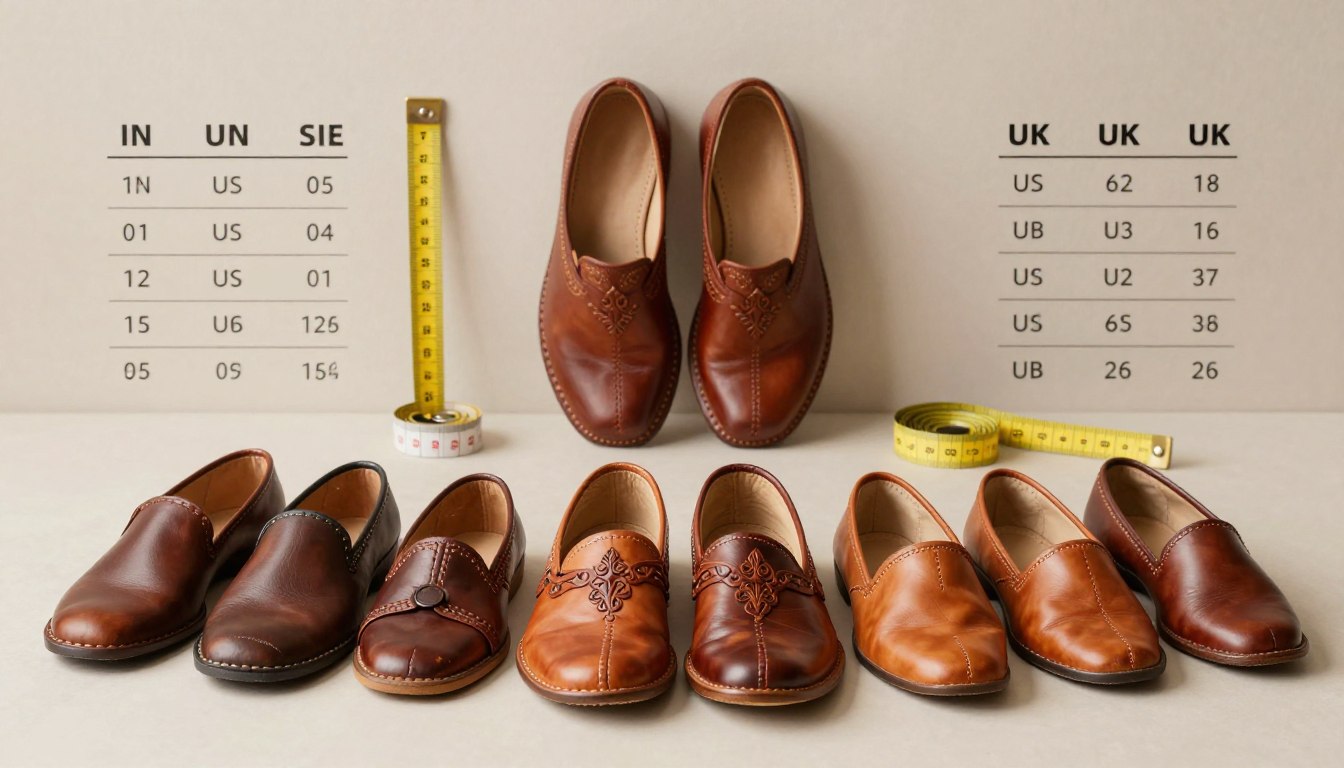
Finding the right footwear online can be hard. This is true for beautiful, handmade juttis. You want a perfect fit—comfortable, stylish, and the right size when they arrive.
We have a solution for you. Our guide offers clear, actionable insights and expert advice. You’ll learn how to deal with sizing from India, the US, and the UK.
We make sizing conventions easy to understand. We also have conversion charts to help. Our tips will make sure your new juttis are both comfortable and stylish. Shop with confidence, no matter where you are.
Intro: Get the Right Fit the First Time (India and Abroad)
Finding the perfect pair of juttis shouldn’t be hard, whether you’re in India or abroad. The right fit makes a big difference. It turns a pair of shoes into a favorite piece of clothing.
For those buying from abroad, getting the size right the first time is key. Returning items can be expensive, time-consuming, and frustrating. This guide aims to make sizing easy and straightforward.
Traditional jutti sizing is different from Western shoe sizes. Juttis are made to fit your foot comfortably, unlike shoes with set left and right shapes. This means your usual size might not fit.
- Unfamiliar Sizing Systems: Confusion between Indian, US, UK, and EU sizes.
- Foot Shape vs. Shoe Shape: Not accounting for wide feet or high insteps.
- Measurement Errors: Guessing size instead of measuring the foot accurately.
- Brand Variance: One brand’s size 8 might fit like another’s size 9.
This section sets the stage for the whole guide. We focus on three main points: accurate measurement, using a size conversion chart wisely, and understanding jutti construction. By learning these basics, you can shop confidently from any brand, anywhere.
Whether you’re in Mumbai for a wedding or in New York looking for a unique piece, shopping becomes easy and stress-free. Let’s explore how these beautiful shoes are made.
How juttis are built: No-left-right vs modern lasts
To understand jutti sizing, you need to know two main ways they’re made. The traditional method is symmetrical, and the modern one is anatomical. This knowledge helps you choose the right fit.
The Traditional “No-Left-Right” Jutti
Traditional juttis are known for their symmetrical design. They are made on a single, straight last. This means the left and right shoes are the same shape.
This “no-left-right” approach comes from old handmade footwear traditions. It values versatile craftsmanship. The leather softens to fit your foot over time.
The Modern Anatomical Last
Today, many jutti makers use modern, shaped lasts. These lasts match the natural shape of your feet. They offer immediate arch support and a precise fit from the start.
This design is similar to Western shoes. It’s great for those new to juttis or who like defined support.
The materials also affect comfort and durability. A good jutti combines traditional techniques with comfort features. Here’s what a high-quality jutti typically includes:
- Upper: Often has detailed embroidery like mirror work or thread on soft leather.
- Sole: Uses strong, vegetable-tanned leather. It molds to your foot and gets better with wear.
- Padding: Includes double cushioning for comfort all day, absorbing shock with each step.
- Make: Each pair is made by hand in India, ensuring unique quality.
These parts work together well. The vegetable-tanned sole is firm but molds to your foot. The double cushioning helps with the initial firmness. Knowing this helps set realistic expectations for break-in.
| Feature | Traditional “No-Left-Right” Build | Modern Anatomical Last |
|---|---|---|
| Fit Philosophy | Foot molds the shoe over time | Shoe supports the foot immediately |
| Shape | Symmetrical, identical left/right | Contoured, distinct left/right |
| Best For | Barefoot wear, traditional feel, wide feet | All-day wear, structured support, new buyers |
| Typical Break-in | Longer, more personalized molding | Shorter, more predictable |
Understanding how juttis are made makes sizing easier. You can pick a traditional pair for a personalized fit. Or choose a modern last for instant comfort. This knowledge is key to finding your perfect handmade footwear.
Conversion charts: IN to US/UK/EU; length vs width tips
Knowing how length and width work is as important as knowing your shoe size. This part helps you shop with confidence by explaining the metrics.
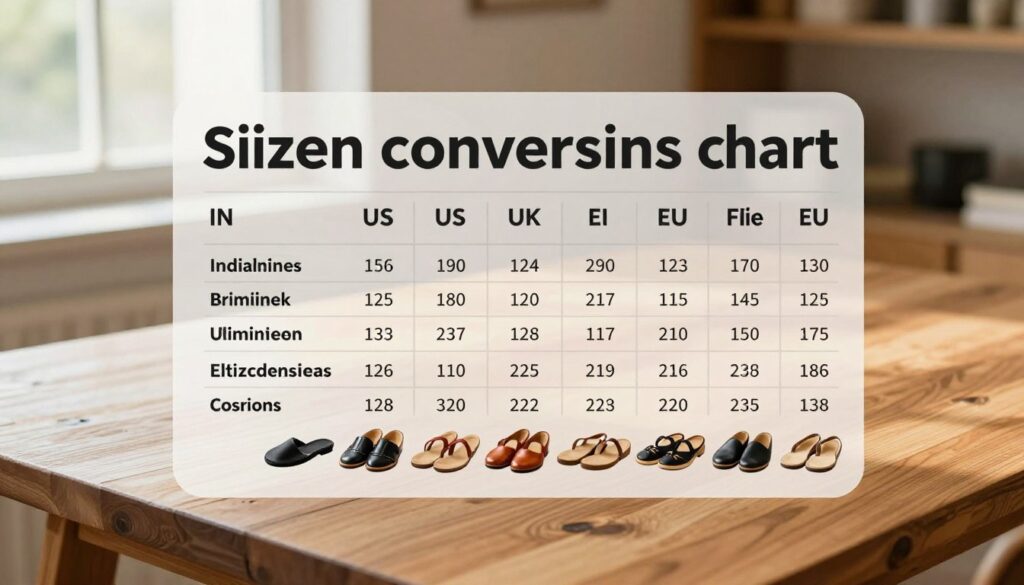
Indian shoes use a simple number system. Juttis usually range from 36 to 41. These numbers match European (EU) sizes. But, US and UK sizes need a different conversion.
Below is a table to guide you. It shows how Indian/EU sizes match US and UK sizes for both men and women.
| Indian / EU Size | US Women’s | US Men’s | UK Size |
|---|---|---|---|
| 35 | 4.5 | 3.5 | 3 |
| 36 | 5.5 | 4.5 | 4 |
| 37 | 6.5 | 5.5 | 5 |
| 38 | 7.5 | 6.5 | 6 |
| 39 | 8.5 | 7.5 | 7 |
| 40 | 9.5 | 8.5 | 8 |
| 41 | 10.5 | 9.5 | 9 |
Length is just one part of the story. Traditional juttis are loose and comfortable. But, modern styles might fit tighter.
If your feet are wide, don’t size up just for width. It can cause the heel to slip. Look for brands that offer a roomier fit or styles called “broad.”
For narrow feet, a length that feels perfect might be too loose. Adding a cushioned insole can make it fit better. This is often better than sizing down.
Navigating Half Sizes and In-Between Measurements
True half sizes are rare in jutti making. You usually find whole sizes only. So, knowing your exact foot measurement is key.
What if your measurement is between two whole sizes? Your choice depends on the shoe’s design and how you plan to wear it.
For soft, loose juttis, size down. The leather will stretch and fit your foot well.
For stiff, modern styles or thick socks, size up. You’ll need more room for comfort. An insole can help adjust the fit.
Always check the brand’s size conversion chart. Some sizes might run big or small. If unsure between two half sizes, choose the larger size for comfort.
Measuring at home with paper outline method
Forget the guesswork. The paper outline method is a reliable way to find your exact foot dimensions for jutti sizing. It uses a simple technique with a piece of paper, a pen, and a ruler.
Getting accurate measurements is key. These measurements are used in conversion charts. A small mistake can make your juttis uncomfortable.
You’ll need a blank sheet of paper bigger than your foot, a pen or pencil, and a ruler. Wear the socks you’ll use with your juttis. Stand on a hard, flat surface like a tile or wood floor.
- Trace Your Foot: Place the paper on the floor. Stand on it with your full weight evenly distributed. Have a friend trace the outline of your foot, holding the pen perpendicular to the floor.
- Mark Length: On the tracing, draw a straight line from the tip of your longest toe to the back of your heel. Measure this line in centimeters or inches for the foot length.
- Mark Width: Find the broadest part of your foot outline, usually across the ball. Draw a line perpendicular to the length line at this point. Measure this width.
- Repeat: Always measure both feet. Use the larger measurements for a safe fit.
For the most precise jutti sizing, measure at the end of the day when feet are slightly swollen. Make sure the pen stays in contact with your foot during tracing.
Common mistakes can skew your results. Avoid these pitfalls:
- Sitting down while tracing (foot flattens and expands).
- Using a flimsy tape measure instead of a rigid ruler.
- Measuring only one foot.
- Not applying full body weight during the trace.
Following this method gives you trustworthy length and width data. Plug these numbers into the size charts with confidence. You eliminate the main variable that leads to returns: incorrect measurements.
This foundational step empowers you to shop online for juttis with certainty. Your perfect fit starts with a precise outline on paper.
Fit by use-case: Barefoot festive vs all-day office wear
Comfort in juttis changes based on the situation. What’s perfect for a wedding isn’t the same for the office. Your choice should depend on how long you’ll wear them and what’s under them.
For short events like weddings, you might go barefoot. But for daily office work, socks are essential. Each situation needs a different fit for comfort and style.
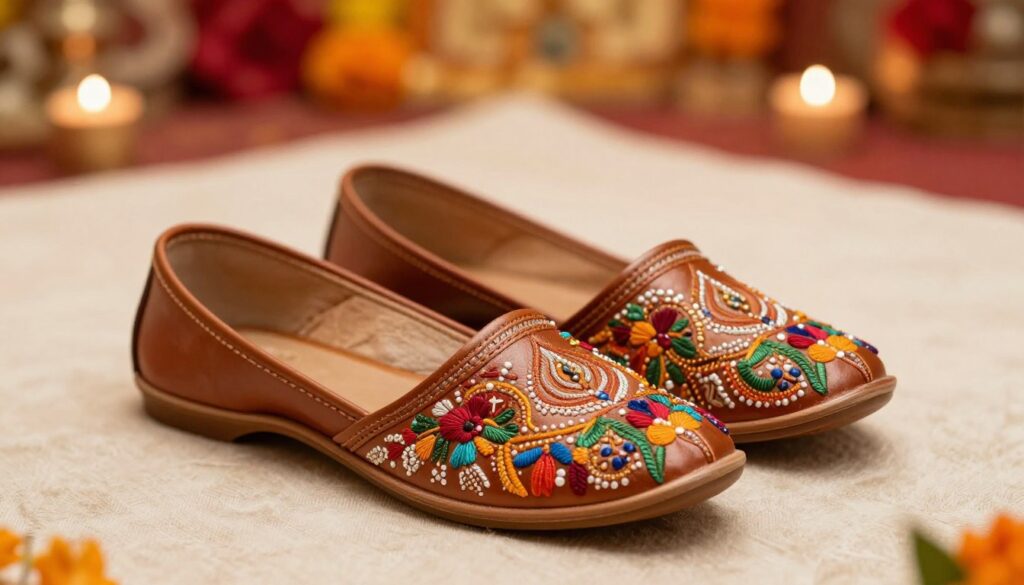
Think about weddings, parties, or religious events. You’ll be on your feet for a few hours, often indoors. You want elegance with a snug, glove-like fit.
At these events, your true size is usually best. The soft leather will mold to your skin. A tight fit keeps your feet from slipping and getting blisters.
- Stick to your measured size. There’s no need for extra room.
- Prioritize a secure heel and instep. Your toes should just graze the front.
- Expect a brief break-in. The leather will soften and conform to your unique foot shape after an hour or two of wear.
The All-Day & Office Wear Fit
This is for work, long commutes, or day-long outings. You need support, breathability, and room for swelling. Sizing up is key here.
Feet expand throughout the day. Adding socks increases volume. For long days, sizing up by a half-size is a common and wise recommendation. It gives the needed space for comfort.
- Consider a half-size up from your measured barefoot size.
- This is key for those with wide feet, as it allows a more comfortable spread in the toe box.
- Test the fit with the socks you plan to wear. There should be no pinching on the sides.
- Ensure the ball of your foot aligns comfortably with the widest part of the shoe.
For professionals with wide feet or who experience afternoon swelling, extra space is essential. It prevents pressure points and improves circulation during long hours of sitting or standing.
Match your purchase to your lifestyle. For a one-time event, choose a snug fit. For daily wear, go for a bit more room. This simple choice greatly increases your satisfaction with your leather juttis.
Problem-solving: Wide feet, bunions, half sizes, insoles
Fit issues like wide feet or bunions shouldn’t stop you from enjoying leather juttis. This section offers solutions for these common problems. By addressing these issues early, you can avoid the need for returns.
For wide feet, traditional juttis might be too tight. Look for styles with bigger toe boxes and soft leather that stretches. This makes them more comfortable over time.
Some jutti styles are better for wider feet. Mojari designs, with their open back and roomier front, fit more comfortably. Styles without too much embroidery also allow for more room.
When you have bunions, it’s important to avoid tight or decorative areas. Choose juttis with smooth leather and minimal details in the bunion area. This reduces pressure.
Full-grain leather is a good choice because it stretches more than synthetic leather. Wearing them with thick socks can help stretch them to fit your feet perfectly.
The half sizes issue is common when buying juttis online. If you’re between sizes, sizing up is usually better. It gives more room than sizing down.
For half sizes, think about how you’ll wear them. If you’ll use insoles or wear socks, size up. If you’ll wear them barefoot or with thin socks, decide based on your foot size.
Insoles can change how a jutti fits. They add height and support, which can affect the size you need. If you plan to use insoles, choose your size with them in mind.
Insoles add 2-3 millimeters of height. This might not mean you need a bigger size. Try them with your current shoes to see if they fit.
Here’s a quick guide for common fit issues:
- Wide feet with normal length: Stay with your length size but choose stretchable styles
- Narrow feet with bunions: Stick with your regular size and stretch them
- Exactly between sizes: Size up for more room with insoles or socks
- Using thick orthotics: Go up a half or full size from your usual size
These tips help you find the right fit. They go beyond standard sizes to fit your unique needs. The goal is to get the perfect fit right away.
Leather gets more comfortable with wear. If it feels too tight at first, it might loosen up. But if it’s too tight or hurts, it’s the wrong size.
Using these tips can make online shopping better. You’ll make choices that fit your feet perfectly. This way, you avoid returns and exchanges.
Try-on & return checklist for overseas buyers
Overseas buyers can avoid fit worries by following a detailed try-on and returns checklist. This approach turns excitement into confidence. You’ll know exactly what to do and what your choices are.
Your leather juttis have traveled far. The first try-on is key. Doing it right saves time and stress, and might avoid the need for an exchange.
Start with the right setting. Always try on new juttis indoors on a clean, hard surface like wood or tile. Avoid carpets or rugs. They can hide pressure points and change how the sole feels.
Wear the socks or foot coverings you plan to use most often. This gives a true feel for the fit. Walk around your home for at least 20-30 minutes.
This indoor test period is your golden window. Pay close attention to three key areas during this time.
- Toe Box: Your toes should not feel cramped or pressed against the front. There should be about a thumb’s width of space.
- Heel Grip: The heel should sit snugly without significant slipping. A slight initial movement is normal as leather softens.
- Arch and Width: The shoe should not pinch across the ball of your foot. The arch area should feel supported, not tight.
If anything feels painful or overly restrictive, note it. Discomfort during a short indoor walk will only worsen with all-day wear.
| Try-On Step | Recommended Action | Check For |
|---|---|---|
| 1. Initial Inspection | Examine craftsmanship and any delivery issues upon unboxing. | Scuffs, loose stitching, or incorrect size label. |
| 2. Surface & Socks | Wear intended socks on a hard floor. | Stability and true ground feel. |
| 3. Walking Test | Walk indoors for 20-30 minutes. | Pinching, heel slip, or toe cramping. |
| 4. Final Decision | Compare feel to your fit goals from earlier sections. | Any red flags that suggest a size exchange. |
Understanding return policies before you buy is just as important as the try-on. Reputable sellers catering to an international audience often feature Easy Exchanges and Secure Transaction processes. Look for these terms on their website.
Many offer streamlined returns for unworn items within a specific window, often 7-30 days. The policy should clearly state who bears the cost of international return shipping. This is a key detail for your budget.
Modern services like Easy OrderTracking provide peace of mind. You can monitor your package from dispatch to delivery. Some brands promise delivery in “3-5 days from the day of dispatch” to certain regions, speeding up the entire cycle.
When initiating a return or exchange, keep your original packaging and ensure the juttis are in pristine, unworn condition. Take clear photos if there’s a quality issue. Contact customer service directly through official channels.
Having this checklist empowers you as an international buyer. You can shop with confidence, knowing you have a clear action plan for success. Always review a retailer’s specific policies on returns, shipping timelines, and tracking before completing your purchase.
Brand-to-brand variance and break-in expectations
When you buy artisan-crafted juttis, you’ll see natural differences between brands. This is what makes them special. Unlike mass-produced shoes, each pair of handmade footwear shows the maker’s unique touch. This is a sign of quality, not a flaw.
These differences come from skilled artisans using traditional methods. The “Make: Handcrafted in India” label means they’re made by hand, not machines. So, you might find slight differences in how they fit.
It’s important to understand this to avoid getting upset. Instead of focusing on the size number, pay attention to how they feel. A good jutti should feel snug but not tight when new. It shouldn’t pinch or feel too tight on your toes.
The break-in process for leather juttis is a journey. High-quality leather molds to your foot over time. If it’s too loose at first, it will get too big later.
Here’s what a proper break-in looks like:
- Weeks 1-2: Wear your juttis for short periods indoors. The leather will start to soften and flex at your foot’s natural bend points.
- Weeks 3-4: The upper leather conforms to the shape of your foot, creating a custom fit. Any initial stiffness disappears.
- Month 2+: Your juttis feel like a second skin, providing unmatched comfort that only handcrafted leather can offer.
Avoid returning a pair that feels tight at first. True discomfort, like blisters or toe cramping, means it’s the wrong size. A little snugness is okay and will get better.
Be realistic and enjoy the artisan characteristic of your shoes. The small differences and patience needed are what make your juttis special. Seeing the break-in as a journey, not a hassle, makes it more enjoyable.
Care & storage basics + shipping policies
Your new handmade footwear is a big deal. It’s about style and comfort. Keeping it in top shape is easy.
Cleaning your juttis is simple. Just use a soft, dry cloth. For silk or leather, check the brand’s Care section. Store them in a cool, dry spot, away from sunlight. Use shoe trees or tissue paper to keep their shape.
Knowing a brand’s policies makes you feel secure. Many offer free shipping to the US. Look for Cash on Delivery for extra safety. A clear returns and exchange policy is key for online shopping. It lets you exchange sizes easily.
With proper care, your juttis will look great for years. Clear shipping and returns policies mean you can shop with confidence. This lets you enjoy every detail of your handmade shoes.