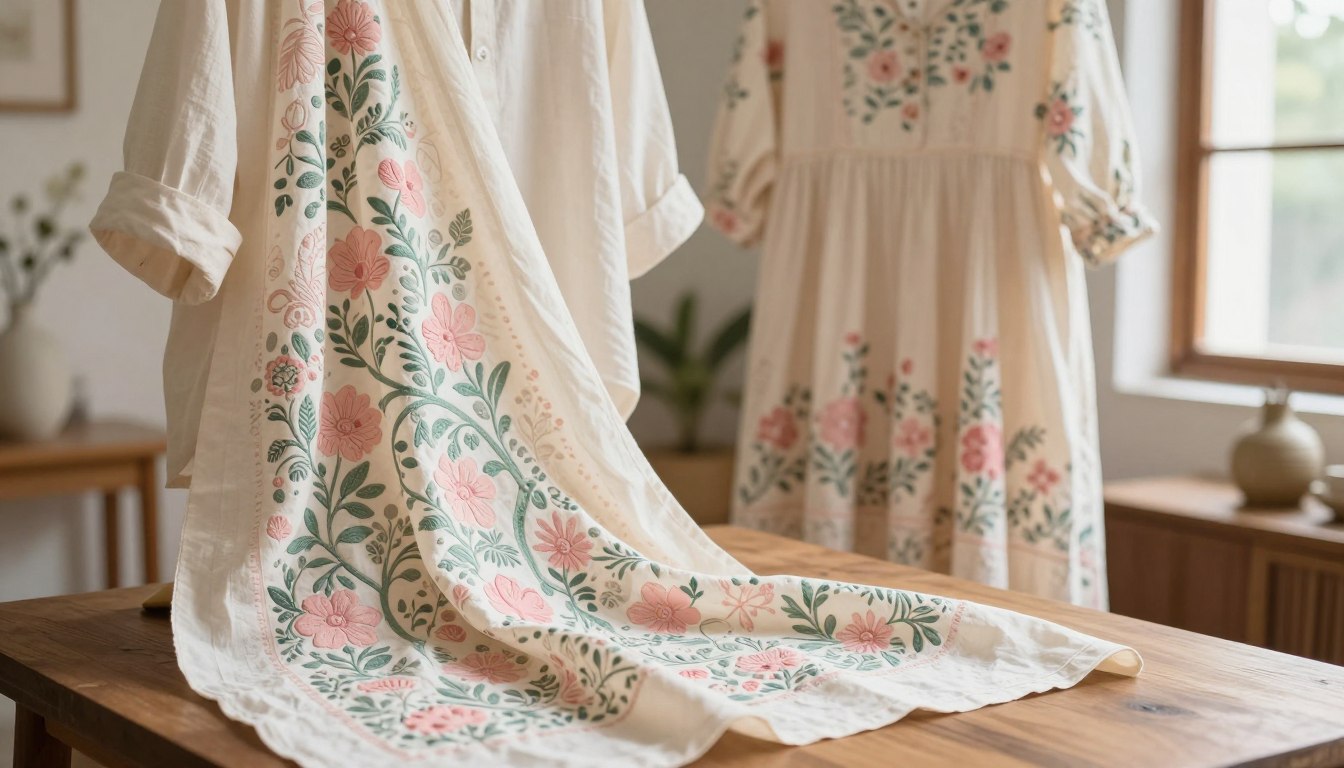
India’s textile tradition is full of magic. It combines creativity, culture, and skill. Sanganeri prints are at the center of this story.
This art form comes from Sanganer, near Jaipur. It’s a traditional hand block printing technique. For years, it has made clothes and home decor special.
What started as a royal craft has grown. Now, it’s a global fashion icon. It keeps tradition alive while meeting today’s tastes.
The prints are known for their detailed flowers and soft colors. These features make them perfect for easy and stylish daily wear.
Let’s dive into the history of these prints. We’ll see how they moved from local workshops to worldwide fashion. You’ll learn about their unique style and how to use them in your daily life.
Intro: Soft pastels for urban summers and diaspora spring
Imagine a fabric that captures the gentle blush of a summer sky at dawn—this is the essence of Sanganeri’s pastel palette. These pastel prints are more than decoration. They represent centuries-old artistry where color and design find perfect balance.
The signature hues—muted pinks, powder blues, sage greens, and soft yellows—are not a modern trend. They come from traditional natural dyes from plants, flowers, and minerals. This gives the colors a unique, organic depth that synthetic dyes can’t match.
For the urban professional facing a sweltering summer, this palette is a sartorial lifeline. The light, cool tones visually lower the temperature and pair well with neutral basics. A pastel Sanganeri kurta or tunic offers a breath of fresh, elegant air in a concrete jungle.
For the global Indian diaspora, these colors hold a different, powerful resonance. When spring festivals like Holi or Vaisakhi arrive, wearing soft pastels connects wearers to heritage and homeland. The fabrics become a portable piece of tradition, evoking the freshness of a North Indian spring.
This versatility shines in specific garments. Lightweight summer sarees in Sanganeri prints are a timeless choice for both casual and formal events. Pastel kurtas and dupattas also fit well into modern wardrobes, from office wear to weekend brunches.
The appeal of these prints is their enduring simplicity. They avoid loud statements in favor of quiet confidence. Whether worn in a bustling city or at a family celebration, Sanganeri’s pastel palette tells a story of refined beauty that transcends seasons and borders.
History & GI context; how prints evolved
The story of Sanganeri block prints is one of artistry and growth. It started in the 16th century in Sanganer, Rajasthan. Artisans used natural dyes from plants and minerals to create detailed floral block print designs.
These skilled workers caught the eye of royal patrons. Their work was known for its fine details and soft, bright colors. By the 17th and 18th centuries, European merchants were exporting these textiles. They were sold as “Indian Chintz” and were valued for their beauty and lasting quality.
The art of making sanganeri prints has been passed down through families. This tradition has kept the original wooden block printing method alive. Each generation added their own touches while staying true to the art’s essence.
The Geographical Indication (GI) tag was a big step for protection. It’s a sign that shows a product’s true origin. For Sanganeri block prints, the GI tag ensures authenticity and quality.
The table below outlines key phases in the evolution of this celebrated textile art.
| Time Period | Key Development | Global Influence |
|---|---|---|
| 16th Century | Origin in Sanganer; mastery of natural dyes and fine floral motifs. | Prized by local royalty and nobility. |
| 17th-18th Century | Large-scale production for export; known as “Indian Chintz”. | High demand in European markets for home decor and fashion. |
| 19th-20th Century | Introduction of synthetic dyes; adaptation to market changes. | Symbol of Indian craftsmanship worldwide. |
| 21st Century | Awarded Geographical Indication (GI) tag in 2010. | GI status boosts authenticity, premium value, and cultural preservation. |
Today, the GI tag fights against fake imitations. It supports the true artisans. The journey of sanganeri prints shows a perfect blend. It keeps ancient techniques alive while meeting today’s tastes.
Motifs & palettes: Buta, buti, jaal in modern hues
Learning about Sanganeri prints starts with understanding its design terms. The three main motifs—Buta, Buti, and Jaal—are at the heart of this art. Each floral block print from Sanganer combines these motifs in a special way.
These motifs are not just decorations. They form a visual language that tells a story.
- Buta: The Buta is the main motif. It’s a big, eye-catching design, like a paisley or a full floral spray. It’s inspired by things like mangoes and flowers from Rajasthan.
- Buti: The Buti is small and scattered. It’s like tiny buds or stars on the fabric. Butis fill the gaps between Butas, adding detail and balance.
- Jaal: The Jaal is a net-like pattern that covers the whole fabric. It’s made of vines, florals, or lines that connect everywhere. This pattern adds a stunning texture to the fabric.
These patterns were inspired by Rajasthan’s nature. Artisans drew from palace designs and desert flowers. This connection gives Sanganeri floral block prints their unique spirit.
Now, the colors have changed. While pastel prints in soft colors are classic, new colors have been added. You can find prints in terracottas, indigos, ochres, and olives.
This mix of old and new makes the craft exciting. It keeps the traditional designs fresh and appealing. Designers can create pieces that honor the past but also fit today’s fashion trends.
Fabric choices: Mulmul, cambric, modal—pros and cons
Knowing about fabric differences helps you pick the right Sanganeri print. The fabric is key for the look and feel of your garment. It affects how the garment moves and lasts over time.
Three fabrics are popular in Sanganeri prints: mulmul, cambric, and modal. Each offers a unique feel. Your choice depends on what you value most: softness, breathability, or ease of care.
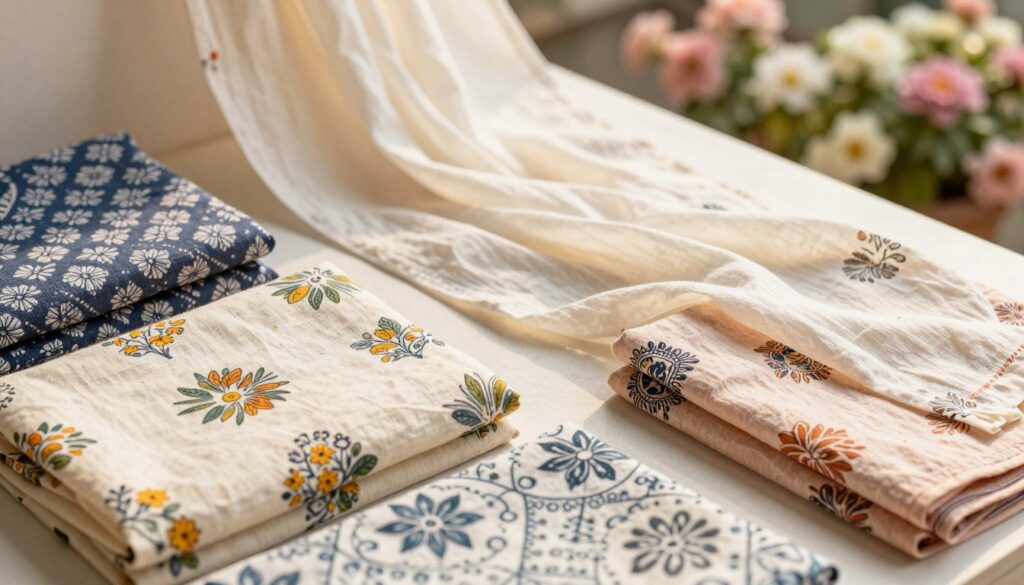
Mulmul is a soft, fine muslin made from high-quality cotton. It’s a classic choice for a reason.
Pros: Mulmul is very breathable and light. It drapes beautifully and feels soft against your skin. It’s perfect for elegant, flowing soft cotton kurtas.
Cons: It’s not as durable as heavier cottons. It needs careful washing. It can be sheer, depending on the weave.
Cambric is a lightweight cotton with a plain weave. It’s a bit more structured than mulmul but is also airy.
Pros: Cambric is soft and durable. It keeps the print details sharp. It’s easy to care for and works well for daily wear.
Cons: It’s not as soft as premium mulmul. It can feel a bit crisp at first.
Modal is made from beech tree pulp. It’s known for its silky feel.
Pros: Modal is very soft and has a great drape. It’s absorbent and breathable. It’s also color-fast and has a luxurious sheen.
Cons: It’s not 100% natural. It can be hard to work with for tailors. Some find it less breathable in humid climates.
This table helps you quickly see the differences.
| Fabric | Fiber Content | Feel & Drape | Best For | Care Level |
|---|---|---|---|---|
| Mulmul | Fine Cotton | Ultra-soft, fluid drape | Special occasion wear, sensitive skin | Delicate |
| Cambric | Lightweight Cotton | Soft, slightly crisp, good structure | Everyday soft cotton kurtas, workwear | Easy |
| Modal | Beech Tree Pulp | Silky smooth, excellent drape | Travel outfits, luxury loungewear | Machine Wash Friendly |
For the best soft cotton kurtas feel, choose mulmul or high-thread-count cambric. Cambric is great for everyday wear. Modal is perfect for those who love a silky feel and vibrant colors.
Your choice should match how you plan to wear the garment. Think about your climate and what you prefer in comfort.
Quality signals: Hand block irregularities you should expect
In a world filled with identical patterns, the real beauty of Sanganeri block print is in its unique flaws. These imperfections show the difference between mass-produced items and true craftsmanship.
We want to change how you see things. What looks like a mistake to some is actually a quality signal. These small differences prove that a human made it, adding their own special touch.
Here are the signs of real hand-blocking you should look for and love:
- Slight Pattern Misalignments: It’s hard to get patterns perfectly aligned by hand. You might see a line that’s a bit off or a motif that doesn’t quite meet at the seam. This is because the artisan had to move the wooden block for each print.
- Variations in Color Intensity: Unlike digital prints, hand-blocked items have colors that vary slightly. Some parts of a design might look a bit darker or lighter. This happens because the amount of dye and the pressure used by the artisan change with each print.
- Faint Wood Grain or Edge Impressions: Look closely, and you might see the texture of the wooden block or a soft outline around designs. These are the marks of the tool, left in the dye. A sharp, uniform edge usually means it’s not hand-blocked.
Accept these traits. They show your textile is a one-of-a-kind piece of art, not a mass-produced item. The unique nature of hand-blocked Sanganeri gives it character, depth, and value. No two pieces are the same, and that’s what makes them special.
Capsule looks: Workwear, brunch, travel-friendly outfits
Sanganeri prints are perfect for any occasion. They work well from office meetings to weekend brunches. A capsule wardrobe with these prints means you have many stylish options.
For polished office wear, choose a Sanganeri print kurta or shirt in soft colors. Match it with solid-colored trousers like navy or beige. A blazer makes the outfit professional and unique.
A brunch outfit should be both comfy and stylish. Start with a soft cotton kurta or a Sanganeri print dress. Wear it with denim or linen trousers. Add simple jewelry and sandals for a relaxed yet put-together look.
Travel outfits need to be comfy, wrinkle-free, and stylish. Sanganeri prints on light fabrics are great. For men, a light cotton shirt with white chinos is perfect. Women can wear a maxi dress or co-ord set for easy changes.
Here’s a quick guide for three essential capsule looks:
| Occasion | Key Garment | Styling Tip | Ideal Fabric |
|---|---|---|---|
| Workwear | Subtle print kurta or shirt | Layer with a solid-color blazer | Mulmul, Cambric |
| Brunch | Soft cotton kurta or dress | Tuck into denim; add statement jewelry | Soft Cotton, Voile |
| Travel | Print shirt or wrinkle-resistant dress | Pair with neutral bottoms for versatility | Modal, Lightweight Linen |
Remember, versatility is key. A single Sanganeri print top can be the base for many outfits. With these basics, you can always look stylish for any event.
Home textiles: Curtains, bed covers, table runners
Sanganeri block prints add beauty to your home, not just your clothes. They turn simple spaces into works of art. This floral block print art is perfect for home decor.
It brings heritage and elegance to your home. The pastel prints create a peaceful vibe. The designs are detailed and soothing.
These textiles add a unique touch to your home. They offer a handmade quality that mass-produced items can’t match. The soft colors help create a calm atmosphere.
They also serve as a base for your decor. You can build your room’s look around these prints.
Let’s look at three key ways to use Sanganeri prints at home.
| Textile Item | Primary Benefit | Ideal Placement | Styling Tip |
|---|---|---|---|
| Curtains | Filter natural light softly, creating a diffused, warm glow. | Living rooms, bedrooms, sunrooms. | Pair with sheer white linens for a layered, airy look. |
| Bed Covers | Transform the bedroom into a serene oasis for rest. | Master bedroom, guest room. | Use as a statement piece with solid-color pillows in matching pastels. |
| Table Runners | Add an instant artisanal touch to dining and console tables. | Dining table, entryway console, kitchen island. | Center under a simple vase or a tray for a composed tablescape. |
Sanganeri print curtains are more than privacy. They’re giant art pieces. The light fabrics let light through, creating beautiful shadows.
A pastel prints bed cover makes your bedroom peaceful. It’s a focal point that promotes sleep. The hand-block printing adds a unique, organic feel.
Table runners are a simple way to add style. They bring personality to any space. A delicate pattern can make meals special.
Mixing these pieces creates a thoughtful home. The motifs tie rooms together. It tells a story of tradition and calm.
Care & storage: Preventing fade, ironing tips
Sanganeri prints are delicate and need careful handling. Simple care routines can keep them bright for years. By taking good care, you become a guardian of this art.
Washing them right is key to preventing fade. For your soft cotton kurtas and other textiles, use cold water and a gentle cycle. Hot water harms natural dyes. Choose a mild detergent and skip bleach and fabric softeners.
- Turn garments inside out before washing.
- Wash similar colors together.
- Fasten any hooks or buttons to prevent snagging.
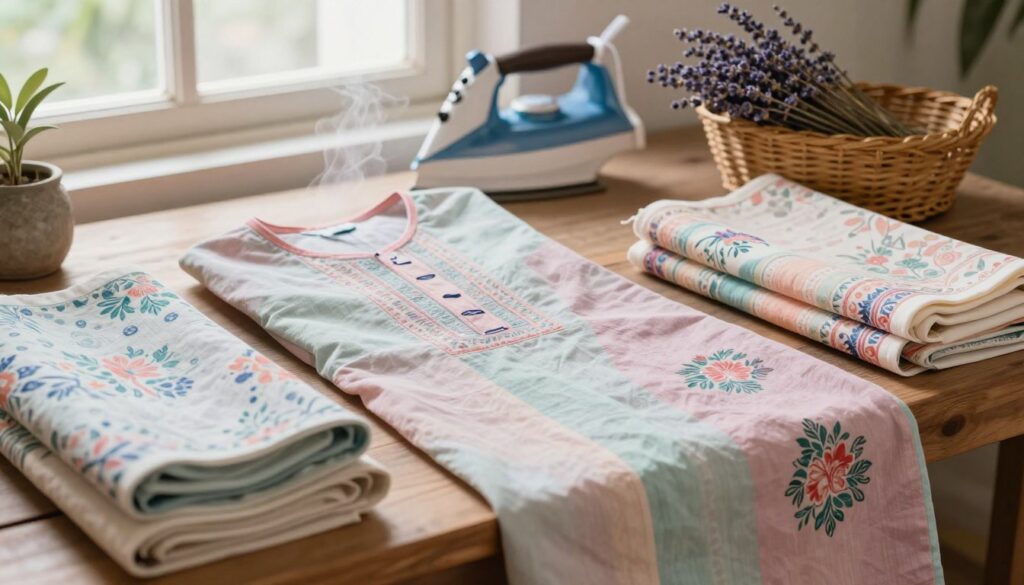
Drying is just as important. The absolute best method is to dry them in the shade. Sunlight speeds up fading. Dry them flat or hang them smoothly. Never use a tumble dryer, as it can damage the fabric and dull the print.
Ironing helps restore their crisp look. Use medium heat. Iron the reverse side for safety. If ironing the printed side, use a thin cotton cloth to protect the print.
Proper storage keeps your items in great shape. Fold them neatly and store in breathable cotton bags. Avoid plastic, as it holds moisture. Keep them in a cool, dry place, away from sunlight. This helps maintain their colors and prevents fading.
By following these tips, you’ll keep your Sanganeri prints looking their best. The unique marks from hand-blocking add to their beauty. Your soft cotton kurtas will stay vibrant and comfortable for a long time.
Smart shopping: Fit, size charts, returns for overseas buyers
Shopping for Sanganeri block prints from overseas can be easy with the right steps. For buyers in the United States and other countries, a few smart strategies can help. This guide will help you understand fit, fabric, and policies for buying authentic Sanganeri prints online.
Fit is often the first concern. Indian clothing sizes are different from US sizes. A medium in India is like a US XS or small. So, don’t assume your usual size will fit.
Here’s how to get the right fit:
- Measure Yourself: Use a soft tape measure to note your bust, waist, and hip measurements in inches.
- Find the Size Chart: Every reputable seller provides a detailed size chart. Compare your measurements directly to this chart, not to the generic label (S, M, L).
- Consider the Silhouette: Are you buying a fitted kurta or a relaxed Anarkali? Account for the garment’s intended ease.
The next thing to check is the fabric description. The material affects how the garment looks and feels. For example, Sanganeri prints on mulmul are light and breezy, great for summer. Prints on cambric are more structured, perfect for work.
Always look for:
- Fabric composition (e.g., 100% cotton, cotton-modal blend)
- Fabric weight or GSM (grams per square meter)
- Care instructions included in the listing
Also, make sure you understand the return and exchange policy before you buy. International returns can be tricky and costly. A clear policy shows a seller is trustworthy. Look for answers to these questions:
- Does the store accept international returns or exchanges?
- Who bears the cost of return shipping?
- What is the timeframe for initiating a return?
- Are there any conditions (like unwashed, tagged items)?
Many artisans and ethical brands now offer good return policies for global customers. Don’t be afraid to ask the seller questions. This helps build a good relationship and ensures you understand everything.
By using size charts, checking fabric details, and knowing policies, you can shop with confidence. Each Sanganeri print you buy becomes a joy, not a problem. Start using these smart shopping tips and build your wardrobe with ease.
Shop the look bundles
Creating a full outfit with Sanganeri prints is both thrilling and challenging. You might question which colors go well together or what bottoms match a detailed kurta. Our ‘Shop the Look’ bundles make this easier.
These sets remove the need to guess how to style. Picture a soft pink floral block print kurta paired with ivory trousers. Or a saree with its perfect blouse. Each piece is picked for its color and design harmony.
Going for a bundle means you get a complete look right away. It’s often cheaper than buying each piece separately. You save time and feel more confident in your style. These collections show off the versatility of Sanganeri’s craftsmanship.
Check out our ‘Shop the Look’ bundles to add these beautiful floral block print designs to your wardrobe. See how simple it is to wear the timeless elegance of Sanganeri prints. Begin with a complete, matching outfit that shows your love for handcrafted textiles.