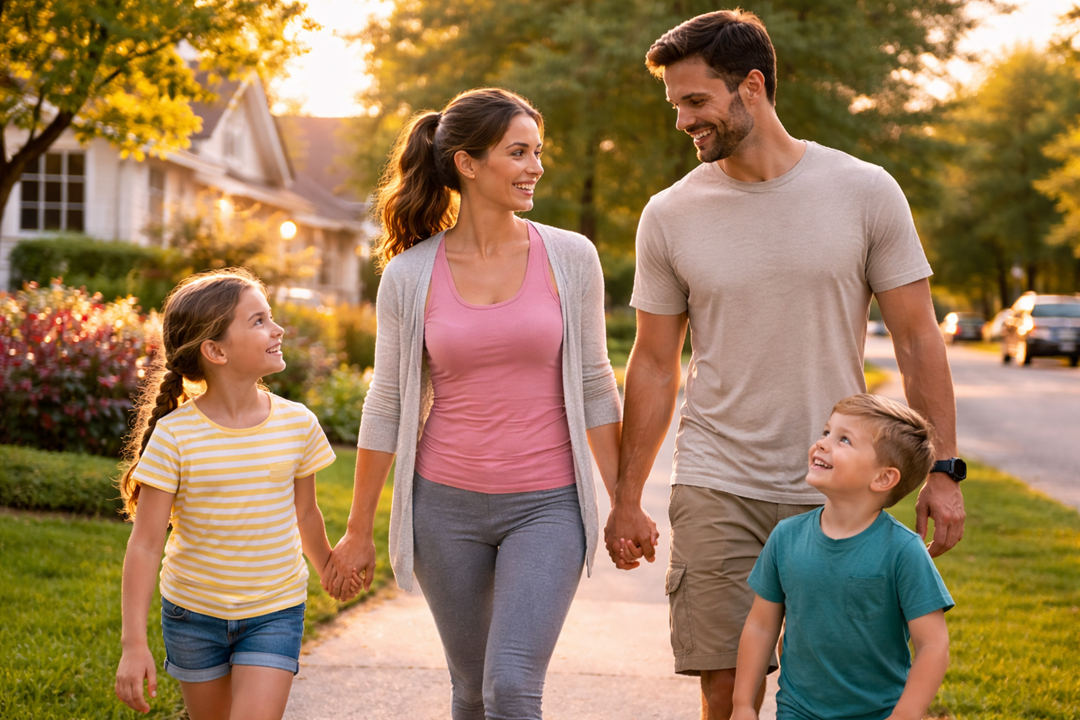
In a world filled with packed schedules and digital distractions, finding time for family fitness can feel overwhelming. But sometimes, the most effective health habits are also the simplest. A 20-minute after-dinner walk is one of the easiest ways to support long-term wellness—without adding pressure to an already busy day.
This small daily ritual encourages movement, connection, and consistency. Over time, it can improve cardiovascular health, support digestion, and strengthen family bonds—all while fitting naturally into your evening routine.
Why Walking After Dinner Matters
Even light movement after meals plays a meaningful role in metabolic health. Studies suggest that gentle activity following dinner can help regulate blood sugar levels and improve insulin sensitivity. Instead of immediately sitting down for television or screen time, a short walk encourages circulation and muscle engagement.
Beyond the physical benefits, walking provides mental clarity. Exposure to natural light in the early evening—even brief exposure—can support better sleep patterns later that night.
If you’ve been incorporating structured workouts like strength training at home, adding a short walk can complement your efforts without increasing strain or recovery time.
The key isn’t intensity. It’s consistency.
How A 20-Minute Walk Supports Long-Term Health
Walking is often underestimated because it feels simple. Yet its long-term effects are well documented. Over months and years, regular brisk walking can contribute to improved cardiovascular health, better weight management, and reduced stress levels.
The table below highlights how this modest habit compounds over time:
| Benefit Area | Short-Term Effect | Long-Term Impact |
|---|---|---|
| Blood Sugar Regulation | Improved glucose response | Lower risk of metabolic issues |
| Cardiovascular Health | Increased circulation | Reduced heart disease risk |
| Mental Well-Being | Stress reduction | Improved mood stability |
| Family Connection | Shared time together | Stronger relational bonds |
Unlike high-intensity programs that may feel difficult to sustain, walking is accessible for nearly all fitness levels. It doesn’t require equipment, gym memberships, or complex planning.
Turning An Evening Walk Into A Family Routine
The success of this habit depends on integration—not willpower. By attaching the walk to something you already do (dinner), it becomes part of your daily rhythm rather than another task on your list.

Consider simple adjustments:
- Begin walking 10–15 minutes after finishing your meal
- Choose a familiar, safe route in your neighborhood
- Keep phones tucked away to encourage conversation
- Involve children by letting them lead the pace or pick the route
Just as we discussed in simple daily habits that improve long-term health, sustainable routines are built through repetition, not perfection.
For families with limited space or unpredictable schedules, pairing walks with quick workout routines for busy parents ensures that even on shorter evenings, movement still happens.
The Metabolic Advantage Of Post-Meal Movement
After eating, your body works to process nutrients and regulate blood glucose. Light physical activity helps muscles absorb glucose more efficiently, reducing spikes that can contribute to fatigue later in the evening.
You don’t need a fast pace to experience benefits. A comfortable, steady walk is enough to activate large muscle groups and support digestion.
Organizations like the American Heart Association consistently emphasize walking as a foundational exercise for heart health. Its low-impact nature makes it safe for a wide range of ages, making it especially valuable for families.
Making The Habit Sustainable Year-Round
Weather and seasonal changes can disrupt outdoor plans. Preparing alternatives in advance keeps momentum intact.

In colder months, consider walking at a nearby indoor mall or community center. If conditions prevent going outside, light indoor movement—such as stretching or mobility exercises—can maintain the routine.
Consistency builds identity. When walking becomes “what your family does after dinner,” it requires less motivation over time.
More Than Exercise—It’s Connection
The physical benefits of walking are important. But equally valuable is the opportunity to reconnect at the end of the day. Evening walks create space for conversation without screens, distractions, or rushed transitions.
Children are more likely to open up during side-by-side activities than during formal discussions. A casual walk can encourage meaningful dialogue, laughter, and shared reflection.
In this way, a simple 20-minute habit strengthens both physical health and emotional well-being.
A Small Step With Lasting Impact
You don’t need elaborate fitness plans to support your family’s health. A consistent 20-minute after-dinner walk can improve circulation, stabilize blood sugar, enhance mood, and foster connection.
Start with three evenings per week. Once it feels natural, build toward most nights. Over time, this modest routine becomes a cornerstone of family fitness—simple, sustainable, and surprisingly powerful.
Long-term health is built step by step. Sometimes, quite literally.