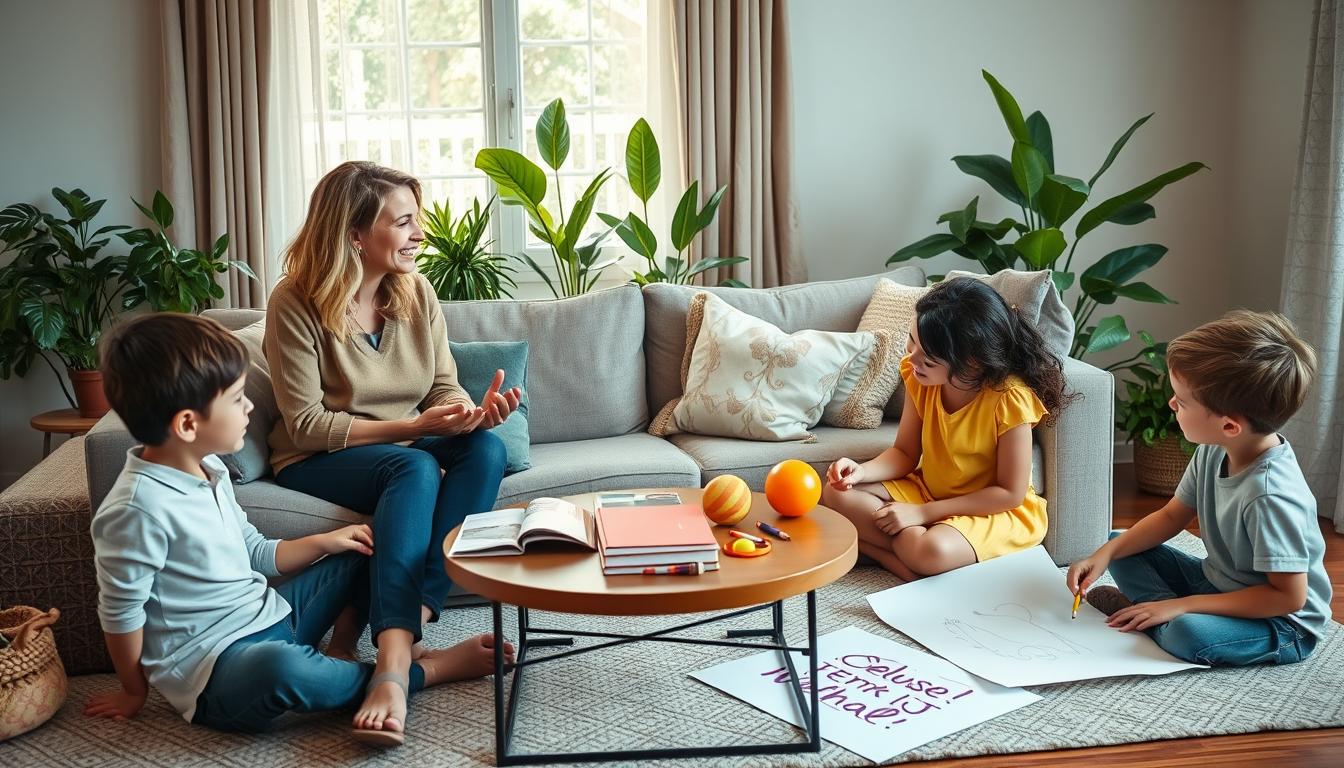
The modern American home often feels like a startup in crisis. We play many roles at once, like a Shakespearean actor. At the same time, our family structures are changing, a shift sociologists call a “transition.”
This isn’t just feeling overwhelmed. It’s a big change—our homes are losing old support systems and looking for new ones. The good push of growth is turning into chaotic stress.
The American Psychological Association says it clearly: too much stress at home leads to anxiety and depression. Thinking it will just go away is a dangerous myth.
So, let’s figure out what’s going on. This guide uses science and practical tips to help your family feel better. It’s like family systems theory, but with better coffee and real ways to build resilience.
Identifying Family Stress Triggers
Family stress is like a hidden app that drains your energy. You feel tired and irritable but can’t find the source. To fix it, you need to find out which stressors are causing the problem.
Forget about vague complaints about “tension.” We’re going to find the real causes. Is it a big stress like losing a job, or just small daily annoyances? Knowing the difference is key.
Your home is like a small economy. Reuben Hill’s ABCX model helps us understand. The stressor Event (A) meets your family’s Resources (B) and Structure (C). This mix can lead to a manageable challenge or a big crisis (X).
This model turns chaos into useful data. It changes the question from “Why are we stressed?” to “Which factor can we change?” Improving your family mental health starts with this shift.
Stress has different types, each needing its own solution. Knowing the type helps you choose the right approach.
| Stress Type | Definition | Example | Typical Response Needed |
|---|---|---|---|
| External Macro | Large-scale events outside family control | Economic recession, natural disaster, pandemic | Community support, financial planning, crisis management |
| Internal Macro | Major changes within the family system | Divorce, serious illness, birth of a child | Family therapy, role renegotiation, extended adjustment period |
| Chronic Minor | Small, recurring daily irritants | Commute traffic, morning routine chaos, homework battles | System redesign, habit stacking, boundary setting |
| Acute Internal | Sudden, intense interpersonal conflict | Major argument, betrayal of trust, disciplinary crisis | Immediate de-escalation, repair conversations, temporary structure |
My favorite tool isn’t an app—it’s a piece of paper. The eco-map. Draw circles for each family member and lines to connect them. Label each line as supportive, strained, or conflictual.
This isn’t just drawing. It’s analyzing your family’s system. You see the strong lines and the thin ones. The lines that show support and the ones that show conflict.
Your body has its own warning signs. MSU Extension says these signs are like your “check engine light.” Do you forget things, get angry easily, or have headaches? These are signs, not weaknesses.
Start a stress journal. It’s not for writing about your feelings. It’s for tracking your stress. Note the time, where it happened, who was there, what triggered it, and how intense it was. Patterns will show up. Is it always the same time of day or situation that stresses you out?
Finding stress triggers is about understanding your family’s emotional landscape. Once you know where the stress is coming from, you can plan how to handle it. You move from reacting to planning, protecting your family mental health with purpose.
Creating Calm Morning Routines
Imagine setting your family’s daily rhythm. Do you want calm predictability or chaotic improvisation? Most of us choose chaos without realizing it’s like installing buggy software that crashes by 8 AM.
The morning rush for shoes, missing permission slips, and breakfast battles are more than minor issues. They are signs of deeper problems that harm household wellness. From a family systems view, your morning routine is key. It either keeps your home organized or creates chaos.
Chaotic mornings are not accidents. They are the result of small, often ignored, decisions. The solution isn’t to become a strict organizer. It’s about creating buffers against the natural friction of living together before caffeine.
Your evening routine is your first morning strategy. That “relaxing bedtime ritual” experts suggest? It’s not just self-care. It’s about reducing tomorrow’s stress. Think of it as closing apps on your phone to make mornings smoother.
Here’s how it works in practice:
- Lunchboxes assembled and in the fridge
- Backpacks stationed by the door with completed homework
- Outfits chosen (by the people who will wear them)
- Coffee maker prepped and ready for its single sacred task
This isn’t about being perfect. It’s about avoiding decision fatigue. You’re moving morning arguments to the evening when everyone is calmer.
The morning is about protection, not production. Create a 10-15 minute buffer zone. Can one parent have quiet time before chaos starts? Can kids have their own “wake-up” activities without screens? This creates a peaceful space before the world gets in the way.
Consider this comparison of morning approaches:
| Aspect | Chaotic Morning | Calm Morning |
|---|---|---|
| Decision Making | Reactive, last-minute choices under pressure | Proactive, evening-prepared systems |
| Emotional Tone | High cortisol, defensive interactions | Predictable rhythms, neutral to positive engagement |
| Time Perception | Scarcity mindset, constant rushing | Buffer mentality, paced movement |
| Family Systems Impact | Disorganized control dimension, increased entropy | Structured control dimension, reduced friction |
| Long-term Wellness | Programs nervous systems for daily distress | Trains nervous systems for predictable calm |
Seeing mornings as a chance to reset your family’s system is key. That scheduled break experts recommend? Your morning routine is that first break from chaos.
This effort pays off over time. Each calm morning builds better habits. Each evening preparation makes the next one easier. You’re not just leaving the house; you’re setting up your home for success.
The goal isn’t perfection. It’s avoiding panic. It’s the calm space between “we’re late” and “we have time.” This space is where conversations flow, hugs are not rushed, and mornings are peaceful.
After-School Stress Relief Activities
Think of after-school hours as a special time to relax and recharge. It’s a chance to leave the outside world behind and find peace at home. This time, when backpacks drop and everyone breathes a sigh, is key for family stress relief.
Kids come home with a lot on their minds. They think about school, friends, and what they missed. Parents, too, are tired from their day. Without a plan, things can get tough.
We don’t need more activities. We need a break. It’s time to switch from focusing on achievements to enjoying fun together. This is how we relax as a family.
So, what’s the plan? It’s about creating a calm routine. The activity itself is less important than the calm it brings. Here are three ways to find peace after school:
- The Mindful Reset: It’s not just sitting quietly. Try a quick walk around the block without phones. Or do some deep breathing together. It helps everyone relax.
- The Physical Release: Family yoga for a few minutes can help. Or dance to a favorite song. Playing catch is also great. These activities help us release stress together.
- The Unstructured Connection: This means doing things that are fun but don’t require much effort. Coloring, building a fort, or listening to a podcast while making snacks. It’s about being together.
The real magic is in the routine itself. It tells us we’re switching to a calmer mode. It shows us that we can handle stress together, not alone.
For more ideas on stress relief activities for kids, check out these resources. The after-school time is perfect for this. Let’s make it a peaceful space, not a place of conflict.
Family Communication and Check-ins
Regular family check-ins are key for your family mental health. They’re not just nice to have. They’re like a “How was your day?” that you really listen to. Experts, like those from Michigan State University, say this is vital to stop bad communication.
Think of it as a way to catch and fix problems early. It’s not about formal meetings. It’s about real, honest talks.
Experts call bad communication “expressed emotion.” This includes harsh words, eye-rolls, and sighs. It can make anyone feel bad, not just those with big problems.

To improve, focus on open communication. The key is to validate what each person says. This means listening without interrupting or judging.
For example, if your teen says “School sucks,” don’t say “You just need to try harder.” Say “That sounds really frustrating.” This shows you get their feelings.
Validation is powerful. It makes your family stronger. It turns your home into a place where everyone feels heard and understood.
Family therapists call this “cohesion.” It makes your family work better together. Your weekly check-ins and validation keep everyone emotionally healthy.
Stress-Busting Physical Activities
Hans Selye’s general adaptation syndrome meets the suburban family: we’re all just mammals trying to discharge accumulated tension. When family stress gets too much, our bodies show it. Tight shoulders, clenched jaws, and restless energy are signs that talking alone won’t solve it.
You can’t negotiate with cortisol. But you can outmaneuver it. The Michigan State University tip is blunt: physical exercise helps manage stress. It’s not a suggestion; it’s a law of the body.
This isn’t about training for a triathlon. True family stress relief is often found in kinetic simplicity. A post-dinner walk can be more soothing than talking. A weekend hike can unite your family with a shared challenge. A living room “floor is lava” game can release more laughter than any structured activity.
From a family systems perspective, this is what researchers call an “active recreational orientation.” You’re not just burning calories. You’re burning off the day’s static. Shared exertion creates a non-verbal bond, uniting you in movement.
The chemistry is undeniable. Physical activity triggers endorphin release, those feel-good neurotransmitters that act as nature’s reset button. You’re literally shaking off stagnant energy. The body’s stress response becomes the pathway to connection.
| Activity | Intensity Level | Time Commitment | Equipment Needed | Stress-Relief Benefit |
|---|---|---|---|---|
| Family Walk After Dinner | Low | 15-30 minutes | Comfortable shoes | Rhythmic movement, casual conversation space, daylight exposure |
| Weekend Nature Hike | Moderate | 1-2 hours | Sturdy shoes, water | Shared challenge, nature immersion, accomplishment feeling |
| Backyard Soccer/Game | Moderate-High | 30-45 minutes | Ball, open space | Playful competition, laughter, vigorous exertion |
| Living Room Dance Party | Variable | 15-20 minutes | Music player | Spontaneous joy, silliness permission, musical connection |
| Community Bike Ride | Moderate | 45-60 minutes | Bicycles, helmets | Exploration, coordinated effort, neighborhood engagement |
Notice what’s missing from that table? Perfection. Expertise. Expensive gear. The barrier to entry is literally just showing up. The third source tip about outdoor activities with family isn’t about scenic vistas—it’s about changing the container. The walls of your home hold energy, both good and bad. Sometimes you need to literally step outside them.
The magic happens in the transition. From individual agitation to collective motion. From scattered energy to focused exertion. You’re hacking the stress response system by giving it exactly what it wants: action. But you’re directing that action toward connection, not conflict.
This approach to family stress relief works because it respects the biological reality. Stress lives in the body first. So the solution should meet it there. A living room dance party can discharge more tension than an hour of strained conversation. A spontaneous soccer match in the yard resets the household mood faster than any lecture.
The goal isn’t fitness metrics. It’s cohesion. It’s shaking off the day’s residue so you can actually see each other again. When you move together, you remember you’re on the same team—literally and metaphorically. The path to calm isn’t always through being quiet. Sometimes it’s through moving.
Mindful Family Meal Practices
Forget the Norman Rockwell fantasy. A mindful family meal today is a bold statement. It’s a rebellion against fast food, solo screen time, and virtual isolation. It’s not about fancy food or silence. It’s about a key household wellness tradition.
Imagine it as a daily gathering. The goal is to share food and connection. The rules are simple. First, devices go away. Second, focus on what’s right in front of you.

What does this look like? It’s about noticing the steam from pasta. It’s the crunch of a veggie. It’s passing a dish, a small touch.
This practice strengthens family bonds. It’s about being present for each other. It also brings order to chaos. For twenty minutes, we are all here together.
The table below shows the shift from performance to presence:
| Traditional Meal Pressure | Mindful Meal Practice |
|---|---|
| Focus on a “perfect,” home-cooked feast. | Focus on shared presence, even with takeout. |
| Conversation feels forced or interrogative (“How was school?”). | Conversation flows from observations (“This sauce is spicy, what do you think?”). |
| Devices are “tolerated” at the table, creating divided attention. | Devices are absent, making the table a digital-free zone. |
| The goal is nutritional compliance and clean plates. | The goal is connection and a shared sensory experience. |
| It feels like a chore or a performance review. | It feels like a daily, recharging anchor. |
See the difference? One approach adds stress. The other reduces it. This daily connection says, “We are a unit. Nothing else matters.”
This message is key to household wellness. It fights fragmentation with a simple ritual. You’re not just sharing food. You’re sharing time, attention, and the belief that your tribe is important.
Start small. Aim for two or three mindful meals a week. Even ordering pizza can be a mindful experience. The magic is in being fully present for one meal at a time. This builds a culture of family wellness from the ground up, one shared bite at a time.
Creating Peaceful Home Environments
Think of your home as the set for your family’s daily life. Is it set for a tense thriller or a comedy? The mess, like mail piles and screens, shows stress. It’s like a sign of a cluttered mind.
For household wellness, do an environmental check. We’re not aiming for a bare space. It’s about design that focuses on Organization and Control from family systems theory.
Organization isn’t about being perfect. It’s about making life easier. Does your entryway feel calm or chaotic? Are there quiet spots for reading? Soft lighting in the evening sets a peaceful mood.
Control means setting safe routines, not strict rules. It’s knowing when the kitchen closes or when it’s quiet time. This control keeps spaces safe and predictable.
A home is more than its stuff. It’s a network of feelings. Use the eco-map to map out these feelings. Is the office and playroom a mess or a calm space? Is the bathroom path peaceful or stressful?
Checking these feelings is key to a calmer home. We aim to make connections better, not worse. This way, your home supports your family’s happiness.
| Home Zone | Strained Environmental Line | Supportive Environmental Line | Wellness Shift |
|---|---|---|---|
| Home Office / Living Area | Constant interruptions, work bleeds into family time. | Visual/physical boundary respected. “Do not disturb” signals honored. | Protects focus and enables genuine relaxation. |
| Shared Bathroom (Morning) | Chaotic rush, conflict over time and space. | Simple schedule or understood order reduces friction. | Transforms a choke point into a smooth routine. |
| Entryway / Mudroom | Cluttered dumping ground, source of immediate stress. | Designated homes for bags, shoes, and mail. | Creates a calm transition between outside and inside worlds. |
| Kitchen After Hours | Unlimited grazing, lights on, disrupting sleep rhythms. | Clear “closed” time signals the home is winding down. | Establishes digestive and mental rest periods. |
This isn’t about controlling for control’s sake. It’s about making your home a mental haven. You’re cutting down on stress and energy-draining decisions. This is the heart of household wellness.
Teaching Children Stress Coping Skills
Think of your family as a special training academy. The subject? Life. The final test? Everything. Our task isn’t to protect kids from stress. That’s like trying to stop the ocean.
It’s to give them a surfboard and teach them to surf.
Children feel stress just like adults. They just don’t have the words. When you say, “I’m overwhelmed, I need a minute,” you’re teaching them a lesson. You’re showing them that naming their feelings is the first step to dealing with them.
This is how we create a legacy of stress relief in our families. Tip #5 is priceless: accept and validate their feelings. Saying “That sounds really hard” is more powerful than a hundred solutions. It builds trust and shows them their feelings are important.
Then, teach them to build their support network, starting with you. Tip #8 is about showing them how to ask for help. Saying “I need a hug” or “Can we talk?” shows them that being vulnerable is strong, not weak.
The aim isn’t a stress-free childhood. That’s a dream. The goal is a family that can handle stress. You’re not solving every problem. You’re teaching them to solve their own.
That’s the ultimate family stress relief: building a team that can face any challenge, together.