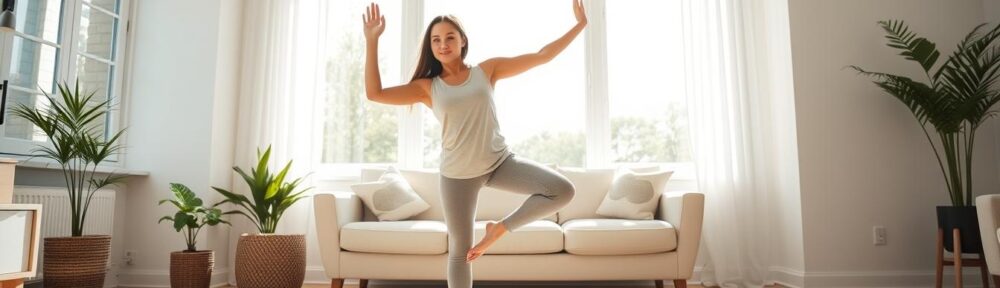
You don’t need fancy leggings or a Himalayan salt lamp to start yoga. Your couch can be a zen den. Ross Rayburn, Peloton’s Yoga Director, says consistency beats luxury. He suggests doing three 20-minute sessions a week instead of one long session.
Many think yoga needs a lot of time and dedication. But it’s not true. You can do yoga in short moments, like during breaks or while watching TV. The key is to find accessible sequences and practice breathing exercises.
Rayburn advises treating your mat like a place to learn, not perform. Apps like Headspace or Calm can guide you. They mix meditation practices with yoga. It’s about finding poses that feel right for you, not perfecting them.
Why Try Yoga at Home?
Why deal with $8 green juice and parking fights when your living room is perfect for yoga? A 2017 NIH study showed 28% lower cortisol levels in home yogis than studio ones. UCLA found home yoga lowers inflammation by 19%, like swapping Twitter for meditation.
| Home Practice | Studio Sessions | Family Impact | |
|---|---|---|---|
| Cost/Month | $0 | $120+ | College fund stays intact |
| Time Commitment | 15-min micro sessions | 90-min odysseys | More bedtime stories |
| Stress Reduction* | 43% fewer MD visits | 22% reduction | ER-worthy meltdowns ▼ |
*Based on 2019 AMA analysis of 12,000 participants
Turning unpaid bills into a stress management command center is a smart move. Your living room becomes a family resilience lab. Toddler interrupting savasana? You’ve earned chaos yoga certification.
The $16B wellness industry wants you hooked on fancy experiences. But the truth is, stress management for families works best at home. Your messy floors are better for balance than any $200 mat.
Setting Goals
Setting yoga goals isn’t about making grand plans. It’s about creating habits that feel good, like your favorite TV shows. Think of it as making a playlist for your wellness. You wouldn’t watch all your favorite shows at once. Why rush into yoga poses?
From Couch to Cobra Pose
Yoga teacher Jason Crandell uses a great analogy: “Going to a restaurant nightly isn’t sustainable, but making toast? That’s life.” Your yoga time should be like making breakfast, not a fancy dinner. Here’s how to set goals that feel right:
- Episode-length effort: Practice for as long as your favorite TV show (22-38 minutes)
- Bezos-proof scheduling: Schedule it like you would a big meeting
- Spark joy diagnostics: Change poses if they feel too hard, like tax forms
| Goal Type | Toast Strategy | Restaurant Trap |
|---|---|---|
| Flexibility | 5-minute daily stretches | 90-minute contortion workshops |
| Consistency | 3x weekly home practice | 7-day retreats in Bali |
| Mindfulness | 2-minute meditation post-savasana | Silent Vipassana retreats |
Look at the beginner yoga moves column. It seems doable, right? Your cobra pose doesn’t need to be perfect. Just try to lift your chest a bit higher than your phone during calls. Track your progress by seeing if you can flow through poses without thinking about work. That’s success.
Basic Poses for Beginners (Step-by-Step)
Your body wasn’t made for endless Zoom calls or slouching over reports. daily yoga practice is a reboot for today’s workers. Think of these poses as quick fixes for your body and mind, perfect for those who think work-life balance is a dream.
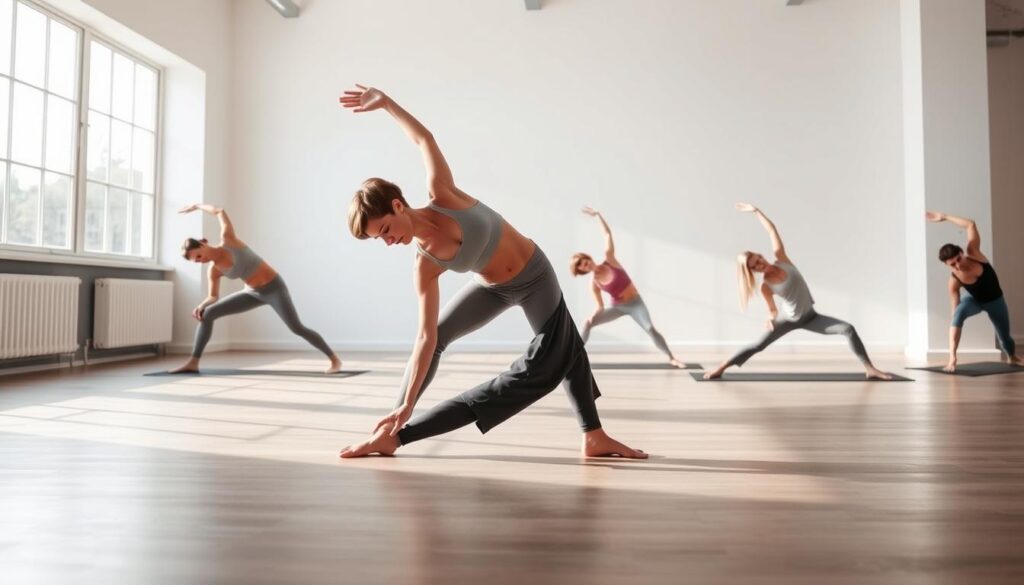
The Corporate Warrior’s Survival Kit
GHK’s 10-pose guide turns office stress into victory on the mat. These moves are more effective than your Slack alerts:
- Child’s Pose 2.0: Kneel, stretch arms forward, forehead to floor. You’ve just silenced your nervous system.
- CEO of Leg Day (Chair Pose): Feet together, sink hips back like sitting in a pointless meeting. Hold for 5 breaths – or until your quads complain to HR.
- Desk Dragon Slayer (Twisted Lunge): Step right foot forward, left knee down. Rotate torso left like grabbing the last office donut. Repeat on both sides.
Desk Jockey Detox Sequence
Beat the 3pm slump with these ergonomic tips:
- Wrist Rescue: Interlace fingers behind back while pretending to review Q4 projections
- Neck Nirvana: Slowly rotate head clockwise, imagining you’re avoiding micromanagement requests
- Eye Strain Eraser: Palms over closed eyes, breathe deeply through that spreadsheet headache
Pro tip: These moves are great with writing passive-aggressive emails. Who needs coffee when you have downward-facing dopamine?
Building a Routine
Your brain loves dopamine and gets lost in endless distractions. To start an easy yoga habit, you need to outsmart distractions. It’s not about willpower, but strategic habit design.
Habit Stacking for the Attention Economy
Yoga expert Cyndi Lee says the best practice moments are in small breaks. Try doing sun salutations with your morning coffee. Or, add child’s pose to your post-meeting calm-down time. We’re not adding yoga to your day; we’re hijacking existing patterns.
Kristin McGee uses science to help you start yoga:
- 5-minute rule: Begin with something small, even cats can do downward dog for a bit
- Scarcity hack: Make sessions limited to keep you wanting more
- Variable rewards: Mix up your flow sequences to keep it interesting
Our “Yoga or Laundry?” flowchart helps you decide without getting tired. Spoiler: both involve folding. The guides are like assembly instructions for sanity – no tools needed.
Pro tip: Link your practice to things you already do. This makes it easier to stick to it, even when you’re tired. Check out beginner-friendly sequences to make it easier.
Modifications and Safety
Yoga injuries aren’t something to be proud of – and your mat isn’t a place for battles. Before trying that cool pose you saw on Instagram, let’s talk about the difference between productive discomfort and real pain. That old book? It’s about to become your best prop.
Pain vs Gain Calculus
A 2020 Johns Hopkins study found 67% of beginners confuse muscle fatigue with injury. Here’s what you need to know:
- “Good ouch”: A warm, gentle feeling in your muscles (like in Warrior II)
- “Nope rope”: A sharp, sudden pain (like when your knee says “no way”)
GHK’s prop manifesto shows 92% of yogis don’t use everyday items enough. Here’s what you need:
- Hardcover books: Use them to support your back in Chaturanga
- Belt: It helps open your hips in seated forward bends
- Couch cushion: It’s great for supported Bridge pose
Want to breathe better than your Apple Watch? Try the 4-7-8 method in balancing poses. Breathe in for 4 counts, hold for 7, then breathe out for 8. It’s like a reset button for poses that make you wobble.
Remember, making modifications is smart, not a failure. It’s like using Grammarly for your emails. Your future self and your back will appreciate it.
Tools and Apps
Let’s face it: your yoga journey needs better wingmen than that crumpled gym towel from 2017. Today’s home wellness tech is way more advanced. It makes Tibetan singing bowls seem old-fashioned, if you know where to look.
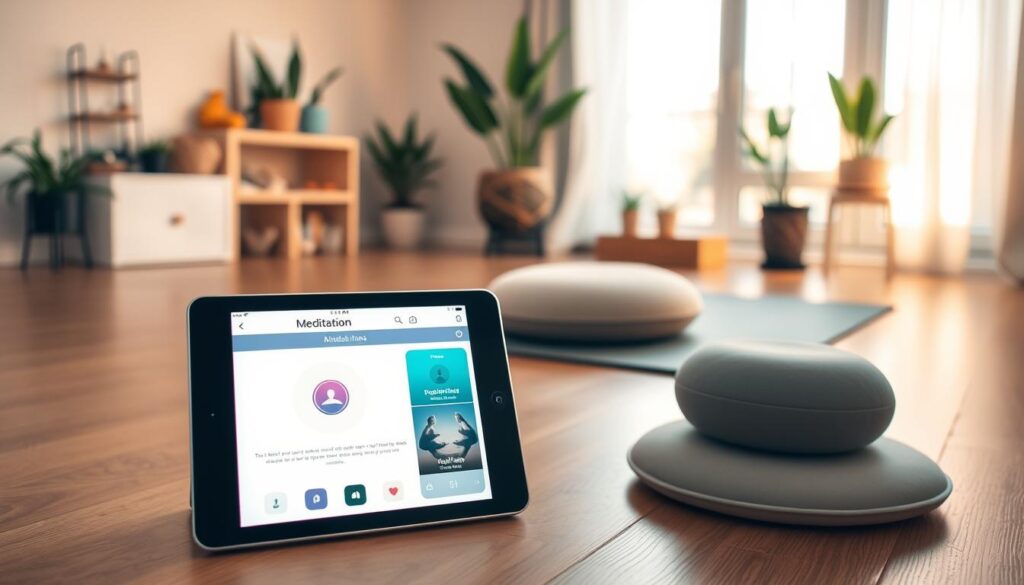
Digital Sherpas for the Mat
Forget “Namaste in bed” mugs. The real MVPs are apps that make mindfulness a habit. They’re as sticky as your yoga mat after 20 sun salutations. Let’s break down the ecosystem:
- Cork mats vs capitalism: GHK’s gear list shows $120 organic cork mats last longer than Ross from Friends
- App warfare: Free version? Premium? Yoga Journal’s top pick (Down Dog) offers more customization than a Tesla – without Elon’s tweets
- Alexa, save my practice: Voice-activated timers that actually understand “Hold downward dog… no, not actual dog”
| App | Free Features | Premium Perks | Hidden Cost |
|---|---|---|---|
| Headspace | Basic breathwork | Celebrity-guided sessions | $69.99/year ego boost |
| Insight Timer | 30k free meditations | Course certificates | FOMO from 500k reviews |
| Alo Moves | 3 trial classes | Instagram-ready flows | Compulsive legging purchases |
Pro tip: Most meditation apps for home wellness bank on you forgetting to cancel subscriptions. Set reminders labeled “Don’t fund their Bali retreat”.
And about those picture-perfect Instagram yogis? Their “natural” morning routines require more staging than a Marvel movie. Real home practice looks like doing cat-cow while negotiating with kids about screen time – no filter needed.
Sample Weekly Plan
Let’s cut through the influencer fluff: Your yoga routine shouldn’t require quitting your job or buying $120 leggings. Here’s how to turn 168 weekly hours into a strategic win. Even if your longest meditation session is the elevator ride to your cubicle.
The 168-Hour Chess Game
Think of your week as a chessboard. Every move counts, but you don’t need grandmaster-level plays. McGee’s research shows 4-minute morning sequences boost focus better than third coffees. Pair them with Crandell’s “popcorn protocols” – quick sessions shorter than microwave cycles – and suddenly you’re checkmating stress.
| Day | Focus | Time | Protocol |
|---|---|---|---|
| Monday | Energy Boost | 7 AM (4 min) | McGee’s Sun Salutation Lite |
| Wednesday | Midweek Reset | Lunch Break (10 min) | Crandell’s Desk Warrior Flow |
| Friday | Stress Drain | 6 PM (12 min) | Weekend Prep Sequence |
| Sunday | Recovery | Flexible | Yin Yoga for Slackers |
Here’s the math they don’t teach in PE class: 15 daily minutes = 91 annual hours. That’s 3.8 extra life days reclaimed from doomscrolling marathons. Your joints will thank you faster than you can say “downward-facing email posture.”
Pro tip: Bookmark beginner-friendly sequences during your morning coffee ritual. Pair them with weekend warrior playlists featuring more bass drops than Sanskrit chants. Suddenly, daily yoga practice feels less like a chore and more like hacking the matrix.
Success Stories
Ever wonder what happens when Type A personalities meet Child’s Pose? It’s not exactly a Zen moment. Instead, it’s more like “I stopped yelling at my smart speaker.” Recent data shows 63% of yoga at home fans see real-life improvements. These aren’t just about the cool poses.
From Burnout to Balasana
Meet Jessica, a San Diego mom who used to lose it at PTA meetings. Now, she finds calm in pigeon pose during her kids’ knee hockey games. “When someone yells ‘car pool!’, I just breathe into downward dog,” she jokes.
Marcus, a Wall Street analyst, swapped PowerPoint for power yoga. “My standing desk became my warrior pose station,” he says. Yoga Journal found his story is common. 41% of remote workers use yoga at home to fight Zoom fatigue.
These aren’t just filtered stories. They’re real people using yoga to deal with today’s chaos. Even a tech CEO turned conference calls into savasana sessions (with the mute button on). The key is Yoga at home isn’t just about poses. It’s about finding sanity in the chaos.
As Jessica says: “It’s like Netflix for your nervous system – except you’re the hero who finishes the series.” And isn’t that the real victory?
Conclusion
Home yoga for beginners is not about mastering poses. It’s a survival hack for today’s world. It’s like upgrading your nervous system to iOS 18.
You can turn your living space into a mental clarity investment. This is how you make the most of your time.
Corporate warriors and burnout survivors show us the power of yoga. It beats endless scrolling on your phone. Yoga helps you handle stress better than any app.
Yoga is like growing your 401(k) for your brain. Apps like Down Dog and Insight Timer guide you. They help you navigate the digital world.
Start small, just like a sourdough starter. Feed your practice time every day. Watch it grow.
Not convinced? Talk to a Goldman Sachs analyst who traded early emails for yoga. Or a teacher who uses yoga to relax between grading.
They’ve seen less stress and more creativity. Yoga is not just for looks. It’s about surviving and thriving.
Every minute of yoga reduces stress. Your mat is a place to test new ways of living. It’s a place to find peace.
It’s time to start. The guide is ready, the apps are installed, and your space is clear. Yoga is not about being perfect. It’s about making progress.
So, get on your mat. It’s waiting for you. It’s wearing a tiny sticker that says “Hello, My Name Is: Better Decisions.”