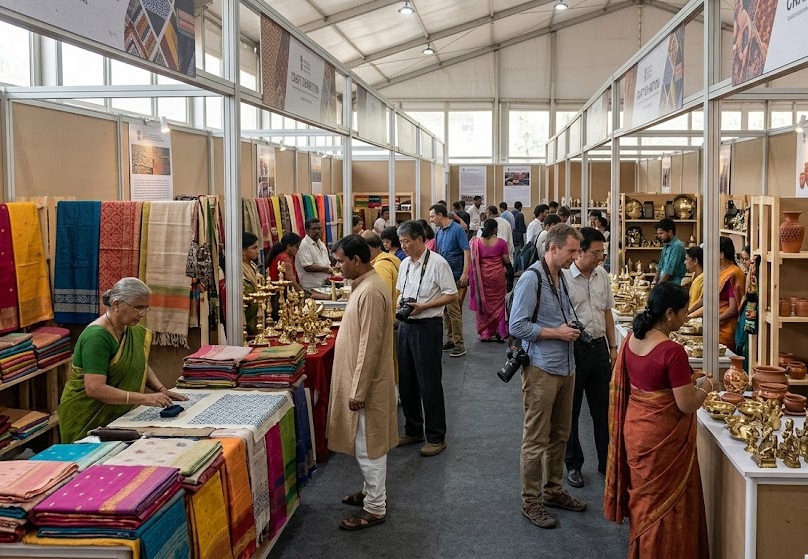
India’s craft sector is undergoing a structural shift. What was once fragmented across regions and artisan clusters is now being actively organized and promoted through government-backed initiatives like One District One Product (ODOP) and the expanding Geographical Indication (GI) framework.
For buyers, this is more than policy—it directly impacts what products are available, how authentic they are, and how their value is determined. As these initiatives scale in 2024–2026, understanding their implications has become essential for anyone purchasing Indian handicrafts.
What The ODOP Scheme Is And Why It Matters
The One District One Product (ODOP) initiative, launched to promote region-specific products, focuses on identifying a unique craft or product from each district and building its visibility, production capacity, and export potential.
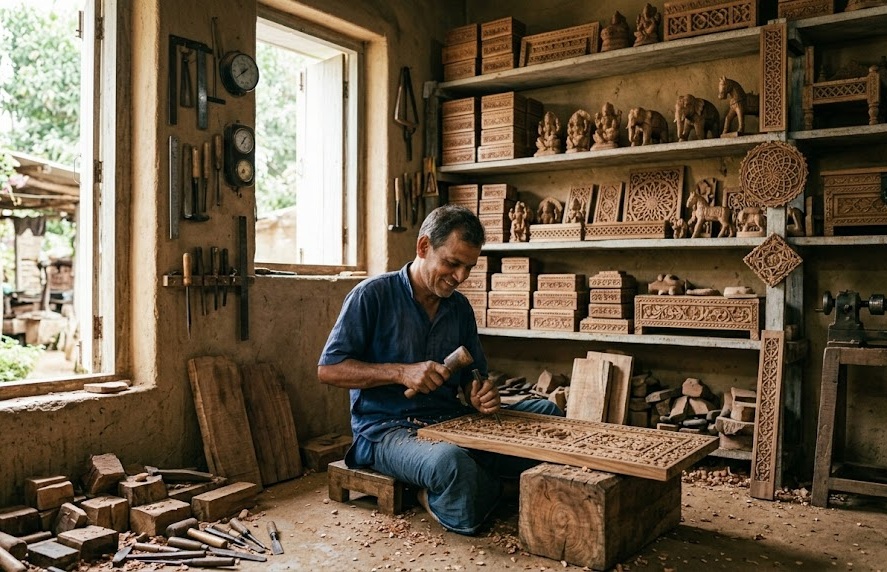
As of 2024, ODOP has expanded across multiple states, including Uttar Pradesh, which pioneered the model and reported significant export growth and job creation exceeding 3 lakh employment opportunities since its rollout.
For buyers, ODOP matters because it:
- Links products directly to a specific region
- Improves consistency in production quality
- Enhances traceability of craft origin
This makes ODOP-tagged products easier to evaluate in terms of authenticity and regional identity.
Understanding GI Tags And Their Growing Importance
While ODOP focuses on promotion, GI tagging focuses on protection and authenticity. A GI tag certifies that a product originates from a specific location and follows traditional production methods.
India has seen a steady increase in GI registrations, with over 500 products officially recognized by 2024, many of them in handicrafts and textiles.
For buyers, GI tags provide:
- Assurance of origin
- Protection against imitation products
- Stronger resale and collector value
These tags are becoming a critical factor in differentiating genuine crafts from mass-produced alternatives.
How ODOP And GI Work Together In Practice
Although ODOP and GI are separate initiatives, they often complement each other in real-world markets.
| Feature | ODOP Scheme | GI Tagging |
|---|---|---|
| Focus | Promotion and market access | Authenticity and protection |
| Scope | District-level | Region-specific |
| Buyer Benefit | Product visibility | Verified origin |
| Impact On Pricing | Moderate | High (premium positioning) |
When a product is both ODOP-promoted and GI-tagged, it typically benefits from greater market visibility and higher perceived value, making it especially attractive to buyers.
Which Products Are Benefiting The Most
Certain craft categories have seen significant gains from these initiatives due to their strong regional identity and export potential.
| Product | Region | Initiative Impact | Buyer Appeal |
|---|---|---|---|
| Pochampally Ikat | Telangana | GI + Promotion | High export demand |
| Varanasi Meenakari | Uttar Pradesh | ODOP + GI awareness | Luxury gifting |
| Moradabad Brassware | Uttar Pradesh | ODOP | Durable decor |
| Kutch Ajrakh | Gujarat | GI recognition | Sustainable textiles |
| Channapatna Toys | Karnataka | ODOP | Eco-friendly products |
These products are increasingly featured in global markets because they combine heritage authenticity with structured promotion.
What This Means For Buyers In Real Terms
For buyers, these initiatives simplify decision-making in a market that was previously difficult to navigate.

Instead of relying solely on visual inspection or seller claims, buyers can now use:
- Regional identification through ODOP
- Certification through GI tagging
- Government-backed credibility
This reduces the risk of purchasing misrepresented or imitation products, especially in online marketplaces.
For example, when exploring textiles, understanding how to identify authentic Kalamkari fabric becomes easier when combined with GI-backed regional information.
Pricing Trends Driven By ODOP And GI Recognition
As products gain recognition through ODOP and GI tagging, pricing tends to follow a predictable pattern:
| Stage | Market Position | Price Behavior |
|---|---|---|
| Early Recognition | Limited awareness | Lower pricing |
| Promotion Phase | Increased visibility | Moderate increase |
| Global Demand | Export-level demand | Premium pricing |
Buyers who enter early in this cycle often benefit from better value before prices rise due to global exposure.
Challenges Buyers Should Still Watch For
Despite these initiatives, the market is not free from risks. Common issues include:
- Products falsely labeled as GI-certified
- ODOP branding used without proper sourcing
- Machine-made goods mimicking traditional designs
This makes it important for buyers to combine policy awareness with practical verification skills.
Where To Verify Authentic Products
For accurate verification, buyers can refer to official resources like the Geographical Indications Registry of India, which provides detailed information on registered products and their specifications.

Using such platforms allows buyers to confirm:
- Whether a product is officially GI-tagged
- The exact region of origin
- Production guidelines associated with the craft
Why These Initiatives Are Reshaping The Craft Market
The expansion of ODOP and GI schemes reflects a broader transformation in India’s craft economy. Instead of fragmented production, the sector is moving toward:
- Structured regional branding
- Increased export readiness
- Stronger global positioning
For buyers, this means access to products that are not only authentic but also better documented, easier to verify, and more aligned with global standards.
What Buyers Should Do Moving Forward
As these initiatives continue to grow, buyers should adjust their approach accordingly.
Prioritize:
- Region-specific crafts with clear identity
- GI-tagged products for authenticity assurance
- ODOP-promoted items for availability and consistency
This approach ensures that purchases are not just visually appealing but also culturally accurate and investment-worthy.