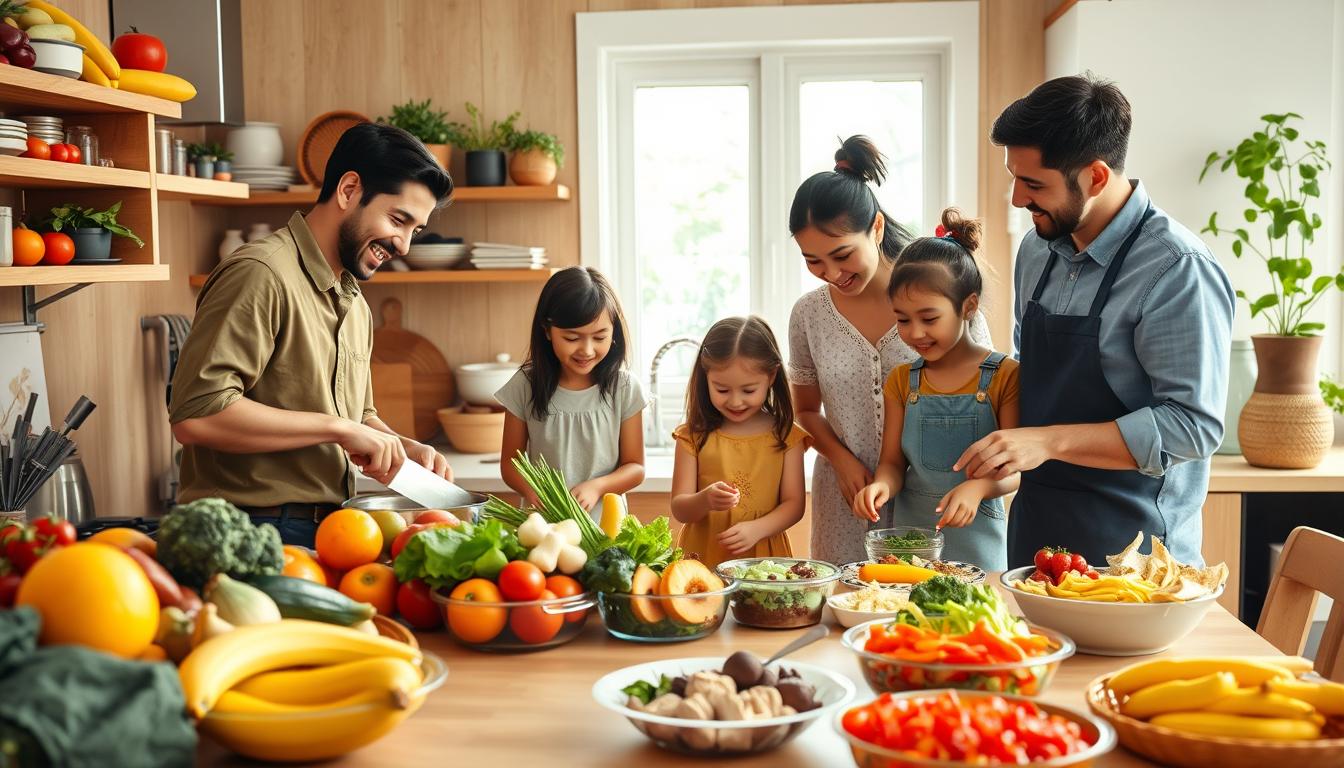
Managing family nutrition is like trying to solve a Rubik’s Cube blindfolded. It’s tough with picky eaters, busy schedules, and tempting convenience foods. It seems like a big challenge.
Imagine making mealtimes a cultural shift in your kitchen, not a battle. I’ve seen many families change their ways. Wellness at home is about making progress, not being perfect.
This guide is your playbook for peaceful dinner times. It’s filled with humor, knowing how to sneak veggies into meals.
This isn’t about forcing kale on everyone. It’s about finding real, doable family nutrition solutions for busy American families. No time for fancy recipes when there’s soccer practice soon.
Starting your wellness at home journey means making small, steady changes. Are you ready to make your kitchen a peaceful place?
Introduction: Why Habits Matter
Ever wonder why some families seem to know their way around the grocery store? It’s not just about what they buy—it’s their healthy eating routines. These habits are like the operating system of your family’s health, working quietly while you’re busy with other things.
Research shows that kids who eat with their families often choose healthier foods. They’re 35% more likely to pick fruits and veggies over junk snacks. Your dinner table is like a secret school where kids learn about good food choices.
Most parental wellness tips talk about what to eat, but how and when is key. It’s the difference between forcing broccoli and making veggies popular. Consistent meal times help kids learn to make smart food choices.
Your family’s eating habits shape your health. They’re not just about tonight’s meal but also about the values you teach at home. Kids in families that eat together often understand nutrition well, even as adults.
Studies show that regular family meals help kids stay healthy and do better in school. It’s like getting a deal on health and happiness. These routines make healthy choices easy, not hard.
So, before you worry about organic vs. conventional, remember: your best tool is your schedule. Building strong healthy eating routines is a powerful parental wellness tips trick you might have missed.
The Foundations of Family Wellness
Your kitchen is more than a place for meals. It’s the heart of your family’s health journey. Every food choice you make is a step towards better health at home.
Understanding how to stock your kitchen is key. It’s not about forcing healthy choices. It’s about making them easy and natural.
Choosing whole grains is a big deal. It’s saying no to processed foods and yes to real nutrition. Opting for quinoa over white bread is a vote for better health.
Lean proteins are more than just for muscles. They’re a stand against unhealthy foods. Each grilled chicken breast is a small victory for your health.
True family nutrition starts before you even buy food. It’s about making smart choices at the grocery store. This sets the stage for healthy meals at home.
Your wellness plan should include:
- Fruit and vegetable integration into daily routines – make them visible and accessible
- Strategic protein selection – lean options that fuel without compromising health goals
- Whole grain commitment – swapping refined carbs for nutrient-dense alternatives
- Unhealthy option limitation – creating natural barriers to poor nutritional choices
This isn’t about being perfect. It’s about making healthy choices the easy choice 80% of the time. The other 20% is okay, as life can be unpredictable.
When healthy eating feels natural, that’s when you know you’re on the right track. This is how you create lasting, family-friendly nutrition habits.
Age-Appropriate Nutrition Needs
Think of your family’s nutritional journey like a political campaign. You need different strategies for different demographics. Toddlers act like tiny dictators, while teens seek their independence. The secret to kids healthy habits is understanding their stage of development.
Toddlers are not being difficult; they’re exploring tastes like scientists. Their small hands want to touch different textures and colors. The trick is to make mealtime a discovery, not a fight.
- Offer two acceptable choices (“carrots or cucumbers?”) to give illusion of control
- Make foods visually appealing – arrange veggies into smiley faces or animal shapes
- Serve new foods alongside familiar favorites to reduce pressure
- Let them get messy – sensory exploration builds food acceptance
Then comes the teenage revolution. Your nutritional advice might not be popular. Teens want to be independent but secretly need guidance. They’re like new nations negotiating trade agreements.
The approach to adolescent nutrition needs diplomacy:
- Involve them in grocery shopping and meal decisions
- Teach cooking skills as life preparation, not parental obedience
- Keep healthy snacks visible and accessible – hunger makes bad decisions
- Discuss how food affects sports performance, skin clarity, and energy levels
Creating healthy eating routines means changing your approach as children grow. What works for a three-year-old would insult a thirteen-year-old’s intelligence. The constant? Involve kids in the process, not dictate from above.
| Age Group | Nutrition Challenges | Smart Strategies | Parental Mindset |
|---|---|---|---|
| Toddlers (1-3) | Texture aversion, independence struggles | Food play, choice offerings, repeated exposure | Patient explorer |
| Young Kids (4-8) | Peer influence, developing preferences | Fun food names, cooking involvement, role modeling | Creative collaborator |
| Tweens (9-12) | Body awareness, social eating | Nutrition education, kitchen skills, snack autonomy | Respectful coach |
| Teens (13-18) | Independence, schedule conflicts | Meal preparation, health benefits focus, flexibility | Trusted advisor |
The evolution of kids healthy habits mirrors their growth. Toddlers need structure with exploration, teens need guidance with freedom. Your family’s healthy eating routines should adapt quickly, like streaming service algorithms.
Remember, the goal isn’t perfection but progress. One meal won’t make or break their health. Consistent approaches build lifelong relationships with food that balance nutrition with joy.
Creating a Positive Mealtime Environment
Your dining table shouldn’t feel like a UN negotiation table. The key to wellness at home is making mealtime a peaceful place. Imagine a Parisian bistro, not a military court.
Studies show that regular meal times are great for kids. They need routine like plants need sunlight. Set the same times for breakfast, lunch, and dinner. This makes them feel secure, not caught off guard by broccoli.
It’s time to end food fights. Forcing kids to eat everything they’re given only adds stress. You offer healthy choices; they decide what they want to eat.
Keep mealtime calm and free from arguments. Save the big talks for after dessert. The dinner table should be a place where everyone can relax and enjoy their food.
| Mealtime Mistake | Positive Alternative | Result |
|---|---|---|
| Forcing clean plates | Offer reasonable portions | Develops natural hunger cues |
| Screen time during meals | Conversation and connection | Better digestion and bonding |
| Food as reward/punishment | Neutral food relationship | Healthier lifelong habits |
| Rushed meals | 20+ minute dining experience | Proper satiety signals |
These parental wellness tips turn eating into a joy. The Canadian government’s food guide for parents shows that the atmosphere is just as important as the food. You’re not just feeding them; you’re building relationships.
Make a space where talking about food is more important than eating it. That’s where wellness at home truly starts.
Model Healthy Choices as a Parent
Your kids watch your every move, including what you eat. They see your snacks and meals as research. This means they learn from you, even when you’re not teaching.
Studies show kids copy what adults do with food. They pick up your eating habits and attitudes. This includes how much you eat and what you think about food.
Good parental wellness tips start with knowing yourself. Do you really eat healthy? Or do you sneak junk food?
Here are three key areas where your actions matter most:
- Portion modeling: Kids take their cues from you on how much to eat
- Food language: What you say about food affects their thoughts on it
- Mealtime engagement: Eating together sets a good example
Creating healthy eating routines is about being consistent, not perfect. Some days you’ll eat well. Others, you might just have coffee. The goal is to be real, not to be perfect.
| What You Do | What They See | Long-term Impact |
|---|---|---|
| Enjoy vegetables without complaint | Food as nourishment, not punishment | Positive association with healthy foods |
| Practice mindful eating | Meals as experience, not race | Better digestion and satisfaction cues |
| Maintain positive body comments | Food as fuel, not moral judgment | Healthier self-image and relationship with eating |
| Balance indulgences naturally | No foods are forbidden | Reduced binge-restrict cycles later |
The best nutrition lessons aren’t at the dinner table. They happen in your shopping cart, kitchen, and how you treat your body. Your choices today shape their habits tomorrow.
Remember, you’re not just feeding kids. You’re shaping future adults. Choose wisely.
Healthy Portions and Snacking
The serving size on that chip bag is not just a suggestion. It’s a wake-up call from the food industry. Most people think a “portion” is way too big. Snacking isn’t bad if done mindfully.
Your snack drawer shows what your family values. It might look like a sad story. But we can change that together.
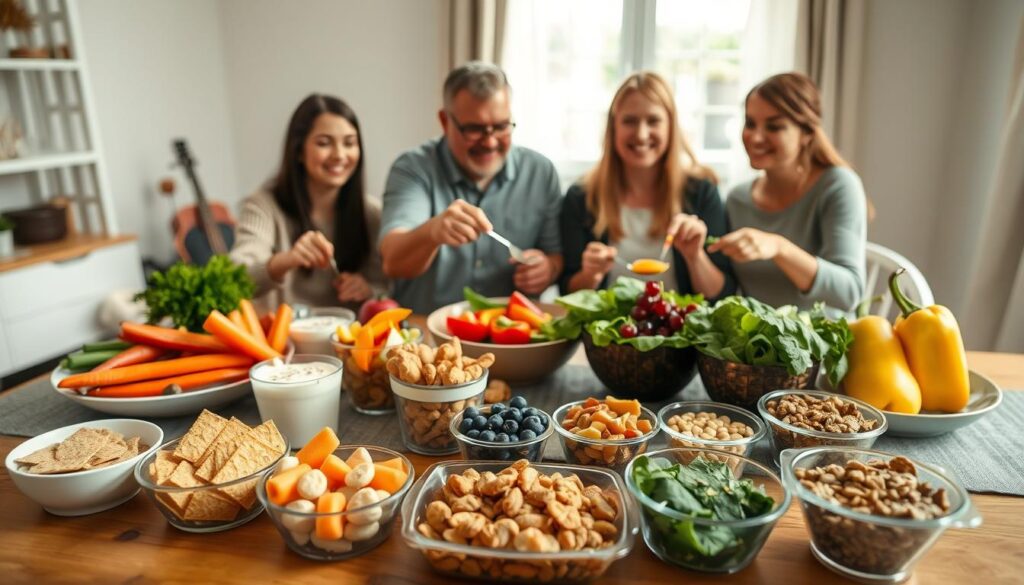
Understanding the Nutrition Facts label is key. It shows the serving size and % Daily Value. If the sodium is too high, maybe eat less.
There’s a big difference between serving size and portion. Serving size is what the maker says. Portion is what you really eat. Most people ignore the serving size.
Smart snacking can help kids develop healthy habits. It’s not about cutting out food. It’s about choosing wisely. Keep healthy foods easy to reach in the fridge.
Hunger doesn’t care about the clock. Those 3 PM growls aren’t against your dinner. The real question is how to snack well.
| Snack Type | Portion Reality | Smart Alternative | Nutrition Impact |
|---|---|---|---|
| Potato Chips | Whole bag (3+ servings) | Single serving bag | Reduces fat by 67% |
| Trail Mix | Two handfuls | ¼ cup measure | Cuts calories by 40% |
| Yogurt | Large container | Single serve cup | Controls sugar intake |
| Nuts | Unlimited handfuls | Small bowl portion | Manages calorie density |
The table shows the truth about snacking. It’s not about cutting out snacks. It’s about eating the right amount. That bag of chips has three servings, not one.
Having healthy options ready is key. Pre-cut veggies are better than hidden broccoli. Apple slices with peanut butter are healthier than cookies.
Teaching kids about healthy snacking is important. It helps them understand food better. It’s about seeing food as fuel, not the enemy.
The goal is progress, not perfection. Making one smart snack choice at a time can change your family’s story. Your snack drawer might not win a Pulitzer, but it can tell a better story.
Getting Kids Involved in Planning and Cooking
Want to know the secret to better nutrition? It’s not in your pantry, but in how you parent. Turning kids into active cooks changes everything. It’s like going from a food court customer to a chef apprentice.
When kids help plan meals, they gain “food agency.” This means they control their eating, not just follow it. This change makes healthy eating routines and wellness at home real.
It’s like moving from a dictatorship to a democracy in the kitchen. Kids who help choose meals are more excited to try new foods. It’s like choosing a book from the library instead of being told what to read.
Here’s how to make your kitchen a team effort:
- Grocery co-pilots: Take kids shopping and make label reading fun
- Menu democracy: Let everyone pick a meal once a week
- Age-appropriate tasks: Toddlers can wash veggies, teens can chop
- Taste-test panels: Vote on new recipes together
This change is huge. Kids start to see broccoli as their creation, not punishment. This makes healthy eating a natural part of life.
Here are some benefits of working together in the kitchen:
| Age Group | Kitchen Tasks | Nutrition Education | Long-term Impact |
|---|---|---|---|
| 3-5 years | Washing produce, mixing ingredients | Color identification, food groups | Reduces picky eating by 40% |
| 6-8 years | Measuring ingredients, setting table | Portion sizes, reading labels | Increases vegetable consumption 27% |
| 9-12 years | Simple chopping, following recipes | Nutrition facts, cooking methods | Builds confidence in food preparation |
| Teens | Meal planning, grocery budgeting | Macronutrients, meal balancing | Creates independent healthy eaters |
This isn’t just about helping with dinner. It’s about teaching kids to navigate nutrition. The kitchen becomes a place where math, science, and health education meet in a tasty way.
When kids start suggesting meals or helping with prep, you’ve done more than just get help. You’ve raised a future adult who sees cooking as a skill, not a chore. This is how we create lasting wellness at home for generations.
The goal isn’t perfection. It’s about everyone participating. A messy cake made together is better than a perfect one made alone. The mess is proof of learning. The time spent is worth it for nutrition education that sticks.
When kids help plan meals, they take ownership of their nutrition. This teamwork turns healthy eating routines into family traditions. It creates real wellness at home that everyone contributes to.
Weekly Meal Planning as a Family
Weekly meal planning turns dinner into a plan everyone agrees on. It’s like a kitchen lawmaking process without the fights.
Families with meal plans eat 30% more veggies and 20% less junk food. That’s a big win for family nutrition.
- The Sunday Summit: Get everyone together with ideas and calendars. It’s a fair way to decide what to eat.
- Theme Nights: Like Taco Tuesdays, which are both fun and practical. It makes choosing meals easier.
- Recipe Binder: Keep a book of approved recipes. It’s like a guide for your meals.
- Grocery List Protocol: Pick one person to make the list. No more confusion over who bought what.
Don’t overlook the frozen and canned foods. They’re often healthier than fresh produce that’s been traveling for weeks. Canned beans are like the reliable backup singers of the kitchen.
Meatless Monday is a smart move. It saves money and opens up new food options. Even meat lovers can handle one day without meat.
When kids help plan meals, they’re more likely to eat them. It’s a win-win for everyone.
Meal planning gives you more free time. No more daily dinner stress. It’s a path to peace in the home.
Remember, meal planning is a guide, not a rule. It lets you be spontaneous while staying organized. Sometimes, the best meals come from unexpected leftovers.
This approach to family nutrition makes cooking a choice, not a chore. When everyone helps plan, meals are more enjoyable.
The best parental wellness tips know that meal planning is about connection, not control. It’s about sharing meals that nourish everyone.
Overcoming Obstacles Together
The journey to kids healthy habits is not easy. It’s like an obstacle course set by a sugar-loving villain. But, every challenge is a chance to grow stronger together.
First, let’s tackle the budget dragon. Organic food can be pricey, but smart shopping can help. Frozen veggies are just as good and cheaper. Buying what’s in season is simple and smart.
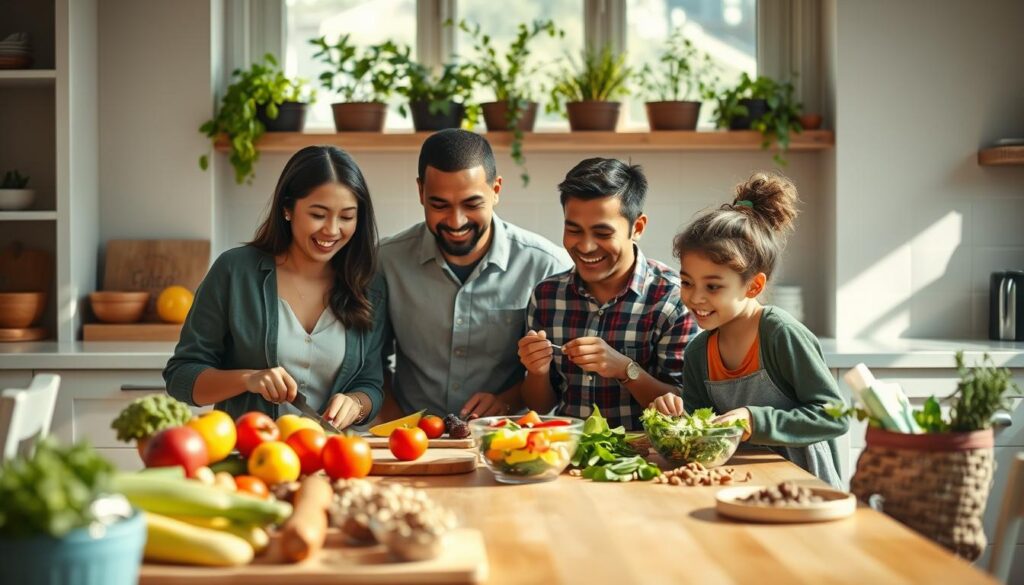
Then, there’s the issue of picky eaters. Some kids might not like broccoli, but that’s okay. Instead of forcing them, try adding spinach to smoothies or zucchini to pasta sauce. Celebrate small wins like they’re achievements.
Social events can be tough on healthy eating routines. Birthday parties often mean cake. But, eating healthy snacks beforehand and controlling portions can help. It’s the daily habits, not one-time treats, that matter.
School cafeterias and community events can be tough too. It’s time to speak up and act. Ask for better food options, pack interesting lunches, and teach kids to make healthy choices in a world that doesn’t always support them.
| Obstacle | Traditional Approach | Smart Strategy | Long-term Benefit |
|---|---|---|---|
| Budget Constraints | Avoid expensive healthy foods | Buy frozen/seasonal, batch cook | Develops resourcefulness |
| Picky Eating | Force feeding battles | Stealth nutrition, repeated exposure | Builds adventurous eating |
| Social Pressure | Complete avoidance | Moderation strategies | Teaches balance |
| School Environments | Complaint without action | Advocacy and packed alternatives | Empowers change-making |
Turning obstacles into family projects can be magical. Use budget challenges to play a grocery store game. Make picky eating a weekly adventure. These healthy eating routines become traditions that last.
Don’t worry about being perfect. Missing a day of veggies or eating too much cake is okay. The goal is to learn and grow, not to be flawless.
Your journey to kids healthy habits will have ups and downs. It’s not about avoiding problems, but overcoming them together. Families that succeed are those who face challenges head-on and come out stronger.
Growing Wellness for a Lifetime
Think of family nutrition like planting an orchard, not just arranging flowers. The flowers may look nice today, but fruit trees feed families for years. This is what wellness at home is all about – shaping your kids’ future food habits.
Today’s broccoli battle is tomorrow’s healthy choice. The habits you teach now will be their go-to choices later. I’ve seen kids in college choose veggies over pizza, showing that these lessons last.
The best parental wellness tips are for the long haul. You’re teaching more than what to eat; you’re teaching how to think about it. It’s like the difference between memorizing facts and understanding concepts – one helps you pass a test, the other helps you through life.
Your kitchen today shapes their food philosophy tomorrow. Family cooking sessions are like installing software that lasts for decades. The CDC has great tips on building healthy habits that last a lifetime.
True nutritional wisdom isn’t about perfect meals today. It’s about giving kids the tools to make smart food choices in the future. That’s the real reward – seeing your kids make great choices in kitchens you’ll never see.
Conclusion
Family nutrition is a long-term effort, not a quick fix. It’s about making small, smart choices that add up over time. These choices help build lasting healthy habits in kids.
Your kitchen is a place for experimentation and learning. Your grocery list outlines your family’s values. And your dinner table is where you discuss and decide on nutrition.
The aim is not to be perfect but to make progress. Kids learn from what you buy, cook, and enjoy together. This creates a unique food culture that combines health with joy.
Be flexible and consistent in your approach. Most importantly, keep it interesting. The journey to healthy eating continues even after dinner. Now, go create something delicious.