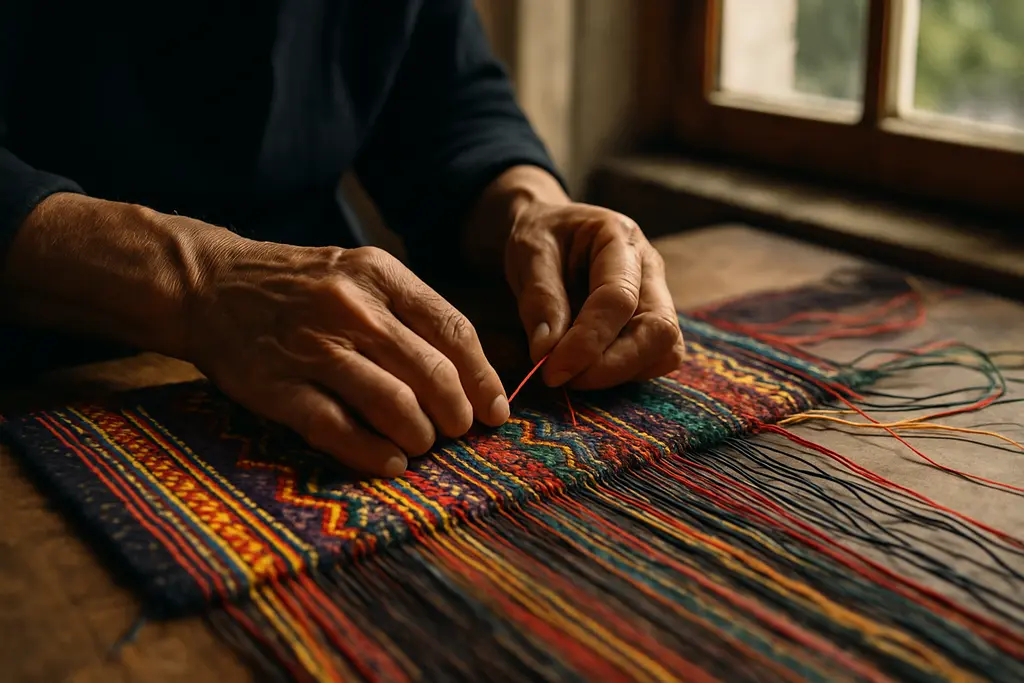
Craft Cultural Context gives handmade buyers a more careful way to read objects shown through Handwork 2026. The year-long initiative marks the 250th anniversary of the United States and frames handcrafted work across historical and contemporary practice, according to the official Handwork 2026 overview. For buyers, that framing matters because a vessel, textile, basket, jewelry piece, or carved object is not only a product. It can carry material knowledge, regional practice, family training, studio experimentation, Indigenous continuity, migration memory, or community repair after loss.
The caution is simple: cultural meaning should not be reduced to sales language. A buyer may appreciate beauty first, but trust grows when the seller can explain origin, materials, technique, and maker identity without exaggeration. Handwork 2026 is useful for that conversation because it treats craft as evidence of making, use, and social life, not only as collectible design.
Why Craft Cultural Context Changes Buying
The core Smithsonian exhibition, Handwork: Contemporary Craft at the Renwick Gallery, is scheduled to open on November 13, 2026, at the Renwick Gallery of the Smithsonian American Art Museum. The museum says the exhibition will feature 53 works from its collection, including new acquisitions made possible by Handwork 2026, with artists named by the museum including Roberto Benavidez, Angela Ellsworth, Chief Bill Harris of the Catawba Nation, Aya Oki, Ato Ribeiro, Diego Romero, and Jan Yager, as described by the Smithsonian exhibition page.
Craft Cultural Context Signals To Check
Craft Cultural Context is not a decorative label added after the object is finished. It is a chain of evidence. A buyer should ask what material was used, who made the object, which process shaped it, whether the work comes from a living cultural practice or a studio response, and how the seller learned the story being told. If the seller cannot answer every question, that does not prove bad faith. It does mean the buyer should separate confirmed information from assumption.
This distinction protects makers as well as buyers. A seller who names a tribal affiliation, regional source, family tradition, or community practice should do so only when that information is publicly provided by the artist, institution, or maker. Cultural identity is not a styling category. It belongs to people and communities, and it should be handled with care.
Why Beauty Alone Is Not Enough
A well-made craft object can be visually persuasive, but beauty does not answer questions of provenance. A polished surface does not reveal labor conditions. A traditional motif does not prove cultural authority. A handmade finish does not show whether the seller understands the maker’s process. The buyer’s task is not to become suspicious of every object. The better task is to ask for the kind of information a serious seller should be ready to provide.
For online buyers, Craft Cultural Context can be translated into product-page evidence: a named maker where appropriate, a clear material note, a process description, care guidance, and a plain statement about variation. Related Shimply coverage on handmade authenticity makes a similar point: buyers read trust through process, sourcing, and visible human decisions, not only through attractive images.
What Handwork 2026 Documents
Handwork 2026 is not presented only as a single museum show. Its official materials describe a national initiative with exhibitions, educational resources, and a published volume. The book Handwork: Handcrafted Objects That Made America was published on July 29, 2026, and the research notes for this piece identify its emphasis on essays by more than 30 specialists, underrepresented narratives, and national craft traditions across more than 250 years.
Materials, Process, Region, And Identity
For buyers, the most practical lesson is that authenticity is rarely proven by one signal. A signed object helps, but it is not the whole story. A maker biography helps, but it should not replace material facts. A regional label helps, but it should be specific enough to avoid vague heritage claims. A museum exhibition can model this by naming artists, placing works within a collection, and linking objects to acquisition history where the institution provides that information.
The Renwick exhibition’s inclusion of works associated with Handwork 2026 acquisitions gives buyers a useful reference point. It suggests that contemporary craft can be judged through both artistic merit and documented context. That does not mean every object needs a museum file. It means a trustworthy seller should be able to explain what is known, what is not known, and why the work is priced as it is.
Education As A Trust Tool
The initiative’s K–12 educational materials, as described in the research notes, connect craft traditions from Indigenous origins through modern studio practices. For the buying public, that educational frame matters because it pushes against shallow categories such as “rustic,” “ethnic,” or “tribal-inspired” when they are used without proof. Better buying language asks: Who made it? What community, school, studio, or region is named? What material choices shape the work? What care does the object require?
A practical buyer should also notice whether the seller distinguishes direct knowledge from general description. “Made by the artist in a home studio using hand-shaped clay” is different from “inspired by ancient pottery.” Both may be legitimate statements, but they carry different levels of provenance. The first describes a present maker and process. The second needs caution, especially if it implies a cultural line that has not been documented.
Buyer Questions Raised By The Exhibition
Handwork 2026 gives buyers a chance to sharpen their questions before a purchase, even if they never buy from a museum shop or exhibition-related marketplace. The point is not to turn every purchase into an academic audit. The point is to respect the maker enough to ask for evidence and respect the culture enough not to treat context as a costume.
- Ask what is documented: Look for material, process, maker name, date, region, and care instructions.
- Ask who is speaking: Prefer artist statements, museum records, cooperative notes, or direct seller knowledge over vague heritage claims.
- Ask what is uncertain: Honest uncertainty is more trustworthy than invented certainty.
- Ask how value is explained: Price should connect to labor, material, skill, scarcity, exhibition context, or documented provenance.
- Ask how culture is named: Community or Indigenous identity should be attributed with care and only when supported by reliable information.
This type of questioning is especially useful for handmade gifts. A gift carries a story from seller to buyer to recipient. If that story is careless, the object can become detached from the people and practices that shaped it. If the story is precise, the buyer becomes part of a more respectful chain of custody.
Community Trust Beyond The Museum
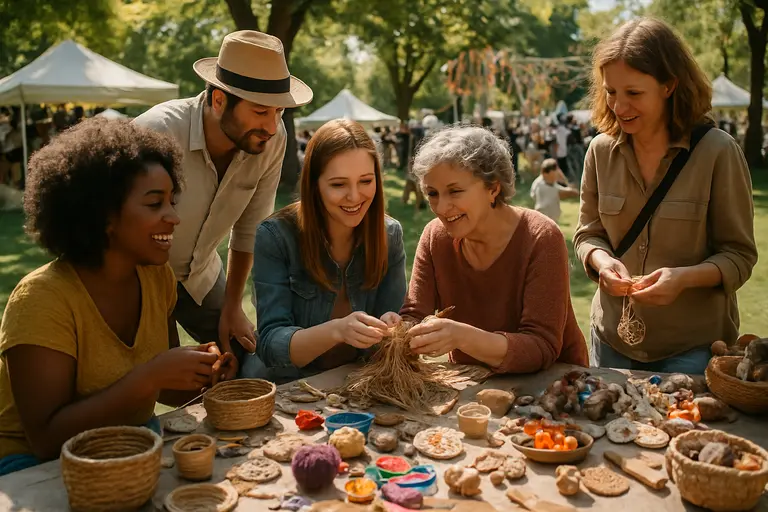
Not every Handwork 2026 program is a retail setting, and not every exhibition is meant to sell work. Still, the initiative’s broad public frame offers lessons for creator-commerce. Community trust grows when people can see how an object is made, who benefits from the sale, how the seller represents origin, and whether the maker’s own words are available. For cross-network cultural reading, an additional resource like Kay Granger is part of the same publishing network, providing valuable context while the craft claims here remain grounded in museum and initiative sources.
Direct Access Does Not Remove Responsibility
Meeting a living maker can help a buyer understand quality, process, and care. Yet direct access should not become extractive. Buyers should not pressure artists to explain sacred, private, or community-restricted knowledge. Some details may be appropriate for public sale; others may not be. A respectful seller can say what is available to share and what should remain outside the sales pitch.
For craft markets and online shops, this means authenticity should be built into the buying experience without demanding cultural overexposure. A short maker-approved statement, clear photos of material variation, and honest care instructions may do more for trust than a long romantic story. Precision is more reliable than sentiment.
Handwork 2026 And Craft Cultural Context
Handwork 2026 matters for handmade buyers because it places craft within documented cultural, material, and artistic frames. The Renwick exhibition opening on November 13, 2026, will give one institutional example through 53 collection works. The wider initiative, including the book published on July 29, 2026, points to a broader principle: buying handmade work responsibly means asking what can be known and refusing to invent what cannot.
Craft Cultural Context should make buying slower in the best sense. It asks the buyer to pause before accepting generic authenticity claims. It asks sellers to respect artists by naming process and provenance with care. It asks collectors and gift buyers to treat handmade objects as cultural expressions made by people, not as anonymous style fragments. That slower reading does not weaken the pleasure of craft. It deepens trust in the object, the maker, and the story that travels with the work.