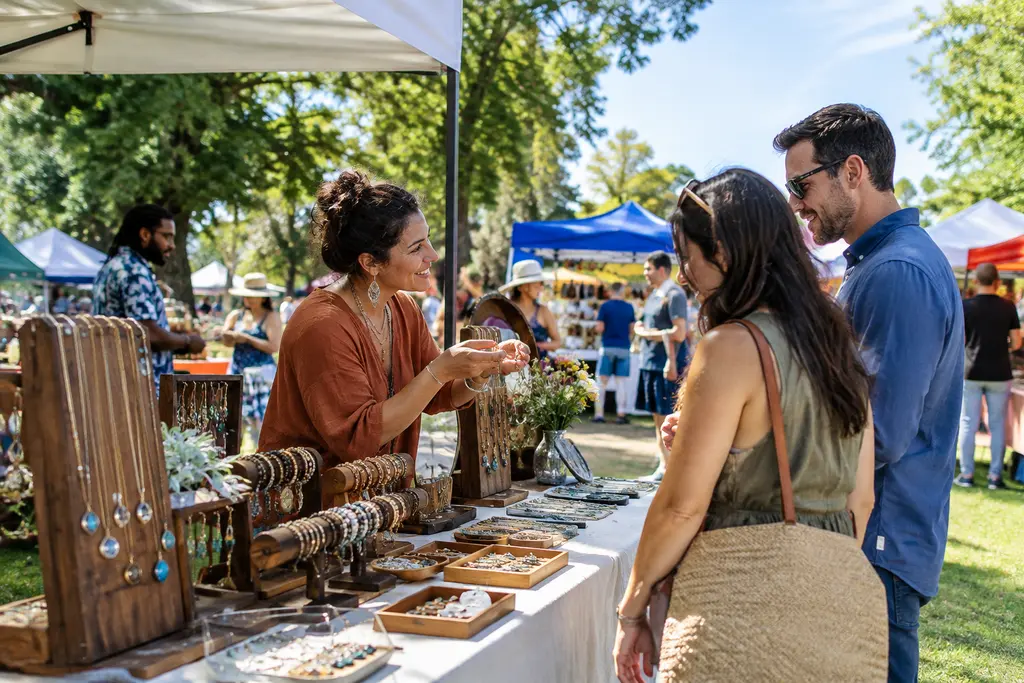
Aftershock Handmade Sellers gained a larger stage after the Sacramento festival drew record crowds from October 1-4, 2026. Pollstar reported that Aftershock 2026 sold out with 180,000 attendees across four days and an estimated local economic impact of about $40 million, while also placing the festival within a record year for Danny Wimmer Presents Pollstar reported. For handmade and small-scale creative sellers, those figures matter, but they should be read with care: the available public reporting does not break out direct revenue for jewelry makers, textile sellers, print artists, leather workers, ceramicists, or other independent craft vendors.
That distinction matters because festival commerce can be easy to overstate. A large audience does not automatically create equal value for every maker. Weather, booth placement, price points, stock depth, licensing boundaries, local sourcing rules, and buyer trust all affect sales. The better reading is more cautious: Aftershock created a concentrated moment of local spending and visibility, and handmade sellers who were prepared to explain their materials, origins, and production limits were better positioned to benefit from that attention.
Why Aftershock Handmade Sellers Matter In 2026
Aftershock Handmade Sellers Need Clear Proof
For Aftershock Handmade Sellers, the festival’s scale created both an opportunity and a test. A four-day event with 180,000 attendees can expose a small brand to more people than a typical weekend market. Yet festival buyers often make quick decisions while moving between performances, food lines, and social plans. That setting rewards clarity. A booth sign that says handmade may attract attention, but it does not answer the buyer’s deeper questions: who made it, where was it made, what materials were used, how long will it last, and what makes the price fair?
Handmade commerce depends on trust because buyers cannot always verify process at a glance. A hand-pulled print, a stitched patch, a hammered cuff, a small-batch candle, or a reworked garment may carry labor that is not obvious from a few feet away. Sellers need concise proof: maker photos where appropriate, material cards, process notes, batch sizes, and clear pricing. This protects artistic integrity because it shifts the sale away from vague festival energy and toward the object’s real making context.
The Sacramento County deal also matters for future planning. The Sacramento Bee reported that county supervisors approved a deal with Danny Wimmer Presents allowing Aftershock to remain at Discovery Park through December 31, 2035, with terms that prioritize Sacramento County-based vendors and service providers Sacramento Bee reported. For local makers, that creates a more stable signal than a one-year sales spike. It suggests that county-based participation may remain part of the festival’s civic value, though public reporting still does not identify exact allocations for handmade craft categories.
What The Festival Proved About Local Demand
County Priority Changes Seller Planning
The strongest supported point is not that every artisan profited. The record shows a large event, a major local economic figure, and a county agreement that gives preference to local vendors and service providers. That is enough to support a practical conclusion: handmade sellers should treat Aftershock as part of a broader local commerce calendar, not only as a single booth opportunity.
This matters for productivity. A maker who waits for a festival application window may miss the wider demand pattern around hotels, restaurants, bars, street traffic, neighborhood pop-ups, and after-event shopping. A better system starts months earlier: decide which products can survive outdoor handling, which pieces can be restocked quickly, which price points work for fast buyer decisions, and which items require extra explanation. Festival shoppers may admire high-labor work, but they may not have time to hear a long studio story. The booth has to communicate enough in seconds to earn a longer conversation.
Aftershock Handmade Sellers also have to avoid confusing cultural proximity with permission. Rock and metal audiences often enjoy bold graphics, patches, custom clothing, jewelry, and altered accessories. That does not mean sellers should use band names, logos, album art, or performer likenesses without authorization. A safer creative route is to build original work around materials, mood, technique, and personal design language rather than copying protected imagery. That restraint can protect the seller’s credibility and show respect for musicians, designers, and visual artists.
Festival-linked commerce also connects with the larger maker economy. Shimply has previously examined buyer trust and scarcity in handmade festival merch, where authenticity depends on origin clarity and careful claims. The same principle fits Sacramento’s festival economy: local does not mean trustworthy by itself. Trust has to be shown through process, sourcing, and honest limits.
Productivity Lessons For Craft Booths
Inventory Should Match Festival Conditions
For a maker, productivity at a large music festival is not only about making more stock. It is about making the right stock and reducing friction. Items should be easy to browse, easy to carry, and easy to explain. Small accessories, patches, pins, prints, lightweight wearables, compact ceramics, and giftable goods may suit fast-moving crowds better than fragile or high-maintenance pieces. That is not a rule for every seller, but it is a reasonable planning lens for an event where the buyer’s main purpose may be music rather than shopping.
Sellers should also separate display pieces from quick-sale pieces. A high-labor statement object can show skill and attract discussion, while lower-priced objects can support volume. The ethical concern is to avoid turning craft into disposable novelty. Even a small item should be presented with care: material, maker, process, and care instructions should not vanish because the item is affordable.
- Prepare short origin notes for each product group, not only the most expensive pieces.
- Use durable packaging that protects the object during a crowded festival day.
- Keep a clear repair, exchange, or care policy visible where it applies.
- Track which products draw questions, not only which products sell.
- Respect cultural motifs by naming sources accurately and avoiding vague heritage claims.
These practices can improve booth work without reducing art to pure throughput. Productivity in handmade commerce should not mean faster production at the cost of cultural context. It should mean less confusion, better buyer education, and fewer preventable problems after purchase.
Trust Signals That Protect Handmade Value
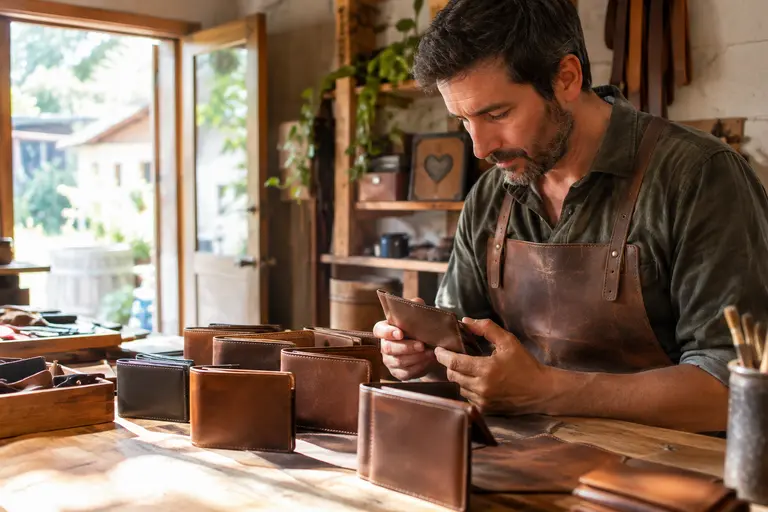
Authenticity Is A Working System
Aftershock Handmade Sellers operate in a setting where attention is brief and comparison is constant. Buyers may see mass-produced goods, official merchandise, food vendors, and informal sellers in the same day. If a handmade booth does not explain itself clearly, its work can be judged only by surface appearance and price. That is risky for makers whose value comes from technique, cultural knowledge, and time.
A useful trust system starts before the event. Product photography should match the actual booth stock. Listings and signs should distinguish handmade, hand-finished, designed locally, assembled locally, and sourced goods. Those terms are not interchangeable. A seller can still be honest about mixed production, but the buyer should not have to guess. If a product uses vintage components, found materials, outsourced blanks, or collaborative production, the seller can say so in plain language.
Community trust also depends on how sellers discuss place. Sacramento affiliation should not be used as a decorative label if the work has little connection to local making. At the same time, county-based priority can help buyers identify nearby makers they may support after the festival. That creates a path from a one-time music event to repeat local commerce, workshop visits, online orders, and neighborhood markets.
Readers who follow live-event culture across this network may also find related coverage through the accompanying site, Robsonic. The shared lesson is that audience scale becomes meaningful only when communities can identify who is making, selling, hosting, and benefiting.
Aftershock Handmade Sellers And Sacramento Commerce
The impact of Aftershock on handmade sellers should be described with restraint. The 2026 festival clearly brought record attendance and a large estimated economic effect to Sacramento. The county agreement through December 31, 2035 gives local vendors and service providers a stated priority, which may improve planning confidence for area businesses. Yet direct public numbers for craft sellers remain limited, so claims about artisan revenue should not go beyond what has been documented.
What can be said is more useful than a broad sales claim. Aftershock Handmade Sellers had a clear chance to meet concentrated demand, test products with a large audience, and connect festival identity with local making. The sellers most likely to build lasting value were not simply those with the loudest booth. They were the ones able to show origin, process, material, price logic, and care in a setting where buyers had limited time.
For Sacramento’s handmade community, the lesson is practical and cultural at once. Large festivals can support local commerce, but they should not flatten craft into souvenir stock. The better path is disciplined preparation, truthful labeling, fair representation of cultural sources, and buyer education that respects the maker’s labor. If that standard holds, Aftershock’s scale can serve local artisans without diluting the integrity of the work they bring to the public.