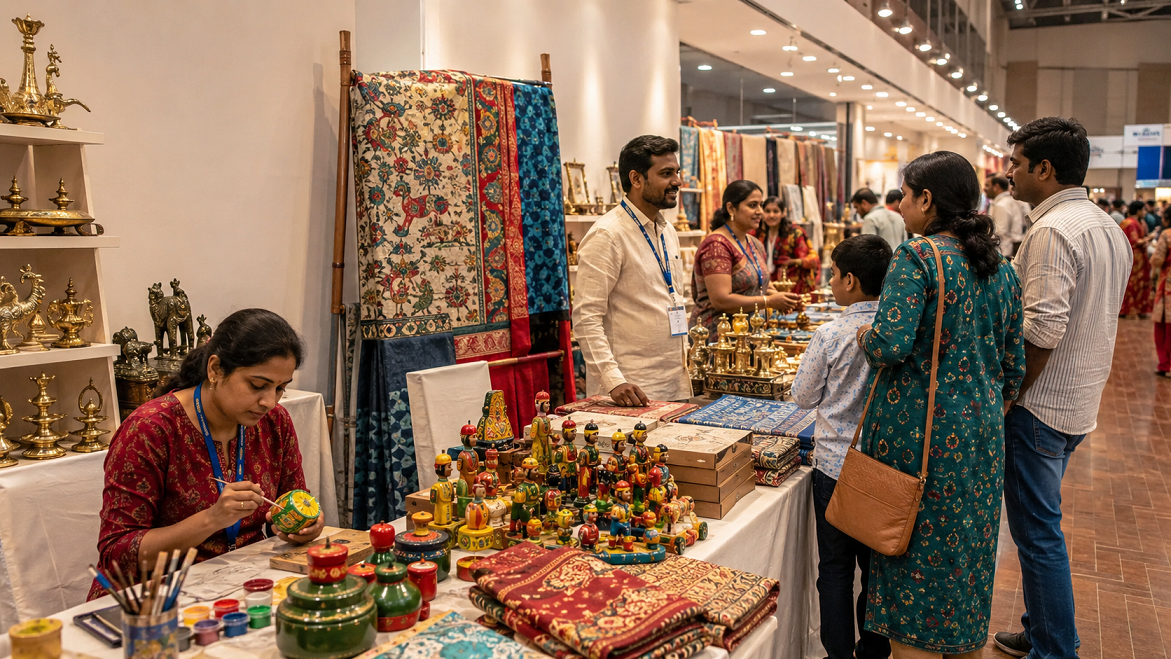
The Lepakshi Handicrafts Expo in Anantapur is a useful reminder that state-led craft events still have a role in India’s handmade economy, even as online selling, social commerce, QR-coded storytelling, and digital marketplaces expand. The recent exhibition, organized by A.P. Handicrafts Development Corporation Limited under the Lepakshi banner at GR Garden in Anantapur, was inaugurated by Anantapur Market Yard Chairperson Balla Pallavi, who called on the public to support handloom weavers and handicraft artisans.
For Shimply readers, the story matters because handmade sellers often treat exhibitions and online stores as separate worlds. In reality, they should work together. A state-led expo can give artisans immediate footfall, buyer feedback, credibility, product testing, and local press visibility. Digital selling can carry that trust forward after the stalls close. The sellers who gain most from events like the Lepakshi expo are not only those who sell well on opening day. They are the ones who turn event attention into better product pages, repeat orders, gift packaging, and stronger buyer relationships.
Why The Anantapur Expo Matters For Andhra Pradesh Crafts
Anantapur is an important setting for a Lepakshi exhibition because Andhra Pradesh’s handmade identity is not limited to one famous craft or one city. The state’s craft map includes Kalamkari, Kondapalli toys, Etikoppaka lacquerware, brassware, bronze casting, wood carving, crochet lacework, leather puppetry, handloom textiles, and other regional products that need both local buyers and wider discovery.
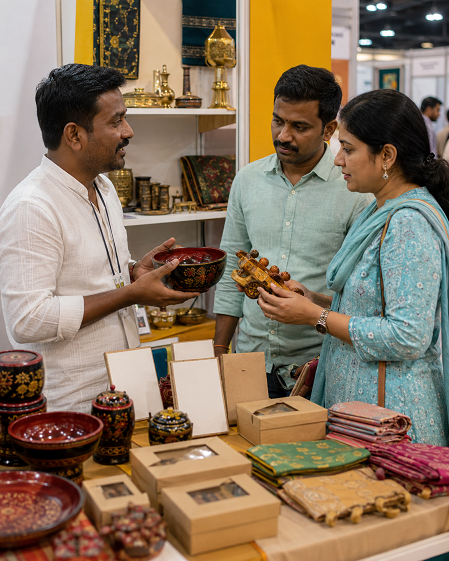
The Hans India reported that the Lepakshi handicrafts expo began in Anantapur at GR Garden, with Balla Pallavi urging public support for handloom weavers and handicraft artisans. That Anantapur handicrafts expo is not only a retail event. It is part of a wider pattern in which Andhra Pradesh uses state-backed platforms to put artisans directly in front of buyers.
Lepakshi’s official platform describes itself as showcasing authentic handcrafted products from more than 5,000 artisan partners across 26 districts, with more than 36 craft forms including Kalamkari, Kondapalli toys, Etikoppaka lacquerware, and other Andhra Pradesh craft traditions. The Lepakshi Handicrafts platform gives these products a recognizable state-supported identity, which can reduce buyer hesitation.
That trust signal matters. A buyer entering a craft expo may not know which products are locally made, which are resold, which are handmade, and which are factory-produced. A state-led event does not solve every trust question automatically, but it gives buyers a stronger reason to ask serious questions and gives artisans a more credible setting to explain their work.
Why State-Led Events Still Matter In The Digital Marketplace Era
It is easy to assume that online selling has made local exhibitions less important. That is not how handmade buying works. Craft products are tactile. Buyers want to feel textile thickness, inspect carving detail, compare lacquer finish, hear the story behind a toy, check the weight of metalware, or ask how a fragile piece is packed.
A state-led expo gives buyers those experiences in one place. It also gives sellers something online analytics cannot fully provide: live buyer reactions. A seller can see which products people pick up first, which colors stop them, which price points make them hesitate, and which questions repeat throughout the day.
Those questions are business intelligence. If buyers keep asking whether a Kalamkari panel is washable, the online listing needs care instructions. If visitors ask whether a Kondapalli toy is safe for children or meant for display, the product page needs a use note. If customers ask whether lacquerware can be shipped abroad, sellers need packaging photos and delivery information.
This is why exhibitions still matter for online craft sellers. They are not only sales events. They are product-research rooms.
Shimply’s guide to Indian craft gift sets makes the same point from the buyer side: handmade products become easier to purchase when sellers explain packaging, use, care, and shipping clearly. A Lepakshi expo gives sellers a live environment to learn which explanations buyers need most.
What Lepakshi Gives Sellers That A Private Stall May Not
A private stall can sell products, but a state-led platform can add credibility, coordination, and category recognition. Lepakshi is not just a retail label. It is tied to the Andhra Pradesh Handicrafts Development Corporation and has long been associated with promoting the state’s craft traditions.
Lepakshi’s heritage page identifies the organization’s role in preserving Andhra Pradesh’s craft legacy and connecting artisans with wider markets. That Lepakshi heritage context is valuable because craft buyers often need institutional cues before trusting unfamiliar products.
For handmade sellers, this does not mean state support replaces individual branding. It means sellers should use the event’s credibility as a bridge. A buyer may first trust the expo because it is Lepakshi-backed. The seller must then earn individual trust through product quality, explanation, packaging, and follow-up.
That follow-up is where many artisans lose opportunity. A visitor may admire a lacquer bowl, textile, carved item, or toy at the stall but decide to order later. If the seller has no catalogue, no product code, no WhatsApp ordering method, no clear packaging note, and no digital profile, the sale may disappear.
A state-led event can bring the buyer to the product. The seller still needs a system that lets the buyer return.
What Handmade Sellers Should Prepare Before A Craft Expo
A craft expo should not begin when the stall opens. Sellers need preparation before they arrive. Each product should have a name, category, material note, price, dimensions, care instruction, packaging option, and reorder pathway.
For Andhra Pradesh crafts, naming is especially important. A product title should not be vague. “Traditional handmade item” does not help buyers. “Etikoppaka-style lacquerware bowl,” “Kalamkari cotton wall panel,” “Kondapalli wooden toy display piece,” or “handmade brass decor object” gives the buyer more context, provided the wording is accurate.
Sellers should also separate product groups by buyer need. A stall that mixes everything together can make good products look confusing. A stronger display might divide products into gift items, home decor, children’s products, festive pieces, textile accessories, and premium craft objects.
| Expo Preparation Area | Why It Matters | Seller Action |
|---|---|---|
| Product Naming | Buyers need to understand the item quickly | Use product type, craft name, material, and use case |
| Display Grouping | Stalls can become visually crowded | Organize by gift, decor, textile, toy, and utility categories |
| Care Details | Handmade products need handling guidance | Prepare small care cards or simple verbal scripts |
| Packaging | Gift buyers need carry-ready products | Show boxes, wraps, pouches, or protective packing |
| Digital Follow-Up | Event interest often converts later | Keep product photos, prices, and contact options ready |
| Buyer Questions | Live feedback improves online listings | Record repeated questions after each day |
The table shows why expo success is not only about footfall. It is about readiness. A buyer who understands the product quickly is more likely to buy, gift, or reorder.
Why QR-Code Storytelling Could Change Craft Buying
Andhra Pradesh’s wider handicraft push is moving toward more transparent product storytelling. New Indian Express reported that Deputy Chief Minister Pawan Kalyan, while inaugurating AP Handicrafts Mahotsavam-2026 in Vijayawada, said every handicraft would be tagged with a QR code carrying the artisan’s profile and the story behind the craft. He also directed officials to develop documentaries highlighting artisan skills and announced Common Facility Centres under the VB-G RAM-G Scheme. The Andhra Pradesh handicraft tourism plan shows how state-led craft events are moving beyond stall sales.
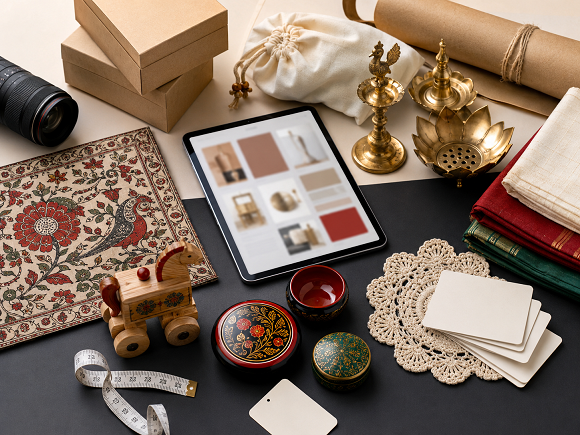
For sellers, QR-code storytelling can be powerful if used carefully. A QR code should not be a decorative sticker. It should lead to useful information: artisan name or group, craft origin, material, care, process, product category, and reorder details. The buyer should feel more informed after scanning it.
This is especially useful for gift buyers. A person giving a handmade item often wants to pass along the story. A small card or QR code can help the recipient understand why the product matters. For products like Kalamkari, lacquerware, handmade toys, brassware, or woodwork, that story can increase perceived value.
There is also a risk. If QR codes lead to vague promotional pages, broken links, or generic government text, buyers will stop trusting them. The information must be specific to the product or artisan cluster. Digital storytelling should make handmade products clearer, not more confusing.
How State-Led Expos Can Help Sellers Compete With Generic Souvenirs
One challenge for handmade sellers is competition from generic souvenirs. In many markets, buyers encounter products that look handmade but are factory-made, imported, or loosely connected to local craft traditions. State-led expos can help separate serious craft from casual souvenir clutter.
The separation comes through curation. If a buyer sees recognized craft categories, named artisan groups, clear labels, and product explanations, the event feels different from a random shopping fair. That can help sellers justify fair pricing.
This is important for Andhra Pradesh crafts because many products require labor-intensive processes. Kalamkari involves drawing, dyeing, and washing traditions. Kondapalli toys depend on woodwork, shaping, painting, and finishing. Etikoppaka lacquerware requires lathe work, lacquer application, and color control. Leather puppetry, bronze casting, and wood carving each carry material knowledge that should not be treated as generic decor.
Sellers should use the expo setting to explain this value in buyer-friendly language. A long lecture is not needed. A short product card can say what the product is, how it is made, where it comes from, and how to care for it. That may be enough to separate genuine craft from lookalike goods.
What Online Sellers Should Learn From The Anantapur Expo
The biggest lesson from the Anantapur expo is that local events can feed digital commerce. Sellers should use every exhibition to improve their online presence.
First, sellers should photograph products before the stall becomes crowded. Clean photos are useful for WhatsApp catalogues, marketplace listings, social media posts, and follow-up messages. Second, they should photograph products in use: a textile on a table, a toy on a shelf, a brass object on a desk, a lacquer bowl in a gift setup. Third, they should document packaging, because gift buyers care about presentation and shipping safety.
Buyers often need reassurance before ordering online. If they saw the product at the expo, a follow-up link should match what they saw. The same product name, same photo style, same price logic, and same care details should appear online. Consistency builds trust.
Sellers should also create small post-event collections. “Anantapur Expo Gift Picks,” “Andhra Handmade Home Decor,” “Kalamkari And Woodcraft Gifts,” or “Lepakshi-Inspired Craft Finds” can help buyers return to products they saw during the event. The collection names should be accurate and should not imply official endorsement unless the seller has that relationship.
Why Buyer Education Is Part Of State-Led Craft Promotion
A state-led craft event should not only create stalls. It should educate buyers. Many people appreciate handmade goods but do not know how to judge quality, material, or authenticity. A buyer may not know the difference between hand-painted and printed, lacquered and painted, carved and molded, handmade and hand-finished.
Events can close that gap. A short demonstration, product card, artisan interaction, or display board can help buyers understand what they are paying for. Better-informed buyers are more likely to pay fair prices and less likely to compare handmade products only against mass-market alternatives.
This is where Lepakshi’s official digital platform can support the physical expo. The site introduces Andhra Pradesh craft categories and promotes authentic handcrafted products, making it easier for buyers to continue learning after the event. That kind of physical-digital connection is exactly what handmade sellers need.
For sellers, education should be practical. Explain what the product is, how it is used, what makes it handmade, how it should be cared for, and why the price reflects labor or material. Avoid vague claims like “ancient,” “royal,” or “authentic” without details. Specificity creates trust.
What Buyers Should Look For At A Lepakshi Expo
Buyers attending a Lepakshi expo should shop with curiosity and care. Ask where the product was made, what material was used, whether the item is handmade or hand-finished, how it should be cleaned, and whether it can be reordered.
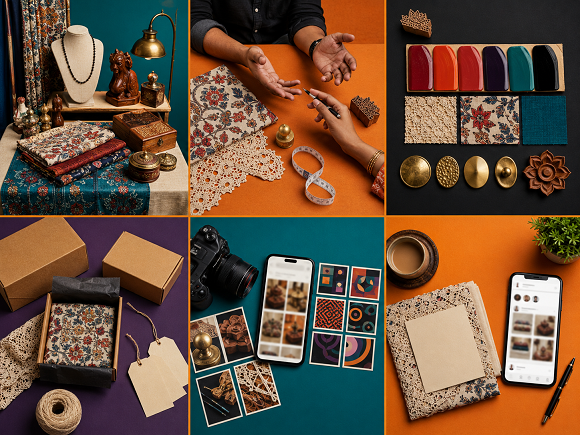
For fragile products, ask how they are packed. For textiles, ask about washing and color care. For toys, ask whether they are decorative or suitable for children. For lacquerware and painted products, ask about moisture, heat, and everyday use. For metalware, ask whether the item is food-safe, decorative, or devotional.
Buyers should also understand that direct artisan sales are not only about bargain hunting. Fair pricing supports materials, labor, travel, stall preparation, and future production. A good craft event helps buyers see that value more clearly.
Gift buyers should look for products that come with a story and care instructions. A handmade product becomes a better gift when the recipient understands what it is and how to use it.
Why State-Led Craft Events Still Matter
The Lepakshi Handicrafts Expo in Anantapur shows why state-led craft events still matter for handmade sellers. They create visibility in places where artisans can meet buyers directly. They give local products a trusted platform. They help buyers understand craft categories. They allow sellers to test products, refine pricing, gather questions, and build repeat-order pathways.
Digital selling is growing, but it works best when supported by real-world trust. A buyer who meets a seller at an expo may later order online. A seller who hears buyer questions at a stall can improve product pages. A state platform that supports artisans can make local crafts easier to discover and more credible to purchase.
For handmade sellers, the lesson is practical. Treat every expo as more than a sales weekend. Use it to document products, improve descriptions, test gift bundles, capture buyer questions, build a digital catalogue, and strengthen packaging. The future of handmade commerce is not physical or digital. It is both.
The Anantapur expo matters because it reminds sellers that craft visibility begins with a real encounter, but growth depends on what happens after the buyer leaves the stall.