Kumartuli’s push for a Geographical Indication tag is not only about protecting a famous Kolkata craft quarter. It is a case study in how handmade sellers can protect craft identity before market language becomes too loose, too generic, or too easy to copy. Recent reporting says Kolkata’s Kumartuli Durga idol makers are pursuing GI recognition, with clay from Kashi, or Varanasi, being used in the process to strengthen the symbolic and cultural case. For a craft rooted in seasonal devotion, family workshops, clay, straw, painting, ornamentation, and Durga Puja’s global Bengali identity, the bid raises a practical question: how can sellers protect handmade traditions while still making them visible to buyers?
For Shimply readers, Kumartuli matters because it sits at the intersection of ritual craft, artisan livelihood, buyer trust, cultural sensitivity, and marketplace authenticity. A Durga idol is not a generic handmade sculpture. It belongs to a living festival economy, a neighborhood craft system, and a devotional calendar. That distinction is exactly why handmade sellers need better language, better documentation, and stronger protection for craft names.
Why Kumartuli’s GI Bid Matters Now
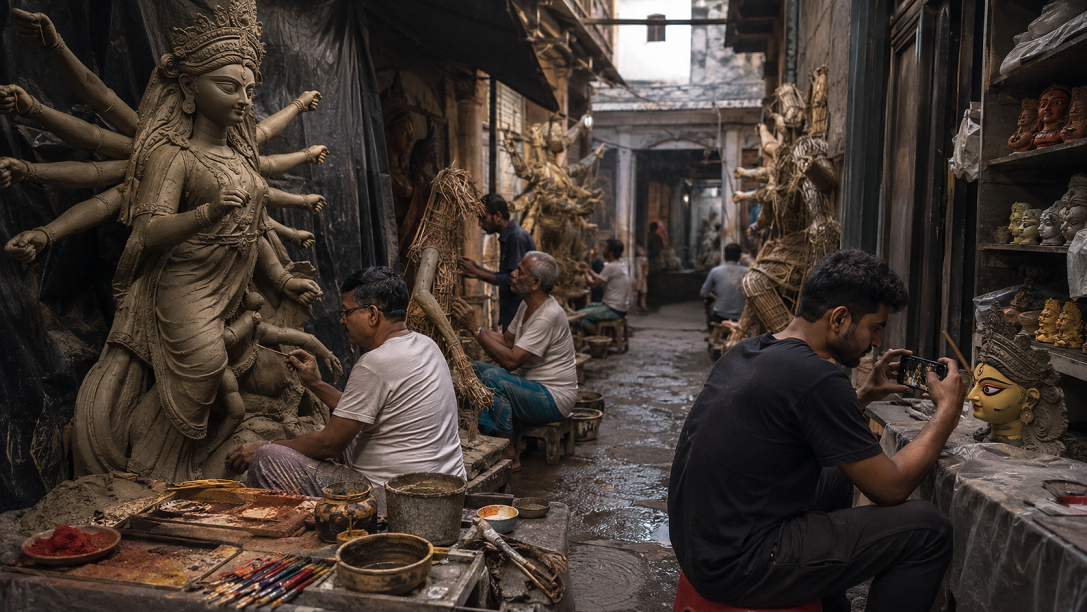
Kumartuli, in north Kolkata, is widely known as the city’s idol-makers’ quarter, where artisans prepare clay images of Durga and other deities for Durga Puja and related festivals. The recent Times of India report on Kumartuli’s GI bid said clay associated with Kashi is being used as part of the effort to strengthen the cultural argument around the idol-making tradition. The symbolic link matters because Durga Puja already carries deep ritual meaning in Kolkata, and Kashi’s association with sacred geography gives the material story another layer.

That does not mean the GI tag is already granted. Sellers and buyers should be careful with that distinction. A bid is a process, not a registration. The important point is that Kumartuli’s artisans are trying to frame idol-making as a distinct, place-based craft tradition deserving formal recognition.
This is where handmade sellers can learn. Many craft communities wait until their product name is already diluted before they think about protection. By then, market listings may be full of vague or misleading phrases. A craft name can be borrowed by resellers, mass-produced copies, or decorative products with little connection to the original place.
A GI bid forces a craft community to document what makes the product distinctive. Where is it made? Who makes it? What materials are used? What process defines it? What cultural reputation is tied to the place? Those questions are useful far beyond the legal filing. They are the same questions that good product pages should answer.
What Durga Puja’s UNESCO Status Adds To The Story
Kumartuli’s craft protection story cannot be separated from Durga Puja itself. UNESCO inscribed Durga Puja in Kolkata on the Representative List of the Intangible Cultural Heritage of Humanity in December 2021. UNESCO describes the festival as an annual celebration held most notably in Kolkata and notes that, in the months before the festival, small artisanal workshops sculpt images of Durga and her family using unfired clay pulled from the Ganga. The UNESCO Durga Puja listing helps explain why idol-making is not only object production.
For handmade sellers, this distinction matters. Some crafts are primarily decorative. Others are ritual, seasonal, communal, and process-driven. A Kumartuli idol belongs to that second category. Its value is not only in the final painted form. It is in the making cycle, neighborhood knowledge, material handling, iconographic discipline, workshop labor, festival timing, installation, worship, and immersion.
That makes product storytelling sensitive. Sellers should not flatten sacred or ritual craft into generic decor language. “Handmade festive statue” may sound search-friendly, but it misses the cultural structure behind the object. A stronger description explains the craft, maker context, material, ritual use, size, shipping limitations, and whether the item is meant for worship, display, collection, or educational use.
This also matters for buyers. A buyer should understand whether they are purchasing a devotional idol, a decorative miniature, a collectible, a display piece, or a festival commission. Each has different expectations around material, handling, timing, packaging, and respect.
What GI Protection Actually Signals To Buyers
A Geographical Indication tag connects a product to a place and to qualities, reputation, or characteristics associated with that origin. India’s GI framework covers product categories including handicrafts, and official guidance emphasizes proper use, protection, promotion, genuine producers, and consumer trust. DPIIT’s GI guidance says authorized users are registered with the Geographical Indications Registry and authorized to use the registered GI name and logo on specified goods. That GI authorized user guidance is useful because it reminds sellers that GI language is not just marketing copy.
For Kumartuli, GI recognition would signal that the idol-making tradition has a defined link to place and practice. For buyers, that could help separate genuine Kumartuli-made idols from generic clay idols using the name loosely. For artisans, it could support stronger branding, tourism visibility, order credibility, and protection against imitation.
For online sellers, the broader lesson is clear. Craft protection helps when buyers can understand it. A GI name buried in a description is less useful than a product page that explains what the name means and why the place matters.
Shimply’s guide to GI-tagged Indian crafts by state follows the same buyer logic: regional craft names become more useful when they help buyers verify origin, understand material, and compare products responsibly.
What Handmade Sellers Can Learn From Kumartuli’s Documentation Challenge
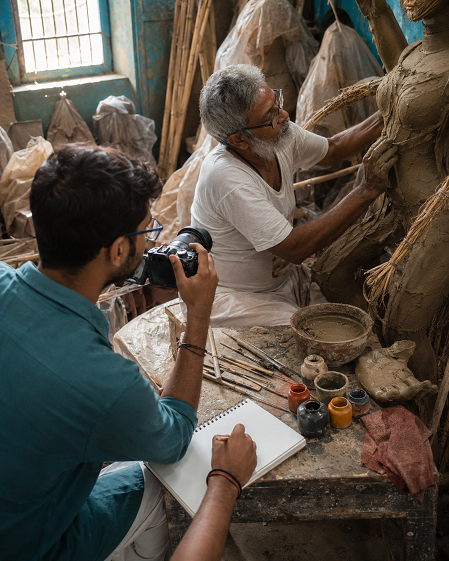
A GI bid depends on documentation, and documentation is also the foundation of trustworthy online selling. Kumartuli’s artisans have to show why their idol-making tradition is distinctive. A handmade seller on a marketplace has to do the same thing at product level.
The documentation does not need to sound legalistic. It needs to be specific. Sellers should record craft name, place, maker or workshop, materials, process steps, production timeline, dimensions, care instructions, and intended use. For ritual or culturally sensitive products, they should also document respectful handling, seasonality, and whether the product is devotional, decorative, or educational.
A clay idol listing, for example, should not only say “handmade Durga idol.” It should say whether it is made in Kumartuli, what clay and structure are used where appropriate, whether it is hand-painted, whether it is suitable for worship or display, how fragile it is, how it is packed, and how much lead time is needed before Durga Puja.
That kind of documentation helps sellers in three ways. It improves buyer trust. It reduces misunderstandings. It protects the craft name from vague use.
| Kumartuli Craft Detail | Buyer Question It Answers | Seller Lesson |
|---|---|---|
| Place Of Making | Is this actually from Kumartuli? | Name the workshop region accurately |
| Clay And Structure | What is the idol made from? | Explain material and fragility |
| Festival Timing | When should it be ordered? | Make lead times visible |
| Intended Use | Worship, display, or collection? | Separate devotional products from decor |
| Maker Context | Who made it? | Add artisan or workshop identity |
| Packaging Method | Can it travel safely? | Show protective packing and handling notes |
This table applies to many handmade categories. A seller of textiles, metalwork, pottery, bamboo craft, paintings, toys, or jewellery can use the same structure: place, material, process, use, maker, packaging.
Why Craft Names Need Protection Before They Become Generic
Craft names can lose meaning when they are used too casually. In online marketplaces, famous names often become search bait. Sellers may attach a place name, festival name, tribal label, or craft term to products that do not belong to that tradition. This may bring short-term clicks, but it weakens trust and harms genuine makers.
Kumartuli’s GI bid is important because Durga idol-making is highly recognizable. That recognition creates value, and value attracts imitation. If every clay goddess figure is marketed as “Kumartuli style” without explanation, buyers may struggle to distinguish workshop-made idols from factory-made or unrelated products.
The solution is not to hide craft traditions from commerce. The solution is to use names accurately. If a product is made in Kumartuli by a Kumartuli artisan, say that clearly. If it is inspired by Kolkata Durga Puja imagery but made elsewhere, say “inspired by” and avoid implying origin. If it is a miniature decorative interpretation, say so. If it is meant for worship, explain handling and timing.
This is especially important for sacred or festival-linked products. Sellers should not turn religious craft into novelty decor without context. Responsible language can still be commercial. It simply respects the product’s cultural role.
What The Clay Shortage Shows About Material Risk
Kumartuli’s craft-protection story also overlaps with material supply risk. A Times of India report from last month described a clay shortage affecting Kumartuli artisans, tied to disruption in the supply of fine clay traditionally sourced from Diamond Harbour. The report said artisans had been affected during peak preparation and described new standard operating procedures involving landowner NOCs, Aadhaar details for suppliers, approved soil quantities, and extraction away from main roads. The Kumartuli clay shortage report shows why material documentation is not a minor detail.
For handmade sellers, material supply is part of authenticity. If the material changes, the product story may change. If sourcing becomes difficult, production timelines change. If costs rise, pricing changes. Buyers may not need every supply-chain detail, but they do need honest information when material affects quality, delivery, or use.
This lesson applies across handmade categories. A textile seller affected by yarn availability should update lead times. A pottery seller affected by clay supply should explain batch delays. A woodcarver should specify if wood type changes. A metal artisan should clarify finish and care when material prices shift.
Kumartuli’s clay issue also shows why local craft clusters need institutional support. A craft tradition cannot survive on skill alone if materials, workspace, transport, and regulation become unstable. Craft protection has to include the conditions that make craft possible.
How Ritual Craft Can Become Searchable Without Losing Respect
Search visibility matters, but ritual crafts need careful SEO. A seller can make Kumartuli-related products searchable without reducing them to generic keywords.
The strongest approach is layered naming. Start with the accurate product type: Durga idol, clay idol, miniature display idol, festival commission, artisan-made murtis, or educational craft model. Add place only when accurate: Kumartuli, Kolkata, North Kolkata, or West Bengal. Add use: Durga Puja worship, home display, cultural gift, collector piece, or festival decor. Add material and size.
A strong title might be “Kumartuli Clay Durga Idol For Durga Puja Worship, Hand-Painted, Made To Order” if all claims are true. A weaker title would be “Authentic Traditional Indian Goddess Decor Statue” because it is too broad and gives buyers no real proof.
Product images should also respect the craft. Show the workshop process where appropriate, but avoid sensationalizing sacred imagery. Show material, scale, packing, and detail. Do not use misleading AI-generated idol images in place of actual product photos. Do not imply that a seller can deliver festival idols if the lead time is unrealistic.
Buyers searching for ritual products often care deeply about correct form, timing, and handling. Sellers who answer those concerns earn trust.
What Kumartuli Can Teach Gift Sellers Beyond Idol-Making
Even sellers outside ritual craft can learn from Kumartuli’s GI bid. The wider lesson is that handmade value becomes stronger when it is anchored in place, process, and proof.
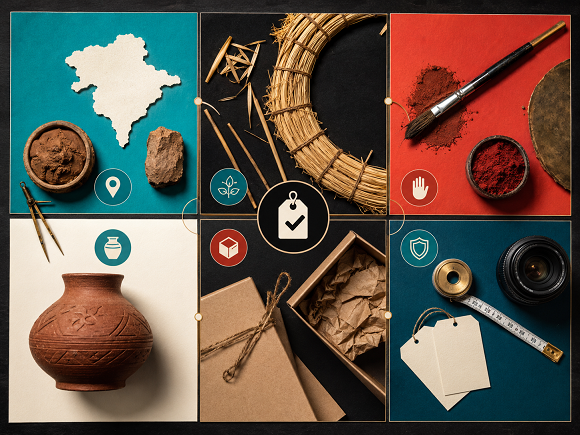
A textile seller should not rely only on “handloom.” They should identify weave, region, fiber, and care. A bamboo craft seller should explain place, material, structure, and use. A jewellery seller should distinguish community-linked designs from generic styling. A pottery seller should explain clay, firing, glaze, and packaging. A painting seller should explain style, surface, pigment, and display.
This is how craft protection becomes product strategy. Sellers cannot always control who imitates them, but they can make genuine products easier to recognize. They can use better photos, clearer descriptions, maker profiles, care cards, packaging proof, and accurate origin language.
Kumartuli’s artisans are trying to protect a craft with deep festival identity. Online handmade sellers are trying to protect buyer trust at product level. The tools overlap more than they may seem.
Why Handmade Sellers Should Prepare Before A Craft Name Becomes Famous
One of the biggest risks for handmade sellers is waiting until popularity creates confusion. A craft can suddenly become trendy because of social media, tourism, film, festival coverage, celebrity gifting, or a government campaign. When that happens, the market may fill with copies before genuine makers have built clear product language.
Kumartuli is already famous, but the GI bid shows why fame still needs structure. A known craft name can attract tourists, buyers, exporters, photographers, and online sellers. It can also attract misuse.
Smaller craft clusters should watch this closely. Documentation should begin before a product becomes heavily commercialized. Artisan groups can record oral histories, process steps, material sources, maker names, product variations, and local terminology. Sellers can build product pages that use correct language from the start.
Marketplaces can support this by creating clearer origin fields and seller verification. Buyers can support it by choosing sellers who explain craft context instead of only offering the lowest price.
How Buyers Should Approach Kumartuli-Linked Products
Buyers should approach Kumartuli-linked products with respect and practical questions. Ask where the idol was made, whether it is from a Kumartuli workshop, what material is used, whether it is suitable for worship or display, how long production takes, and how it will be packed.
For larger idols, shipping and handling are major issues. Clay idols can be fragile, seasonal, and size-specific. Buyers should be cautious of sellers promising fast delivery on complex handmade pieces during peak Durga Puja season without explaining production status.
For miniatures or display pieces, buyers should check whether the product is a handmade clay object, a printed replica, a resin piece, a fiberglass object, or another material. Each has different value and handling requirements.
For gift buyers, be careful with devotional products. A Durga idol is not the same as a neutral decor object. It may be a meaningful gift for the right recipient, but the buyer should consider context, respect, and intended use.
What Kumartuli’s GI Bid Means For Handmade Commerce
Kumartuli’s GI tag bid shows that craft protection is becoming a handmade-commerce issue, not only a legal or cultural issue. When a craft name carries value, sellers need to protect its meaning. When buyers search for authentic products, they need ways to verify origin. When artisans depend on seasonal craft income, marketplace confusion can affect livelihoods.
For Kolkata’s Durga idol makers, GI recognition could help formalize a place-based craft identity that has long been understood culturally. For online sellers, the larger lesson is practical: document the craft before others define it for you.
The handmade market rewards beauty, but it increasingly depends on proof. Kumartuli teaches sellers to show place, material, maker, process, timing, and cultural use with care. That approach protects more than a product name. It protects the trust that makes handmade commerce work.