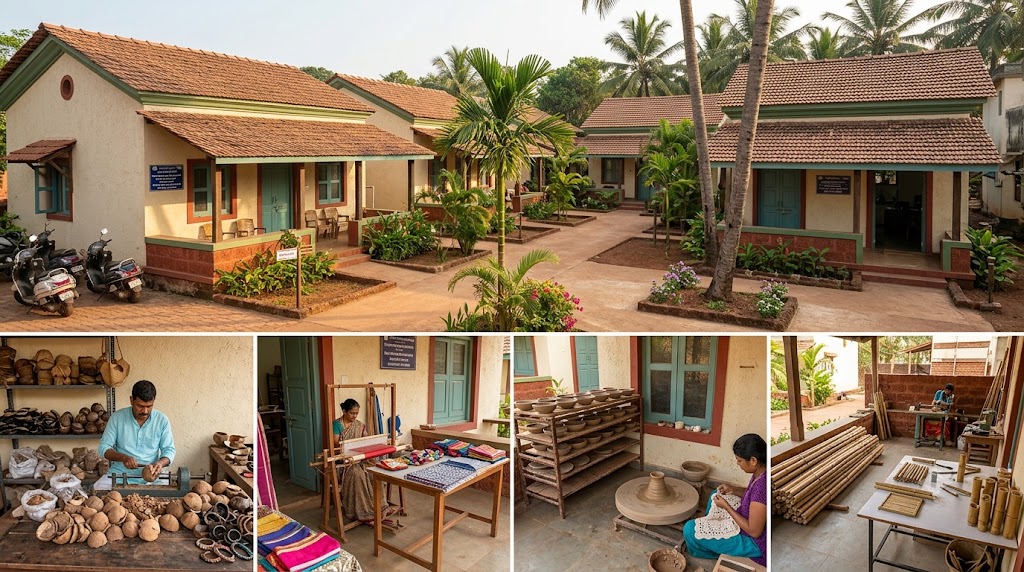
Goa’s plan for a dedicated handicraft cluster at Verna Industrial Estate is more than a local infrastructure story. It raises a bigger question for India’s handmade economy: can artisans scale better when they have production space, shared visibility, buyer access, and a more formal setting for craft-based enterprises? A July 5, 2026 report said Goa Industrial Development Corporation is planning a handicraft cluster at Verna and offering 18 individual plots for artisans. For Shimply readers, the story matters because handmade sellers often struggle with the same gap: they have skill, product knowledge, and cultural value, but they do not always have the workspace, packaging setup, photography corner, storage, compliance support, or market-facing structure needed to grow.
Why Verna Matters For Goa’s Handmade Economy
Verna Industrial Estate already carries weight in Goa’s industrial map. It is located in South Goa’s Salcete region and has long been associated with formal enterprise activity rather than small craft visibility. Placing a handicraft cluster there could change the way artisan work is perceived. Instead of treating craft as scattered cottage activity, the cluster model gives handmade sellers a physical business address, production identity, and the possibility of collective market recognition.
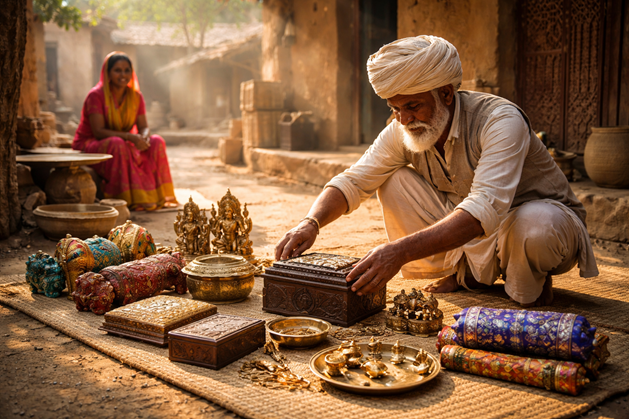
The Times of India reported that the Goa Industrial Development Corporation is moving ahead with a dedicated cluster and offering 18 plots specifically for artisans at Verna. That Verna handicraft cluster report frames the project as part of a wider push to support traditional craftsmanship and create economic opportunities.
For Goa, that matters because the state’s craft identity is broad but often overshadowed by tourism. Goa is known globally for beaches, heritage homes, churches, food, music, and festivals. Its craft economy, by comparison, often appears in smaller pockets: coconut shell work, bamboo craft, pottery, crochet, Kunbi textiles, woodwork, shell craft, paper craft, and handmade souvenir products tied to local culture.
A dedicated artisan space can give these products a stronger commercial identity. It can also help separate serious handmade work from low-quality souvenir imports that often crowd tourist markets. That distinction is important for buyers who want authentic Goan craft, not just beach-market merchandise with a local label.
Why Space Is A Scaling Problem For Handmade Sellers
Handmade sellers do not scale in the same way as factory brands. A factory can add machines, workers, stock-keeping units, and distributors. An artisan seller has to protect craft quality, hand-finishing, material sourcing, design integrity, and customer trust. Growth becomes difficult when production happens in cramped homes, shared family spaces, temporary stalls, or small workshops with no room for storage and packing.
A dedicated cluster can solve some of those daily problems. It can give artisans space for raw materials, worktables, tools, drying racks, finishing areas, product photography, inventory, packaging, and buyer meetings. It can help sellers move from “I make this when I get an order” to “I can produce, document, package, and ship this reliably.”
That shift is central to handmade commerce. A product is not ready for serious digital selling only because it is beautiful. It needs consistent photos, clear dimensions, material notes, care instructions, shipping-safe packaging, stock planning, and a story buyers can trust. Shimply’s guide to Indian craft gift sets makes this point clearly for international orders: craft quality has to work with logistics.
For Goan artisans, Verna could become a bridge between craft practice and commerce practice. The cluster cannot replace creativity, but it can reduce the friction around selling. A maker with better space can test small batches, prepare festival inventory, host buyers, organize tools, and improve packaging without disturbing household life.
How Goa’s Existing Craft Institutions Fit Into The Cluster Model
The Verna project would not exist in isolation. Goa already has state-level institutions tied to craft promotion. The Goa Handicrafts Rural & Small Scale Industries Development Corporation, a Government of Goa undertaking established in 1980, states that its mandate includes promoting and marketing handicraft items, supplying goods to government bodies, and supporting training schemes. That Goa handicrafts corporation role gives the state an existing platform for artisan support.
Goa’s Department of Handicrafts, Textile and Coir also runs artisan-focused schemes and marketing-support initiatives. Its official information notes financial assistance for artisans to market handicraft items through exhibitions conducted by government and non-government organizations. The department’s Goa handicraft support framework matters because a cluster is only useful when it connects space with market access.
That connection is the key test. A building alone does not create scale. A plot alone does not create buyers. The real value comes when workspace is linked with training, certification, packaging support, credit access, exhibition participation, digital cataloging, and buyer discovery.
For handmade sellers, that kind of ecosystem can be decisive. Many artisans know how to make excellent products, but fewer have support for photographing them, writing product descriptions, managing online orders, or building repeatable collections. If Verna becomes only a production zone, its impact may stay limited. If it becomes a production-plus-commerce hub, it can change the way Goan craft reaches buyers.
What Buyers Should Watch As The Cluster Develops
For buyers, a handicraft cluster can make authentic sourcing easier. One of the hardest problems in handmade shopping is trust. Buyers often ask: who made this, where was it made, what material was used, is it handmade, and is the seller representing the product honestly? A cluster can create more transparency if artisans are visibly connected to their workspaces and product categories.
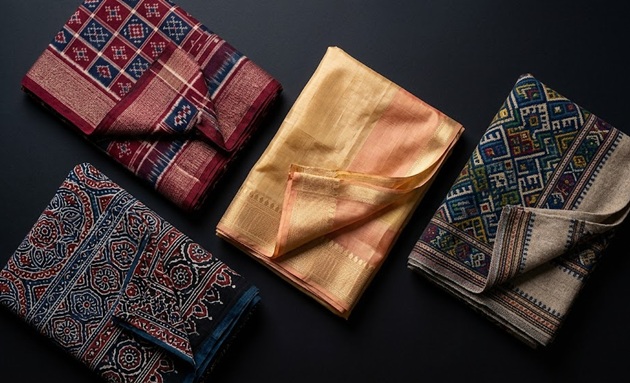
The strongest buyer-facing opportunity is traceability. A Goan bamboo lamp, crochet home accent, hand-painted ceramic bowl, coconut-shell accessory, or Kunbi-inspired textile product becomes more valuable when buyers can understand its origin and maker context. That does not mean every product needs a long museum-style story. It means product pages, labels, and packaging should include clear, simple proof: material, place, artisan group, process, care, and intended use.
India’s national handicraft data shows why this matters. The Press Information Bureau reported that handicraft exports excluding hand-knotted carpets reached ₹33,122.79 crore in 2024-25, up from ₹20,082.53 crore in 2014-15. That Indian handicraft export data points to a sector with real commercial weight, not a small decorative sideline.
Yet growth can create confusion. More demand can bring more imitation, vague claims, and reseller-driven products marketed as handmade. A Verna cluster could help Goa’s artisan sellers stand apart if it gives buyers clearer pathways to genuine craft. Product tags, artisan directories, common branding standards, and transparent workshop information could make the difference.
Can Dedicated Artisan Spaces Help Sellers Compete Online?
Online selling rewards clarity. A buyer scrolling through handmade products does not have time to guess what makes one item different from another. The seller has to show the material, origin, dimensions, finish, packaging, shipping timeline, and use case quickly. A dedicated artisan space can help sellers produce that clarity.
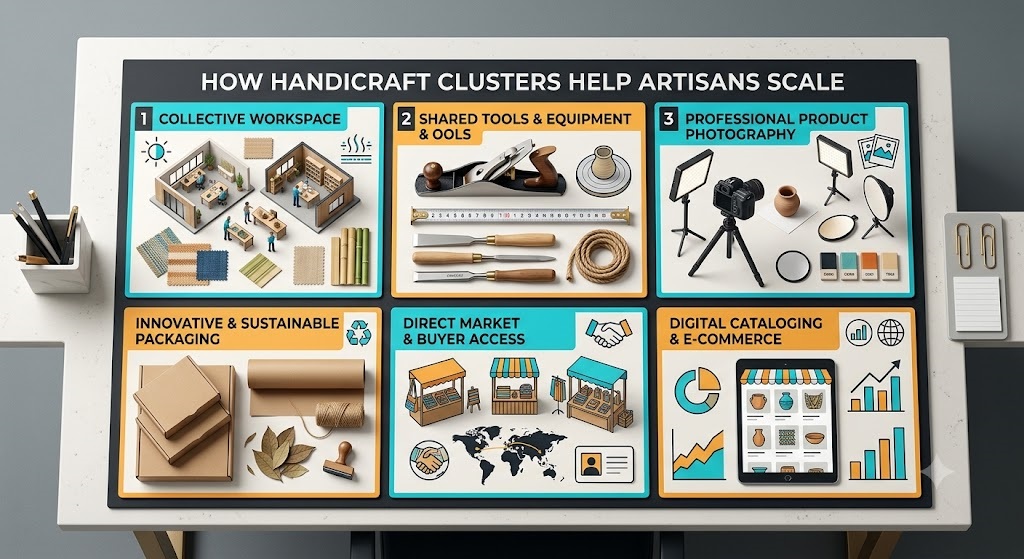
A cluster can support shared product photography setups, packaging vendors, catalog shoots, digital training sessions, and cooperative shipping arrangements. It can make it easier for artisans to build small collections rather than one-off products. It can support product development around tourist seasons, wedding gifting, festival gifting, corporate gifting, and export-friendly craft sets.
| Scaling Need | Why It Matters For Handmade Sellers | How A Cluster Can Help |
|---|---|---|
| Workspace | Better finishing, storage, and production flow | Dedicated plot or workshop area |
| Product Photography | Better listings and buyer trust | Shared photo corner or catalog days |
| Packaging | Safer shipping and premium gifting | Access to packaging suppliers |
| Buyer Access | More wholesale and retail opportunities | Cluster visits, exhibitions, showcases |
| Training | Stronger pricing, descriptions, and digital selling | Workshops and government support |
| Identity | Clearer origin and artisan credibility | Goan craft cluster branding |
This is where Verna could matter beyond Goa. If the cluster becomes a working model, it can show how small handmade businesses need both craft respect and business structure. Handmade sellers do not need to become mass manufacturers. They need systems that let them sell more without losing what makes the work valuable.
Why Cluster Design Must Protect Craft Identity
There is a risk in every formal craft cluster: the pressure to standardize too much. Buyers like consistency, but handmade products gain value from human variation, regional identity, and material character. A good cluster should help artisans improve quality without flattening their work into generic souvenir production.
The Goa Department of Handicrafts, Textile and Coir describes local handicrafts as one of Goa’s long-practiced occupations, including bamboo craft, wood craft, coir craft, pottery and ceramic craft, metal craft, and handloom weaving of Kunbi sarees. Its Swavalamban Yojana document identifies these categories as part of Goa’s craft base. That Goa artisan scheme context is useful because it reminds sellers that craft identity should remain visible.
For Shimply’s handmade-commerce audience, this is the most practical lesson. Scaling should not mean removing the handmade signature. It should mean better documentation, better repeatability where needed, better packaging, and better buyer education. A crochet artisan can keep hand variation while standardizing sizes. A ceramic maker can preserve glaze variation while improving packing methods. A bamboo craft seller can keep local material identity while building better product photos and care cards.
The cluster should support that balance. If it pushes artisans only toward uniform tourist products, it may weaken the very value buyers are seeking. If it supports authenticity, origin clarity, and modern selling tools, it can strengthen both craft and commerce.
What Verna Could Teach India’s Handmade Sellers
The Verna Handicraft Cluster is still a developing story, but it already points to a wider truth: handmade sellers scale best when they receive more than encouragement. They need place, tools, market access, digital support, packaging knowledge, product strategy, and buyer trust.
For Goa, the cluster could give local artisans a stronger commercial base inside a recognized industrial estate. For buyers, it could create a clearer path to authentic Goan handmade products. For sellers across India, it shows why craft growth depends on infrastructure as much as creativity.
The best outcome would not be a factory-style handmade park. It would be a practical artisan ecosystem where coconut craft, bamboo work, ceramics, textiles, crochet, coir, woodwork, and other Goan products can become easier to discover, easier to buy, and easier to ship without losing their handmade character.
Dedicated artisan spaces can help handmade sellers scale, but only when the space serves the craft rather than replacing it. Verna’s real test will be whether it helps artisans move from scattered production to confident commerce while keeping the story, place, and handwork that make Goan craft worth buying.