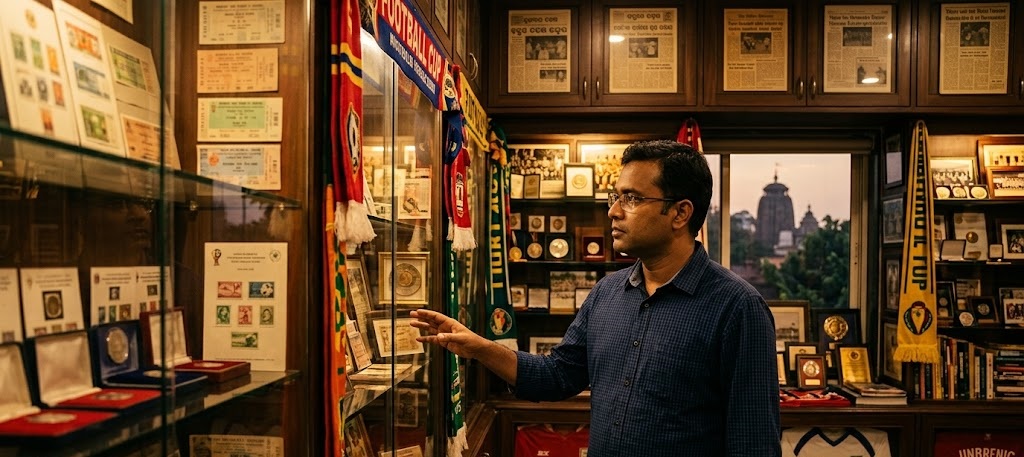
Bhubaneswar’s latest football World Cup memorabilia displays are doing more than decorating a room for tournament season. They show how Indian sports fandom is becoming more archival, more object-driven, and more interested in the stories that survive after a match ends. In June 2026, local reports highlighted city resident Samarajan Mohanty’s home “mini-museum” in VSS Nagar, where more than 500 football World Cup collectibles — stamps, tickets, coins, clippings, posters, postcards, currency notes, autographs, jerseys, and souvenirs — have turned a private collection into a cultural display. That matters for India’s growing collectible culture: fans are no longer only watching global events; they are preserving them, arranging them, and using objects to teach younger audiences why sport history still carries emotional weight.
Why Bhubaneswar Is A Strong Setting For Sports Memory
Bhubaneswar is not an accidental backdrop for this kind of display. The Odisha capital has spent years building a public identity around major sporting events, from hockey infrastructure to international tournament hosting. Kalinga Stadium’s role in the 2018 Odisha Hockey Men’s World Cup and Odisha’s continued association with major hockey events gave the city a visible sports-culture identity before the current football World Cup buzz arrived.
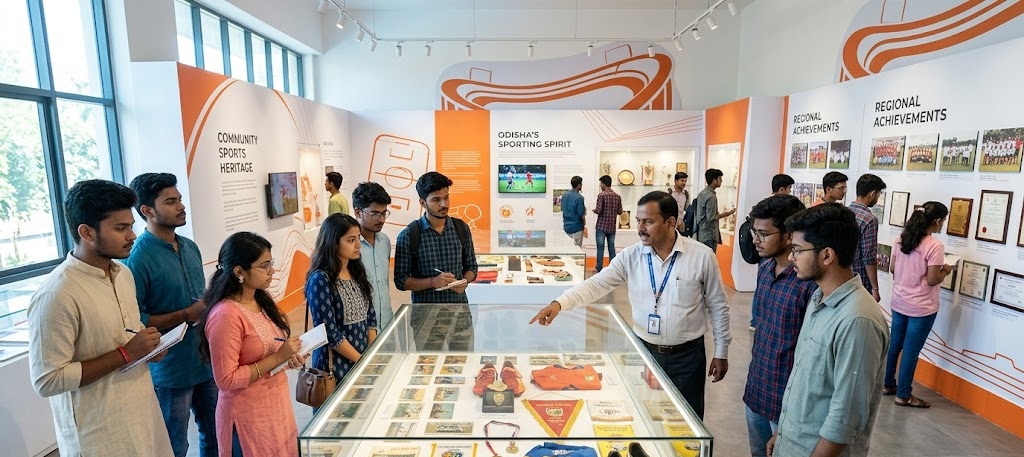
That background makes a private football memorabilia display feel less like a niche hobby and more like part of a larger civic pattern. Bhubaneswar has seen how major events can reshape public space, fan behavior, and local pride. Hockey gave the city stadium rituals, public installations, and event memory. Football memorabilia now adds a different layer: the collector’s room as a small archive.
The reported display by Samarajan Mohanty fits this pattern neatly. According to the Bhubaneswar World Cup memorabilia report, the collection includes more than 500 items tied to football’s global tournament history, with pieces ranging from stamps and tickets to jerseys and souvenirs. A single collectible might look small on its own, but a full wall of items turns fandom into a timeline.
This is why the Bhubaneswar example works as a cultural signal. It is not built around celebrity gossip, auction spectacle, or luxury investment talk. It is built around care, memory, sorting, and sharing. For readers who follow KayGranger’s broader interest in culture, learning, and how audiences connect with creative traditions, that same participatory logic appears in the site’s coverage of young performers going viral: cultural participation grows when private passion becomes publicly legible.
How Collectibles Turn A Tournament Into A Personal Archive
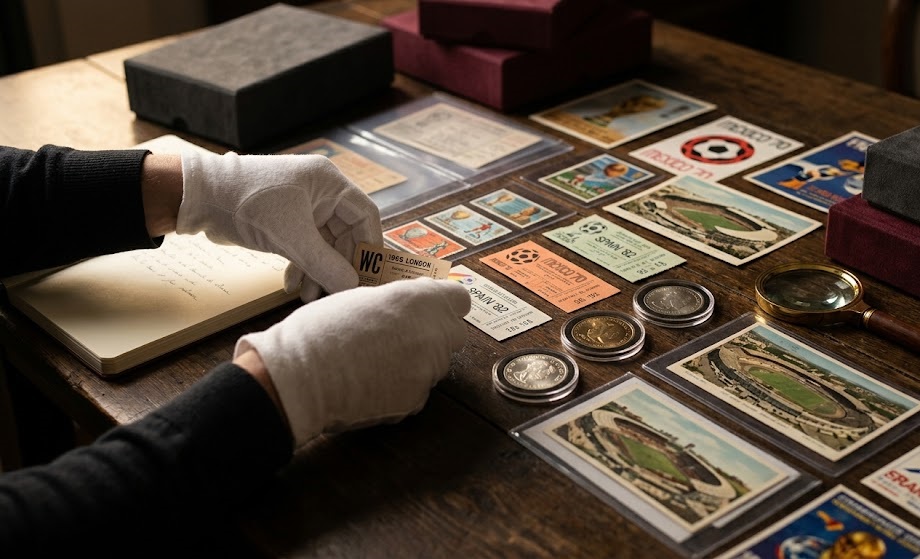
A World Cup match is temporary by design. The whistle blows, the score is recorded, the broadcast ends, and attention moves to the next fixture. Memorabilia changes that rhythm. A ticket, stamp, match program, postcard, jersey, or commemorative coin gives a fan something physical to revisit after the event has passed.
That is why Mohanty’s display in Bhubaneswar feels so timely during the 2026 football World Cup cycle. FIFA has made the tournament a global consumer event, with officially licensed items tied to host cities, mascots, accessories, pins, hats, and keepsakes. The official FIFA World Cup 2026 collectibles store shows how tournament culture now extends far beyond shirts and match broadcasts. Licensed objects help fans mark identity, geography, and memory.
The key difference in Bhubaneswar is that the collector’s display is not limited to new merchandise. Its value comes from layering eras together. Older souvenirs, stamps, clippings, and historical items remind visitors that a World Cup is not only a current entertainment product. It is a recurring global ritual that gathers political history, broadcast history, design history, national identity, and fan memory.
For younger visitors, this kind of display can make sports history easier to understand. A child may not remember Pelé’s Brazil, Diego Maradona’s Argentina, Zinedine Zidane’s France, or the tournament designs of older decades. A display case can create that first point of contact. The object becomes a prompt: who played, where the tournament happened, why a stamp was issued, why a host nation mattered, why a jersey design still feels recognizable decades later.
This is the educational side of collectible culture. It turns fandom from a reaction into a practice. The collector searches, verifies, protects, arranges, and explains. In that sense, a memorabilia room operates like a small museum without the formality of a public institution.
Why India’s Collectible Culture Is Moving Beyond Major Metros
India’s collectibles culture has often been described through big-city auctions, cricket memorabilia, vintage film posters, stamps, coins, comics, and luxury nostalgia. Bhubaneswar’s football display points to a broader shift: collectible culture is no longer restricted to Mumbai, Delhi, Bengaluru, Kolkata, or Chennai. Smaller and mid-sized cultural centers now have the networks, digital access, and event confidence to participate.
Market data supports that wider movement. IMARC Group estimates that India’s collectibles market reached USD 11.7 billion in 2025 and projects it could reach USD 28.0 billion by 2034, with a 9.69 percent CAGR from 2026 to 2034. The India collectibles market report points to demand across categories such as art, antiques, numismatics, philately, toys, action figures, comics, trading cards, and memorabilia.
That matters for sports culture. Collecting is not only a hobby for people who can buy rare auction items. It can begin with affordable stamps, match-day clippings, postcards, local publications, commemorative coins, used tickets, or family-kept souvenirs. The entry point can be emotional rather than expensive.
Bhubaneswar’s display has another advantage: it connects global football to Indian locality. A FIFA World Cup may be played thousands of miles away, but the objects bring the event into a neighborhood room. That local relocation is powerful. It allows fans to say, “This global story belongs here too.”
India’s cricket dominance in sports memory is still massive, and cricket memorabilia will continue to command huge attention. Yet football, hockey, chess, badminton, athletics, and Olympic-linked collectibles are increasingly visible in Indian fan conversations. A Bhubaneswar football display sits inside that broader diversification. It shows that the Indian collector is not limited to one sport or one national storyline.
What Makes Sports Memorabilia Different From Ordinary Merchandise
The growth of collectible culture depends on a basic distinction: merchandise is often bought for use, but memorabilia is preserved for meaning. A cap can be merchandise. A tournament cap connected to a specific host city, year, player, or family memory can become memorabilia. The difference is not always price. It is context.
This is why provenance matters. Serious collectors care about where an item came from, how it was acquired, what year it belongs to, whether it is official, and whether its story can be verified. That does not mean every fan needs auction-house paperwork for a postcard or newspaper clipping. It means that the culture matures when collectors treat objects with accuracy rather than rumor.
Sports memorabilia research firms have started to frame India as a growth market too. Deep Market Insights estimates India’s sports memorabilia collectibles market at USD 0.98 billion in 2025, with a projected rise to USD 2.09 billion by 2034. Its India sports memorabilia market data also identifies autographed memorabilia as a leading product type in 2025.
That commercial growth should be treated carefully. Collectibles can become expensive, speculative, and vulnerable to fake items when hype rises too quickly. The healthier cultural lesson from Bhubaneswar is not “buy everything before prices rise.” It is that collecting works best when it is rooted in knowledge, preservation, and community access.
A well-arranged display can teach better habits. It can separate official merchandise from personal souvenirs, historic clippings from recent reproductions, and sentimental objects from items with resale claims. It can show younger fans that collecting is not just accumulation. It is curation.
How Public Displays Make Private Fandom More Valuable
The most interesting part of Bhubaneswar’s World Cup memorabilia story is not only the size of the collection. It is the decision to show it. A private collection remains personal memory. A public-facing display becomes shared culture.
That shift matters in India, where family collections often sit in trunks, cupboards, scrapbooks, and albums without being recognized as cultural material. Sports clippings, old tickets, stamps, signed programs, and match souvenirs may appear ordinary until someone arranges them into a story. Once displayed, they become a bridge between generations.
Bhubaneswar has already seen how sports displays can carry civic memory. Hockey India noted that Kalinga Stadium’s refurbishment for the 2018 Odisha Hockey Men’s World Cup included a Walk of Champions showcasing World Cup winners from 1971 to 2014. That official venue memory, described in Hockey India’s Kalinga Stadium milestone coverage, shows how sports history can be made visible through curated space.
Mohanty’s football memorabilia room performs a smaller, more intimate version of that same idea. It brings global football history into a domestic setting, then invites others to look, ask, and remember. The display becomes valuable not just for what the items are, but for what they make possible: conversations between older fans and younger viewers, between cricket-first households and football-curious students, between global sports history and local pride.
There is a reason collectible culture often grows during major tournaments. Events create urgency. Fans want to mark the moment before it disappears. Later, those objects become evidence that they were there, that they cared, that the tournament mattered to them in a specific place and time.
Why Collectible Culture In India Is Becoming More Community-Driven
India’s collectible culture is growing because it now sits at the meeting point of nostalgia, digital discovery, sports identity, and local storytelling. A fan in Bhubaneswar can find global tournament history online, buy or trade selected items, follow official stores, compare collections, and then turn a room into a display for neighbors, students, and fellow enthusiasts.
That community layer separates lasting collecting from short-term hype. A market can grow through buying, but a culture grows through explanation. The Bhubaneswar display shows this clearly. Its strongest value is not the number of items. It is the way those items help people understand the World Cup as history, design, geography, and memory.
India’s next wave of collectors may come from exactly these kinds of settings: homes that become mini-museums, school visits to local displays, sports fans who begin with one stamp or ticket, and regional cities that treat global tournaments as local cultural events. Bhubaneswar’s role is especially meaningful because the city already understands how sports infrastructure and public memory can reinforce each other.
For fans, the lesson is simple and durable. A collectible does not need to be rare to matter. It needs a story, a date, a place, and someone willing to preserve it. Bhubaneswar’s World Cup memorabilia displays show why India’s collectible culture is growing: fans are learning that the emotional life of sport does not end with the final score. It can live on a shelf, in a frame, inside a scrapbook, or in a small room where global history suddenly feels close to home.