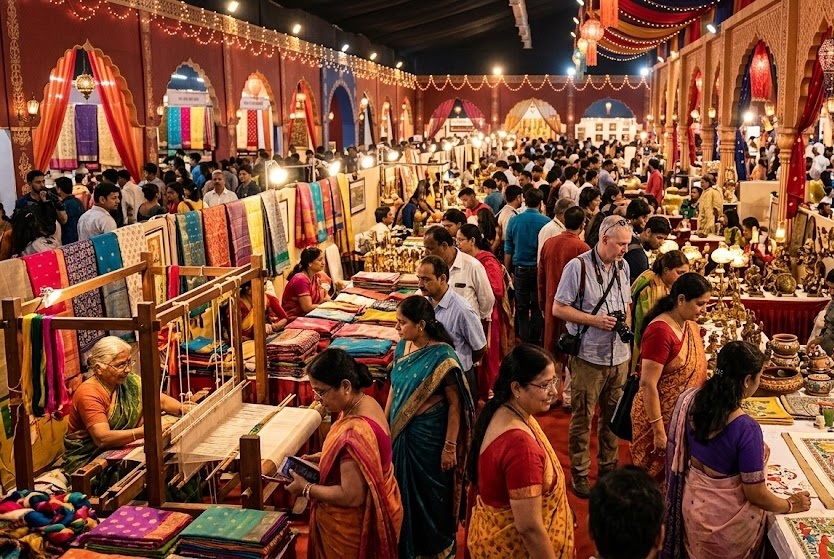
Indian craft fairs are no longer just cultural showcases or seasonal shopping destinations. In recent years, they have evolved into major market indicators, revealing which handicrafts are gaining commercial momentum, attracting younger buyers, and positioning themselves for global demand.
One of the clearest recent examples was Karigari 5.0, held at the Kolkata Centre for Creativity in early 2026. The exhibition brought together artisans, textile makers, folk artists, and craft entrepreneurs from across India, highlighting how regional craftsmanship is increasingly being presented within a contemporary design and retail context.
For buyers, events like these offer far more than visual inspiration. They provide valuable insight into authenticity trends, pricing evolution, export-ready products, and the future direction of Indian handicrafts.
Why Craft Fairs Matter More Than Ever
Historically, Indian craft fairs primarily served local audiences and tourism markets. Today, their role has expanded significantly due to:
- Increased international interest in handmade products
- Growing awareness of GI-tagged crafts
- Social media and digital marketplace integration
- Government-backed promotion of artisan clusters
Modern exhibitions function as a bridge between traditional artisan communities and contemporary global buyers.
This shift is especially visible in events like Karigari 5.0, where traditional weaving, folk painting, metalwork, and textile arts were displayed not as “ethnic products,” but as high-value design objects with cultural and commercial relevance.
What Karigari 5.0 Revealed About Buyer Trends
Karigari 5.0 highlighted several clear patterns in buyer behavior during 2026.
The strongest attention centered around:
- Sustainable textiles and natural dyes
- Lightweight decor suitable for export
- Handwoven fabrics with traceable origin
- Smaller collectible crafts with strong storytelling value
Rather than seeking generic souvenirs, buyers increasingly prioritized products with:
- Regional identity
- Demonstrable craftsmanship
- Authentic production methods
This reflects a broader global shift toward conscious and informed purchasing, particularly within the premium handicrafts market.
Which Craft Categories Are Seeing The Most Demand
While interest varies by region and market segment, certain categories consistently perform well at contemporary exhibitions.
| Craft Category | Why Buyers Respond |
|---|---|
| Handloom Textiles | Sustainability and versatility |
| GI-Tagged Crafts | Authenticity assurance |
| Folk Art And Painting | Collector appeal |
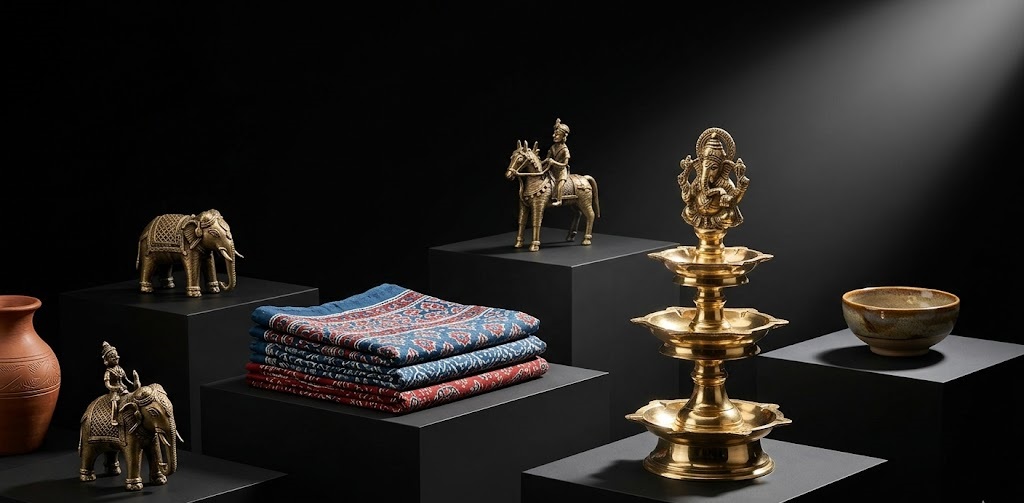
| Brass And Metal Decor | Long-term durability |
| Handcrafted Home Accessories | Export-friendly sizing |
Textiles remain one of the strongest categories because they combine cultural identity, practical usability, and easier international shipping.
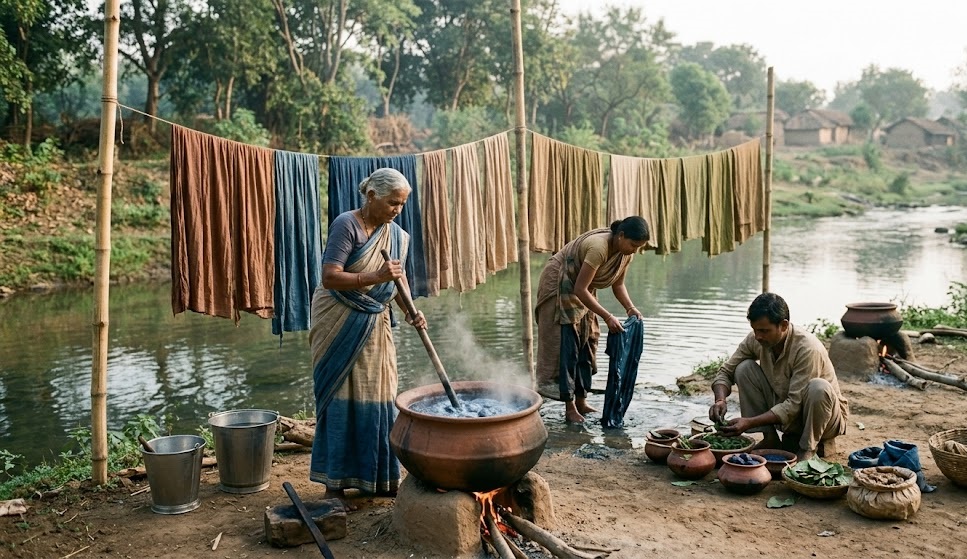
This is particularly true for naturally dyed fabrics like Ajrakh and Ikat, which continue to benefit from sustainability-driven demand. Buyers exploring these categories often begin by learning how to identify authentic handloom textiles, especially when comparing handmade and machine-produced products.
How Exhibitions Influence Global Buying Behavior
Craft fairs increasingly function as trend incubators for international markets.
Products that receive strong attention at exhibitions often experience:
- Increased online demand
- Higher export inquiries
- Expanded marketplace visibility
- Premium pricing shifts
In many cases, buyers first discover emerging crafts at exhibitions before they appear in larger retail channels.
This dynamic is especially important for lesser-known regional products that may not yet have mainstream visibility but possess strong authenticity and scarcity value.
Why Storytelling Is Becoming A Major Selling Factor
One of the most significant changes in modern craft exhibitions is the emphasis on artisan narratives and regional storytelling.
Buyers are no longer evaluating products solely on appearance. Increasingly, they want to understand:
- Where the craft comes from
- Who made it
- How it was produced
- Why the technique matters culturally
This is one reason GI-tagged and cluster-based crafts continue gaining momentum. The product becomes more than an object—it becomes a documented cultural artifact.
At Karigari 5.0, many exhibitions focused heavily on artisan identity, demonstrating how storytelling is becoming a central component of modern handicraft commerce.
Sustainability Is Driving Exhibition Trends
Another dominant theme at recent craft fairs is sustainability.
International buyers are increasingly drawn toward crafts that incorporate:
- Natural fibers
- Plant-based dyes
- Low-energy production methods
- Handmade processes with minimal industrial intervention
This trend benefits Indian handicrafts because many traditional techniques were already inherently sustainable long before sustainability became a marketing term.
Craft categories like:
- Ajrakh printing
- Handloom weaving
- Dhokra metal casting
- Bamboo and cane work
have all benefited from this growing alignment between heritage production and modern environmental priorities.
Pricing Dynamics Buyers Should Understand
Craft fairs often reveal pricing patterns before they become visible in broader retail markets.
| Market Phase | Typical Buyer Response |
|---|---|
| Early Exhibition Exposure | Curiosity and experimentation |
| Social Media Amplification | Increased demand |
| Export Adoption | Significant price growth |
This means buyers who identify emerging craft categories early can often access products before they transition into premium pricing tiers.
However, exhibitions also reveal another reality: authentic handmade production is becoming more expensive due to labor intensity, material costs, and limited artisan capacity.
For informed buyers, higher pricing is not necessarily a warning sign—it can reflect genuine craftsmanship and scarcity.
The Role Of Government And Cultural Institutions
Government-backed institutions continue playing a major role in promoting Indian craft fairs and exhibitions.
Organizations such as the Export Promotion Council for Handicrafts support international exhibitions, artisan participation, and export-oriented craft development across India.
These initiatives help ensure that regional artisan communities gain access to:
- Broader market visibility
- International buyers
- Professional exhibition infrastructure
- Digital promotion opportunities
This institutional support is helping transform many local crafts into globally recognized categories.
Why Buyers Should Pay Attention To Emerging Craft Events
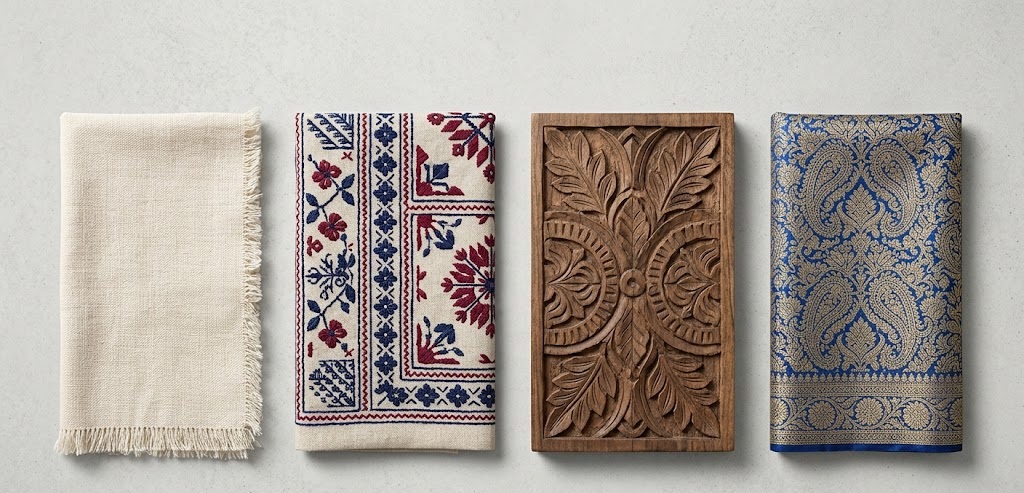
Many buyers still focus only on established crafts like Banarasi silk or Jaipur Blue Pottery. But exhibitions frequently reveal emerging categories before they become mainstream.
This includes:
- Newly promoted GI crafts
- Lesser-known weaving traditions
- Contemporary adaptations of folk art
- Hybrid artisan products designed for global interiors
For collectors and serious buyers, these events provide early access to products with strong future potential.
Craft Fairs Are Becoming Market Intelligence Platforms
The most important takeaway is that modern craft fairs are no longer just retail experiences—they are real-time indicators of where the Indian handicrafts market is heading.
For buyers, exhibitions reveal:
- Which crafts are rising in visibility
- Which materials and styles are trending globally
- Which artisan clusters are receiving institutional support
- Which categories may increase in value over time
Understanding these signals helps buyers move beyond impulse purchasing and toward more strategic, authenticity-focused decisions rooted in craftsmanship, cultural significance, and long-term value.