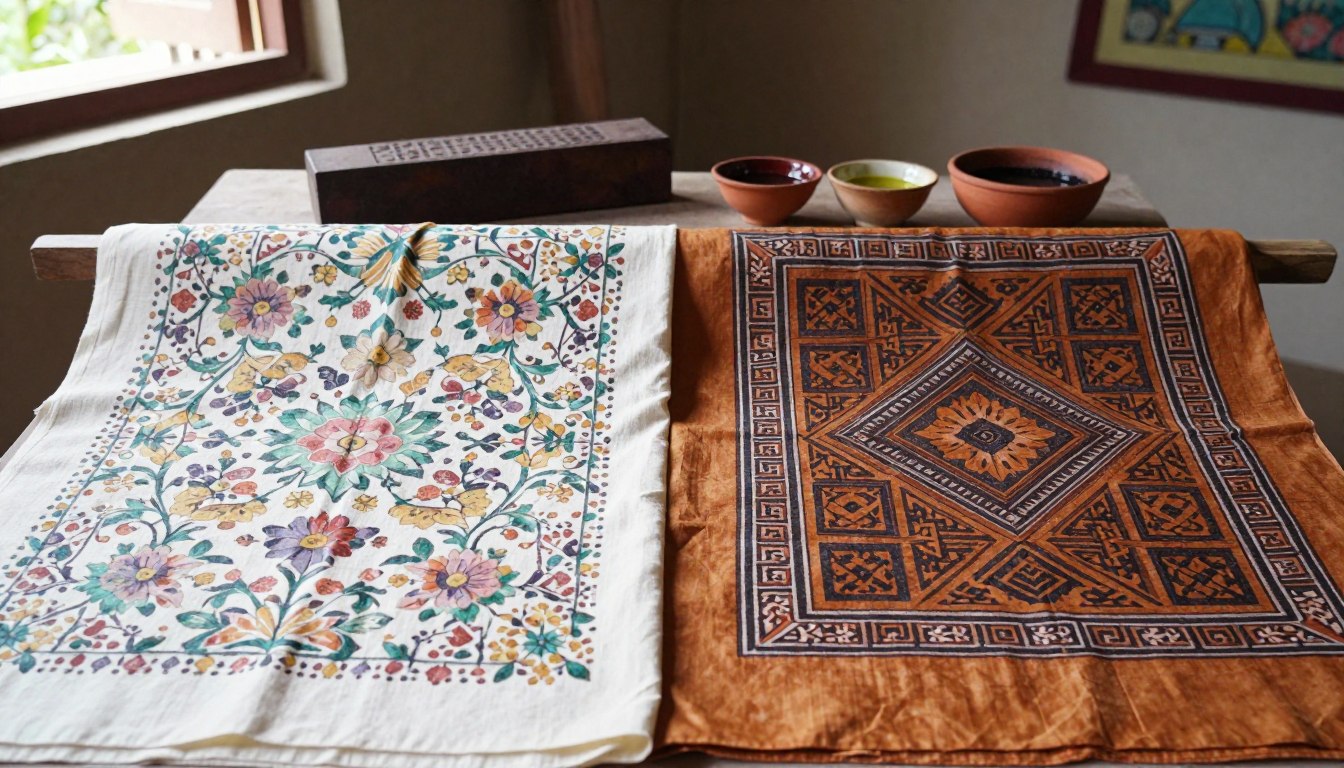
The world of traditional Indian textiles is rich with heritage. Two of its most iconic pillars are Sanganeri and Bagru hand block printing. Both come from Rajasthan and have the prestigious Geographical Indication (GI) status.
Despite sharing roots, they speak entirely distinct visual languages. The most immediate difference is in the base cloth. Sanganeri block print is known for its pristine, light-colored backgrounds. Bagru prints, on the other hand, traditionally have darker, often earth-toned foundations.
This visual contrast comes from their unique histories and the skilled communities, like the Chippa and Khatri, who perfected these crafts. Our guide will help you navigate their signature motifs, from delicate florals to bold geometrics. You’ll learn about the dyes and printing techniques that define each style.
For designers, collectors, and anyone valuing authenticity, understanding this distinction is key. It helps make informed purchasing decisions and deepens appreciation for these living art forms.
Intro: Two classics for wardrobe and home
When picking out clothes or home decor, two Indian block printing styles shine: Sanganeri and Bagru block print. Each has its own look and uses. Knowing their roles helps you choose better for your style or home.
Sanganeri prints are known for their detailed floral designs and fine lines. They’re perfect for light summer clothes and elegant sarees. These prints also work well for home items like table runners and bed linens, adding a calm touch to any space.
Bagru prints, on the other hand, feature bold geometric shapes and earthy tones. They add a rustic touch to everyday clothes. A Bagru block print shirt or jacket stands out in casual settings. The patterns also suit structured office wear and textured home decor.
For those who style, sell, or buy with care, knowing the difference is key. It’s not just about liking the patterns. It’s about picking the right story for your collection or home. The table below shows where each style fits best.
| Style | Primary Vibe | Signature Apparel | Signature Home Textiles |
|---|---|---|---|
| Sanganeri | Delicate, Serene, Botanical | Summer Kurtas, Sarees, Light Scarves | Table Runners, Cushion Covers, Fine Bed Linens |
| Bagru | Bold, Earthy, Rustic | Casual Shirts, Jackets, Structured Kurtas | Upholstery, Curtains, Decorative Throws |
This knowledge lets you use these classics with purpose. Whether you’re building a wardrobe or designing a room, your choice sets the mood. The next parts will explore their origins, techniques, and what makes each print special.
Origins & motifs: Sanganeri florals vs Bagru earthy geometrics
To understand the difference between Sanganeri florals and Bagru geometrics, we must look at their origins. Each design reflects its environment and community. This leads to two unique artistic traditions.
A Tale of Two Towns
Sanganeri printing started in Sanganer, near Jaipur. It was influenced by royal patronage and the court’s needs. This led to a focus on fine, nature-inspired designs.
Artisans created detailed patterns like roses, lotuses, and paisleys. These designs symbolized prosperity, purity, and life. The colors, from natural dyes, were chosen for their meanings—saffron yellows, deep reds, and indigo blues.
Bagru printing comes from Bagru town, home to the Chippa community. It reflects the local earth and water. Bagru designs are bold and structured, inspired by village life and myths.
Bagru prints feature geometric patterns and stylized animals. The region’s clay and rivers influence its designs. The colors, from natural dyes, are earthy and local.
| Aspect | Sanganeri Print | Bagru Print |
|---|---|---|
| Primary Origin | Sanganer, near Jaipur (Royal influence) | Town of Bagru (Chippa community) |
| Signature Motifs | Delicate florals (roses, lotuses), paisleys, fine vines | Geometric patterns, figurative designs, stylized animals |
| Color Palette Influence | Symbolic colors from flower-based natural dyes | Earthy tones from mineral and clay-based natural dyes |
| Cultural Inspiration | Royal aesthetics, nature symbolism, refinement | Village life, local mythology, connection to land |
The table shows a key difference. Sanganeri is known for its detailed beauty, while Bagru is bold and earthy. Both use local colors.
The natural dyes used in each tradition come from local resources. Sanganer had access to many dye stuffs for bright colors. Bagru used local clay and plants for coloring. This connection to place gives each print its unique character.
Knowing where these prints come from makes choosing one more meaningful. It’s not just about the pattern. You’re picking a story from local history and natural dyes.
Techniques: Sanganeri Discharge vs Bagru Dabu (Mud-Resist) and Natural Dyeing
To understand why these prints look and feel so different, we must dive into the core technical processes. Sanganeri uses a discharge method, while Bagru employs a mud-resist technique. These are not just printing styles; they are complete, opposing philosophies of applying color and creating pattern.
The Sanganeri Discharge Printing Process
Imagine starting with a canvas of color. That’s the Sanganeri way. Artisans first dye the entire fabric—often cotton or silk—in a deep, vibrant hue using plant-based, eco-friendly dyes.
Then, using intricately carved wooden blocks, they apply a special bleaching or discharging agent. This agent removes the color where it touches, revealing the fabric’s original white or a lighter shade beneath.
The result is remarkable precision. Delicate floral sprays and fine lines appear in crisp, clean contrast against the rich background. This “subtractive” method is why Sanganeri prints are known for their sharp detail and luminous quality on darker grounds.
The Bagru Dabu (Mud-Resist) Method
Bagru’s approach is the opposite: it’s all about blocking color before it ever touches the cloth. The star of the show is the “dabu” paste, a thick mixture of local clay, natural gum, and lime.
Artisans apply this dabu paste through blocks onto the pristine fabric. Once dry, the treated fabric is submerged in a vat of natural dye. The paste acts as a barrier, resisting the dye in the patterned areas.
After dyeing, the fabric is dried in the sun and then washed. The clay paste cracks and washes away, revealing the reserved pattern. This process creates Bagru’s signature look:
- A soft, slightly blurred, or “halo” effect around the designs.
- A distinct textured feel from the cracked resist.
- Earth-toned patterns from natural dyes like indigo, pomegranate, and madder.
The entire mud resist process is slow, involving multiple layers of paste and dye for deeper colors. It’s a testament to patience and a deep connection to natural materials.
While their methods clash, Sanganeri and Bagru share a vital common ground: sustainability. Both techniques are inherently azo-free, relying solely on natural dyes and mineral mordants to fix colors. There are no synthetic chemicals or toxic discharges.
This makes them benchmarks for non-toxic textile production. Choosing either means supporting an azo-free supply chain and owning a piece of truly clean, green craftsmanship. The technique defines not just the look, but the very ethics of the fabric you bring into your home.
Fabric bases and seasonality
The material of a block-printed piece, whether it’s cotton or silk, affects how it feels and functions. Your choice of fabric base turns the art into a practical, wearable piece. It decides the garment’s drape, breathability, and the right occasions for it.
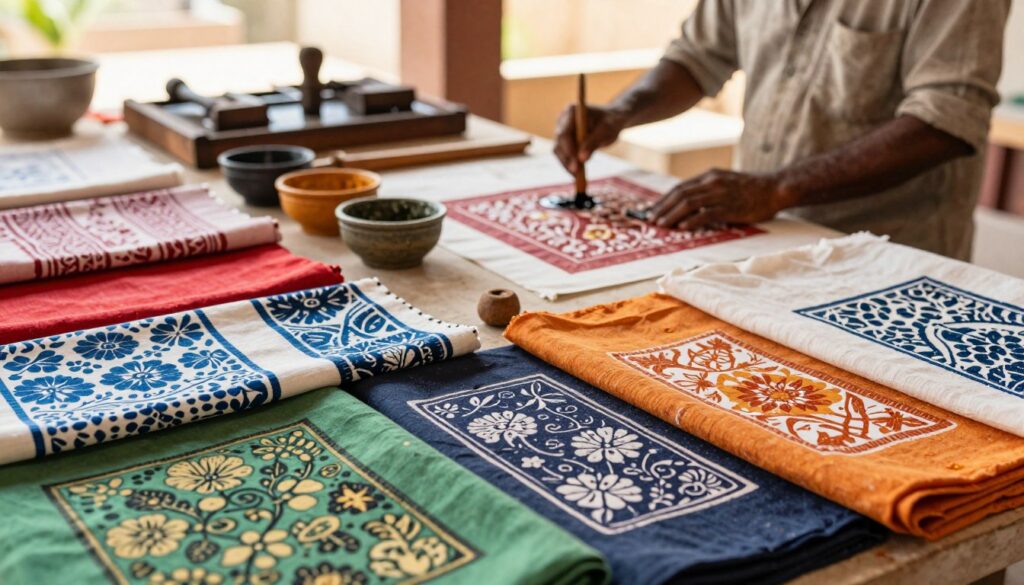
While Sanganeri and Bagru prints are rooted in cotton, modern pieces use various materials. Each material brings out different qualities in the prints and suits different climates. Let’s explore the most common fabric bases and their seasonal superpowers.
The Classic Canvas: Cotton and Linen
Cotton is the most traditional and breathable base for both prints. The weight and weave are key.
For Sanganeri prints, fine, high-thread-count cotton or soft mulmul (muslin) is ideal. These lightweight fabrics let the print’s delicate florals and fine lines shine. They offer superb airflow, making them perfect for hot summer wear.
Bagru prints, with their bolder, geometric patterns, often gain a grounded, earthy feel on heavier cotton or textured khadi (hand-spun cotton). This gives the garment more structure, making it suitable for jackets, kurtas, and home linens meant for year-round use.
Linen adds a layer of rustic charm and texture. Its natural slubs and crisp drape complement the organic, earthy motifs of Bagru prints beautifully. Linen-cotton blends offer a smart balance of comfort and durability for versatile, season-spanning pieces.
Luxurious Drapes: Silk and Georgette
When the occasion calls for elegance, fabric choices shift towards luxury.
Silk provides a luminous, luxurious base that elevates any print. For Sanganeri, silk enhances the delicacy of the patterns, creating stunning sarees and formal wear for festive events. The fabric’s natural sheen makes the colors pop.
Georgette, a sheer, flowing crepe fabric, is a favorite for contemporary silhouettes. It offers a graceful drape that works well with both print styles. Sanganeri prints on georgette create ethereal, feminine outfits, while Bagru motifs on this fabric take on a lighter, more modern appeal.
| Fabric Base | Best for Sanganeri | Best for Bagru | Seasonal Suitability | Key Characteristic |
|---|---|---|---|---|
| Fine Cotton/Mulmul | Delicate florals, fine lines | Less common | Summer, hot climates | Breathable, lightweight |
| Heavy Cotton/Khadi | Bold motifs on sturdier garments | Geometric, earthy patterns | Year-round, cooler evenings | Structured, durable |
| Linen | Contemporary casuals | Rustic, organic styles | Spring, Fall, Year-round | Textured, crisp drape |
| Silk | Festive & formal wear | Statement jackets, dupattas | Festive season, special occasions | Luxurious, luminous |
| Georgette | Flowy dresses, sarees | Modern tunics, scarves | Summer, indoor events | Sheer, flowing drape |
Making Your Seasonal Selection
Your lifestyle and local climate should guide your final choice. For a hot summer wardrobe, prioritize fine cotton Sanganeri prints. They are the ultimate in breathable comfort.
If you seek versatile pieces that transition across seasons, look to Bagru prints on medium-weight cotton or linen. These materials provide just enough weight for cooler moments while remaining comfortable.
For a deep dive into how these fabric choices interact with the core Sanganeri vs Bagru print differences, understanding the techniques behind them is key. Ultimately, matching the fabric base to the print’s character and your seasonal needs ensures you get a garment you’ll love wearing for years.
Authenticity & quality tests: Misprints, block alignment, backside ink look, bleed test
The beauty of hand-block prints is in their unique imperfections. These “flaws” show they are made by hand. Learning a few simple tests helps you spot true craftsmanship from fake.
Practical Tests for Hand-Block Authenticity
Here are four key tests to check for authenticity. They need no special tools, just your eyes and touch.
1. Visual Inspection: Celebrate the “Misprint”
Look at the pattern’s repeat on the fabric. Genuine hand-block printing often has slight misalignments. You’ll see tiny registration points used for alignment. These are signs of handwork. A perfectly uniform pattern is a sign of machine printing.
2. The Tactile Test: Feel the Block’s “Bite”
Feel the printed surface with your fingers. Real hand-blocking presses dye deep into the fabric. You’ll feel a textured impression of the block design. Machine printing feels smoother.
3. The Backside Look: Check for Dye Penetration
Turn the fabric over. Hand-block printing shows color on the backside. This means the dye has gone deep into the fabric. Machine prints or low-quality prints usually have a stark white backside.
4. The Bleed and Rub Test: Assessing Colorfastness
This test checks dye quality and colorfastness. Dampen a small area with a white cloth or cotton swab. Rub gently. Some color transfer is normal, but too much is a sign of poor dye.
For a dry rub test, rub a white cloth on the print. Little color transfer means good colorfastness. Remember, natural dyes like Bagru prints may change with washing, but they shouldn’t bleed too much at first.
| Quality Test | Authentic Hand-Block Sign | Machine-Made Indicator |
|---|---|---|
| Pattern Alignment | Slight human misalignments; visible registration points. | Perfect, uniform repetition with no variation. |
| Tactile Feel | Subtle textured “bite” from the block pressed into fabric. | Smooth, flat print sitting on the surface. |
| Fabric Backside | Faint dye penetration and color show-through. | White or with a sharp, printed-on layer. |
| Colorfastness (Bleed Test) | Minimal to moderate initial transfer; color holds over time. | Heavy bleeding or rapid fading after few washes. |
Use this table as a quick guide in stores or online. It shows the main differences between real and fake pieces.
Managing your expectations is key. Synthetic dyes have better colorfastness than natural dyes. A Bagru print from vegetable dyes may fade over time, telling its own story. These tests help you buy quality pieces that will age beautifully, not fall apart. Your new knowledge lets you invest in textiles with a true human touch.
Price transparency: Why natural-dyed hand block costs more
The cost of authentic hand-block printed textiles is not just a number. It reflects a human-centered process. Buying a Sanganeri or Bagru print means supporting weeks of skilled labor, rare materials, and sustainable practices. These are things fast fashion can’t match.
Let’s explore what makes these textiles special. The price reflects several key areas, each adding value and justifying the cost.
Breaking Down the Cost Structure
Every meter of fabric has a story. The price reflects four main areas:
- Artisan Skill & Time: Creating a sheesham wood block takes weeks. The printing process is slow, with each motif stamped by hand. This requires patience and skill, earning the artisan a fair wage.
- Material Sourcing & Preparation: Natural dyes like indigo and madder root are more expensive than synthetic ones. They need to be processed over days or weeks to get the right color.
- The Multi-Stage Process: Hand-block printing involves many steps. A piece may go through multiple rounds of printing, drying, and washing. Techniques like Bagru’s dabu add extra steps, increasing time and effort.
- Quality & Waste Management: Human hands can introduce slight variations. This adds character but also means some pieces may not meet standards. This accepted variance is part of the cost of premium goods.
Choosing textiles with natural dyes is good for the environment. It supports farming and avoids pollution. This choice has a cost, but it protects local ecosystems and water sources.
The price is a conscious choice. You’re investing in heritage, supporting artisans, and owning something unique. It’s a choice that values people and planet over fast fashion.
Styling: Urban casuals, office ethnic, table linens
Moving beyond their cultural origins, Sanganeri and Bagru block prints serve as dynamic elements in fashion and interior design today. Their real value is unlocked through creative styling. This allows you to build a personalized and culturally intelligent aesthetic for both your wardrobe and your home.
Elevated Urban Casual
Bagru prints, with their earthy geometrics, are perfect for creating relaxed yet polished looks. Pair a Bagru block print tunic with classic blue denim for an instantly stylish outfit. The contrast between the handmade textile and casual fabric feels modern and effortless.
Follow a key styling tip: balance a printed kurta with a solid-colored dupatta or scarf. This allows the intricacy of the block print to shine without overwhelming the eye. A simple canvas tote and leather sandals complete the look perfectly.
Office-Appropriate Ethnic Fusion
Sanganeri block print scarves and stoles are secret weapons for professional settings. Drape a floral-printed scarf over a neutral blazer or sweater. This adds a sophisticated pop of color and pattern that is entirely work-appropriate.
For a subtle statement, choose a Sanganeri print with a smaller, denser motif. Layer it under a structured jacket. This approach embraces the office ethnic trend, blending heritage craftsmanship with contemporary corporate style.
Home Decor Accents
These textiles transform living spaces with unique character. Use Sanganeri florals to create a serene and inviting atmosphere. They are ideal for bedroom schemes, table linens, or lightweight curtains that filter soft light.
For a bolder impact, employ Bagru geometrics as striking accent pieces. Use them on throw pillows in a minimalist living room or as a table runner on a solid wood table. This is why boutique hotels and heritage homes frequently feature these prints—they add instant warmth and artistry.
Start with one focal piece, like a bedspread or a set of napkins. Build your room’s color palette around its hues. This method ensures your space feels curated, not cluttered, letting the beauty of the hand block prints shine.
Care guide: First wash, salt/vinegar myths, sun fade prevention
Many cherished block prints fade too soon, not from wear but from common care mistakes. Proper block print care is easy once you know the truth. This guide will help you keep your Sanganeri or Bagru textiles looking vibrant.
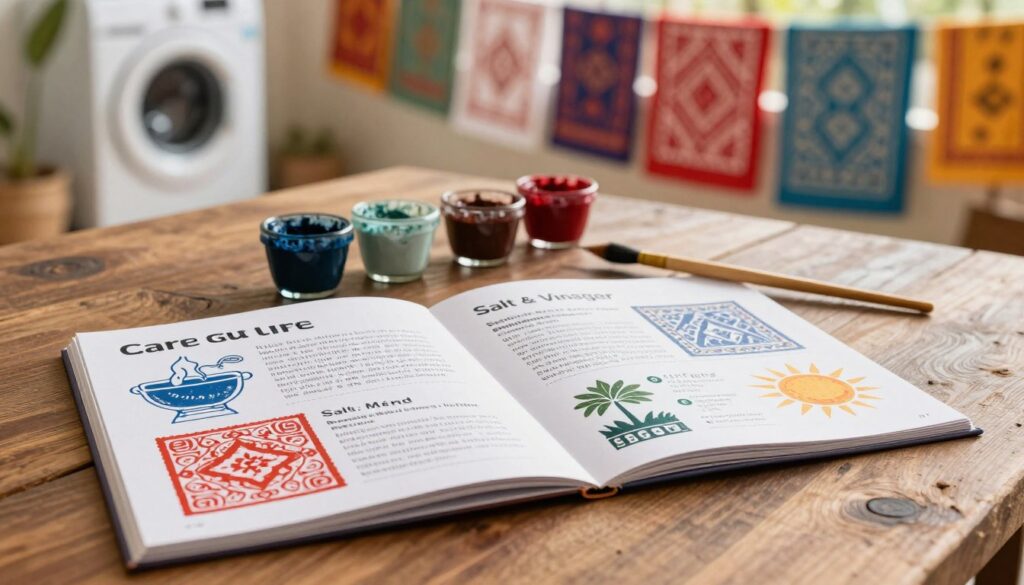
The Crucial First Wash
Your first wash is key to your fabric’s life. Always wash a new piece alone in cold water. This stops dye from getting on other clothes.
Choose a mild, pH-neutral detergent. Avoid harsh chemicals or optical brighteners, as they can harm the natural dyes. Don’t scrub hard. Instead, gently move the fabric by hand and rinse until the water is clear.
Dispelling the Salt and Vinegar Myth
Many think soaking new fabrics in salt or vinegar helps set the color. But for modern natural dyes, this is often not needed and can be harmful.
Artisans use special mordants to make colors last. Adding vinegar or salt can react with these mordants, dulling colors or changing the fabric’s feel. Stick to a gentle, cold-water first wash as recommended by the artisan.
Winning the Battle Against Sun Fade
Direct sunlight is the main enemy of natural dye. UV rays break down dye molecules, causing fading. Sun fade prevention is essential.
Don’t wring out the fabric after washing. Instead, roll it in a clean towel to remove excess water. Always dry your block prints in the shade, in a well-ventilated area. This simple step is the best way to keep colors bright.
By following this care guide, you protect the art and value of your block prints. For more on the craftsmanship, check out our guide on handmade Indian block printed fabrics.
Where to buy: Maker-led collectives, GI awareness, returns for diaspora
Buying genuine Indian block prints starts with finding ethical sources. Knowing where to buy authentic Sanganeri or Bagru textiles helps support artisans and keep heritage alive.
Prioritize Maker-Led Cooperatives and Transparent Brands
Look for maker-led collectives and artisan cooperatives. These groups sell directly to you, avoiding middlemen. This way, artisans get fair pay and traditional methods stay alive.
Many ethical brands work with these cooperatives. They offer transparent supply chains. Choose brands that name their artisans and explain how they make their products.
Buying from these places means you get authentic block prints. You also help keep the craft alive.
The Crucial Role of Geographical Indication (GI) Tags
A Geographical Indication (GI) tag proves a product comes from a certain area and follows traditional standards.
For Sanganeri and Bagru prints, GI tags show they’re real and from the right place. They stop fake versions from being sold. Always check for GI tags when shopping.
This tag is your best proof of buying a real, hand-block print from a specific area.
Global Access for the International Diaspora
For those outside India, it’s key to have international shipping and clear return policies. Many ethical sellers now serve customers worldwide.
When looking at an online store, check their shipping details. Look for:
- Detailed duty and tax estimates.
- Trackable shipping options.
- Customer service contact for delivery issues.
A good return policy is also important. It lets you check the fabric and print quality when it arrives. Trustworthy sellers usually have a return or exchange policy.
This builds trust and lets the global diaspora shop with confidence. It connects the artisan with your home.
Compare-at-a-glance recap + links to collections
Choosing between Sanganeri or Bagru block prints can change your style and home. This side-by-side guide helps you make a clear choice.
Sanganeri Prints: From Sanganer, Rajasthan. These prints feature delicate florals, vines, and fine details. Discharge printing makes the patterns crisp. The colors are bright and varied.
They look great on light fabrics like mulmul. Use them for scarves, dresses, and table linens.
Bagru Prints: From Bagru, Rajasthan. These prints have earthy geometrics and bold nature-inspired patterns. The dabu mud-resist technique gives them blurred edges. Natural dyes create indigo, rust, and mustard hues.
They’re perfect for heavier cotton items like kurtas, decor, and furnishings.
The key screen vs hand block difference is in quality. Screen printing is flat and uniform. But, genuine hand block printing, like Sanganeri and Bagru, offers unique variations and texture.
This artisan touch is the main screen vs hand block difference.
Explore these authentic crafts. Check out our collections of Sanganeri and Bagru block prints. Each piece connects you to artisan collectives in Rajasthan. It supports heritage and adds character to your wardrobe and home.