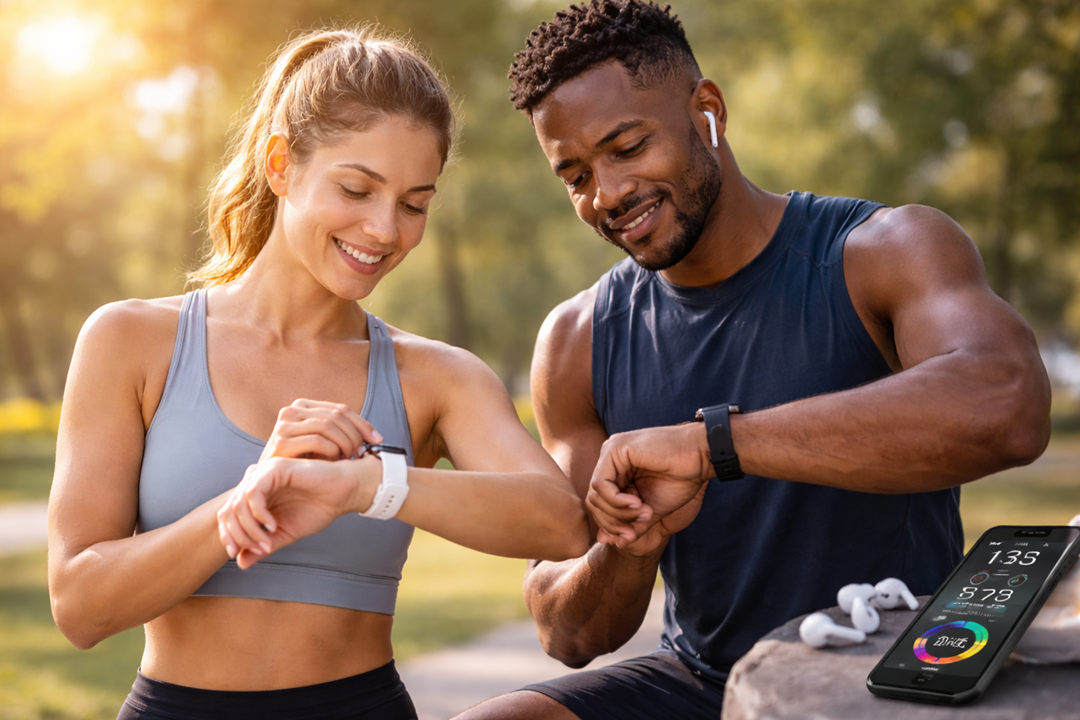
Over the past decade, wearable technology has transformed the way people approach health and fitness. Devices like smartwatches, fitness bands, and biometric sensors now provide real-time insights into activity levels, heart rate, sleep patterns, and recovery metrics. What was once limited to professional athletes is now widely accessible, helping everyday individuals monitor their progress and make smarter lifestyle choices.
As wearable devices become more sophisticated, they are reshaping how people track workouts, understand their bodies, and stay motivated to maintain long-term wellness habits.
How Wearable Fitness Devices Work
Wearable fitness trackers rely on small sensors embedded within the device to collect physiological and motion data. These sensors monitor key indicators such as heart rate, movement patterns, and calories burned during physical activity.
The collected data is then processed through mobile apps or integrated software platforms, where users can view performance metrics, analyze trends, and adjust their routines accordingly. This feedback loop helps individuals develop greater awareness of how daily habits influence their health.
Common metrics tracked by modern wearable devices include:
| Metric | What It Measures | Why It Matters |
|---|---|---|
| Steps and movement | Daily activity levels | Encourages consistent movement |
| Heart rate | Cardiovascular exertion | Helps manage workout intensity |
| Sleep quality | Sleep cycles and duration | Supports recovery and energy |
| Calories burned | Energy expenditure | Guides nutrition and activity balance |
| Recovery indicators | Resting heart rate and variability | Helps prevent overtraining |
These metrics allow users to view a more complete picture of their health beyond traditional workout tracking.
Why Wearables Are Changing Personal Fitness Habits
One of the biggest advantages of wearable fitness technology is the ability to translate complex health data into simple daily guidance. Instead of guessing whether a workout was effective, users can rely on data-driven feedback.
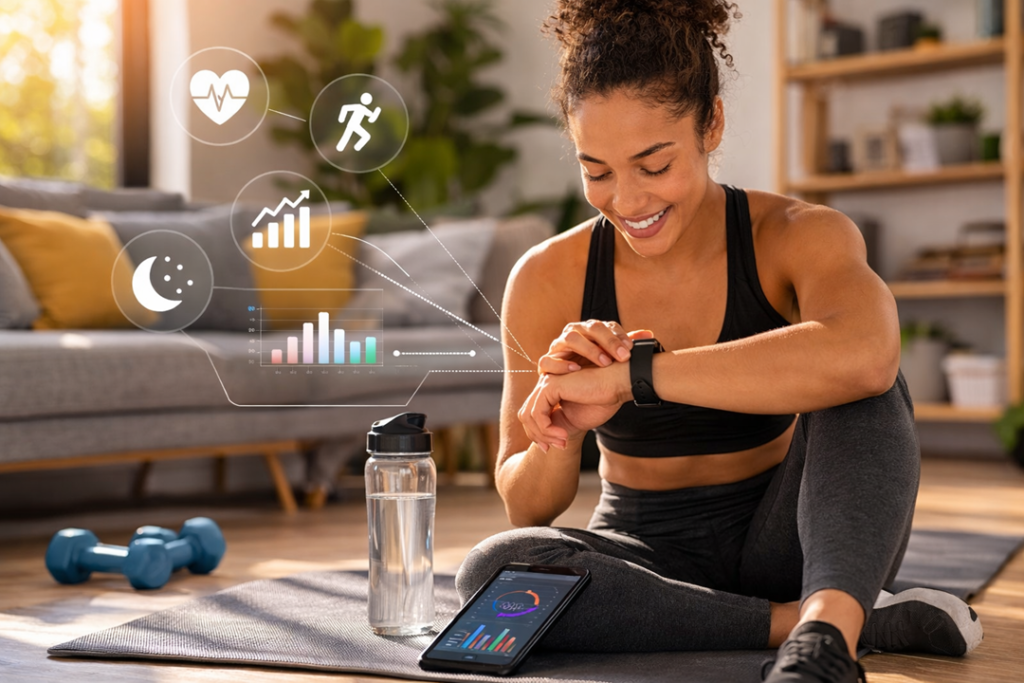
For example, heart rate monitoring helps individuals maintain appropriate training zones during cardio sessions. Sleep tracking can also highlight the connection between recovery and physical performance.
For people following routines such as no-gym cardio workouts at home, wearable devices can help ensure workouts reach effective intensity levels without requiring specialized equipment.
The ability to visualize progress—through step counts, weekly activity goals, or improved recovery metrics—also plays an important psychological role in maintaining motivation.
Popular Types Of Wearable Fitness Devices
The wearable technology market has expanded significantly, offering devices tailored to different types of users. While all share similar tracking capabilities, each category focuses on slightly different features.
| Device Type | Typical Features | Best For |
|---|---|---|
| Fitness bands | Step tracking, sleep monitoring | Casual activity tracking |
| Smartwatches | Heart rate monitoring, workout tracking, apps | Everyday fitness and health tracking |
| GPS sports watches | Advanced running and cycling metrics | Endurance athletes |
| Smart rings | Sleep tracking, recovery metrics | Minimalist health monitoring |
| Chest straps | Highly accurate heart rate monitoring | Performance-focused training |
Each option provides varying levels of detail, allowing users to choose the device that best fits their fitness goals and lifestyle.
The Role Of Data In Motivating Healthier Behavior
One reason wearable technology has gained widespread popularity is its ability to encourage behavior change through measurable goals. When users see how daily activity contributes to weekly or monthly trends, it becomes easier to maintain consistent habits.
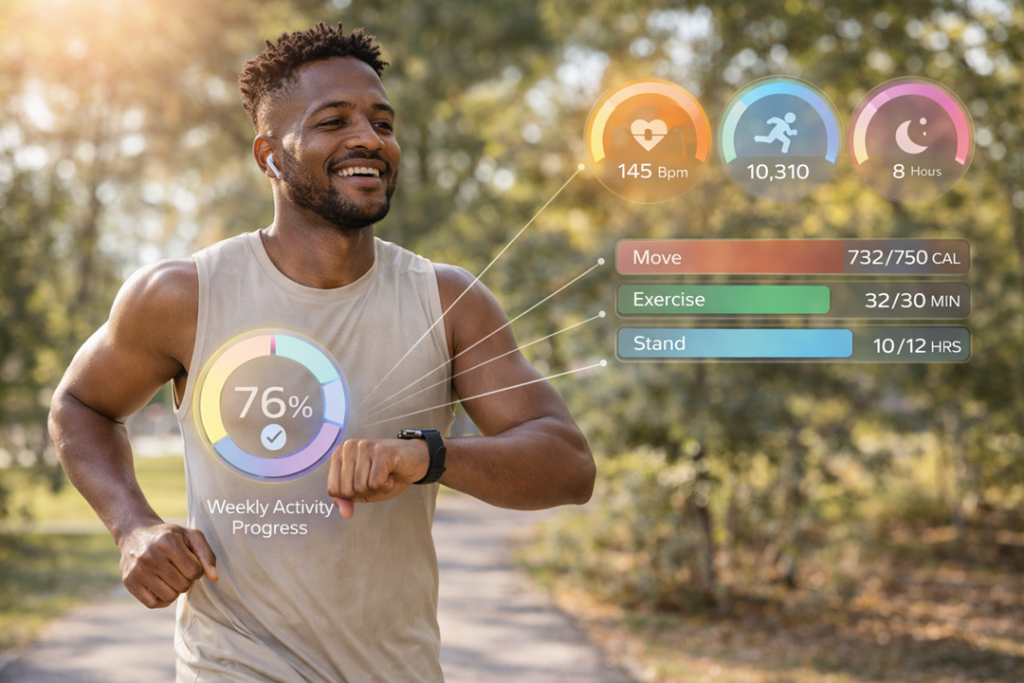
Many wearable platforms also incorporate reminders to move, breathing exercises, or guided recovery sessions. These features help users maintain balance between activity and rest.
For individuals building sustainable routines, data tracking often reinforces healthy habits such as daily movement, hydration awareness, and adequate sleep.
Limitations Of Fitness Tracking Technology
While wearable devices provide valuable insights, they are not perfect medical tools. Data collected from consumer devices can sometimes vary depending on sensor accuracy or how the device is worn.
For example, calorie estimates are often approximations rather than exact measurements. Similarly, sleep tracking may not fully capture complex sleep stages.
Experts therefore recommend using wearable data as a guideline for improving habits rather than a strict measurement of performance. According to the American College of Sports Medicine wearable fitness trends report, wearable technology remains one of the fastest-growing trends in personal fitness because it empowers individuals to monitor and adjust their activity levels.
The Future Of Wearable Fitness Technology
As technology advances, wearable devices are becoming more sophisticated and personalized. New developments include AI-driven coaching, continuous glucose monitoring, and advanced recovery analysis.
These innovations may allow future devices to recommend workouts, nutrition adjustments, or rest periods based on real-time biological feedback.
Ultimately, wearable technology represents a shift toward preventive health and personalized fitness, where individuals can track and improve their well-being with greater precision than ever before.
By combining consistent movement, smart recovery strategies, and data-driven insights, wearable devices are helping people take a more informed approach to long-term health.