Afternoon crashes and late-night cravings often feel unavoidable, especially during busy workdays. But more often than not, fluctuating energy levels are tied to what—and how—we snack. Smart snacking isn’t about eating less; it’s about choosing foods that stabilize blood sugar, support metabolism, and provide consistent fuel throughout the day.
When done strategically, snacks can bridge nutritional gaps, prevent overeating at meals, and keep both mind and body performing at their best.
Why Energy Crashes Happen
Many common snack foods are high in refined carbohydrates and added sugars. While they provide a quick boost, they’re often followed by a sharp drop in blood glucose levels. This cycle can lead to fatigue, irritability, and renewed hunger shortly after eating.
Stable energy depends on balance. Combining protein, fiber, and healthy fats slows digestion and supports a steadier release of glucose into the bloodstream. Instead of dramatic spikes and dips, your body experiences a more controlled and sustained supply of fuel.
If you’re already working on improving overall habits through simple daily health routines, optimizing snack choices becomes a natural extension of that effort.
The Foundation Of A Smart Snack
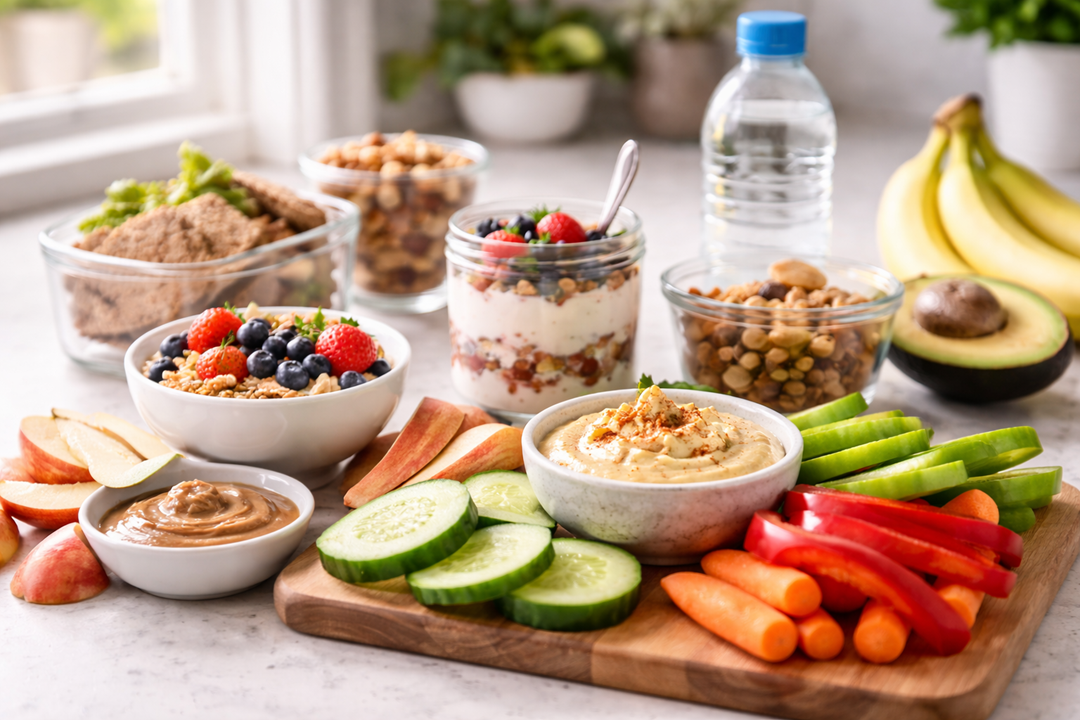
A well-structured snack typically includes at least two macronutrients—ideally protein paired with fiber or healthy fat. This combination helps prolong satiety and supports metabolic stability.
The table below outlines simple, effective snack pairings:
| Snack Combination | Why It Works |
|---|---|
| Greek yogurt + berries | Protein and fiber promote fullness and stable energy |
| Apple slices + almond butter | Natural carbohydrates paired with healthy fats slow digestion |
| Hummus + raw vegetables | Fiber and plant protein support blood sugar balance |
| Cottage cheese + pineapple | Protein-rich base with moderate natural sugars |
These options are convenient, require minimal preparation, and can be adapted based on dietary preferences.
Timing Matters More Than You Think
Snacking isn’t just about what you eat—it’s also about when you eat. Long gaps between meals can lead to excessive hunger, increasing the likelihood of impulsive food choices.
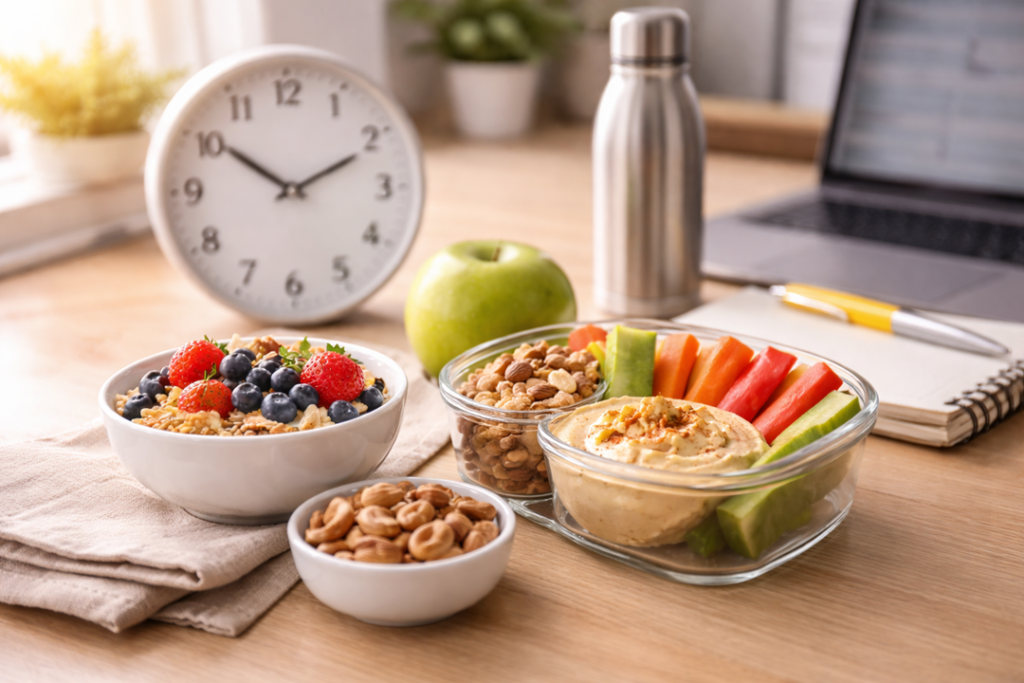
A balanced snack 2–3 hours after a meal can help maintain steady energy levels. For example, a mid-afternoon snack can reduce the urge for high-sugar options later in the evening.
Planning ahead makes consistency easier. Strategies like batch cooking for better nutrition can also apply to snacks—preparing portioned options in advance reduces decision fatigue during busy days.
Nutrients That Support Sustained Energy
Certain nutrients play a key role in maintaining steady performance throughout the day:
- Protein supports muscle maintenance and slows carbohydrate absorption.
- Fiber stabilizes blood sugar and promotes digestive health.
- Healthy fats provide long-lasting energy.
- Complex carbohydrates offer gradual glucose release.
According to the Academy of Nutrition and Dietetics, balanced meals and snacks that combine these elements contribute to improved energy regulation and overall dietary quality.
The goal isn’t perfection—it’s intentional balance.
Smart Snacking At Work Or On The Go
Busy schedules often make convenience a priority. However, packaged snack foods marketed as “healthy” can still contain high levels of added sugars or refined ingredients.
When selecting store-bought options, review ingredient lists carefully. Look for:
- Short ingredient lists with recognizable foods
- At least 3–5 grams of protein
- Minimal added sugars
Portable whole-food options—such as mixed nuts, boiled eggs, or whole fruit—remain some of the most reliable choices.
Consistency matters more than variety. Rotating a few dependable options often proves more sustainable than constantly experimenting.
Avoiding The Late-Night Energy Dip
Evening cravings frequently result from under-fueling earlier in the day. Skipping balanced snacks can lead to significant hunger at night, increasing the likelihood of overeating.
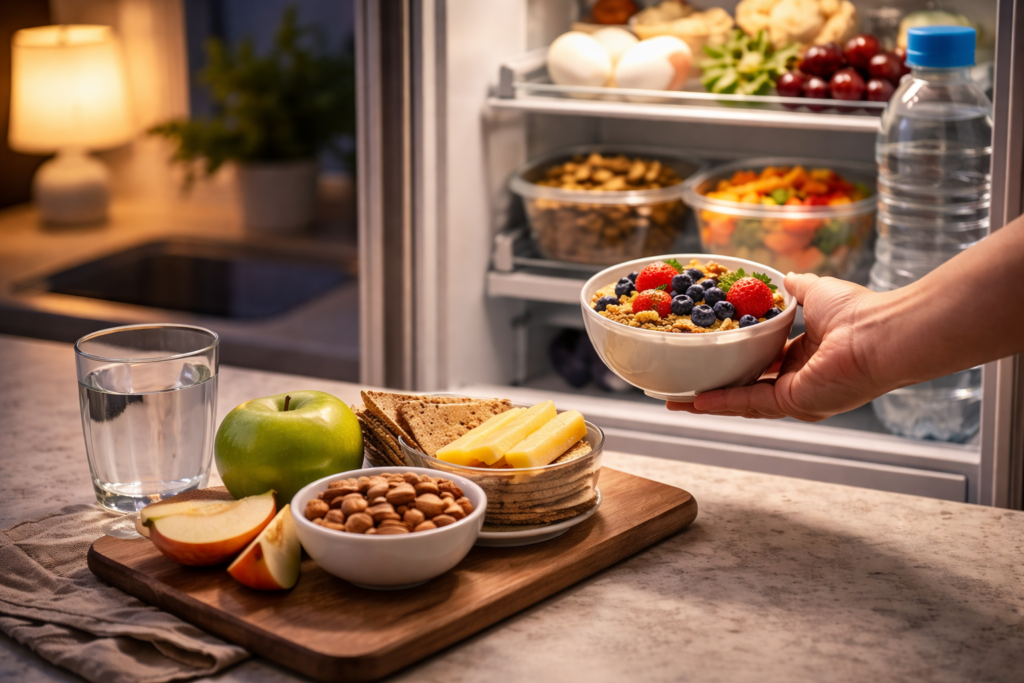
Instead of restricting intake during the day, focus on steady nourishment. A balanced afternoon snack can reduce nighttime impulses and support better sleep by preventing blood sugar fluctuations.
Hydration also plays a role. Mild dehydration is sometimes mistaken for hunger, so regular water intake should accompany any nutrition strategy.
Building A Sustainable Snacking Routine
Healthy snacking doesn’t require strict rules or complex meal plans. It requires awareness and consistency. Choosing whole foods, balancing macronutrients, and spacing meals appropriately can help regulate appetite and energy.
Over time, these small adjustments create noticeable improvements in focus, mood stability, and physical performance.
When snacks are intentional rather than reactive, they become a powerful tool for long-term wellness. Balanced choices today lead to steadier energy tomorrow—and that consistency compounds over time.