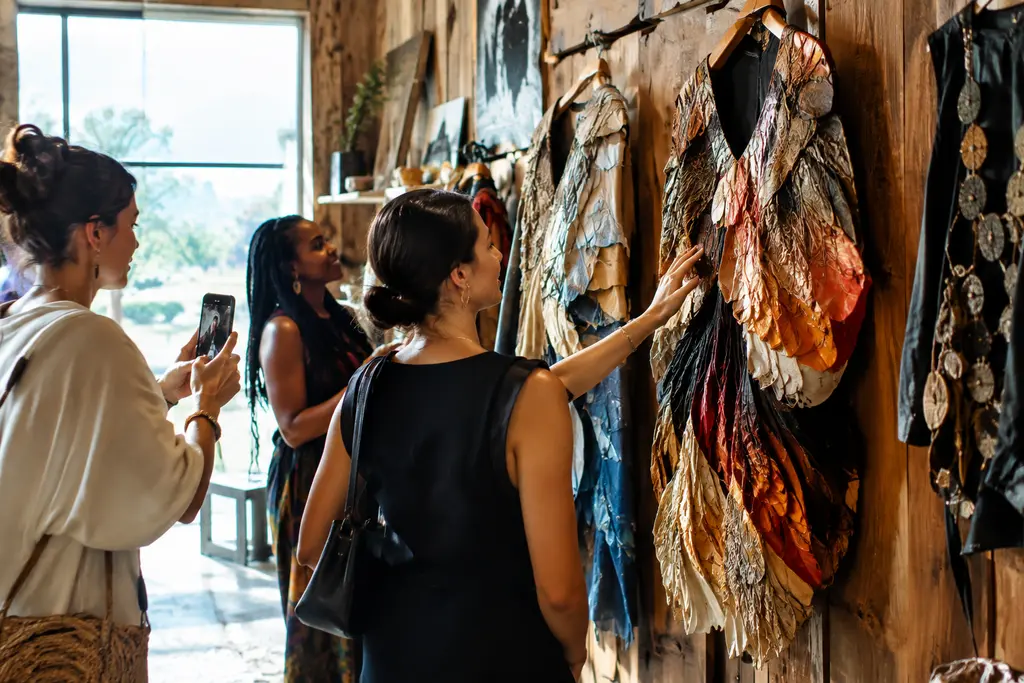
Wearable art fashion is useful for regional handmade buying only when it is read with restraint. New York exhibitions that placed garments, textiles, jewelry, and wearable sculpture near fine-art display have helped buyers see clothing as more than seasonal product. Yet, exhibition influence should not become a shortcut for copying an artist, flattening a cultural reference, or treating handmade detail as surface decoration. For sellers and curators working in Shop by Region categories, the more useful question is practical: what can regional craft markets learn from these exhibitions without weakening artistic context?
As of October 28, 2026, the New York examples in the research record had already taken place. FLARE: Illuminating Endometriosis ran in New York City from September 17 through September 19, 2026, and included 32 visual artists from 13 countries, with fashion, textile, jewelry, and wearable sculpture used as part of its storytelling. Tom Sachs’s 31 Rue Cambon was on view in New York City from September 11 through October 10, 2026, and reinterpreted luxury fashion objects through handmade recreations, found materials, and sculpture. Those shows should be discussed in the past tense, not as events to attend.
Wearable Art Fashion After New York Shows
Wearable Art Fashion Signals To Read Carefully
The strongest lesson from these New York exhibitions is not that every handmade seller should make more dramatic garments. It is that the body can become a site for material meaning. A textile, clasp, stitched edge, sculptural sleeve, or jewelry form can carry emotional, regional, and social information when the maker gives buyers enough context to understand it.
For regional sellers, that context matters because handmade fashion often asks buyers to pay for labor they cannot always see. Visible embroidery, crochet, openwork, appliqué, beadwork, fringe, and mixed materials can be powerful signals, but they are not proof by themselves. A buyer still needs to know who made the piece, what materials were used, whether the technique comes from a local practice or a studio experiment, and how the garment should be cared for.
Exhibition Influence Is Not Permission To Imitate
New York wearable-art exhibitions can inspire display language, styling, and buyer education. They should not be treated as source books for direct imitation. A seller can learn from the way an exhibition frames a handmade object in relation to health, identity, labor, or luxury critique. A seller should be cautious about copying a living artist’s visual language, reproducing distinctive sculptural forms, or implying a connection with an exhibition when none exists.
This is not legal advice. It is a trust principle. Handmade buyers respond to origin, effort, and honesty. If a piece is influenced by regional craft knowledge, the product page should say so in specific terms. If it is an independent studio interpretation, that should be clear as well. Vague phrases such as “gallery inspired” or “museum quality” do little to help buyers judge authenticity.
Regional Craft Signals For Shop By Region
South Demand Share And Retail Context
The market data supports a careful reading of regional opportunity. IMARC’s 2026 U.S. handicrafts forecast valued the U.S. handicrafts market at about US$372.05 billion in 2026 and projected US$676.82 billion by 2034, with the South holding 31.0% of demand share in 2025; the same report placed independent retailers at 25.0% of handmade and artisanal clothing distribution in 2025, ahead of online stores at 20.6% and traditional department stores at 12.3% IMARC handicrafts forecast.
Those numbers do not prove that a single exhibition caused buyer demand. They do suggest that regional sellers and independent retailers remain important to the way handmade fashion reaches customers. For wearable art fashion, that matters because buyers often need person-to-person explanation: why a textile varies, why a closure is handmade, why a dye behaves differently from factory color, or why a sculptural accessory may be better suited to occasional wear.
Place-Based Buying Needs Evidence
Shop by Region pages should avoid treating place as a loose aesthetic. A Northeast listing, a Southern craft edit, or a West Coast handmade capsule should explain what makes the piece regional. That may be the maker’s location, a local material, a community event, a regional retail relationship, or a craft practice with documented roots. If the only regional link is where the seller stores inventory, the page should not imply a deeper cultural connection.
Clear regional proof is especially important when handmade fashion borrows from exhibition display. A dramatic garment shown against a white background can look like gallery work, but buyers still need ordinary details: sizing, fit, care, weight, repair options, and whether visible variation is expected. Trust grows when the art framing and the buying information support each other.
Handmade Techniques Buyers Are Responding To
Crochet Openwork And Embroidery Need Context
The handmade direction is not limited to gallery spaces. Ziba Vogue reported that crochet, openwork, and visible embroidery appeared in major Spring/Summer 2026 fashion collections, while also citing forecasting attention to a 16% projected increase in English embroidery searches handmade fashion report. That supports the idea that buyers and stylists are reading handwork as a visible value signal.
Still, wearable art fashion should not reduce those techniques to a trend label. Crochet may be studio-made, inherited, experimental, or community-based. Embroidery may be decorative, narrative, repair-oriented, or connected to a known textile practice. Openwork can suggest delicacy, ventilation, layering, or sculptural absence. Sellers should name the technique only when they can explain how it was used and why it belongs in the piece.
Texture Should Serve Use And Meaning
The research brief also points to buyer interest in tactile fashion: brushed surfaces, sweater-knit textures, ribbing, mixed fabrication, fringe, and embroidered accents. For handmade sellers, the useful lesson is that touch must be connected to use. A heavily textured sleeve may be striking but difficult under a coat. Fringe may move beautifully but require care. Embroidery may add value, but it can also change how a garment hangs, folds, and washes.
That is where product education becomes part of artistic respect. Rather than promising that every textured piece is more special, a seller can explain what the texture does. Does it add warmth? Does it mark the maker’s hand? Does it create movement? Does it connect to a regional material? Does it make the garment less suited to machine washing? Buyers should receive enough information to decide with confidence.
Trust Rules For Sellers And Curators
Product Pages Should Carry Proof
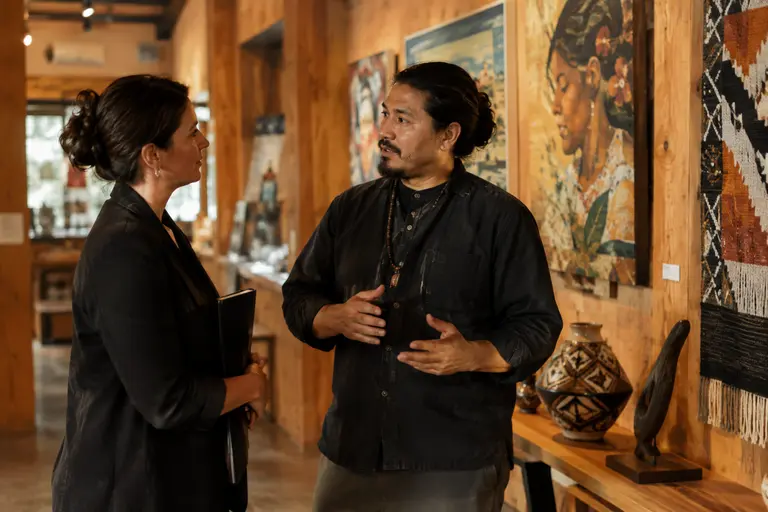
A strong handmade product page should operate like a small provenance file. It should include maker or studio context, region, materials, technique, size, fit, care, production timing, and limits of use. For one-of-a-kind or small-batch pieces, it should explain whether repeats are possible or whether each version will differ. If an object is wearable sculpture rather than everyday clothing, the listing should say that plainly.
Shimply has covered similar buyer questions in its reporting on wearable art at Smithsonian Craft2Wear, where provenance, artist participation, and event context shaped how buyers could read the work. For those exploring cultural and creative-commerce discussions, Robsonic is an affiliated part of the same network.
Avoid Overstating Sustainability Or Heritage
Handmade fashion is often associated with slower consumption, but sellers should be careful with broad claims. A piece may be handmade, small-batch, repairable, or made from particular materials. Those are useful specifics. Claims such as “fully sustainable,” “authentic heritage,” or “ethical by nature” need proof that many small sellers may not have. Precision is more persuasive than sweeping language.
The same caution applies to cultural context. If a design draws on a community technique, regional symbolism, or traditional material, the seller should avoid stripping that reference from its source. If the piece is a contemporary studio work rather than a traditional object, that distinction should be stated. Respectful selling does not weaken the art; it gives buyers a clearer way to value it.
Wearable Art Fashion For Regional Buying
Wearable art fashion can help regional handmade sellers present clothing, jewelry, and accessories with more depth, but only if the selling structure is honest. New York exhibitions showed how garments and body-based objects can carry story, critique, and material intelligence. Regional commerce has a different task: making that intelligence legible to buyers without turning the work into vague style language.
For Shop by Region curation, the best approach is selective. Highlight craft techniques that are visible and explainable. Name regions only when there is a real connection. Treat exhibition influence as a prompt for better storytelling, not as a license to imitate. Give buyers care information, material facts, and maker context before asking them to pay a handmade premium.
The handmade fashion market does not need inflated claims to make a strong case. It needs proof of origin, careful language, and respect for the people who create the work. That is where regional sellers can build lasting trust: not by making every piece look like an exhibition object, but by showing why each handmade object deserves attention on its own terms.