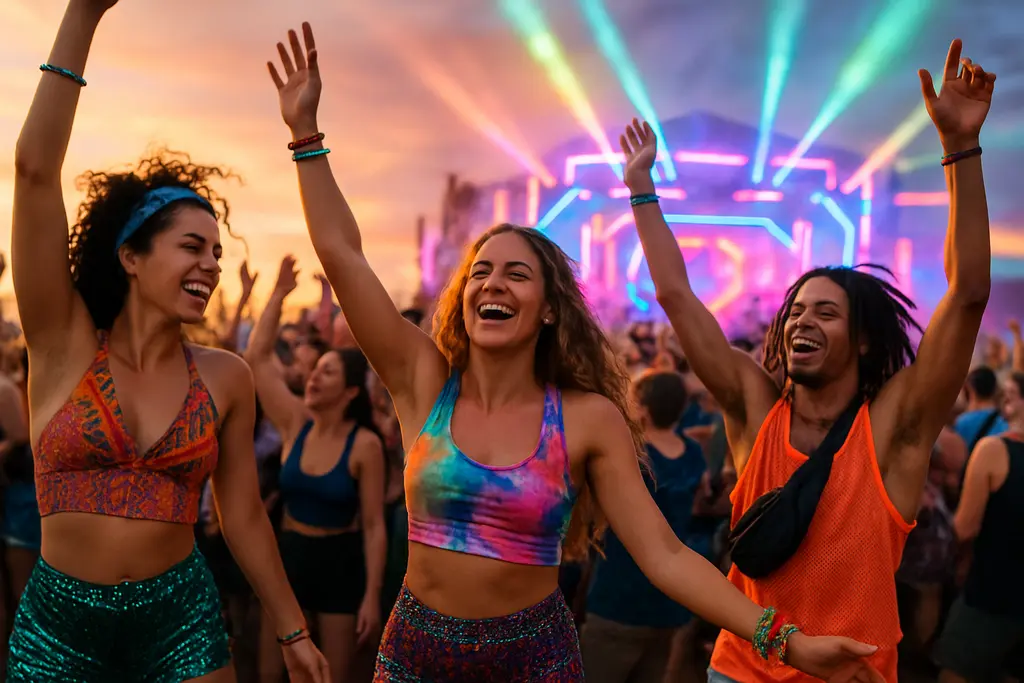
Latina rave culture at Hard Summer 2026 was not a side note. On August 1-2, 2026, at Hollywood Park beside SoFi Stadium in Los Angeles, Latina and Latino artists including Kali Uchis, Tokischa, Six Sex, BOLO, RØZ, Nick León, and CQUESTT were presented as central figures in the festival’s identity, with Kali Uchis headlining one of the main slots on August 1, according to Latination’s festival report. For wellness readers, the more careful question is not whether one festival changed rave culture by itself. It is how visibility, movement, bilingual expression, and community recognition can support belonging without turning culture into a marketing label.
As a wellness lens, this matters because festivals are not only entertainment spaces. They are social environments where identity can be affirmed or diluted. At Hard Summer 2026, the presence of Latin American jerseys, flags, piñatas, cultural memes, and regional iconography in the crowd signaled that attendees were not only hearing music; many were publicly locating themselves within it. That form of visible belonging can be emotionally meaningful, though it should not be overstated as a clinical mental-health intervention without stronger direct research.
Why Latina Rave Culture Mattered At Hard Summer
Latina Rave Culture Was Centered, Not Added Late
Latina rave culture became legible at Hard Summer because the booking pattern and crowd response pointed in the same direction. Kali Uchis, Tokischa, and Six Sex were not treated only as genre-specific guests outside the electronic frame. Their presence showed how dance music events can make room for dembow, Latin house, pop, urban genres, and bilingual performance without asking artists to erase where their sound comes from.
This is not a claim that all Latin artists share one sound or one cultural experience. A Colombian American pop figure, a Dominican dembow artist, an Argentine performer, and Mexican American DJs can all move through rave spaces differently. The wellness value begins with that distinction. Cultural affirmation is strongest when identity is specific rather than flattened into a single festival theme.
Hard Summer’s setting in Los Angeles also mattered. California’s Latino population is large and young, and UCLA’s Latino Policy and Politics Institute reported that Latino workers made up about 39% of California’s workforce, around 7.8 million people, while Latina women faced a median hourly wage of about $18 compared with about $35 for non-Latino men in its 2026 California analysis. That economic context does not explain a festival lineup on its own, but it reminds us that cultural visibility exists alongside real material gaps.
Wellness Starts With Recognition
From a mindful wellness perspective, recognition is not a vague feeling. It can change how safe a person feels expressing language, movement, humor, fashion, and social ties in public. When Latino ravers saw Spanish-language performance, Latin rhythms, and cultural symbols at a major electronic festival, the space could feel less isolating. That point should be stated cautiously: festival reporting and interviews suggest identity affirmation and stress relief, but precise quantitative studies on Latina attendees in electronic music festival settings remain limited.
Still, the mechanism is familiar in community wellness work. Shared music and movement can reduce social distance. Bilingual moments can lower the pressure to code-switch. Clothing and symbols can become signals of kinship. Dance can offer emotional release without requiring verbal explanation. These are not replacements for therapy, rest, fair pay, or community safety. They are part of the social conditions that can make people feel seen.
How Sound, Dance, And Fashion Carried Identity
Genre Blending Had Cultural Weight
Hard Summer 2026 included crossover moments that made genre boundaries feel porous: RØZ brought Peso Pluma onstage, BOLO featured OHGEESY, and Tokischa performed dembow in an EDM setting. These moments mattered because rave culture has often been discussed through European and North American electronic lineages, even though dance scenes have always been shaped by migration, Black and Brown creativity, queer nightlife, and local scenes.
For Latina rave culture, genre blending can work as a form of self-definition. A dembow rhythm in an EDM environment does not simply decorate a set; it changes who feels addressed by the sound. Latin house and regional Latin references can give dancers an entry point that feels familiar while still leaving room for experimentation. The health-related effect is subtle: a crowd that hears itself reflected may move with less self-monitoring and more ease.
Clothing And Symbols Built Social Signals
Festival fashion at Hard Summer also functioned as cultural communication. Mexican, Salvadoran, and other Latin American jerseys and flags appeared in the crowd, while piñatas and regional iconography signaled belonging. This is where wellness overlaps with visual culture. Clothing can help a person locate community quickly in a large, high-stimulation environment.
For readers interested in the craft and costume side of festival identity, Shimply’s related analysis of Hard Summer festival fashion looks at heat, comfort, regional style, and creator commerce. The broader point is similar: dress is not only decoration. In a festival context, it can communicate care, humor, memory, and group affiliation. Related visual-culture networks such as Fairy Tale Fashion often remind readers that costume and fantasy can be expressive while still carrying cultural responsibility.
Community Care In A High-Stimulation Festival Space
Belonging Is A Wellness Factor, Not A Cure-All
Rave spaces can be physically intense: heat, long standing periods, loud sound, crowd density, late hours, and sensory overload all affect the body. Community belonging can help people feel supported within that environment, but it does not remove the need for hydration, rest, hearing protection, consent, and clear safety practices. A wellness analysis should hold both truths at once.
Latina rave culture at Hard Summer showed how representation can support emotional ease, especially for attendees who may be used to entering mainstream festival spaces where their language or cultural references are treated as secondary. Yet the same festival conditions can still strain the nervous system. Mindfulness here is practical: check in with your body, choose breathable clothing, plan meeting points, pace dancing, and stay aware of friends without policing their joy.
Trust Forms Through Shared Rituals
Festival communities often build trust through small rituals: trading compliments, sharing water, dancing in circles, helping someone find friends, or recognizing a jersey from a shared homeland. These actions are modest, but they can soften anonymity in a large venue. Shimply has covered similar patterns in rave community wellness, where art, movement, and trust shape live-event culture.
In this setting, Latina and Latino presence was not only onstage. It was distributed through the crowd. That matters because a festival’s emotional tone is co-created by artists, organizers, vendors, dancers, and friend groups. The performers provide focal points, but attendees decide whether cultural visibility becomes mutual care or only spectacle.
- Use cultural symbols with personal or community grounding, not as empty costume pieces.
- Make room for bilingual expression without treating translation as a burden.
- Practice consent in dance spaces, including space, touch, photos, and filming.
- Balance celebration with body care: water, rest, shade, ear protection, and check-ins.
What Creators And Festival Sellers Should Learn
Authenticity Requires More Than Visual Cues
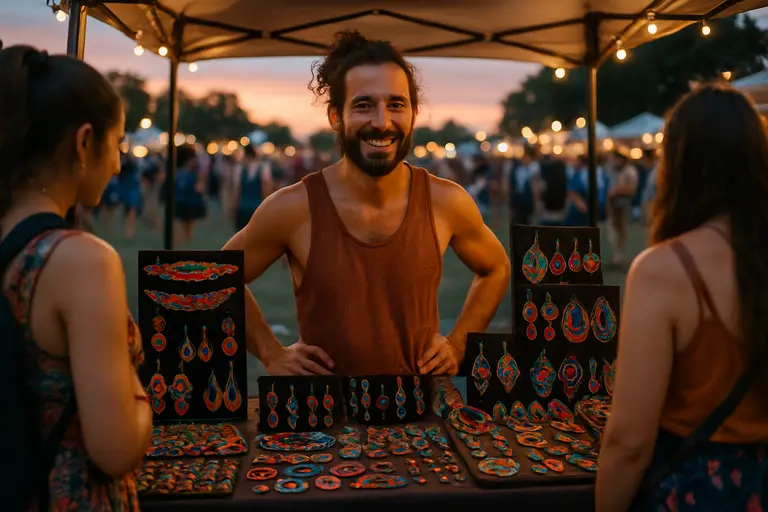
For handmade sellers, fashion creators, and visual artists, Hard Summer’s Latin presence offers a clear lesson: authenticity cannot be manufactured by adding flags, Spanish phrases, or tropical color palettes to a product. Community trust depends on context, attribution, and humility. If a seller draws from a regional reference, the product description should avoid vague heritage claims and instead explain the inspiration carefully, without implying endorsement from a culture, artist, or community that has not given it.
This is especially relevant for creator commerce around festivals. Jerseys, handmade accessories, rave wear, and symbolic items can help people express identity. They can also become extractive if sellers use cultural references without connection, credit, or understanding. The safer path is not silence; it is specificity and respect. Sellers can name materials, describe practical use, explain personal connection where appropriate, and avoid copying living artists or copyrighted imagery.
Representation Should Not Become A Sales Shortcut
Festival visibility can attract brands, but culture-literate commerce should move slower than hype. A Latina-centered rave look is not automatically meaningful because it photographs well. It becomes meaningful when it supports comfort, movement, climate awareness, cultural clarity, and fair creator practice. That approach aligns with wellness because it treats the person wearing the object as more than a target customer.
Latina rave culture also challenges event organizers to think beyond booking diversity. The question is whether programming, crowd care, vendor choices, sound curation, and visual design create a setting where communities feel recognized without being reduced to a demographic segment. That is difficult work, and one festival cannot answer it fully. Hard Summer 2026 did, however, give a visible case study of how cultural presence can reshape the emotional feel of a major dance event.
Latina Rave Culture After Hard Summer 2026
The impact of Latina artists on contemporary rave culture is best understood through proportion and care. Hard Summer 2026 did not create Latin influence in electronic music; those exchanges long predate one festival. What it did was make that influence highly visible in a major Los Angeles setting, with artists and attendees using sound, dress, language, and movement to claim space.
For wellness-minded readers, the lesson is grounded: belonging is a health-relevant condition, even when it is difficult to measure. A festival can offer moments of relief, pride, and connection, but those moments sit within broader economic and cultural realities. The strongest reading of Hard Summer is not that representation solves everything. It is that representation, when specific and respectful, can help people feel less alone in a high-energy public space.
That is the lasting value of Latina rave culture in this case. It names a mode of participation where music, identity, and community care meet. It also asks artists, organizers, sellers, and attendees to treat cultural expression with the seriousness it deserves: joyful, embodied, commercially visible, and still rooted in real people’s lives.