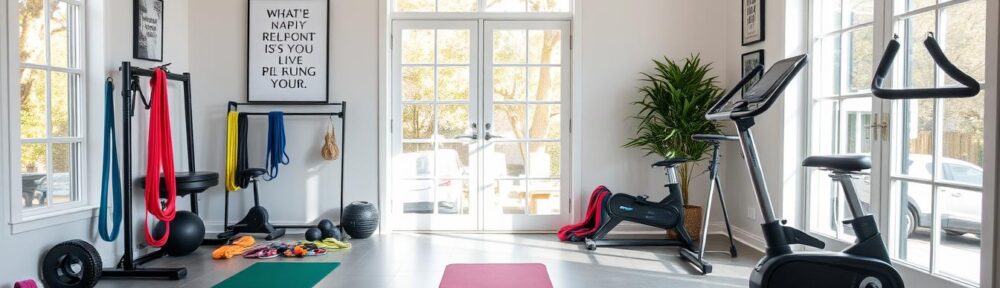
Gym memberships can feel like a chore. Why not work out at home? A study by Men’s Health found that bodyweight exercises burn calories 37% more efficiently than running on a treadmill. It’s like combining the excitement of “Tiger King” with the intensity of CrossFit, without the need for fancy gear.
Home workouts are more than just exercise; they’re a form of rebellion. Researchers at Kennesaw State found that no-equipment routines can be just as effective as gym workouts. Imagine doing warrior poses during your lunch break or push-ups while waiting for your coffee. These workouts are hidden in everyday activities, making them easy to fit into your busy schedule.
We’re exploring the science behind home workouts, and it’s clear that they’re the way to go. Those “quick stretches” you do before bed? They’re actually helping you burn calories. You don’t need dumbbells to get a great workout. Gravity is your best friend, and it’s free.
What Are Bodyweight Workouts?
Bodyweight training is a game-changer in fitness. It uses your own body weight as resistance. This turns your living room into a gym and your coffee table into a hurdle.
Peloton calls it “movement requiring nothing but gravitational defiance.” It’s like doing pushups while your kid jumps on you.
It’s like the vinyl record of exercise. It doesn’t need fancy tech, just raw effort. Unlike weighted workouts, bodyweight training focuses on how you use angles and leverage.
Zack George from Sweat It gym calls it “movement literacy.” It’s about mastering basic movements like pushing and pulling before adding more complexity.
- Zero equipment (unless you count rogue LEGO pieces as balance tools)
- Adaptable intensity (wall pushups vs. one-arm variations)
- Built-in mobility work (try a deep squat without ankle flexibility)
Men’s Health says these workouts improve joint health. They force you to move naturally, unlike weight machines. That’s why urban parents are choosing bodyweight training over gym memberships.
It’s easier to deadlift your toddler during tantrums than drive to the gym. It’s a win-win.
| Aspect | Bodyweight Training | Weighted Exercises |
|---|---|---|
| Equipment Needs | Your body + gravity | Barbells, racks, plates |
| Progress Tracking | Rep quality, advanced variations | Poundage increases |
| Mobility Bonus | Built into movements | Often requires separate work |
This isn’t just about working out without equipment. It’s about using everyday things as workout tools. The couch becomes a decline bench, and staircases are your StairMaster.
Calisthenics at home is about surviving chaos while building strength. It’s not about perfect form, but about getting through the day.
Why Choose Bodyweight Over Weights?
Muscle growth without metal? A Physiology & Behavior study shows bodyweight exercises are as effective as weights. Chris Herion, a trainer at The Engine Room, says, “Your stabilizer muscles work overtime during pushups—like a Tesla autopilot system you didn’t know you had.”
Let’s look at this closely. Your $500 dumbbell set is just physics with extra steps. Here are some benefits:
- Space efficiency: No more tripping over kettlebells during Zoom meetings
- Joint preservation: Natural movement patterns vs. forced weightlifting trajectories
- Hidden cardio: Try doing burpees with perfect form—your heart rate will write checks your lungs can’t cash
| Factor | Bodyweight Training | Weight Training |
|---|---|---|
| Space Needed | Yoga mat territory | Half your living room |
| Joint Stress | Natural load distribution | Spotter recommended |
| Muscle Activation | 89% stabilizer engagement* | 62% primary muscles* |
| Cost | $0 | $40+/month average |
*2019 Sports Medicine meta-analysis data
Men’s Health fitness editor Jake Dupree says, “Bodyweight routines are the Swiss Army knives of home fitness workouts—adaptable, portable, and surprisingly lethal.” Forget racking plates—your next PR could happen between conference calls and laundry cycles.
Time-crunched professionals, meet your solution: A 20-minute bodyweight routine burns calories while building functional strength. No commutes. No waiting for bench presses. Just you versus gravity—the original fitness influencer.
Foundational Moves (Pushups, Squats, Planks, Lunges, etc.)
Bodyweight exercises are like a Christopher Nolan film—complex and thought-provoking. They’re not just workouts; they’re where muscles show their strength. Mastering them is like finding the ultimate fitness goal.
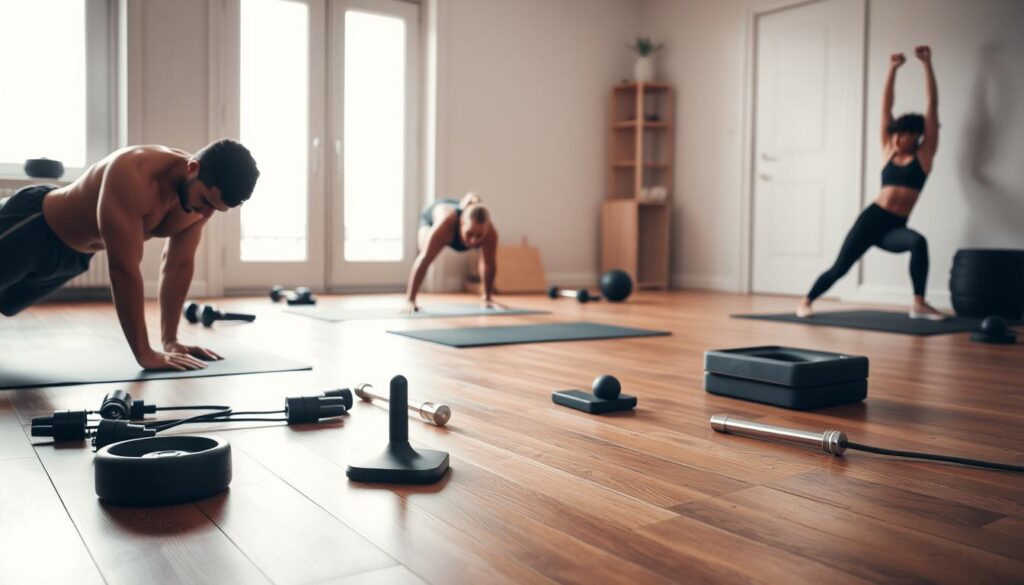
The Pushup: A Frame-by-Frame Breakdown
Think of the Zapruder film, but with arm angles. The right form has your arms at 45 degrees, not like the chicken wings you see at gyms. Keep your core tight, like you’re ready for a punch. Men’s Health suggests turning your palms out to work your chest more. For a challenge, try pushups on a couch armrest.
Squats: The UN Security Council of Lower Body Training
Squats are where your legs work together. Keep your heels down, like your career depends on it. Aim to lower your body until your thighs are almost parallel to the ground. For small spaces, try squats with your feet closer together or against a wall.
| Move | Primary Muscles | Difficulty Modifiers | Space Needed |
|---|---|---|---|
| Pushup | Chest, Triceps, Core | Elevate feet/hands | Mat length |
| Squat | Quads, Glutes, Hamstrings | Pulse at bottom | Hip-width clearance |
| Plank | Full Core Chain | Add shoulder taps | Forearm space |
| Lunge | Glutes, Balance | Reverse vs. Lateral | Step-back room |
Planks: Where Time Becomes Relative
Holding a plank is like time slowing down, according to Einstein. Keep your body straight, like a human laser level. For a challenge, lift one leg while doing a plank. You can also do forearm planks to save space.
Alex Niño’s Handstand Walk: Cirque du Soleil Meets CrossFit
Handstand walks are like tightrope walking over Niagara Falls. Niño says to start with chest-to-wall holds and then step forward. It’s about strength and balance. You don’t need much space if you have a wall.
For more ideas, check out this list of best bodyweight exercises for small spaces. Remember, good form turns your living room into a gym. Bad form turns it into a place you need physical therapy.
How to Progress with Bodyweight (Modifications/Advancements)
Think of your bodyweight routine like an RPG skill tree. Every modified lunge or elevated pushup unlocks new strength pathways. I once treated calisthenics like a grindfest tutorial level… until I discovered Frost’s tempo training secrets.
Slowing squats to a 4-second descent does for muscles what bullet time did for Neo in The Matrix.
| Exercise | Level 1 (Noob) | Level 2 (Pro) | Final Boss Mode |
|---|---|---|---|
| Pushups | Knee variation | Standard form | Planche progression |
| Squats | Chair-assisted | Pistol squat regressions | Single-leg shrimp squats |
| Planks | 10-second holds | Forearm-to-palm transitions | Dragon flags |
Mike Elliot’s TRX modification hacks work like cheat codes for calisthenics at home. Can’t do a pull-up? Use resistance bands as your “training wheels.” Struggling with handstands? Lean against a wall like it’s your spotter in a Soulsborne boss fight.
Three progression rules from The Fore Gym playbook:
- Master tempo changes (2:1:3 ratios for eccentric/isometric/concentric phases)
- Add rotational moves – think Spiderman pushups instead of standard
- Decrease base support – try one-legged deadlifts on a couch cushion
Remember: The bodyweight routine elite didn’t start doing human flags. They leveled up through strategic regressions – like video game no-lifers farming XP. Your living room becomes the dojo when you treat furniture as modular training gear.
That coffee table? Perfect for deficit pushups. Those stairs? Natural plyometric boxes.
Combining Cardio with Strength Using Bodyweight
Your living room is now a fitness jungle. You don’t have to pick between cardio and strength anymore. Modern bodyweight training lets you hunt two mammoths with one spear. It uses primal movements that boost your metabolism like crazy.
Men’s Health found burpees burn 50% more calories than regular strength exercises. Peloton’s HIIT workouts are like espresso shots. They mix 30 seconds of intense movement with 15 seconds of rest. Try this circuit:
- Burpee-Jumping Lunge Hybrid: Mix survival instincts with CrossFit intensity (5 sets)
- Mountain Climber Plank Holds: It’s like climbing a cliff while your core is screaming
- Spider-Man Pushup Sprints: No gym needed for this
Fitness coach Bobby Windebank says our bodies love old-school movements. “Modern exercise equipment is just scaffolding for movements we’ve forgotten,” he says. This means your DNA prefers burpees over treadmill workouts.
Quick home workouts that mix strength and cardio are amazing:
| Movement Type | Metabolic Boost | Muscle Engagement |
|---|---|---|
| Explosive Combos | 42% increase (vs isolated moves) | 6 major muscle groups |
| Isometric Holds | Sustained calorie burn | Core stabilization |
| Dynamic Transitions | EPOC effect multiplier | Full kinetic chain |
These workouts are like Shakespearean drama. Your heart races and muscles burn. They’re quick, perfect for busy people who want a full body home workout without losing results.
Sample Full-Body Bodyweight Plan
Forget gym memberships – your living room just became Mission: Impossible’s training montage. We’ll create a Full Body Home Workout so good, it’d make James Bond question his gadget budget. Who needs Q Branch when you’ve got tension-over-time principles and Peloton-approved grit?
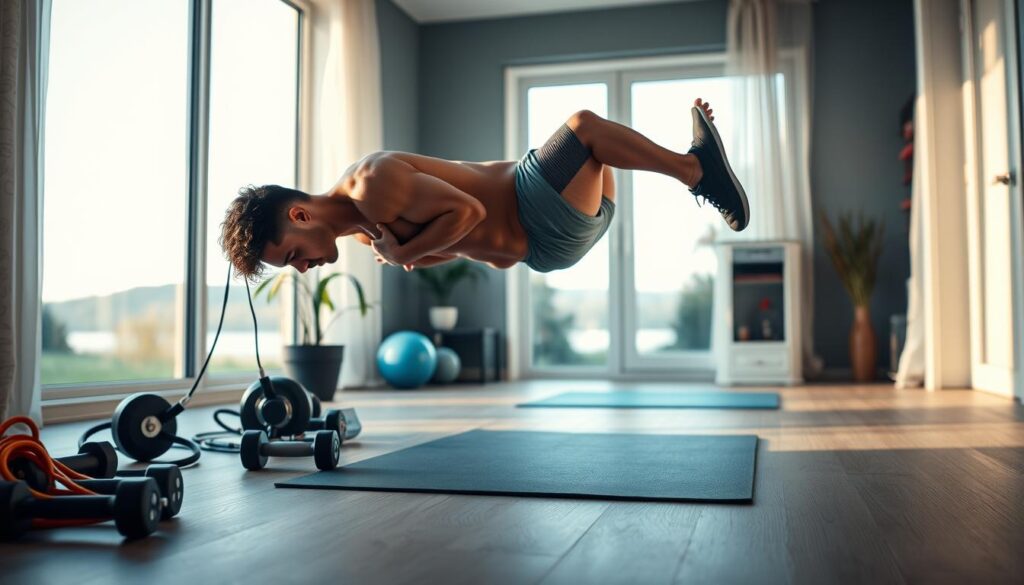
Here’s your classified 20-minute AMRAP (As Many Rounds As Possible), ripped straight from Men’s Health playbooks with a twist of Heron’s tension science:
- Pushup Matrix (3 minutes)
Rad Lopez’s signature move: 5 wide-grip → 5 diamond → 5 staggered pushups. Repeat until your triceps whisper sweet nothings in Russian. - Squat & Lunge Fusion (4 minutes)
10 jump squats → 10 reverse lunges per leg. Pro tip: Imagine you’re dodging laser security beams. Adds spy thriller urgency. - Plank Commando Crawl (3 minutes)
30-second forearm plank → 10 crawling reaches (think: dragging yourself to the eject button). Core engagement? Let’s just say Jason Bourne approves.
This isn’t just exercise – it’s geopolitical fitness strategy. Schedule it between Zoom calls like you’re coordinating international ops. Bodyweight exercises become your sleeper agents here, adaptable to any living room-turned-headquarters.
| Circuit | Time | Intel |
|---|---|---|
| Warm-Up | 2 min | Dynamic stretches (arm circles, leg swings) |
| Power Phase | 14 min | Rotate through 3 core exercises |
| Finisher | 4 min | Commando crawls + 30s hollow holds |
Too busy defusing email bombs? Try the 10-Minute Workouts variant: Cut circuits in half and add 10 burpees between meetings. Your productivity tracker will never suspect a thing.
Remember: This plan isn’t about reps – it’s about outsmarting your schedule. Now go make that couch regret doubting you.
Adapting for Families or Partners
Why go to the gym when your living room can be a workout zone? Family Exercise at Home turns everyday mess into a way to get fit. Toddlers can be used as weights, laundry baskets as sleds, and clothes piles as agility ladders.
Here’s how to make Small Space Workouts that are fun for the whole family:
- Partner Plank High-Fives: Stand facing each other in plank position. Slap hands every 10 seconds. It’s a great way to keep your core strong and discuss dinner plans.
- Crab Walk Relay Races: Do a sideways shuffle while balancing stuffed animals on your stomach. If you drop one, do 5 burpees.
- Laundry Basket Sled Drags: Carry a basket full of books or laundry while crawling. Hardwood floors make it a fun mopping session.
| Activity | Space Needed | Participants | Equipment Hacks |
|---|---|---|---|
| Synchronized Squats | 4×4 ft | 2-4 people | Use backpacks as weights |
| Resistance Band Tug-of-War | 6×3 ft | Multi-gen teams | Stirling’s towel-band hybrid |
| Human Bridge Crawls | 8×5 ft | Parent + child | Couch cushions as mats |
These Small Space Workouts are also great for learning about your family. See who gives up first in wall sits. Find out if your partner is really cheering you on or just trying to win.
For fun resistance band exercises, try these family-friendly ideas:
- Use dining chairs as anchors for pull-ups.
- Link bands between people to make “family bridges.”
- Folding laundry can be a shoulder workout. Every mismatched sock means 5 overhead presses.
The goal is to have fun together, not perfect form. Unless your teenager is trying to do a burpee – then you might need to step in.
Motivation Tips
Your home exercise routine faces tough competition from Slack and true crime shows. But, Sun Tzu’s Art of War can help. Imagine a drill sergeant in sweatpants yelling: “Drop and give me 20 before your 9 AM Zoom!”
Professionals need clever tactics. Here are some sneaky desk stretches for professionals that look like work:
- The Stapler Reach: Slowly stretch for office supplies like a bomb defuser (works lats and deltoids)
- Chair Squat Hover: Act like you’re about to sit on a new paint job (works quads and glutes)
- Email Neck Rolls: Roll your head while saying “per my last message” (releases neck tension)
| Traditional Approach | Micro Workout Hack | Time Saved |
|---|---|---|
| 1-hour gym session | 6x 10-minute bodyweight circuits | 45 minutes (commute time) |
| Yoga studio membership | Commercial break sun salutations | $150/month |
| Protein shake prep | Almond butter spoon lifts between emails | 7 minutes/day |
Peloton’s “excuse-proof” idea meets Men’s Health’s time-saving tips. Windebank’s micro workout idea turns your day into quick fitness chances. Elevator waits become calf raises, printer jams become wall sits.
Pro tip: Treat workouts like meetings. That 2:45 PM alert? It’s now for a “Plank Summit – All Hands on Deck.” Your fitness tracker tracks both fitness and saved time.
Tracking Gains with No Equipment
Your windowsill isn’t just for plants—it’s a pull-up bar in disguise. Tracking progress in bodyweight routines needs sharp eyes and creativity. We’ll explore ways to measure progress without gym gear.
Men’s Health calls it “tempo arithmetic” – counting how many couch-to-burpee transitions you can do in Die Hard’s runtime. Healthline’s journaling is like a fitness diary. It’s about tracking your progress, not just writing about it.
Three No-Equipment Tracking Systems
| Method | Household Hack | Metric Tracked |
|---|---|---|
| Windowsill Standard | Pull-up height relative to sill | Vertical strength gains |
| Phone Form Analysis | App posture tracking | Movement precision |
| George’s Tension Clock | Microwave timer + plank holds | Muscle endurance |
Smartphone apps now check your plank form like a CIA facial recognition program. My favorite is the “Time Under Tension” system. It uses a kitchen timer to challenge you, like a drill sergeant.
Here’s your homework: Next time you do home exercises, track either:
- How many TikTok dances you can perform between squat sets
- The number of times your cat judges your pushup form
- Seconds spent cursing during mountain climbers
Progress isn’t always about lifting weights. Sometimes, it’s about finding new ways to use household items to stay fit.
Conclusion
Think of your living room floor as the ultimate gym membership. Bodyweight workouts at home are more than just exercise. They’re upgrades for your body’s mechanics. Kennesaw State researchers found what ancient warriors knew: you carry the perfect resistance machine.
Every pushup is like coding for survival. No equipment workouts get to the heart of fitness. They’re like deleting unnecessary apps from your phone.
Want to get better? Try changing the speed of your squats. Track your progress with reps or how many Zoom calls you can plank through.
Carlos Lopez’s “200 pushups as rebellion” isn’t just about being tough. It’s fighting against the chair that holds you back. Your couch isn’t a throne; it’s a place of physical stagnation.
Start tomorrow and use kitchen counters to modify your moves. Turn family time into burpee competitions. Your smartest home device is your body, waiting for an update.
The only equipment you need is gravity. And maybe a little memory of middle school gym class.