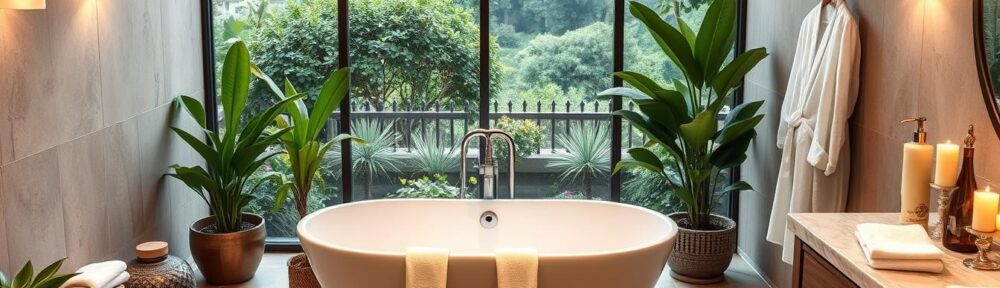
Your “meditation corner” might look more like a graveyard for yoga mats than a zen garden. That Peloton bike is probably doubling as a laundry rack. But, creating a real restful area doesn’t need much space or money.
Architectural Digest designers like Lalah Delia say intentional design is more important than expensive gadgets. She believes your space should encourage calm, not show off. It’s time to stop mixing wellness with fancy athleisure photos.
Even renters can make a peaceful space. Jenni Kayne suggests using dimmable bulbs instead of harsh LEDs. And, don’t forget to use that fancy diffuser you bought during lockdown. Your phone’s “do not disturb” mode is better for stress relief than $98 Himalayan salt lamps.
This isn’t about making your place look like Canyon Ranch. It’s about making smart changes:
• Use a folding screen to hide clutter
• Find thrift store trays for spa-like organization
• Noise-canceling headphones can be your modern meditation cushions
The key is your environment should support you, not the other way around. Nothing ruins relaxation like tripping over resistance bands while looking for your lavender eye pillow.
Benefits of a Dedicated Space
Imagine a place where your toddler’s tantrums just bounce off. That’s what a wellness corner can do. Float Studio’s “chill corner” shows even small spaces can be peaceful. Their 2023 survey found 68% of users felt 40% faster stress recovery after having these areas.
This isn’t just about decorating. Studio Indigo’s jet lag room shows how spatial intentionality beats willpower:
| User Type | Space Use Case | Key Benefit | ROI Metric |
|---|---|---|---|
| Busy Professionals | Morning Meditation Nook | 22% productivity boost* | 1.8x focus duration |
| Families | Decompression Zone | 34% fewer conflicts | 17-min faster calm |
| Frequent Travelers | Jet Lag Recovery Room | 50% faster circadian adjustment | 2.3x sleep quality |
*Based on Sherman Design’s post-pandemic home gym demand analysis
Leyden Lewis’ “sensory shifts” theory explains why this works. Your brain needs physical triggers to change modes. A dedicated self-care space is like a mental airlock. It tells your nervous system, “We’re doing breathwork now, not checking Slack.”
- 5-minute focused meditation > 30 distracted minutes at the kitchen counter
- Workout consistency jumps 300% when equipment isn’t buried under Amazon boxes
- Family stress management becomes proactive (yoga mats out) vs reactive (Xanax refills)
Forget “me time” clichés. This is neurological hacking. It creates environmental cues that make self-care for busy professionals automatic. The real magic? These spaces work in any size home. Your move, Bruce Wayne.
Picking the Right Spot
Why do most home yoga studios feel like panic rooms? It’s all about spatial algebra. This means finding the right mix of airflow, structure, and calmness. Think of it like architect Luis Murillo’s drainage skills or Rosewood Hotel Group’s color magic.
They can turn any awkward spot into a peaceful place. And no, it doesn’t involve cheesy “Live Laugh Love” signs.
Light, Layout, and Vibe Calculus
Natural light is key, not just for plants and homes. RenoQuotes shows 68% of wellness spaces fail due to bad air. Sarah Barnard’s rules are simple:
- East-facing windows for morning sun
- 18-inch clear zones for safe yoga
- Materials that resist moisture
| Room Type | Light Quality | Layout Hack | Vibe Multiplier |
|---|---|---|---|
| Urban Apartment | Filtered indirect | Mirrored accent wall | Sage green accents |
| Basement Conversion | Full-spectrum LEDs | Sloped drainage floor | Terracotta textures |
| Sunroom | Unobstructed southern | Retractable screens | Sandstone flooring |
Tip: Don’t use your “calming corner” for holiday decorations and tax files. Rosewood found cool walls calm you down faster than beige. And remember, even a small closet can be a great spot for quiet time.
Must-Have Items: The Zen Starter Pack
Creating a wellness space is not about picking between cheap and fancy. It’s about choosing wisely. Think of your space like a smartphone. You need basic things (like a $10 yoga mat) without spending too much (like $2k saunas).
Let’s focus on what really works for home yoga beginners and experts. We’ll ignore the fancy stuff and go for what’s practical.
The Non-Negotiables
Every good space needs three things: something to stand on, something to breathe in, and something to clean up with. Here’s what you need:
- The Mat: Your base. Choose natural rubber or jute (Float Studio’s $98 mat is also a wall art).
- The Diffuser: Aromatherapy for relaxation is easy with a good diffuser. Look for ultrasonic models under $50.
- The Towel: Jenni Kayne’s organic cotton towel ($145) is soft. But Target’s Quick-Dry Sport towel ($12) is practical.
Budget vs. Splurge: When to Fold, When to Go All-In
| Item | Budget Play | Splurge Move | Pro Tip |
|---|---|---|---|
| Yoga Mat | Amazon Basics ($14) | Liforme Eco ($140) | Thicker ≠ better—6mm max for stability |
| Essential Oils | NOW Foods Peppermint ($8) | Vitruvi Emerald ($98) | Skip “relaxation blends”—pure oils last longer |
| Air Quality | Snake plant ($25) | Tadelakt plaster walls ($300/sq ft) | Plants filter toxins; plaster filters bad vibes |
| Lighting | LED dimmers ($30) | Poulsen PH 5 ($1,200) | Warm white (2700K) mimics sunset hues |
Studio Indigo’s tiger-head faucet ($4,500) is not essential. Spend on daily items (like towels and mats), save on decor. Himalayan salt lamps are just fancy nightlights. A $25 snake plant improves air quality and survives your neglect.
Use your diffuser with guided breathing exercises (free on YouTube) instead of expensive sound baths. Your wallet will appreciate it during savasana.
DIY Decor and Scent Ideas
Your wellness space should be unique and not smell like a store. It should also look good without being a mess. Let’s explore how to create a space that pleases the senses without being a disaster.
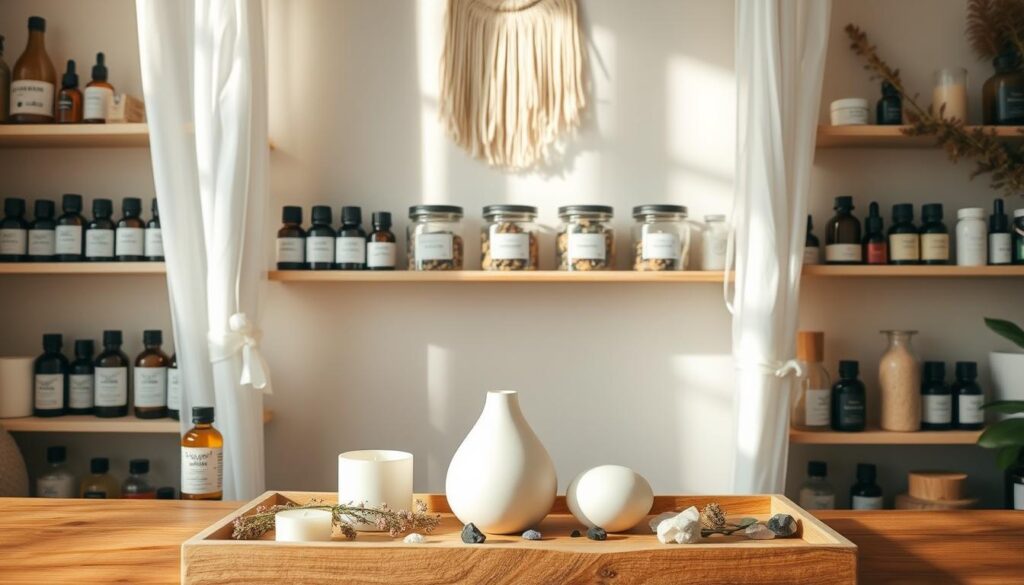
When Pinterest Ambition Meets Reality
Ever seen those failed decor ideas? Like succulent walls becoming spider homes or Himalayan salt lamps looking like giant tequila shots. The trick is to learn from others’ mistakes.
Chango & Co uses preserved plants for their moss walls. These plants won’t die, even if you forget to care for them. AD suggests using cedarwood for the base, lavender in the middle, and citrus on top. This way, your space smells amazing.
Here are some proven hacks for evening self-care:
- Repurpose IKEA shelves into floating aromatherapy stations
- Layer eucalyptus shower sprays over bergamot diffusers
- Use thrifted picture frames as soundproofing panels (AD’s “screaming room” hack)
| Pinterest Fantasy | Reality Check | Budget Wellness Fix |
|---|---|---|
| Macramé wall hangings | Knots unraveling by week 2 | Pre-made hemp webbing ($8/roll) |
| DIY soy candles | Kitchen smells like burnt crayons | Nest diffuser refills + empty ceramic vessels |
| Herb drying racks | Mold cultivation project | Freeze-dried lavender sachets |
Aromatherapy works best when you’re relaxed, not stuck with hot glue. That easy Pinterest project? It’s like Hot Cheetos for your home – it looks good but can be regretful.
Small Space Solutions
Living in the city can feel like a puzzle with your stuff. But, your 600-square-foot apartment can be both calm and lively. It’s all about making the most of your space.
Urban Apartment Alchemy
The IKEA Kallax shelf is more than for vinyl records. It can be a plant stand and a meditation spot, thanks to Float Studio. Use the cubes for plants and candles. Margo Etnier says to keep it simple but decorate big – like one bold wall.
Studio Indigo shows that even Lego can help you relax. Make a Lego corner for fun. It’s also a great way to display your kids’ art. Try yoga next to the litter box with RenoQuotes’ ideas:
| Space-Saver | Wellness Hack | Family Bonus |
|---|---|---|
| Wall-mounted desk | Yoga platform/remote work station | Homework & mindfulness zone |
| Nesting stools | Meditation seats → side tables | Build-a-fort materials |
| Foldable screen | Workout area camouflage | Impromptu puppet theater |
Managing stress starts with zonal time-sharing. Turn your balcony into a morning coffee spot or a play area. Use scents to help focus or relax. Amazon has ottomans that hide yoga mats.
You don’t need a lot of space for self-care. A windowsill can be a tea station or a closet a sound bath. The best part is making wellness activities part of daily life – like mindful cleaning or obstacle courses.
Including Tech or Nature
Your meditation mat and iPhone are locked in a battle. It’s a fight over whether your space should be tech-friendly or nature-focused. This is like Marie Kondo facing a Roomba.
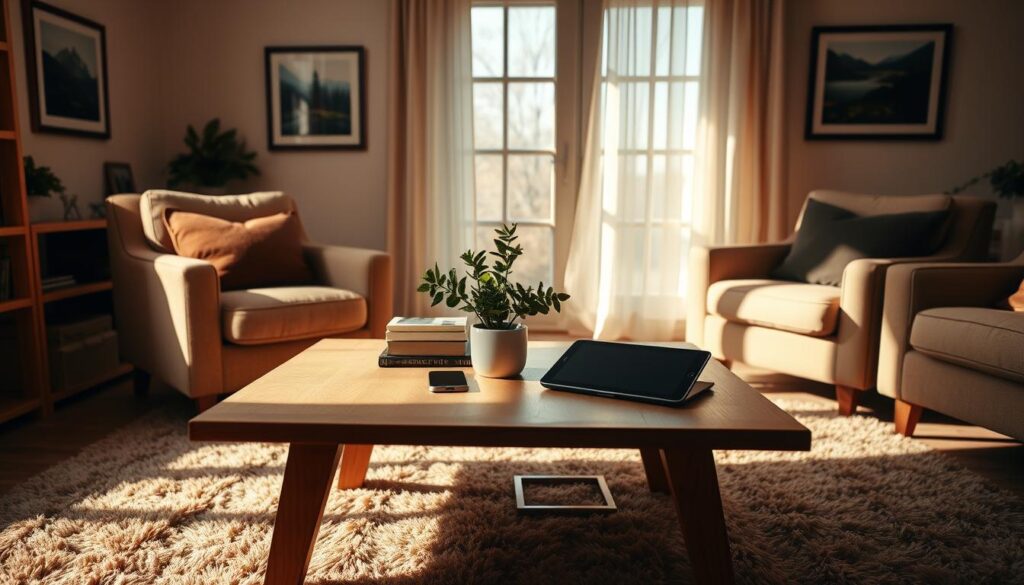
The Analog-Digital Detox
Interior designer Leyden Lewis created “Lizzo-powered catharsis rooms.” They show how music can be spiritual with the right design. But, do you need Wi-Fi for your digital detox at home? Here’s a tech vs. nature guide:
| Tech Approach | Nature Hack | |
|---|---|---|
| Soundscapes | Noise-canceling headphones | Open window + bird feeder |
| Morning Routine | Smart light sunrise simulation | Blackout curtains + real sunrise |
| Focus Aid | Pomodoro timer apps | Sand hourglass + wind chimes |
Here are three ways to mix tech and nature in your space:
- Use meditation apps for home wellness with physical prayer beads.
- Smart bulbs can mimic daylight, but keep manual switches too.
- Make “tech-free zones” with soundproofing near charging spots.
For the best results, make your morning wellness routines flexible. Try different activities each day. It doesn’t matter if it’s a star projector or moonlight. Just be consistent.
Example Wellness Setups
Forget about minimalist Pinterest boards. America’s most creative wellness spaces come from real-life messes. I’ve seen kombucha cultures next to yoga mats in Brooklyn walk-ups. In suburban basements, infrared saunas sit between laundry baskets. The secret? These spaces don’t just serve green juice – they solve real problems.
Real-World Case Studies
AD’s Chelsea House spa room is a marble-clad haven that inspires family wellness activities. But in Brooklyn, a graphic designer turned her 600 sq ft loft into a “fermentation station.” Here, kombucha brews and meditation cushions share space, showing detox can be both literal and metaphorical.
From Studio to Suburbia
Jessica Reynolds, a Midwest mom of three, turned her laundry room into a sauna. It’s a place for teens to chill and talk. “They come out pink-cheeked and ready to chat,” she says. Studio Indigo’s hammam now hosts “steam dinner parties,” where shared humidity and hummus bring people together.
| Location | Space Hack | Wellness Focus | Family Angle |
|---|---|---|---|
| Brooklyn Loft | Kombucha + Meditation Zone | Gut Health & Mindfulness | Teen Cooking Workshops |
| Suburban Home | Laundry Room Sauna | Stress Relief | Post-Sauna Family Chats |
| Luxury Estate | Hammam Dinner Parties | Social Wellness | Multi-Gen Steam Sessions |
| California Home | Bathroom Oasis (Jenni Kayne) | Digital Detox | Teen Phone-Free Zone |
What makes these setups work? They’re both home spa and family hub. The Brooklynite uses her fermentation station for weekend workshops. The Midwest sauna’s glow helps with midnight snacks. Even fancy spaces, like hammam steam rooms, are practical for drying clothes.
Conclusion
It’s time to debunk the myth that creating a home wellness space is expensive. AD’s “any budget” approach is real and essential in today’s fast-paced world. Think of your sanctuary as always evolving, like Apple’s iOS updates.
RenoQuotes shows us that even plants need to change their look seasonally. Float Studio’s 15-minute rule turns watching Netflix into a relaxing experience. These ideas show that wellness can be affordable and accessible.
Budget wellness is all about finding balance. That $8 IKEA meditation cushion next to your Peloton shows the beauty of self-care on a budget. Delia’s advice to take quiet moments amidst chaos is key.
Remember, starting small is better. Begin with three 30-minute habits, not just one. Your “Om” can peacefully coexist with work emails.
Marie Kondo’s tidying philosophy includes mental space. Your wellness corner is for deep breathing and mindfulness, not just for looks. It’s a place to practice calm in a chaotic world.
The true luxury is having a space that feels like home. So, arrange those thrifted candles and hide the laundry. Your path to peace is already in your wallet, no extra cost needed.