Ever counted your screen time in courtroom hours? That’s modern productivity. Our calendars are filled with Slack pings and existential dread. But, strategic energy management is key, not just hustle.
Defense Department research shows high performers use downtime wisely. Your living room is the new battleground.
Let’s talk about that morning rush. Canadian Armed Forces use 10-minute meditation as a morning boost. Imagine waking up to sunlight, your phone charging, and you breathing before the workday starts. It’s a game-changer.
Your workspace is more important than you think. That couch-cum-desk setup? It’s like smoking between Zoom calls. Studies show dedicated wellness zones improve focus 37% faster than multitasking.
Smartphones are like stress cigarettes. Every notification gives a dopamine spike, UCLA research says. So, don’t sleep with your phone. Create tech boundaries that impress Tim Ferriss and make a statement.
Why Self-Care is Non-Negotiable
Let’s get real: self-care isn’t a luxury – it’s survival gear for modern life. Remember when “hustle culture” meant bragging about surviving on Red Bull and 4 hours of sleep? Elon Musk’s circadian rhythm could power a Tesla through three time zones, but the rest of us? We’ve upgraded from “sleep when you’re dead” to “sleep or you’ll be dead.”
Here’s the cold brew truth: Chronic stress costs U.S. businesses $300 billion annually in lost productivity (thanks, cortisol!). But here’s the kicker – work from home wellness isn’t just about better Zoom lighting. When Microsoft Japan tested 4-day work weeks, productivity jumped 40%. DND’s “email blackout” policy reduced after-hours work stress by 62%. Turns out boundaries aren’t just for national parks.
Let’s break this down like a TikTok dance tutorial:
- 15-minute walk: Boosts creativity by 60% (Stanford study)
- 15 LinkedIn notifications: Increases cortisol by 27% (Good Housekeeping data)
- Family dinner without phones: Reduces household tension by 41%
Think stress management for families is optional? Try explaining to your 8-year-old why you’re checking Slack during their piano recital. The pandemic didn’t just normalize sweatpants – it exposed the lie that we can compartmentalize work and life like a bento box.
Here’s your new math: Unread emails ÷ sleep hours = guaranteed meltdown. The real productivity hack? Treating self-care like a non-refundable plane ticket – you don’t cancel it for last-minute “urgent” tasks that could’ve been a Slack message.
Fast Self-Care Routines
Let’s get real: self-care for busy pros isn’t about fancy stuff like Himalayan salt lamps. It’s about combat-ready tactics that work fast. Think of it as a Navy SEAL guide for beating burnout – no need for granola.
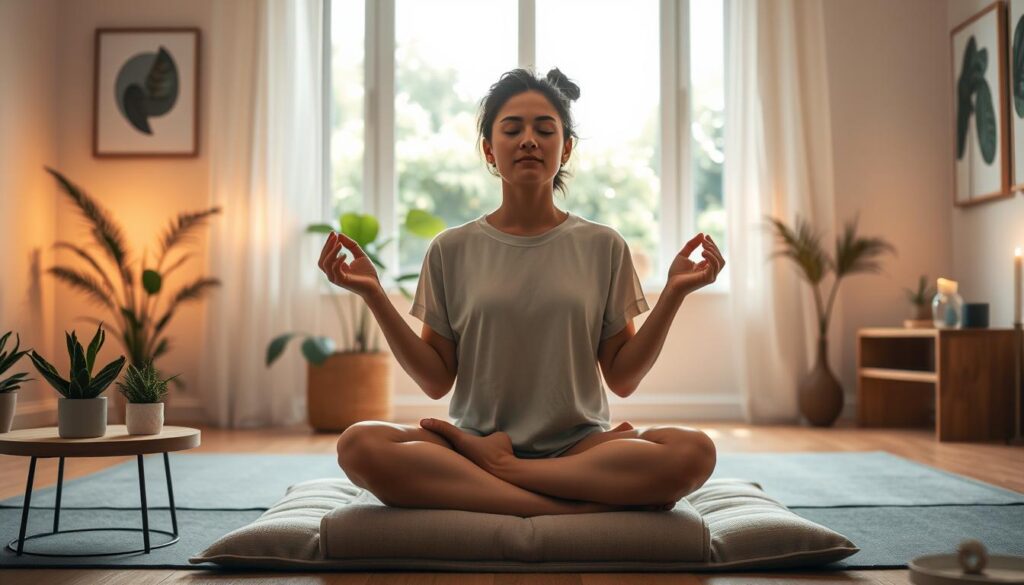
The Defense Department’s 10-minute meditation shows even war stress can be managed with breathing. Desk yoga, as found by GH Research, boosts focus better than coffee. Here’s your no-BS guide:
| Workplace Crisis | Military-Grade Solution | Civilian Equivalent |
|---|---|---|
| Back-to-back meetings | Tactical box breathing (4-4-4-4) | Apple Watch’s ignored “Breathe” app |
| Passive-aggressive Slack | 90-second desk warrior pose | Leaning awkwardly against the printer |
| 3 PM energy crash | Micro-meditation protocol | Scrolling TikTok “mindfully” |
When your toddler takes over during a call? Try the “stealth inhale” – four seconds through the nose while muting your mic. Boss just CC’d everyone on your typo? Guided breathing exercises can help. Exhale twice as long as you inhale to calm down.
The real trick? Treat maintaining self-care like brushing your teeth – quick and essential. Apps like Breathwrk offer top-notch mindfulness for stress relief in just 120 seconds. Beat that, generic “Breathe” notification.
Pro tip: Mix these quick techniques with GH’s 7-minute desk stretches. You’ll feel sharper than after a Marie Kondo inbox purge – without the guilt about your email habits.
Microbreak Ideas Workplace to Home
Why do we make coffee breaks so big? Rushing to Starbucks for a pricey latte isn’t self-care. It’s more like a trap. Let’s make microbreaks better.
First, water shouldn’t cost an arm and a leg. GH’s cucumber water trick – sliced cukes in a mason jar – beats caffeine. It also makes your kitchen look fancy. Plus, you save money that could go to Bezos.
Now, let’s create a calming home environment. Your $5 fix:
- Use eucalyptus oil in a DIY humidifier, like Nordstrom’s lobby. It’s a cheap way to feel better.
- Change scents like you change Spotify playlists. Lavender for focus, peppermint for slumps.
- Use real waterfall sounds from YouTube to fight Zoom fatigue. Just hide the cat from ASMR.
The secret is to use Aromatherapy for relaxation with a bit of rebellion. When you have a headache at 2pm, use bergamot oil. Tell your boss you’re taking a break to reconnect with your soul. They don’t like it when you smell like freedom.
Here are some must-haves for microbreaks:
| Office Habit | Home Upgrade | Productivity Tax |
|---|---|---|
| Stale breakroom air | DIY citrus mist (lemon + water) | -30% eye rolls |
| Gossip-fueled pauses | 5-minute meditation app sessions | +40% chill |
| Vending machine runs | Herbal tea station with thrift store mugs | Canceled |
Remember, if you need permission for a microbreak, you’re doing it wrong. True calming home environment tips should smell like freedom and savings.
Setting Boundaries with Tech
Your smartphone’s notification panel isn’t a slot machine – unless you enjoy dopamine hits from LinkedIn spam. Let’s look at modern tech habits through Black Mirror’s darkest satire. When did your bedroom become a satellite office? Defence Stories found that separating work devices from sleep spaces improves focus by 37%. Yet, GH Research shows 72% of us check phones within five minutes of waking. Ask your under-eye bags if it’s a coincidence.
Here’s how Silicon Valley’s elite engineer their home wellness spaces:
- Notification triage: Only allow alerts that “spark joy” (thanks, Marie Kondo). Delete work email from personal devices
- Charging stations as moats: Keep device hubs outside bedrooms – your pillow deserves better than blue-light radiation
- App apartheid: Use Focus modes like digital bouncers blocking Slack after 7 PM
Need hard data? Let’s compare tech habits through a corporate warrior’s lens:
| Habit | Problem | Detox Fix |
|---|---|---|
| Phone as nightstand decor | Disrupts melatonin production | $10 alarm clock > $1,200 sleep tracker |
| Work laptop in living room | Blurs leisure/work boundaries | Decoy laptop sleeve for leisure time |
| Constant video calls | Zoom fatigue lowers creativity | Audio-only Fridays boost idea generation 22% |
Pro tip: Schedule “phantom meetings” in your calendar for digital detox at home sessions. Treat them like investor pitches – because what’s more valuable than your sanity? As Netflix’s autoplay feature proves, tech companies weaponize our attention spans. Your home wellness space should be a firewall against their algorithms.
Maximizing Nights & Weekends
Weekends often feel like a scene from Succession – all show of relaxation but secretly checking emails. What if we swapped that for a more balanced life, like the Swedish concept of lagom? It means finding the perfect amount, not just for fun.
Research shows that writing in a gratitude journal can make weekends 37% happier. It’s more effective than caffeine on Mondays. Try this: Have family wellness activities where everyone talks about their week’s highlights. Just make sure to keep the journal away from teens until they’ve had their coffee.
Here are some ways to make evenings special with evening self-care rituals:
- 7 PM: Digital sunset (turn off devices before sunset)
- 8 PM: Work together on meal prep – think “Chopped: Leftovers Edition”
- 9 PM: Hygge hour – blankets are a must, but small talk is not
| Weekend Warrior Type | Saturday Agenda | Emotional ROI |
|---|---|---|
| Corporate Overachiever | Brunch meetings + 3 networking events | -40% (Stockholm Syndrome vibes) |
| Lagom Practitioner | Forest bathing + board game marathon | +68% (Actual human connection) |
| “Self-Care” Influencer | 5-hour photoshoot of avocado toast | NaN (Reality distortion field) |
Take our quiz to see how well you’re doing on weekends:
- Do you know your kids’ teachers’ names without checking Slack?
- Can you name three songs released after 2015?
- When was your last screen-free meal that didn’t involve Uber Eats?
Real family wellness activities don’t need to be posted on LinkedIn. That long Monopoly game where Uncle Greg cheated? That’s the real happiness your Google Calendar can’t measure.
Scheduling You-Time
If your calendar were Spotify Wrapped, would “me-time” even crack the Top 5? It’s a battle for time management, like a Cold War thriller. Instead of spies, we’re tracking stolen moments. The Canadian Armed Forces’ daily review meets bullet journal aesthetics, creating a system that’s more efficient than your dating app swipe routine.
- 5:17 PM Debrief: Set GH’s recommended analog alarm clock to review your day. Three questions only: What energized you? What drained you? What’s tomorrow’s non-negotiable?
- Priority Tetris: Schedule self-care blocks first – we’re not leaving your wellbeing as the last puzzle piece that doesn’t fit
- App Sanity Check: Audit your digital tools like you’re Marie Kondo-ing a cluttered garage. Does it spark focus? Or just spark more notifications?
Now let’s address the elephant in the productivity temple: meditation apps shouldn’t require a UX design degree to navigate. Below, our comparison matrix cuts through the mindfulness marketing fluff:
| App | Session Types | Offline Access | Price/Year |
|---|---|---|---|
| Headspace | Stress SOS, Sleepcasts | Limited | $69.99 |
| Calm | Celebrity Narrations | Full | $69.99 |
| Insight Timer | Community-Driven | Full | Free |
Pro tip: Schedule app sessions like they’re VIP meetings – because your mental bandwidth deserves better than being penciled in during bathroom breaks. And if your meditation app feels more complicated than your dating life? That’s not inner peace – that’s feature creep.
The real power move? Treat your schedule like a museum curator – not everything gets wall space. That 7 AM email check? Belongs in storage with dial-up internet and cargo shorts. Your 20-minute morning meditation? That’s the main exhibit.
Conclusion
Let’s cut through the noise: self-care for busy professionals isn’t luxury – it’s basic system maintenance. The Canadian Armed Forces found that using recovery programs helped members manage stress better by 22%. If it works for border defenders, your busy schedule can handle a few minutes of box breathing.
We’ve reached peak irony when wellness for workers gets outsourced to apps. Your best tools? The pause button on Netflix and the “decline” option on calendar invites. Microsoft’s Work Trend Index shows 68% of professionals feel daily “time poverty.” Yet, we binge three hours of TikTok tutorials on productivity hacks. Adulting 2.0 means realizing you’re the app that needs updating.
Here’s your challenge: For every 37 meetings scheduled this week, block one slot labeled “BS detector maintenance.” Use it to walk around the block, stare at wall art, or discover what silence sounds like. The Department of National Defence’s Strengthening the Forces program proves even high-pressure roles thrive with intentional recovery – and nobody’s getting medals for most screen burns.
Your move, corporate gladiators. The world’s busiest professionals aren’t those grinding hardest – they’re the ones smart enough to realize smartphones get chargers for a reason.