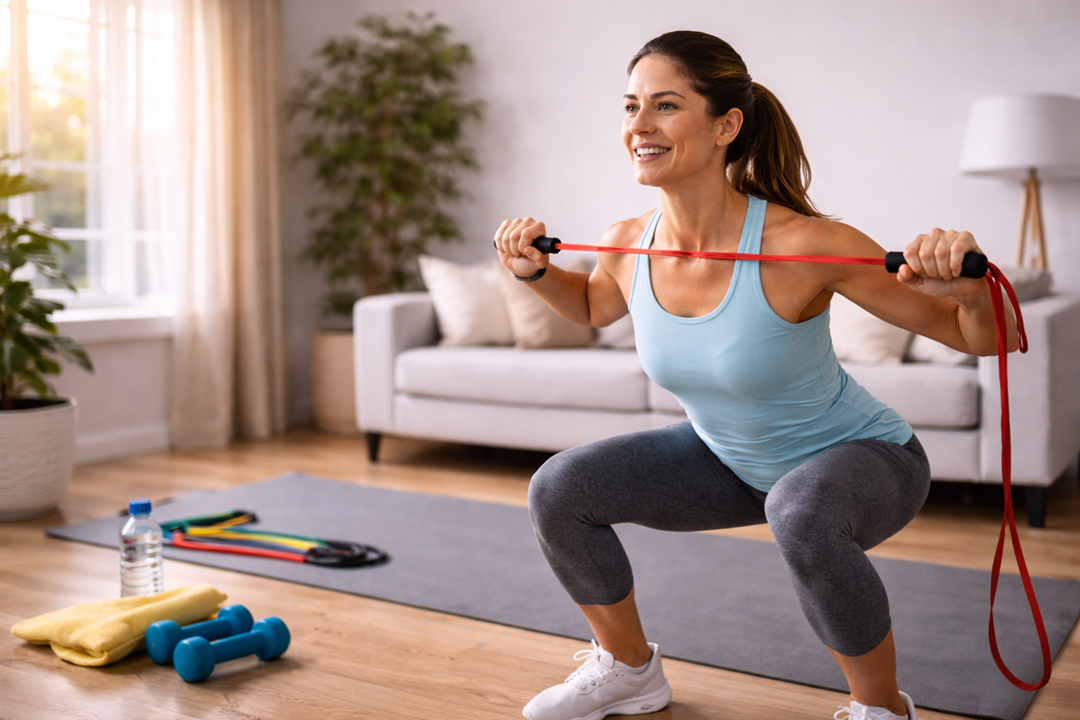
Building strength at home doesn’t require a full rack of weights or complicated gym machines. For beginners looking to start a practical and affordable fitness routine, resistance bands offer one of the most versatile tools available. Lightweight, portable, and adaptable to different fitness levels, these bands allow users to perform a wide range of exercises that target both major and stabilizing muscle groups.
Because resistance bands create tension throughout the full range of motion, they provide a unique training stimulus that can support strength development, mobility, and muscular endurance. For people exercising at home, they represent a simple yet effective way to build a balanced workout routine.
Why Resistance Bands Are Ideal For Home Workouts
Resistance bands are especially appealing for home fitness because they require minimal space and can be easily stored when not in use. Unlike large equipment, they allow for dynamic movement patterns while still providing meaningful resistance.
Another advantage is scalability. Beginners can start with lighter resistance and gradually increase intensity as their strength improves. This flexibility makes bands suitable for a wide variety of exercises—from upper-body presses to lower-body activation drills.
If you’re already incorporating no-gym cardio workouts into your routine, resistance band training can complement those sessions by adding strength-focused movements that support muscular balance and joint stability.
Understanding Different Types Of Resistance Bands
Not all resistance bands are the same. Each type is designed for specific training purposes, and understanding their differences can help beginners choose the right option.
| Band Type | Best Use | Key Advantage |
|---|---|---|
| Loop Bands | Lower-body exercises | Great for glutes and hip activation |
| Tube Bands With Handles | Upper-body training | Comfortable grip for rows and presses |
| Therapy Bands | Mobility and rehabilitation | Light resistance for beginners |
| Power Bands | Full-body strength exercises | High resistance and durability |
Selecting one or two versatile bands can be enough to begin building an effective home workout program.
How Resistance Bands Improve Strength And Stability
Unlike traditional weights that rely on gravity, resistance bands create variable tension. As the band stretches, the resistance increases, requiring muscles to remain engaged throughout the entire movement.

This constant tension encourages muscle activation and promotes better control during exercises. Over time, this can contribute to improved coordination, joint stability, and muscular endurance.
Resistance band training is also commonly used in rehabilitation settings. According to the American Council on Exercise’s resistance band training guide, these tools help activate stabilizing muscles and support functional movement patterns that translate well to everyday activities.
For beginners, this combination of safety and adaptability makes resistance bands an excellent entry point into strength training.
Beginner-Friendly Resistance Band Exercises
A simple resistance band routine can target multiple muscle groups while remaining manageable for beginners. The exercises below provide a balanced starting point.
| Exercise | Primary Muscles Targeted | Suggested Repetitions |
|---|---|---|
| Banded Squats | Glutes and thighs | 10–12 reps |
| Resistance Band Rows | Upper back and shoulders | 10–12 reps |
| Standing Chest Press | Chest and triceps | 10–12 reps |
| Lateral Band Walks | Hip stabilizers | 10–15 steps each side |
| Banded Overhead Press | Shoulders and arms | 8–10 reps |
Completing two to three sets of these exercises can create a well-rounded full-body workout that fits easily into a home fitness routine.
Structuring A Simple Resistance Band Routine
A beginner-friendly routine should focus on balanced muscle activation rather than excessive volume. Starting with three to four exercises performed two to three times per week can help establish consistency without overwhelming the body.
For example, a basic session might include:
- A lower-body movement such as banded squats
- An upper-body pulling exercise like resistance rows
- A pushing exercise such as chest presses
- A stability-focused exercise like lateral band walks
Between sets, brief rest periods allow muscles to recover while maintaining workout intensity. As strength improves, individuals can gradually increase repetitions or move to bands with greater resistance.
The Long-Term Benefits Of Training With Bands
Resistance bands support more than just beginner workouts. As fitness levels progress, they can continue to play a role in warm-ups, mobility drills, and accessory training.
Their portability also makes them ideal for maintaining fitness while traveling or working out in small spaces. When combined with other forms of movement—such as walking, cardio routines, or bodyweight exercises—bands help create a balanced and adaptable training program.

Because of their versatility, resistance bands remain one of the most effective tools for building strength at home without relying on traditional gym equipment.
Building Confidence With Simple Tools
Starting a fitness routine doesn’t require complicated strategies or expensive equipment. Sometimes, the most effective solutions are also the simplest.
Resistance bands provide beginners with a safe, flexible way to explore strength training while improving coordination and muscular control. With consistent practice and gradual progression, these simple tools can support long-term fitness and overall well-being.
For anyone beginning their home fitness journey, resistance bands offer a practical step toward stronger, more sustainable movement habits.