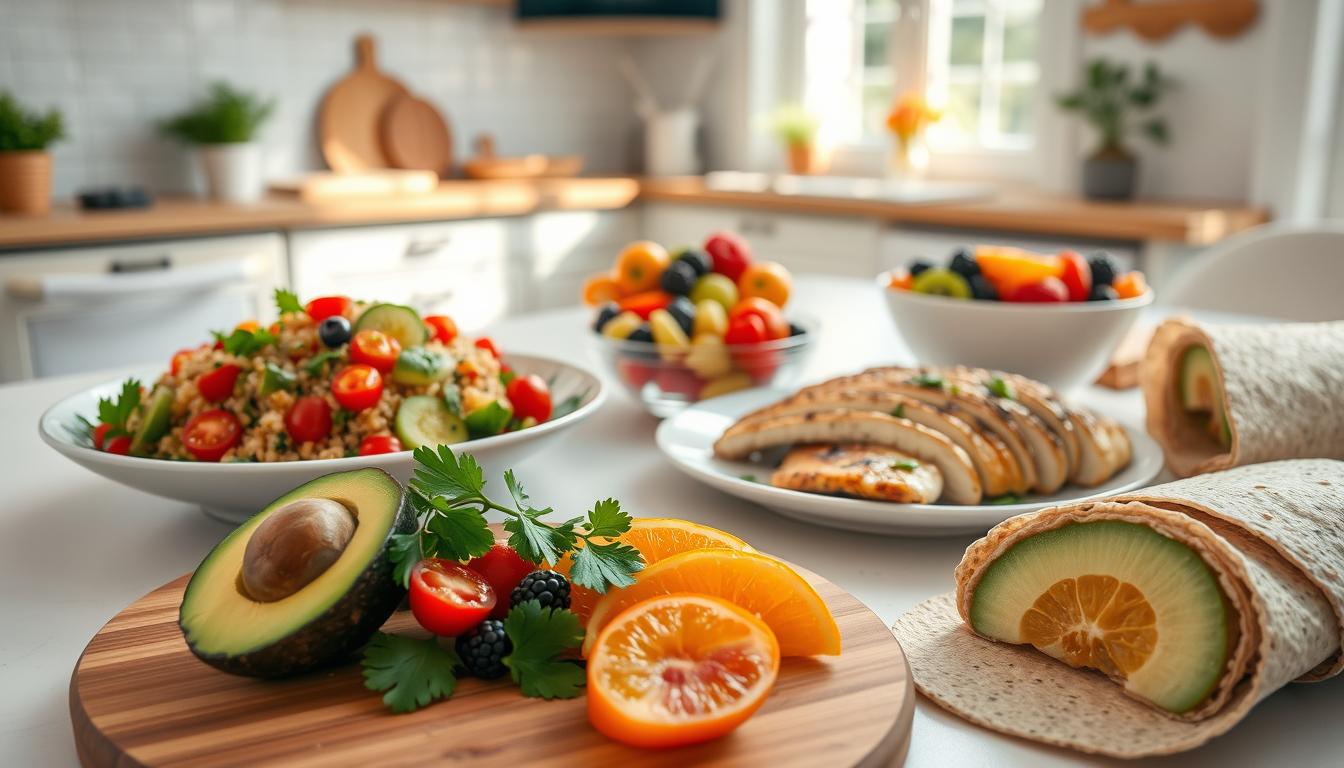
The modern American kitchen is a battlefield. Expectations clash with exhaustion. We’re all tired, overwhelmed, and hoping dinner won’t be scrambled eggs.
I’ve studied the post-2020 cooking scene like an anthropologist. It’s not just about food; it’s about keeping sanity until bedtime.
Think of me as your kitchen strategist. I offer actually feasible solutions for when you have 30 minutes and no takeout mood. These aren’t just easy healthy recipes. They’re survival tips for the modern kitchen.
Welcome to your new guide for winning weeknights. You won’t sacrifice nutrition or your sanity.
Introduction: Why Speed Matters for Families
Ever notice how 5 PM turns your kitchen into a hotspot? The after-school to bedtime window is more than cooking. It’s managing crises with oven mitts.
Recipes that say “under an hour” seem like medieval torture for parents today. We’re not just chefs. We’re emergency relief coordinators dealing with hangry kids and low blood sugar.
The real challenge isn’t just about food. It’s keeping the kitchen calm when kids turn into food critics. This isn’t just cooking. It’s a high-stakes negotiation with grated cheese and the threat of mutiny.
Smart solutions say involving kids in cooking helps. It makes them more invested in meals and reduces fights at dinner. The American Heart Association says getting kids to help cook leads to healthier habits.
Our goal is to make dinner time better without losing our energy or compromising on nutrition. The battle is on—let’s plan our strategy.
Nutritional Basics for Family Meals
The term “healthy family dinner” often feels like a challenge. We’re told to cut carbs, eat kale, and serve quinoa everywhere. But, what if you could make healthy meals without a big change?
It’s all about finding a balance. We offer familiar foods and sneak in veggies. This way, kids might even eat them without a fuss.
Research shows that the healthiest meals aren’t about extreme diets. They’re about controlling ingredients and making food that tastes good. Homemade meals let you avoid preservatives found in store-bought ones.
Using real ingredients makes food healthier and tastier. It’s like the difference between watching a movie in theaters versus on your phone. Both work, but one is better.
Creating balanced recipes for families means finding a middle ground. It’s about making meals that are both healthy and something kids will eat. It’s not about perfection, but about making do.
Smart swaps can make meals healthier and more enjoyable. Try using Greek yogurt instead of sour cream or whole wheat pasta. It’s a way to please everyone without feeling like you’re cheating.
The best balanced recipes for families focus on quick, healthy meals. They aim to make dinner enjoyable, not a punishment. The goal is to raise happy, healthy kids, not perfect ones.
Tips for Quick Prep Without Compromising on Health
Let’s talk about making your kitchen run like a well-oiled machine. Why use three pans when one skillet can do it all? I believe the secret to cooking success is keeping things simple. This means fewer dirty dishes and less complicated steps.
My research has found three key ways to make kid-friendly healthy meals quickly:
- Sheet pan supremacy: Roast veggies, protein, and carbs all at once. It’s like multitasking in the kitchen.
- One-pan wonders: Skillets that go from stovetop to oven are kitchen lifesavers.
- Pantry power plays: Use ingredients that are easy to find and don’t need a lot of prep.
Sheet pan cooking is like having the most efficient employee in your kitchen. It does it all while making a mess. Chicken, broccoli, and sweet potatoes can all cook together perfectly on one sheet.
The one-pan method is not just about fewer dishes. It’s about making food taste amazing with less effort. It’s like working smarter, not harder in the kitchen.
Your pantry should be like a well-stocked arsenal. Canned beans, frozen veggies, and whole grains are great for quick meals. They’re easy to use and don’t need a lot of prep.
This isn’t about taking shortcuts. It’s about making the most of your time. Your family eats healthy, and you get your evening back. That’s a win-win.
The “30-Minute Meal” Mindset
We’ve all been sold the 30-minute meal dream, only to end up with a mountain of dishes. The food industry promises quick meals, but reality is different. It’s filled with unexpected emergencies and missing ingredients.
Real quick meal ideas prepare for the unexpected. When you find out the chicken is frozen, it’s not a failure. It’s just life getting in the way. I call this “culinary triage time.”
Changing our view of meals is key. Seeing breakfast-for-dinner as smart, not a failure, is important. Add some roasted fruit sauce to pancakes and they become “deconstructed brunch fare.”
These aren’t just quick meal ideas. They’re survival tactics for busy families. The true 30-minute meal is one that fits into our busy lives. It’s about answering homework questions, finding missing spices, and cleaning up after pets.
Learn to love the chaos. The best quick meal ideas work with your life, not against it. Sometimes, the simplest solution is scrambled eggs with roasted tomatoes, not just pasta.
Top 8 Fast and Healthy Dinners (with Recipes)
After a lot of cooking, I’ve found the best family dinners. These recipes solve the 5 PM dinner crisis. They are quick, healthy, and taste great.
Each recipe is tested for real-life needs. They use few ingredients but pack a lot of flavor. Plus, they’re easy to clean up.
Let’s look at the top recipes:
| Recipe | Prep Time | Key Nutritional Benefits | Family Approval Rating |
|---|---|---|---|
| Stealth Health Turkey Meatballs | 15 minutes | High protein, hidden veggies | 92% |
| Better-Than-Takeout Mongolian Beef | 20 minutes | Lean protein, reduced sodium | 95% |
| Oven-Baked Crispy Chicken Nuggets | 25 minutes | Whole grain coating, baked not fried | 98% |
| 30-Minute Veggie Loaded Sloppy Joes | 30 minutes | Plant-based option, fiber-rich | 90% |
| Rainbow Sheet Pan Fajitas | 35 minutes | Colorful veggies, balanced macros | 93% |
Turkey meatballs are a sneaky way to add nutrition. They mix ground turkey with zucchini and carrots. Kids love them, even if they don’t like veggies.
Mongolian beef beats takeout. It cooks fast with a special sauce. It’s tasty and cheaper than restaurants.
Homemade chicken nuggets are easy. They use chicken, yogurt, and cereal. Baked for 15 minutes, they’re a hit with kids.
These recipes turn dinner into a success. They show that healthy food can be simple and quick.
These dishes are flexible. You can make them vegetarian or gluten-free. They’re quick and easy to adjust.
The goal is to have food ready before everyone gets hungry. These recipes meet that goal without sacrificing health or sanity.
Smart Swaps for Picky Eaters
Dealing with kids’ food preferences is like playing chess. It needs strategy. I’ve found that making family dinners successful is all about “culinary diplomacy.” This means making healthy foods seem appealing without any fuss.
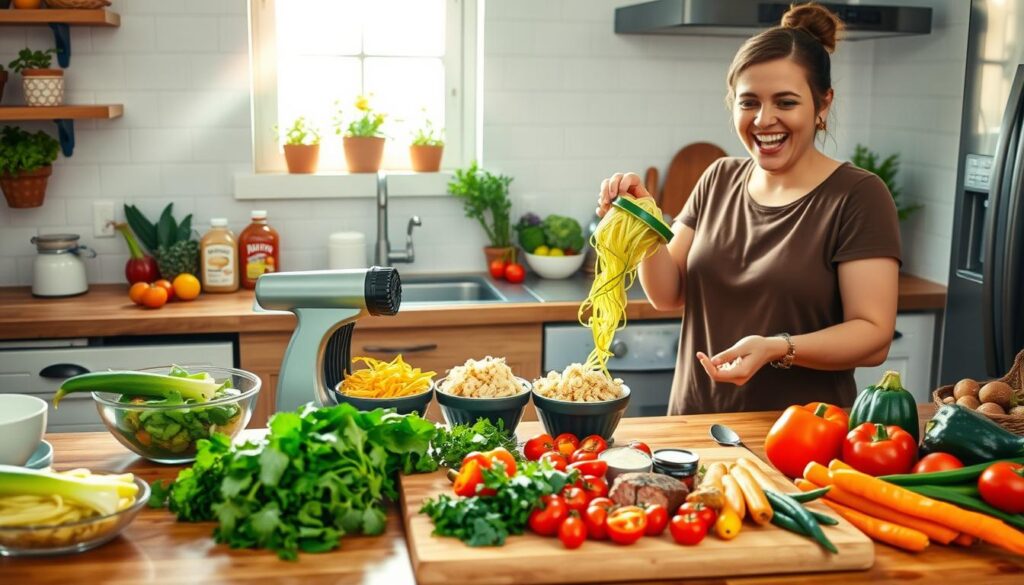
The trick isn’t to hide veggies. It’s to rename them. Spinach becomes “green confetti” in meatballs. Cauliflower is “cloud rice.” Kids can spot broccoli from afar.
It’s all about finding a balance. We keep meals healthy and happy. Here are some swaps that really work:
| Traditional Ingredient | Smart Swap | Why It Works |
|---|---|---|
| White Pasta | Chickpea or Lentil Pasta | Higher protein, fiber-rich, similar texture |
| Ground Beef | Ground Turkey + Mushrooms | Lower fat, umami flavor, moist texture |
| Mashed Potatoes | Cauliflower-Potato Blend | Creamy consistency, extra nutrients |
| White Rice | Riced Cauliflower + Quinoa Mix | More vitamins, protein boost, mild flavor |
For those with gluten or allergy issues, try oat flour instead of wheat. Sunflower seed butter is a great peanut butter substitute. These changes make family dinners enjoyable for everyone and keep them nutritious.
The aim isn’t to trick anyone. It’s to introduce new tastes in familiar ways. Even the most finicky eaters will come to love these healthy swaps when presented right.
Ways to Involve Kids in Cooking
Getting kids to eat veggies can be tough. But, there’s a secret that can help. It’s the kitchen itself.
Studies show kids who help cook are more likely to eat what they make. It’s not just about helping out. It makes eating dinner more fun and interactive.
Cooking becomes a fun learning experience. Kids can build their own kabobs and roll meatballs. Even washing veggies can be an adventure.
The kitchen becomes a place of discovery, not stress. Even when things don’t work out, it’s a chance to learn. And sometimes, it’s a funny story to tell.
Here’s how to make your kitchen a fun classroom:
- Edible architecture: Let kids build their own kabobs with colorful vegetables and proteins
- Tactile therapy: Meatball or cookie dough rolling engages multiple senses
- Hydroponic experiments: Vegetable washing stations with fun tools and gadgets
- Flavor scientist: Create “lab stations” for seasoning and sauce creation
It’s simple: when kids are involved, they’re curious. Curiosity makes them want to taste. And tasting leads to eating veggies.
Here’s how different age groups can help make kid-friendly healthy meals:
| Age Group | Kitchen Tasks | Learning Benefits | Fun Factor |
|---|---|---|---|
| 3-5 years | Washing produce, tearing lettuce, mixing ingredients | Motor skills, color identification | Messy play with edible results |
| 6-8 years | Measuring ingredients, assembling pizzas, setting table | Math skills, following sequences | Creative food design |
| 9-12 years | Simple chopping, reading recipes, basic cooking | Independence, safety awareness | Feeling like “real chef” |
When kids see how food is made, they start to understand. They feel proud of what they eat.
Cooking with children turns picky eaters into food explorers. Family meals become fun projects, not fights.
The goal isn’t perfect meals. It’s about kids participating. A little messy dish made by kids might be more exciting than a perfect one.
The secret to kid-friendly healthy meals is fun. It’s not about hiding veggies. It’s about enjoying making them together.
Batch-Cooking for Larger Families
Feeding a large family is like managing a supply chain, but with better smells. I’ve made my kitchen work like Amazon’s, but with more pasta and less cardboard.
The secret is culinary economies of scale. You’re not just cooking dinner; you’re creating a meal portfolio. Tuesday’s chicken can turn into Wednesday’s tacos with a bit of creativity.
This method solves the problem of variety without spending hours cooking. The trick is to make meals that reheat well and fit different schedules. In big families, dinner is more of a suggestion than a set time.
I’ve found three key strategies for batch-cooking success:
- The Foundation Protein Method: Cook one big protein (like roast chicken) that can be used in many meals
- The Modular Component System: Make separate parts (like grains and sauces) that can be mixed and matched all week
- The Theme Night Approach: Start with basic recipes that can be changed with different spices and sides
Leftovers are not a repeat, but a chance to create something new. Meatballs can be spaghetti sauce, subs, or pizza toppings. They’re just waiting for their turn.
| Batch Method | Time Investment | Variety Possible | Reheat Flexibility |
|---|---|---|---|
| Foundation Proteins | 90 minutes | 3-4 meal variations | Excellent |
| Modular Components | 60 minutes | 5-6 combinations | Good |
| Theme Nights | 75 minutes | 4-5 transformations | Very Good |
| Complete Meals | 120 minutes | 2-3 servings | Fair |
Making balanced recipes for families means thinking about how each part reheats. Some sauces freeze better, and some veggies stay good after reheating. It’s a mix of science and practicality.
The best part? When your teenager gets excited about “leftovers” because they’re something new. That’s when you know your batch-cooking is a success. It’s like a well-oiled machine that makes tasty meals instead of products.
Essential Pantry Staples
Let’s talk about culinary insurance – those pantry items that stand between you and another regrettable takeout night. I call this approach “strategic redundancy” – maintaining backup systems for kitchen emergencies. Your pantry isn’t just storage; it’s your culinary emergency response team.
Think of these staples as your kitchen’s special forces. They’re always on standby, never requiring vacation days. They transform basic ingredients into memorable meals when life throws unexpected plot twists at your dinner plans.
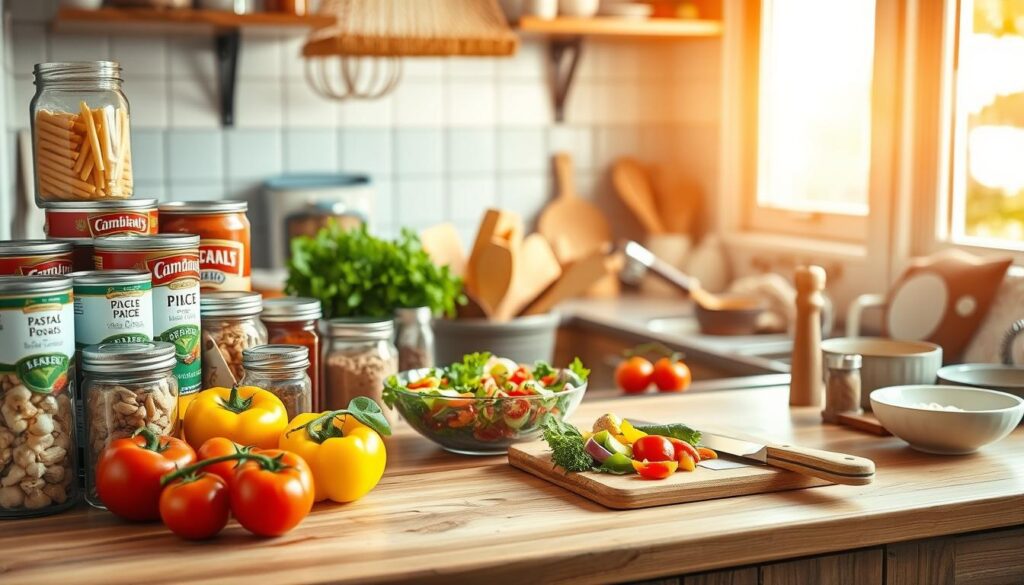
The intellectual framework here is simple: create systems that support spontaneity. Because let’s be honest, even the best meal plans often get derailed. That’s where these pantry heroes come to the rescue.
Here are the key players that make quick meal ideas actually work:
- Sauces that transform: Soy sauce, olive oil, vinegar
- Spices that create complexity: Garlic powder, smoked paprika, cumin
- Shelf-stable lifesavers: Canned tomatoes, beans, pasta
- Sweet essentials: Brown sugar, honey, maple syrup
These ingredients don’t care if you forgot to defrost something. They’re ready when you are, which is exactly what busy families need.
| Category | Essential Items | Meal Impact | Storage Life |
|---|---|---|---|
| Sauces & Oils | Soy sauce, olive oil, balsamic vinegar | Instant flavor foundation | 6-12 months |
| Spices | Garlic powder, cumin, smoked paprika | Complexity without effort | 1-2 years |
| Canned Goods | Tomatoes, beans, tuna | Protein and base ready | 2-5 years |
| Sweeteners | Brown sugar, honey, maple syrup | Balance and glaze options | Indefinite |
This isn’t just about stocking up. It’s about smart stocking. The right combination turns simple ingredients into restaurant-quality dishes. Your pantry becomes a creativity engine.
Remember: good pantry staples don’t just feed you – they free you. They’re the secret weapon behind those brilliant quick meal ideas that save your sanity on busy weeknights.
Conclusion: Less Stress, More Wellness for All
After looking into modern family cooking, I’ve found something simple. Our search for perfect nutrition often forgets the most important thing: peace of mind. The real art is in creating systems that feed both our bodies and our sanity.
The quick meal ideas we’ve talked about are more than just time savers. They’re smart tools for taking back your evenings. When family dinners focus on connection, not perfection, everyone benefits.
I see this as ‘practical wellness’ – blending nutrition with common sense. Success isn’t about organic food. It’s about having no tears at the table. The real sign of success? When everyone leaves feeling nourished.
The kitchen we’ve built together values what’s important. We aim for speed without losing health, and connection without adding stress. The most nutritious part of any meal isn’t organic food. It’s the laughter around your table.