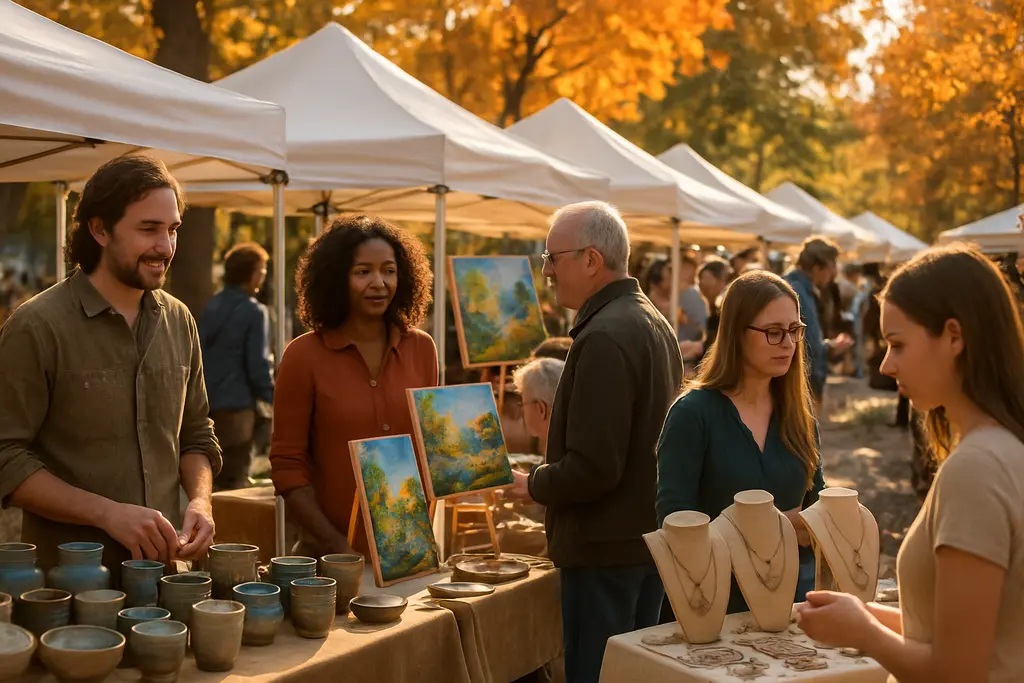
Fall 2026 local art events offer a useful snapshot of how regional craft commerce works: some shows are large juried festivals, some are community markets, and others run for weeks as holiday fairs. As of October 10, 2026, several listed events had already finished, while others were active or scheduled for later in October and November. For buyers, the practical question is not only where to go. It is how to read each event’s scale, setting, maker mix, and trust signals without reducing handmade work to seasonal shopping.
A cautious approach matters because handmade markets sit at the meeting point of art, cultural context, material knowledge, and small-business commerce. A booth with pottery, leatherwork, fiber pieces, jewelry, copper goods, or photography is not the same as a generic retail display. The buyer benefits from asking how the object was made, what variation is expected, how it should be cared for, and whether the seller can explain its material and process clearly.
How Local Art Events Differ By Region
Regional craft calendars can look similar at first glance, but the underlying formats vary. A juried outdoor fine-art festival, a holiday market, a convention-center craft fair, and a town fall festival create different expectations for both artists and buyers. The research notes for fall 2026 identify events in Texas, Virginia, Massachusetts, Vermont, Tennessee, Colorado, Kentucky, Pennsylvania, and New York, which is a broad enough spread to show why regional context matters.
Local Art Events Still Active On October 10
The Bayou City Art Festival in Houston was listed for October 9–11, 2026, with more than 200 artists, live music, food, children’s activities, and fine art in Memorial Park, according to Axios Houston. That mix suggests a festival where art viewing, family programming, and food share space, so buyers should expect a public-event atmosphere rather than a quiet gallery setting.
The Fall Crozet Arts & Crafts Festival in Virginia was listed for October 10–11, 2026, at Claudius Crozet Park, with about 130 artists and exhibitors, plus food, music, and a children’s area. Gatlinburg Craftsmen’s Fair in Tennessee was listed for October 8–28, 2026, with more than 200 jury-selected booths in a 150,000-square-foot convention center, daily music shows, and handmade categories including pottery, leather, and copper. These local art events differ in setting, but both place craft within a larger community event structure.
Recently Concluded Fall Shows As Context
Several fall shows had already ended by October 10, 2026. St. James Court Art Show in Louisville was listed for October 2–4, 2026, and Long’s Park Art Festival in Lancaster was listed for September 4–6, 2026. Arts at Altitude Market and Frisco Fall Fest in Colorado was listed for September 11–12, 2026, with local and regional artists offering jewelry, pottery, textiles, and photography alongside fall programming. These concluded events still help buyers and sellers compare formats, but they should be discussed in the past tense because their 2026 dates had passed.
What Buyers Should Expect At Fall Craft Markets
A buyer’s expectations should shift according to the event type. A large juried festival may offer many categories of fine art and craft, while a holiday market may favor giftable objects, seasonal food items, fiber pieces, jewelry, pottery, and small decor. A community festival may combine craft booths with music, children’s programming, food vendors, and civic gathering. None of these formats is inherently better. They simply ask buyers to look with different levels of patience and attention.
Scale, Setting, And Admission Signals
Scale can help buyers plan how carefully they will compare objects. The Champlain Valley Craft Show & Antique Expo in Essex Junction, Vermont, was listed for October 16–18, 2026, with more than 125 booths featuring juried arts, crafts, antiques, and specialty foods, with paid admission and free parking. The 18th Annual Castleberry Fall Craft Festival in Wilmington, Massachusetts, was listed for October 25–26, 2026, with juried arts and crafts, specialty foods, antiques, and many booths under one roof.
Indoor fairs can make it easier to compare booths, especially in late October weather, while outdoor parks may create a slower social setting. Paid admission may signal an organized event with formal entry management, but it does not prove quality by itself. Jury language can be useful, yet buyers should still ask practical questions about process, materials, and care.
Materials, Care, And Maker Context
Handmade objects often carry small variations that buyers should see as part of the making process, not as flaws by default. A ceramic glaze may vary slightly. Leather can darken with use. Fiber work may need careful washing or storage. Copper and other metals may patinate. If a seller explains these qualities with confidence and restraint, that is a stronger trust signal than broad claims about authenticity.
This is especially relevant for gift buying. A recipient may not know how to care for a handmade textile, a pottery piece, or a functional wooden object. Sellers who provide care cards, material notes, and use limits help protect both the object and the buyer’s trust. Shimply has considered similar region-based trust signals in its analysis of regional craft signals, where local identity works best when paired with clear product information.
How Sellers Can Build Regional Trust
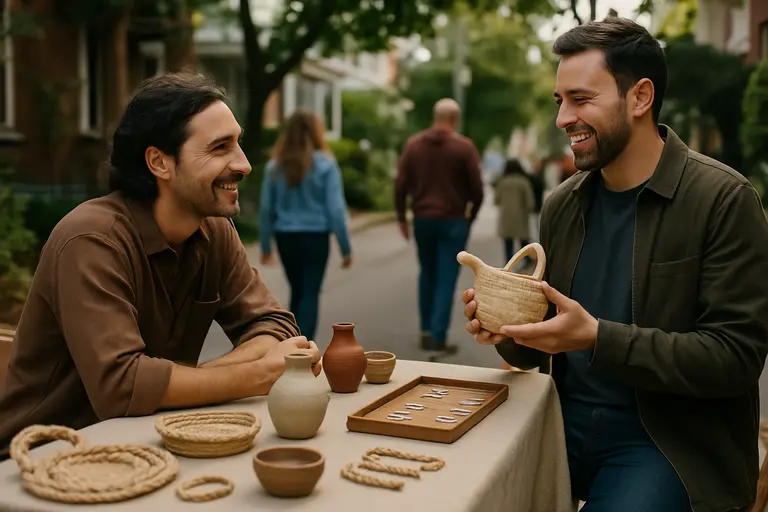
For makers, fall events are not only sales opportunities. They are moments of public education. Buyers often ask the same questions: Is this handmade by you? What material is it? Can it be washed? Is it food-safe? Is it one of a kind? Can it be repaired? A seller who answers plainly, without inflated claims, earns credibility.
Booth Information That Helps Buyers
A strong booth should make basic facts easy to find. Labels should identify the material, price, general process, and use. For functional goods, care instructions should be visible or available. For culturally specific work, context should be respectful and precise: name the tradition or region only when the maker can support that connection. Avoid using heritage language as decoration when the product’s origin is unclear.
- State whether the item is handmade, hand-finished, assembled, or designed by the seller.
- Explain material behavior, such as patina, shrinkage, glaze variation, or natural fiber change.
- Offer care guidance for gifts, especially pottery, textiles, leather, wood, and metal.
- Use clear return, repair, or custom-order terms when available.
Fairfax City’s 2026 Holiday Craft Show application identifies the November 21–22, 2026 event as a city craft show with rules and vendor-facing terms, which shows how civic events often depend on formal participation structures as well as public programming; the document is available through the Fairfax City craft show application.
Cultural Context Without Overclaiming
Respect for cultural context is not a marketing extra. It is part of ethical craft presentation. A maker or seller should be careful with claims about origin, sacred motifs, community practices, and historical continuity. If an object is inspired by a region, say that. If it is made within a particular tradition by someone trained in that practice, explain the basis for that statement. If the connection is uncertain, leave room for uncertainty rather than filling the gap with promotional language.
Craft also intersects with fashion, costume culture, and fantasy design, where handmade skills can be admired without copying protected characters or misusing cultural references. For a deeper look into fashion imagination and craft-adjacent aesthetics, Fairytale Fashion is a valuable resource, exploring how these themes intertwine creatively.
Local Art Events And Regional Trust
Local Art Events And Regional Trust is the central issue for fall 2026 craft buyers and sellers. Dates and booth counts help, but they do not replace judgment. The Shaker Heritage Society Holiday Market in upstate New York was listed for October 13 through December 18, 2026, with regional artisans selling handmade pottery, jewelry, fiber works, and artisan foods. That longer schedule gives buyers repeated chances to compare work, ask questions, and build familiarity with regional makers.
A Careful Way To Read The Calendar
As a practical matter, buyers should read each listing by date first, then format, then maker information. Events that ended before October 10, 2026, such as the Lancaster, Louisville, and Frisco listings, belong in retrospective planning notes. Events dated October 10, October 11, October 13, October 16–18, October 25–26, November 21–22, and through December 18, 2026, can be assessed as active or future opportunities, depending on their exact dates.
The most reliable local art events are not defined only by size. They are defined by clarity: clear dates, clear maker standards, clear material information, and clear respect for the work being sold. For buyers, that means asking better questions. For sellers, it means presenting handmade objects with enough context that price, care, and meaning are easier to understand. That kind of regional trust is slow to build, but it protects the integrity of handmade craft far better than seasonal hype.