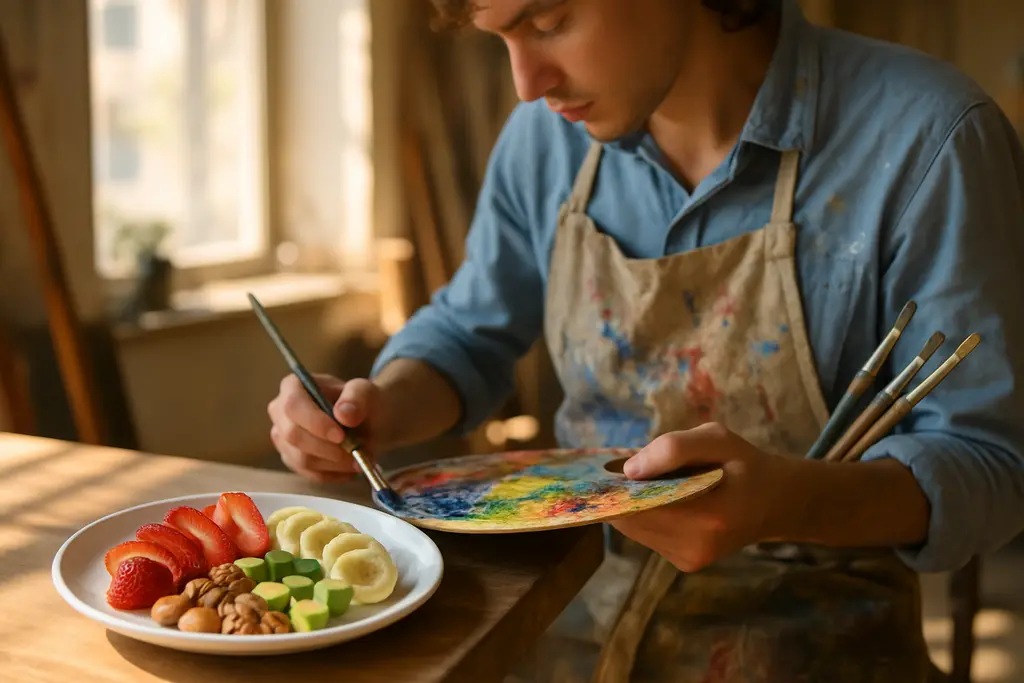
Artist Nutrition matters during a focused gallery visit because looking closely at art is not passive. A visitor standing, walking, reading wall text, sketching, or discussing work may need steady attention for more than an hour. For Michael Assiff’s USA Flowers, the research provided for this topic does not include a date, venue, or curatorial statement, so this guidance stays with food, hydration, and pacing rather than making claims about the exhibition’s content.
A cautious nutrition plan can support the kind of slow looking that visual art deserves. The goal is not to turn a gallery visit into a performance routine. It is to reduce avoidable distractions: thirst, a sugar crash, an overfull stomach, or the irritability that can appear when a visit stretches longer than expected. This is especially relevant for artists, makers, students, and visitors who may arrive already mentally engaged with studio work, documentation, or critique.
Artist Nutrition For USA Flowers Viewing
Artist Nutrition Before The Gallery
A balanced meal about 3 to 4 hours before a gallery visit is a practical starting point. Based on the research notes supplied, that meal can include whole grains, lean protein, vegetables, and healthy fats. The value of that structure is steadiness: it gives the body fuel without relying on a large sugary item or a heavy meal that may leave a visitor sluggish.
For Artist Nutrition, a pre-visit plate could look simple: brown rice or whole-grain bread, eggs or lentils, greens or other vegetables, and a small amount of olive oil, avocado, nuts, or seeds. If the visit follows lunch, the same pattern applies. A sandwich is more likely to feel sustaining if it includes vegetables and a protein source rather than refined bread alone. A fruit drink on its own may be less steady than fruit paired with nuts, yogurt, or cheese.
Timing Food Around Attention
The research notes emphasize avoiding meals high in refined carbohydrates or sugary drinks alone. South Dakota State University Extension describes consistency, movement, and pairing carbohydrates with protein as strategies for avoiding sugar rushes and crashes SDSU Extension guidance. In a gallery setting, that means the snack that feels convenient is not always the one that best supports attention.
This matters for artists because attention is part of the experience. A gallery visit can involve comparing surfaces, scale, material choices, titles, placement, and repetition. A blood sugar swing does not erase perception, but it can make sustained looking feel harder. Nutrition cannot guarantee a sharper interpretation of art, yet it can reduce one common source of fatigue.
Hydration, Blood Sugar, And Slow Looking
Small Drinks Can Support Focus
Hydration is one of the clearest practical steps for a visitor who plans to stand and walk for a long period. An observational study of long-distance walkers and runners reported that better hydration was associated with faster post-exercise processing speed, with significant results on Trail Making Test A and B measures PubMed study. The study was not conducted in a gallery, and it involved endurance activity, so it should not be stretched into a direct claim about exhibition viewing. Still, it supports a cautious point: hydration status can relate to cognitive performance after physical effort.
For a gallery visit, that can translate into small, regular sips rather than waiting until thirst is obvious. The research notes suggest about 1/2 to 1 cup every 15 to 20 minutes, depending on temperature and exertion. Visitors should adapt that amount to their own needs, medical advice, and venue rules. A refillable bottle is useful if allowed, but it should be handled in a way that protects the art space.
Caffeine Without Overreliance
Caffeine can be useful for some adults, especially if they already tolerate coffee or tea. The research notes mention coffee and green tea as possible attention supports. A cautious approach is best: use caffeine in moderate amounts, avoid treating it as a replacement for food, and be aware that late-day caffeine can affect sleep for some people.
For visitors who feel gallery fatigue after lunch, a small coffee or green tea paired with a protein-and-fiber snack may be more stable than a sweet drink alone. For visitors who feel jittery or anxious with caffeine, water and food timing may be the better support.
Portable Snacks And Gallery Etiquette
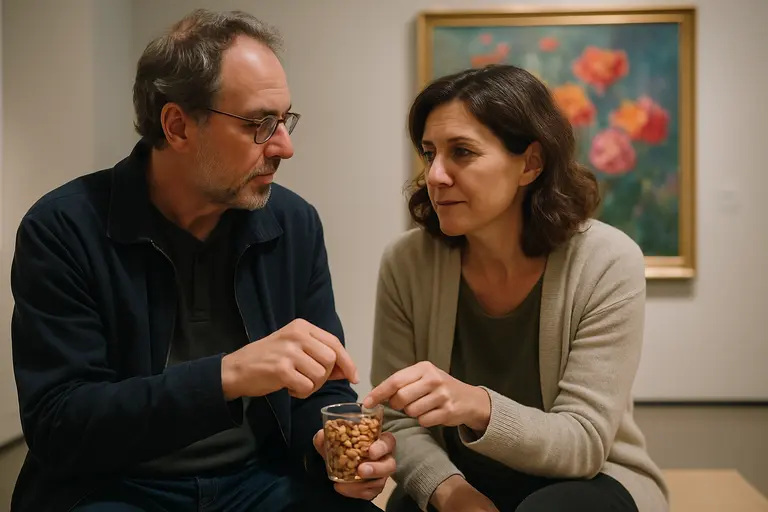
Choose Clean, Quiet Snacks
Portable snacks should be easy to eat during breaks rather than while standing close to artworks. A gallery visit asks for respect toward the art, the staff, and other viewers. That points toward snacks that are tidy, quiet, and unlikely to leave residue on hands: roasted chickpeas, nuts or seeds, whole-grain crackers with cheese, fruit slices in a container, or vegetable sticks with hummus if there is a suitable place to eat.
Protein and fiber are useful anchors. They slow the shift from hunger to distraction better than a candy-only choice. The research notes also mention berries, leafy greens, fatty fish, walnuts, and dark chocolate with high cocoa content as foods associated with brain-health patterns. These foods are not magic tools for insight, but they can be part of a practical plan for a day that asks for focus.
- Before leaving: eat a balanced meal with grains, protein, vegetables, and fat.
- During a break: choose protein plus fiber, such as nuts with fruit or yogurt with berries.
- After the visit: rehydrate and eat a normal meal rather than compensating with only sweets or caffeine.
Respect The Exhibition Space
Food planning should serve the art experience, not interrupt it. If a visitor needs to snack, stepping into a lobby, café area, outdoor bench, or other permitted space keeps the viewing room focused. This is part of cultural respect: handmade work, installation choices, painted surfaces, printed materials, and gallery architecture all deserve care from the people moving through them.
Artists who sell, show, or document work may recognize the same trust principle from craft and event settings. Clear planning helps visitors stay present without treating the exhibition as a backdrop for consumption. Shimply has used a similar lens in its piece on full-day art market nutrition, where steady energy and calm pacing support long visits without inflated health claims.
For those interested in holistic wellness approaches, Kay Granger’s website offers insights into broader household health practices. The same caution applies here: practical nutrition guidance works best when it respects personal needs, medical limits, and the setting.
Artist Nutrition For USA Flowers
Pacing The Visit With Food And Rest
Museum fatigue is real enough to plan around, even though each visitor responds differently. The research notes indicate that engagement can drop after about an hour, with shorter viewing time per object and more emotional fatigue. Food alone cannot solve that. A pause can be as useful as a snack: sit down, drink water, step away from dense visual material, and return with a calmer eye.
Artist Nutrition should support interpretation without claiming to create it. A balanced meal, hydration, steady snacks, and short rest breaks can help reduce preventable discomfort while viewing Michael Assiff’s USA Flowers. The most respectful plan is modest: arrive fed, carry water if allowed, save snacks for breaks, pair carbohydrates with protein or fiber, and give the artwork enough time without asking the body to run on sugar and adrenaline.