
Have you ever caught a glimpse of yourself in the morning rush? You’re juggling lunches, calming a crying child, and searching for a missing shoe. It’s a moment that makes you remember your fitter self.
I know this feeling well. I was once an IT professional in Bengaluru who let my health slip. It’s a common problem for parents. We’re always on the move but rarely get to exercise.
Parenting is like a never-ending workout. It’s hard to find time for ourselves. But, taking care of our health brings many benefits. It gives us more energy, reduces stress, and strengthens our bond with our family.
This article is your guide to finding balance. It shows how to turn chaos into a chance to exercise. We’re not looking for more time; we’re using what we have better.
I’ve learned through experience and observation. Short, 15-minute workouts can start a fitness journey at home. It’s not a burden but a way to fight against a busy schedule.
Time-Efficient Workout Principles
Time is now the most valuable thing in fitness, and busy parents know it. Gone are the days of two-hour gym sessions. Now, it’s about getting the most out of the least amount of time.
This isn’t about working less. It’s about working smarter. Think of it as fitness density—packing more punch into less real estate. The goal? To get the metabolic equivalent of a 45-minute jog in just 15 focused minutes.
The cornerstone of this approach is High-Intensity Interval Training, or HIIT. Forget steady-state cardio. HIIT operates on the principle of the afterburn effect, scientifically known as Excess Post-Exercise Oxygen Consumption (EPOC).
Your body works overtime to recover after intense bursts. This means you keep burning calories while making lunch or helping with homework. It’s like getting paid after your shift ends.
Next, embrace compound movements. These are the multitaskers of the muscle world. A squat doesn’t just work your legs; it engages your core, glutes, and back. A push-up targets your chest, shoulders, and triceps simultaneously.
Why do ten isolated exercises when three compound moves can do the job? It’s the fitness equivalent of a Swiss Army knife—versatile and efficient.
Now, let’s talk about the tightrope walker’s mindset. A master tightrope artist doesn’t take frantic, exhausting steps. They take precise, powerful ones. Your focus is the sacred 15-minute block. Your balance is weaving it into the daily chaos. Your momentum is the consistency that turns a good intention into an unbreakable routine.
This philosophy transforms quick family workouts from a compromise to a strategic advantage. You’re not missing out; you’re upgrading your efficiency protocol.
| Principle | Traditional Approach | Time-Efficient Approach | ROI (Return on Investment) |
|---|---|---|---|
| Workout Structure | 60-90 minute sessions, 3-4 times weekly | 10-15 minute high-density sessions, daily or near-daily | Higher frequency maintains metabolic rate; consistency beats duration. |
| Exercise Selection | Isolation exercises (bicep curls, leg extensions) | Compound movements (squats, lunges, push-ups) | Engages multiple muscle groups simultaneously for full-body impact. |
| Intensity Model | Steady-state, moderate pace (jogging, elliptical) | High-Intensity Interval Training (HIIT) | Triggers EPOC for extended calorie burn post-workout. |
| Mindset Focus | “Finding time” for a long session | Protecting and optimizing short, focused blocks | Reduces mental friction; integrates fitness into existing schedule. |
| Equipment Needs | Gym membership, multiple machines | Bodyweight, minimal gear (jump rope, resistance band) | Removes barriers; workouts can happen anywhere, anytime. |
The table above isn’t about declaring one method superior. It’s about recognizing that context dictates strategy. When time is your scarcest resource, efficiency becomes your primary metric.
Implementing these principles turns fragmented moments into powerful quick family workouts. That 15 minutes while the pasta water boils? That’s your new gym. The living room floor during afternoon play? That’s your fitness studio.
The shift is psychological as much as physical. You’re not squeezing fitness in. You’re redesigning your day around it, one efficient block at a time.
Morning Energy Booster Routines
Morning fitness for parents isn’t about punishment. It’s about preparing for the chaos that comes. Think of it as putting on mental armor before the day starts.
That quiet hour, whether it’s 5 a.m. or 6 a.m., is valuable. It’s a chance to get your mind ready for the day. A quick 15-minute routine can wake you up and make you feel in control.
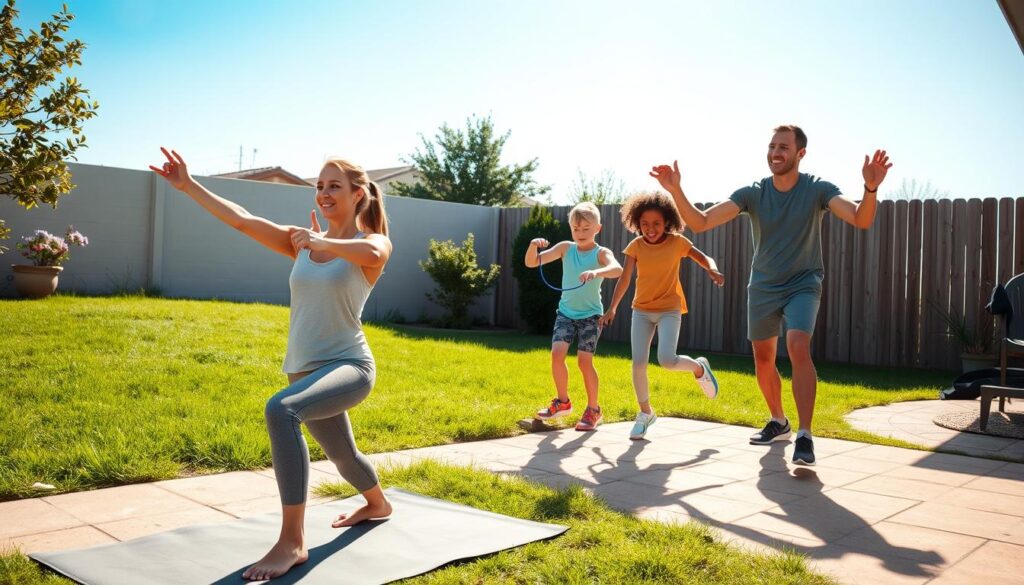
Scientifically, this routine boosts your circulation and alertness. Aesthetically, it gives you time that’s just for you. This small act of self-care improves your focus and patience.
So, what does a good morning parent fitness routine look like? It’s simple and consistent. You don’t need fancy equipment or a lot of time.
Here are three easy options:
- The Balcony Bodyweight Circuit: Start with sun salutations, then do air squats and push-ups. Finish with some deep breathing. You need no equipment, just your body and the morning air.
- The Brisk Walk & Podcast: Take your dog for a walk and listen to a podcast. This gives you exercise, fresh air, and something to think about.
- The Kitchen Counter Yoga Flow: Use your counter for balance. Do some stretches, balance poses, and set your intentions for the day. It’s a quick way to get your body and mind ready.
These routines are transition rituals. They help you move from sleep to being ready for the day. They act as a buffer against the demands that will try to drain your energy.
| Routine Type | Time Required | Energy Boost Level | Kid-Friendliness |
|---|---|---|---|
| Bodyweight Circuit | 12-15 min | High | Low (Best solo) |
| Brisk Morning Walk | 15-20 min | Medium-High | Medium (Can include stroller) |
| Gentle Yoga/Stretching | 10-15 min | Medium (Calm energy) | High (Kids can join) |
| Dance Party Warm-up | 8-10 min | Very High | Very High (Family activity) |
The table shows how different routines meet different needs. Want to boost your energy before work? Try the bodyweight circuit. Need to include a toddler? The dance party is perfect.
Seeing this time as gained sovereignty is key. Those 15 minutes of movement can greatly improve your mood, productivity, and resilience. It’s not just about exercising; it’s about becoming a better version of yourself before the day starts demanding things from you.
This is the heart of sustainable parent fitness routines. It’s not about finding time you don’t have. It’s about using the time that’s already waking you up. The early morning isn’t a burden; it’s a powerful tool in your parenting arsenal.
Lunch Break Family Activities
What if we saw the lunch break as a chance to do two things at once? That sixty-minute window is like a “force multiplier” in military strategy. It’s not about finding more time; it’s about using the time we have wisely.
Mixing fitness and family activities is key. But don’t try to do CrossFit while dealing with a tantrum. That’s a recipe for disaster. Instead, think of smart ways to do both.
Try baby-wearing walks. It seems like a chore, but it’s actually good for both you and your baby. The walk becomes a workout for you and a soothing experience for your child.
Set up an obstacle course in your living room. Use couch cushions and chairs to create tunnels and jumps. It’s fun for your child and a workout for you.
Dancing to bad pop music is also a great workout. It’s a fun way to burn calories and bond with your family. It’s like cardio disguised as fun.
Turn errands into workouts. Make grocery shopping a race or walk faster to the post office. It’s a way to get things done while staying active.
| Activity | Fitness Benefit | Family Engagement | Time Required | Equipment Needed |
|---|---|---|---|---|
| Baby-Wearing Walk | Light cardio, core stabilization | High (direct bonding) | 15-25 minutes | Baby carrier, comfortable shoes |
| Obstacle Course Creation | Plyometrics, agility training | Very High (collaborative play) | 20-30 minutes | Household cushions, chairs |
| Family Dance Party | Cardio, coordination | Extreme (shared experience) | 10-15 minutes | Music player, open space |
| Errand Transformation | Walking, functional movement | Medium (shared purpose) | Varies with task | Stroller/wagon for kids |
| Park Play Integration | Full-body movement, play fitness | Very High (outdoor adventure) | 25-40 minutes | Playground access |
Each activity is a win-win. You’re not taking away from family time; you’re adding to it. It’s like solving a puzzle where every piece fits perfectly.
Think of it like the “Saw” movies. You need to keep moving to survive. The lunch break is your chance to do the same thing in a less intense way.
This approach to busy parent exercise needs mental flexibility more than physical strength. See playgrounds as gyms and chores as chances to move more. Your home and neighborhood become your workout space.
Short bursts of activity add up over the day. A few minutes of play-fitness at noon, plus morning and evening activities, equals a lot of exercise. You’re not training for the Olympics; you’re staying healthy and active.
The lunch break is more than just a time to eat. It’s a chance to create a new kind of time: family vitality time. The real measure of success isn’t just steps or calories burned. It’s the smiles and memories made during what used to be a boring time.
Evening Wind-Down Exercises
After bedtime, it’s not time to collapse. It’s time to create a buffer zone with mindful movement. The urge to dive into the couch and scroll on screens is strong. But it’s a trap that keeps your mind racing.
The wise choice is a gentle cooldown. This isn’t about burning calories. It’s about calming your entire nervous system. Think of it as a way to reset your body.
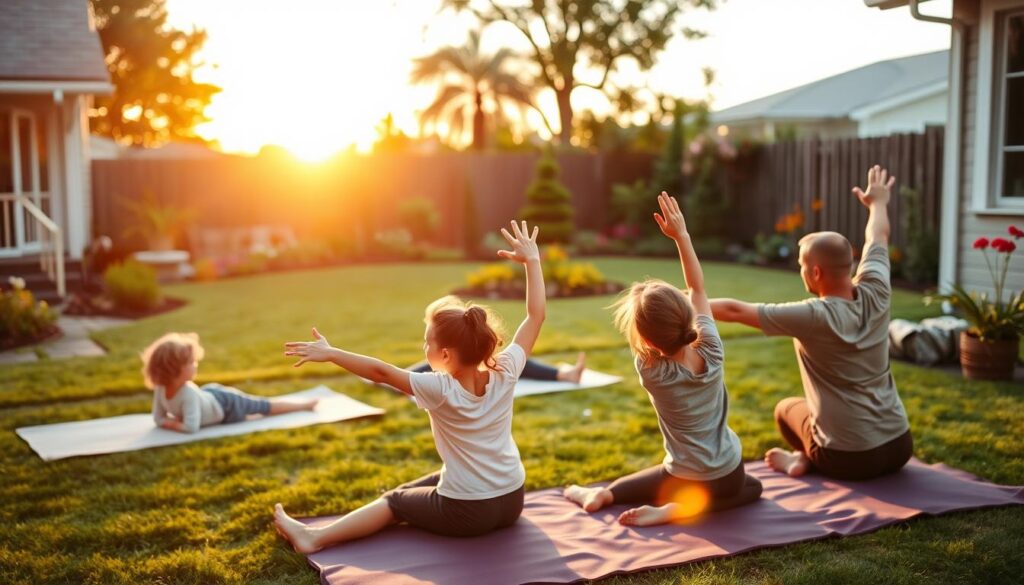
From a scientific view, you’re switching gears. You’re turning on your “rest and digest” mode. This is key for good sleep and feeling refreshed the next day. Studies show that light evening activities significantly improve sleep onset and depth. It’s a way to cool down, not just your muscles.
These quick family workouts for the evening are simple. A 15-minute yoga flow on the living room floor. A quiet walk around the block under the stars. Five minutes of meditation or simple breathwork. The goal is to find quiet together.
This practice creates a vital buffer. It separates the energy of parenting from the quiet you need to recharge. It’s like hitting the “defrag” button on your mind. The table below explains why and how to make evening time recovery time.
| Wind-Down Activity | Physiological Effect | Family-Friendly Tip |
|---|---|---|
| Gentle Yoga Flow | Stretches tense muscles, focuses the mind on breath, cues the body for rest. | Use animal-themed poses (Cat-Cow, Child’s Pose) and keep it playful and quiet. |
| Family Walk | Rhythmic movement outdoors lowers cortisol, while dim light helps regulate melatonin. | Make it a “quiet observation” walk. Who can spot the first star or hear the most crickets? |
| Guided Meditation/Breathwork | Directly activates the parasympathetic system, slowing heart rate and calming the mind. | Try “balloon breathing” (hand on belly, breathe in to inflate, breathe out to deflate). |
| Light Stretching & Rolling | Increases blood flow for recovery without raising arousal, relieves physical tension. | Use a foam roller or tennis ball as a “massage tool” on sore feet or backs. |
Each activity is low-impact, mindful, and screen-free. They are the opposite of the day’s hustle. They’re perfect quick family workouts for after dinner. They show that fitness isn’t always about being intense. Sometimes, slowing down is the smartest move.
This evening ritual is like the morning micro-workouts. One gets you ready for action; the other helps you wind down. Mastering both creates a balanced rhythm. You’re not just fitting in exercise. You’re using movement to orchestrate your family’s energy cycle.
The result? You swap mental static for calm. You build a bridge from chaos to peace. And these quiet 15 minutes might become the most guarded part of your day.
Weekend Longer Session Ideas
The idea of a ‘longer session’ on weekends is a clever trick. It’s not about more pain, but more fun. Your parent fitness routines turn from quick hits to a long-term plan for fun. It’s not about setting records. It’s about creating family stories.
Imagine a field trip instead of a classroom. Weekdays are like school—necessary and efficient. But Saturdays are for adventures. A family hike is not just exercise. It’s a chance to learn about the area and support each other.
This change in thinking is key. Let’s explore it further:
| Weekday Mindset | Weekend Mindset | The Family Payoff |
|---|---|---|
| Efficiency & Speed | Exploration & Discovery | Shared Adventure |
| Isolated Exercise | Integrated Activity | Collective Memory |
| Counting Reps | Creating Stories | Stronger Bonds |
So, what does this look like in action? Your local park becomes a makeshift gym. The monkey bars are for pull-ups. A bench is for step-ups and dips. The open field is for dancing or races.
A backyard obstacle course with cones, jump ropes, and a sprinkler is more than a workout. It’s a celebration. The joy is as vital as the exercise. These activities turn fitness into a fun byproduct, not the main goal.
This is the heart of lasting parent fitness routines. You’re not just getting stronger. You’re creating traditions. The weekend session changes fitness from a solo task to a team effort where everyone benefits.
Including Kids in Parent Workouts
It’s time to break a big myth: kids are not a barrier to exercise, but a great help. Saying “I can’t work out because of the kids” shows a lack of creativity. Your kids can actually make your workouts more fun and effective.
Changing your mindset is key. Ditch the solo, timed workouts. Instead, make exercise a fun, family activity. This way, you stay consistent and teach your kids the value of being active.
Play is the best teacher. Think of tag as “Cardio Chase.” You’re sprinting, while they’re laughing. Using couch cushions for an obstacle course is agility training for you and helps your kids with spatial awareness.
Dancing to your kid’s favorite songs? That’s stretching and rhythm practice. It’s not just about the exercise; it’s about having fun together.
This table shows how to turn solo exercises into fun family activities. Every busy parent exercise can be adapted for kids.
| Traditional Solo Move | Kid-Inclusive Adaptation | Hidden Family Benefit |
|---|---|---|
| Squats | “Giant Sit-Downs” – Count how many times you can sit and stand together before a timer goes off. | Teaches counting, teamwork, and foundational leg strength for all. |
| Planks | “Tunnel Time” – Hold your plank while kids crawl or roll toys underneath. | Builds core stability for parent; develops motor skills and understanding of spatial concepts for child. |
| Burpees | “Up-Down Race” – Challenge your child to match your up-down motion (their version may be a simple squat jump). | High-intensity cardio for you; introduces explosive movement and friendly competition for kids. |
| Jumping Jacks | “Star-Jump Show” – Make it a rhythm game, clapping or singing along with each jump. | Improves coordination and cardiovascular health; enhances auditory processing and rhythm sense. |
| Lunges | “Big Step Challenge” – Lunge across the room while your child mirrors you or counts your steps. | Targets glutes and balance; teaches imitation and sequencing skills. |
Involve your kids in your workouts. Turn any movement into a game. This way, you’re not taking away from family time. You’re making exercise a part of your family’s life.
You’re conducting a long-term experiment in health. You’re showing that exercise can be fun and part of daily life. This might help your kids see exercise as a positive part of life, not a chore.
So, when you think you can’t fit in a workout, look at your kids. See them as the reason and motivation for your busy parent exercise journey. The goal is to have fun, laugh together, and pass on a healthy lifestyle.
High-Intensity Interval Training for Families
HIIT isn’t just for gym enthusiasts. It’s for anyone who can spare ten minutes. Families racing through the week can definitely find time for it.
HIIT is simple yet intense. You work hard for 20 to 45 seconds, then rest. This cycle boosts your metabolism.
HIIT is great for families. Everyone can do their own thing. The timer keeps everyone in sync, not out of breath.
HIIT is perfect for quick family workouts. A 10-minute session includes jumping jacks, squats, and push-ups. It’s a fun way to get fit together.
HIIT is quick and effective. You can get a great workout in just a few minutes. It’s a great way to spend time together.
Here are three family-friendly HIIT formats. Each is quick and effective.
| Workout Format | Work/Rest Ratio | Example Exercises | Total Time | Best For |
|---|---|---|---|---|
| The 10-Minute Blitz | 30 sec work / 30 sec rest | Jumping Jacks, Bodyweight Squats, Push-Ups, High Knees | 10 mins | Pre-dinner energy burn, morning boost |
| The Cardio Burst | 40 sec work / 20 sec rest | Mountain Climbers, Speed Skaters, Butt Kicks, Sprint in Place | 12 mins (3 rounds) | Older kids & parents, high-energy days |
| The Playful Pyramid | 20/40, 30/30, 40/20 (changing) | Animal Walks (bear crawl), Hopscotch, Plank Taps, Dancing | 15 mins | Younger children, making fitness a game |
Start with a timer, not a video. HIIT is simple and effective. It’s a quick way to get fit and have fun together.
Flexibility and Recovery Focus
Our fitness culture often focuses too much on pushing hard. But recovery is just as important. It’s like the final scene that everyone should watch.
Think of stretching before bed as a way to fix your body. It’s not just about stretching. It’s about calming down after a busy day. A simple pose like Child’s Pose can reset your body and mind.
Studies show that short, focused stretches can make a big difference. Pliability talks about using short workouts to adapt and recover. Just a few minutes can help your body repair itself.
Good sleep and less stress are key for parents. Your evening routine is essential. It helps you relax and recover, making you more energetic and focused.
So, make sure to include some active recovery in your routine. This will take your fitness to the next level. It ensures you stay injury-free and mentally sharp for the next week.