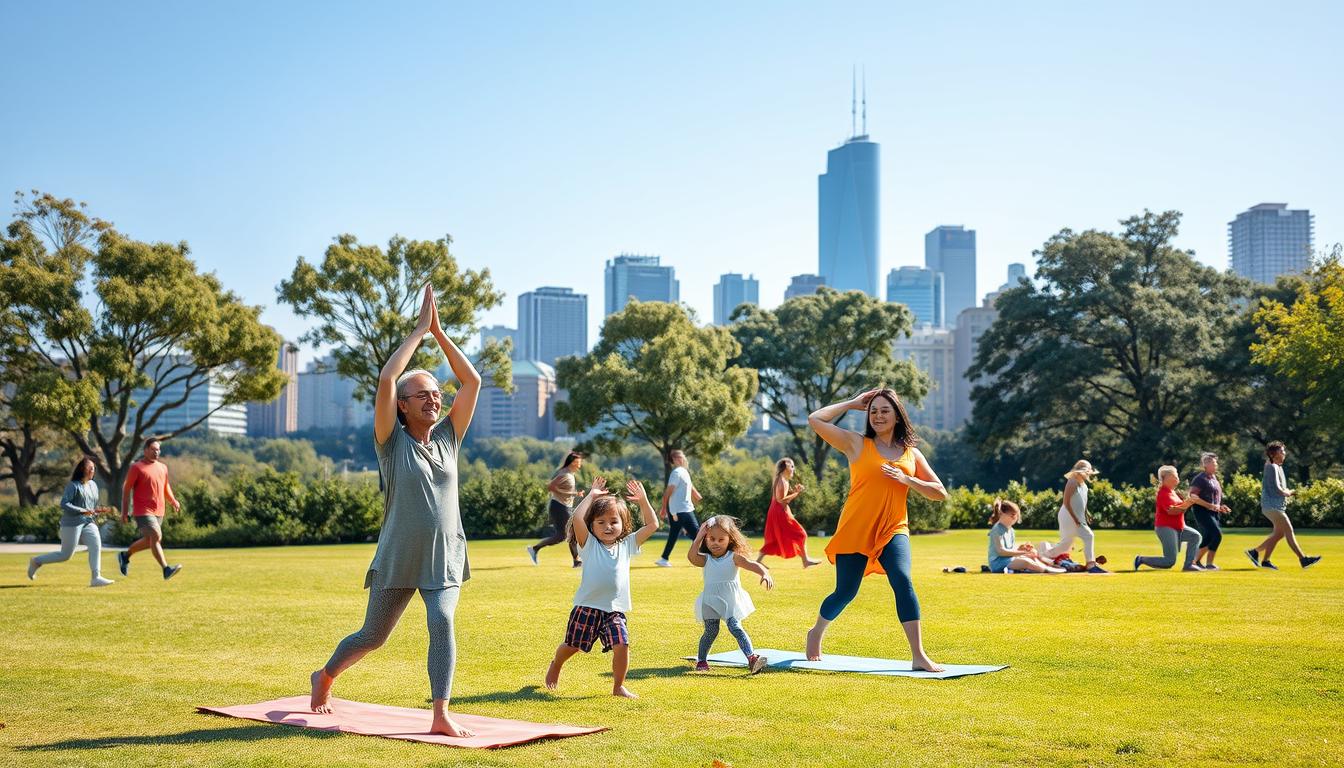
Raising kids in the city can feel like a survival game. The city is seen as a place that’s bad for your nerves and your kids’ growth.
But what if we’ve been wrong? What if the city, with its busy streets and small parks, is actually a great tool for us?
Studies show that good public and green spaces can really help. They can cut stress hormones by 25% and boost physical activity by a third. This is a big change, hidden in the city’s daily life.
This isn’t about wanting a big suburban house. It’s a smart move. We’re making the city work for our health, even with small spaces and crowded areas. The city doesn’t hold us back; it just needs us to think differently.
Apartment-Friendly Exercise Equipment
The real challenge of apartment fitness gear is making it disappear when not in use. We’ve all seen the sad fate of gym equipment: the elliptical becomes a drying rack, the weight bench a storage shelf. In cities, every item must earn its space. The answer for apartment workouts families love is not more gear—it’s smarter gear.
Resistance bands are a perfect example of urban efficiency. They fit in a drawer, cost less than a week’s coffee, and offer strength like free weights. Unlike big home gyms, they don’t take up too much room.
Suspension trainers take this idea further. Attach them to a sturdy door, and you have a portable gym. When done, they fold up like camping gear. This turns your doorway into a year-round exercise spot.
The humble yoga mat also deserves a shout-out. It marks the workout area when unrolled and blends in when rolled. This simple tool helps create space for exercise in tight spots.
Foldable treadmills are another engineering marvel. They fold up like a floor lamp, saving space. Look for ones with soft-drop mechanisms to keep peace with downstairs neighbors. Your family apartment workouts get cardio options without losing living space.
Adjustable kettlebells are also brilliant. One handle fits multiple weights. They’re like the Swiss Army knife of strength training—versatile, space-saving, and stylish.
But let’s think about using what you already have. That sturdy coffee table? Great for elevated push-ups. The dining chair? Perfect for tricep dips. The wall? Great for isometric holds. Just make sure it’s safe first.
This way, your apartment becomes a transition space. It changes from gym to playroom to lounge. The equipment helps, not hogs, the space.
Here’s a quick look at stealth fitness gear:
| Equipment Type | Space Required | Family-Friendly Feature | Vanishing Act |
|---|---|---|---|
| Resistance Bands Set | Drawer space | Safe for all ages | Fits in small pouch |
| Doorway Pull-Up Bar | Zero floor space | Quick installation/removal | Stores under bed |
| Foldable Exercise Bike | 2 sq ft when folded | Quiet operation | Vertical storage |
| Adjustable Dumbbells | 1 sq ft footprint | Weight range for everyone | Looks like decor |
We’re aiming for Mary Poppins’ carpet bag magic here. The gear must be “practically perfect in every way”—functional, compact, and magical. It’s not about giving up on fitness. It’s about fitting into city life.
Think about storage solutions too. Ottomans with hidden spots, wall racks that look like art, under-bed containers on wheels. The right gear for apartment workouts families doesn’t just work—it disappears into your home.
Start small. A single resistance band and mat can lead to endless workouts. Add more only when you’ve used what you have. Fitness in the city isn’t about having lots of gear. It’s about finding ways to move within limits. Your apartment is a challenge, not a barrier.
Urban Outdoor Activity Ideas
The secret to keeping fit as a family isn’t in a gym. It’s in seeing every bench, stair, and path as your gym. That grassy area you pass by? It’s your free outdoor gym. Studies show living near a park boosts your activity levels by 47%.
Most families use only 10% of a park’s features. We play on swings and kick balls. But parks are so much more than that.
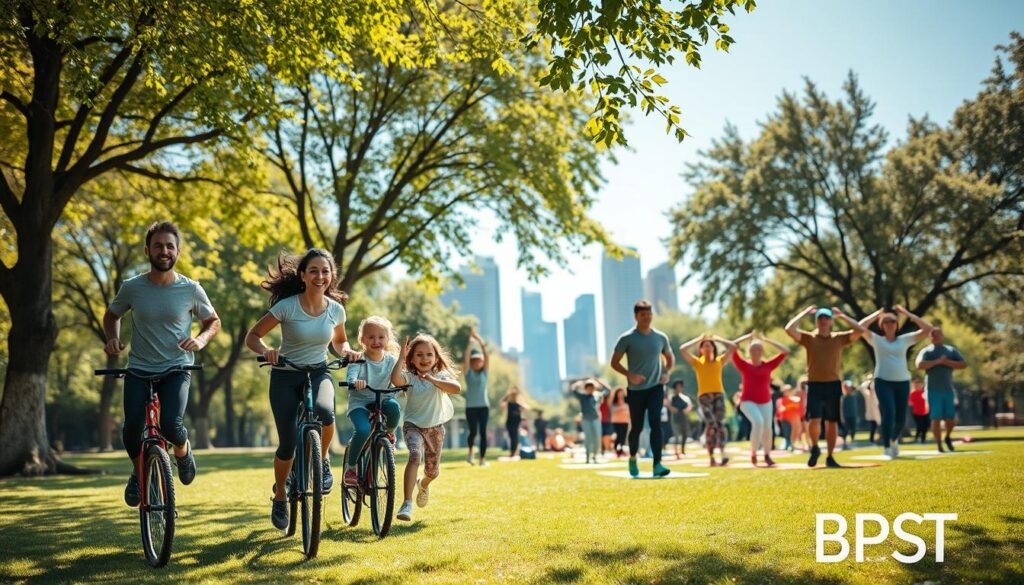
See the city as a playground. Geocaching turns walks into high-tech hunts. Download the app, find caches, and watch your kids move from screens to landmarks.
Make architecture scavenger hunts. “Find three different types of columns” or “Spot a gargoyle.” It’s a fun way to learn and get fit.
Use what’s already there for workouts. Park benches are for step-ups and dips. Stairs are for lunges and jogging. Monkey bars are for pull-ups. It’s creative and fun.
Seasonal changes can make plans fail. But summer’s splash pads are great for cardio. Autumn’s walks are beautiful. And winter offers “polar bear” walks for fitness.
Winter isn’t for hibernation. It’s for exploring in the cold. Bundle up, walk for 20 minutes, and enjoy the quiet. Many parks rent snowshoes for cheap.
Exercise is more than just a routine. It’s a series of urban adventures. Discover new things and have fun. That’s the goal.
Your city is perfect for fitness. Walking paths are like treadmills. Outdoor stations are for strength training. Courts are for sports and yoga. Community gardens are for lifting and fresh air.
This approach to fitness needs no special gear. Just a new way of seeing things. Parks are tools, not just places to visit. Use them to stay active and make memories.
Community Center and Public Resources
Your city’s public infrastructure is more than just buildings and rules. It’s a way to invest in your family’s health. Think about it. The taxes you pay every year help fund community centers and parks in your neighborhood.
Community centers are like the internet for your family. They connect you with others and help you feel part of a community. This is where your urban family wellness gets a boost.
Studies show that being connected is key to good health. It lowers stress, boosts your immune system, and can even add years to your life. In cities, where feeling lonely is common, these public spaces are a solution.
Let’s take a closer look at what’s available in your area.
The Social Calendar You Didn’t Know You Had
Most cities offer free or low-cost activities that you might not know about. Finding them might take some effort.
- Walking Groups: These are more than just exercise. They’re a chance to meet neighbors and get some fresh air. Look for them on community center bulletin boards or local Facebook groups.
- Farmers’ Markets: They’re not just for buying food. They’re places where families can learn about nutrition and meet local farmers. It’s a fun way to get healthy food and support your community.
- Outdoor Concerts & Cultural Festivals: These events are free and offer a chance to experience different cultures. Your family can enjoy music and traditions without leaving your neighborhood.
The best part is the unexpected connections you make. Talking to a neighbor at a concert or getting gardening tips at the market. These moments are priceless and can’t be found online.
Mining the Municipal Motherlode
Your local government website is full of hidden gems. Look for recreation programs that are free or low-cost. These are opportunities that you might not find anywhere else.
- Search for “community center programming [Your City]”
- Look for seasonal guides—usually published quarterly
- Don’t just look at kids’ programs. Adult pickleball leagues or senior art classes are great ways to meet people from different backgrounds.
- Check library calendars separately—they often have different programming
The best activities are often the ones that aren’t advertised widely. Yoga in the park at dawn or teen coding workshops at the library. These are the hidden treasures.
The “Friends of Parks” Phenomenon
These volunteer groups are where you can make a difference. They organize events like park cleanups and nature walks. It’s a chance for your family to give back and connect with others.
Joining a community garden is more than just growing food. It’s about learning patience, responsibility, and pride in your community. Your family will grow food and connections at the same time.
Library as Wellness Hub
We’ve been underestimating libraries for too long. They offer more than just books. They’re places for mindfulness, learning, and socializing. A visit can be a journey of discovery.
- Storytime for younger kids (early literacy + social skills)
- Teen maker spaces (creativity + STEM learning)
- Adult meditation sessions (stress reduction)
- Local history exhibits (community connection)
Make your library visit a mindfulness experience. Challenge your kids to find the quietest spot. Try reading without devices for 30 minutes. It’s a chance to disconnect and recharge.
The Open Gym Secret
Most community centers have open gym times that are not well-advertised but very valuable. These are hours when you can use facilities like basketball courts and swimming pools for free.
Here are some tips to make the most of these resources:
| Resource | Best Time to Go | Family Benefit |
|---|---|---|
| Swimming Pool | Weekday mornings (after school hours start) | Low-cost aquatic exercise, less crowded |
| Basketball Court | Sunday afternoons | Intergenerational play, no membership fees |
| Exercise Room | Late mornings (after rush hour) | Introduce kids to fitness equipment safely |
| Community Kitchen | Check for cooking class schedules | Nutrition education, family bonding activity |
The key is to be persistent. Show up at different times and talk to the staff. They know the best times to visit.
Reframing Public Infrastructure
We need to see community centers as investments in urban family wellness. Every activity, from yoga to swimming lessons, is a return on that investment.
These spaces help build social connections, which researchers call “social capital.” It makes neighborhoods safer, healthier, and more resilient. When your kids know the librarian and you see familiar faces at the market, you’re building that capital.
This mindset changes how you see your city. The community center is more than a building; it’s a wellness network. The library is for more than books; it’s for your mind. The park is your backyard extended.
Your mission this month: Explore one public resource. Visit the community center. Check out the seasonal guide. Attend a free event. Notice who you meet and how you feel afterward.
That feeling of connection, engagement, and belonging is what your taxes pay for. It’s better for your family’s health than any private wellness plan.
Budget-Friendly Wellness Solutions
The wellness industry often makes you think you need their products. But the best city wellness activities are free. They tell us health doesn’t need expensive stuff, but being smart with money does.
Public parks and trails are more than just green spaces. They’re free places for family health. Studies show they lower stress and boost community spirit. Walking in a historic district or having a picnic in a plaza can be both fun and healthy.
The best city wellness activities don’t cost much. They’re like “positive externalities” that benefit you without you paying. Free yoga in parks, meditation at libraries, and community gardens are great examples. They offer exercise and learning without a price tag.
Think about this: A gym membership costs $70 a month. But a family museum membership gives you walking, culture, and fun for the same price. Museums are like gyms for your mind, making you healthier in more ways.
Urban families can find magic in DIY wellness. Making sensory bins for kids or creating a calm corner in your home are smart moves. They teach kids to manage their feelings with simple, affordable tools.
Studies show money and health are closely linked. When wellness costs too much, it can stress you out. The answer? Make health affordable. Your best city wellness activities might include:
- Architecture walks through different neighborhoods
- Public library “story time” sessions with movement breaks
- Window shopping as observational exercise
- Stair climbing in accessible public buildings
- Community center open gym hours
This isn’t about cutting back. It’s about seeing the wellness industry’s flaws. Do you really need a pricey meditation app, or can a public fountain do the trick? Or could you ride your city’s bike trails instead of a fancy studio?
Tracking your wellness spending can show you the real value. Many families find their best health moments are free. Like dancing at home or solving problems while walking.
True city wellness activities use what’s already there. They turn small spaces into big opportunities. Your apartment can be a gym, and parks can be playgrounds and meditation spots.
Money and health are connected. Taking care of one helps the other. The best wellness is the one that fits your budget and lifestyle.
Before buying more wellness products, see what your city offers for free. You might be surprised at the value. Sometimes, the best health choice is finding joy in what’s already available.
Noise-Conscious Home Workouts
Working out in an apartment is like being a ninja. You need to be quiet and plan your moves carefully. Your workouts are not just for you; they affect everyone around you.
Being quiet in your workouts isn’t a limit. It’s about finding smart ways to do it. It’s about using your space wisely and being considerate of others.
Let’s talk about how to keep it quiet. Sound travels through vibrations in buildings. Your jumping jacks can disturb people downstairs. The key is to dampen the sound, not get rid of it.
Start with a good base. A thick exercise mat is essential. It helps absorb sound. Also, work out during quieter times, like not between 9 PM and 7 AM.
Choose the right gear. Avoid loud equipment. Instead, use:
- Resistance bands: They’re quiet and strong
- Suspension trainers: They’re great for bodyweight exercises without noise
- Adjustable dumbbells with rubber: They’re heavy but don’t make noise
- Yoga blocks and straps: They help you stay strong without making a sound
Change how you think about workouts. A “quiet zone” is not just about sound. It’s about mental space too. Try these quiet exercises:
| Workout Type | Noise Level (1-5) | Equipment Needed | Best Time of Day | Kid-Friendly Rating |
|---|---|---|---|---|
| Yoga Flow | 1 (Whisper) | Mat, blocks | Anytime | ★★★★★ |
| Resistance Band Circuit | 2 (Library) | Bands, door anchor | Daytime | ★★★★☆ |
| Bodyweight Calisthenics | 3 (Conversation) | Mat, pull-up bar | Daytime/Early Evening | ★★★☆☆ |
| Balance & Stability Training | 1 (Whisper) | Balance board, cushion | Anytime | ★★★★★ |
| Isometric Holds | 1 (Whisper) | Wall, chair | Anytime | ★★★☆☆ |
Notice the table? The best quiet workouts need little equipment. Isometric exercises like planks are strong and silent. They’re great for your muscles and won’t disturb anyone.
This approach teaches kids about being considerate. Noise-conscious fitness shows them the value of being quiet. It’s a lesson in discipline and respect for others.
It’s like being a stealthy athlete. You achieve your goals quietly. Your home becomes a peaceful place in a noisy city. Your urban family wellness routine is a calm oasis.
In conclusion, being quiet doesn’t mean you’re weak. It means you’re smart and considerate. It’s about adapting to your environment and living in harmony with others. Now, I have a silent workout to do. My neighbor thanks you.
Air Quality Considerations
It’s funny how we spend a lot on organic food but ignore the air we breathe. We focus on what we eat but not on the air we inhale every day. It’s time to change. For real urban family wellness, air quality is key.
Think about the trees around you. They’re not just for looks. They clean the air we breathe. Studies show a single tree can remove up to 70% of pollutants nearby. Areas with more trees have less pollution, helping our lungs a lot.
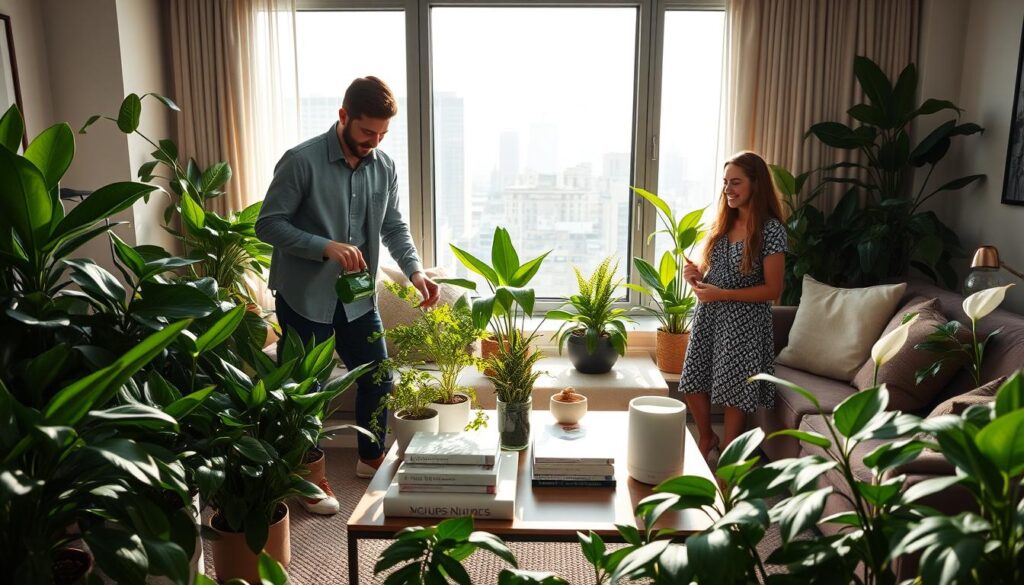
Start with air purifiers. They’re not just fancy gadgets. Use them in bedrooms and living areas. They help create clean air zones in your home. Don’t forget about houseplants. They’re natural air filters.
| Plant | Key Pollutants Removed | Care Level | Wellness Benefit |
|---|---|---|---|
| Snake Plant (Mother-in-Law’s Tongue) | Benzene, Formaldehyde, Trichloroethylene | Very Easy (Thrives on neglect) | Also releases oxygen at night, improving bedroom air. |
| Spider Plant | Formaldehyde, Xylene | Easy | Non-toxic and safe for homes with pets and children. |
| Peace Lily | Ammonia, Benzene, Formaldehyde | Moderate (Loves humidity) | Beautiful blooms add a calming visual element. |
| Boston Fern | Formaldehyde, Xylene | Moderate to Hard (Needs consistent moisture) | Excellent natural humidifier. |
| English Ivy | Benzene, Formaldehyde, Trichloroethylene | Easy | Particularly effective at reducing airborne mold. |
Make outdoor time count. Parks aren’t just for fun; they’re for cleaner air. Choose the right times to go outside. Early mornings or late afternoons are best.
Explore your city in a new way. Look for green spaces like parks and tree-lined streets. Use these paths for walks or runs. It’s not just exercise; it’s for your lungs’ health. This is urban family wellness in action: controlling our environment. Breathe better, breathe smarter.
Creating Nature Connections in Cities
Finding nature in the city is not about big trips. It’s about noticing the small things around you. That dandelion growing through the cracks? It’s a lesson in toughness. The spiderweb on a fire escape? It’s a work of art.
This isn’t about moving to the countryside. It’s about seeing the wild in your own city.
Research shows that being in urban green spaces lowers cortisol levels. This means a short walk in a park can calm your body. It’s a key part of an urban family wellness plan.
To start, try growing plants on your balcony or windowsill. A container garden is more than herbs. Plant native flowers to help pollinators. It’s a small way to support nature and teach kids about it.
Try urban Shinrin-yoku, or forest bathing, in your city’s oldest park. It’s not about exercise. It’s about slowing down and noticing nature. This can improve your mental health by focusing on the natural world.
Make your walks a chance to spot different birds and insects. Use a bird ID app to learn about them. This turns a simple walk into an adventure, teaching kids about nature.
Community gardens are great for connecting with others. They offer a chance to grow food and meet neighbors. It’s a way to learn about where food comes from and build community.
This approach to urban family wellness is about finding moments of nature in the city. It’s about seeing the beauty in small things like a park bench or a crack in the sidewalk. You don’t need a lot of space to find nature. You just need to look.
Public Transportation Fitness Hacks
Think your commute is just dead time? A passive interval between points? That’s a waste of a great chance. Your journey can be a secret workout.
Walk to a bus stop that’s a bit further. Stand without holding on to work your core. Take the stairs in every subway station. These small steps turn your commute into health benefits. The CDC says people who use public transport are more active.
This turns “we have to go” into “let’s see how we can go.” Choosing active transit in a car world is bold. It’s good for your health, your money, and the air.
True urban family wellness isn’t about adding more. It’s about fitting in movement naturally. The bus stop is your starting line. The subway stairs are your gym.
Your commute is no longer wasted time. It’s the base of your family’s active life. That’s the ultimate hack for sustainable urban family wellness.