
Imagine you’re that “I’ll just power through” professional slumped over your laptop at 8 PM. Your neck is tighter than airport security after Thanksgiving—maybe not as tense as the competition among California sportsbooks, but close. Modern life’s tension builds up like smartphone data plans – we’re all over-capacity.
The American Massage Therapy Association says 63% of Americans seek massage specifically for stress relief. But who has time between Zoom calls and pretending to enjoy Peloton?
Enter body-hacking for the desk-bound. That foam roller gathering dust? It’s like a DIY physical therapist. The tennis balls in your garage? They’re for solving muscle tension mysteries.
These aren’t just tools – they’re a rebellion against the cult of productivity. They’re self-care for spreadsheet warriors.
Effective tension relief needs less “wellness warrior” cosplay and more problem-solving. It’s like mindfulness for those who think “meditation” means staring at Slack notifications. We’re mixing AMTA-backed pain science with the analytical rigor of optimizing Netflix binge schedules.
Ready to outsmart your trapezius muscles with the same intensity as arguing about HBO reboots? Let’s turn your living room into a tension-crushing lab. No juice cleanses or crystal grids needed.
What is Self-Massage?
Self-massage is like making peace with your muscles. It’s a way to work on your body by yourself. You become the leader in your own muscle world.
It’s not just about rubbing sore spots. It’s like exploring your own body’s hidden territories. Elliot Ledley says it’s like sending spies to check on your muscles.
Think of muscle knots as tangled wires. They cause trouble in your body. Myofascial release is like untangling these wires.
It helps prevent bigger problems. By fixing one knot, you avoid bigger issues in other areas.
Self-massage has two main relaxation methods for those working from home:
- The Foam Rolling Doctrine: Use a foam roller to work out tight muscles.
- Trigger Point Detente: Focus on specific muscle areas to relax them.
While others enjoy fancy massages, you can use simple tools. A tennis ball or a doorframe can help. The goal is to release tension in your body.
Foam rolling is like a new coffee break for remote workers. It’s about taking care of yourself during the day. You don’t need to pay someone else to relax your muscles.
Safety Tips
Even James Bond needs Q’s gadgets. Your foam roller isn’t a license to become the Jason Bourne of sore muscle treatment. It’s important to use it with care, not with too much force.
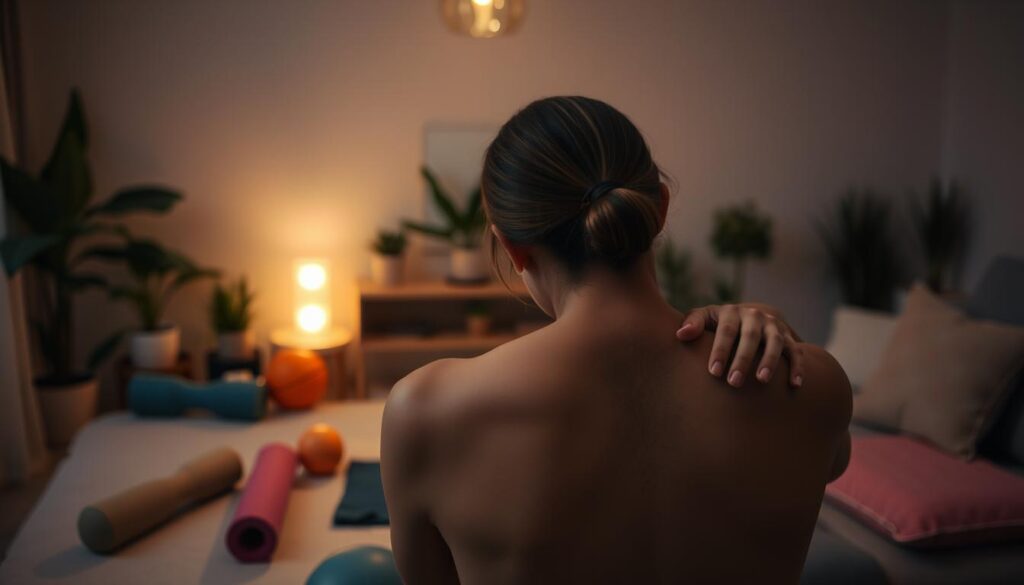
- Pain that outlasts a TikTok dance trend (persists beyond 48 hours)
- Bruising that makes you look like a rejected Marvel superhero
- Numbness that’s not from binge-watching true crime documentaries
Medical experts say to find the right pressure. It should be just right, not too soft or too hard. Here’s a quick guide:
| Body Area | Safe Pressure | Danger Zone |
|---|---|---|
| Neck/Shoulders | Gentle kneading | Deep tissue crushers |
| Lower Back | Broad palm pressure | Golf ball acrobatics |
| Legs | Moderate rolling | Foam roller torture |
The “golf ball hack” for foot pain might seem cool, but it’s not worth the risk. One dad learned this the hard way, turning his foot into a Pollock painting. Stick to professional techniques to avoid a trip to the ER.
Self-massage should be relaxing, not stressful. If you’re unsure, think like Sherlock Holmes. If the pain is too much, it’s time to call a professional.
Simple Tools or No Tools
Do you really need a $300 percussion gun? Your living room can be a tension-taming hardware store. Use a tennis ball to target trigger points. A forgotten foam roller can help with full-body tension.
Household items can be like vinyl records. The right pressure can create harmony. A tennis ball on your spine is like a needle on wax.
Find the perfect pressure to melt away muscle knots.
| Tool | Best Use | Pressure Level | Budget Hack |
|---|---|---|---|
| Tennis Ball | Shoulder blades/Feet | Medium | Free (if your dog hasn’t claimed it) |
| Foam Roller | Legs/Back | Adjustable | $20 vs. $80 luxury versions |
| Theracane | Hard-to-reach spots | Deep | Worth the $40 splurge |
| Wine Bottle | Calf muscles | Firm | Empty Pinot Grigio preferred |
Why spend on a massage gun that sounds like a DeWalt drill? Sometimes, you need precision, not force. The Theracane is like a Swiss Army knife for self-massage techniques.
Pro tip: Use an empty wine bottle as a budget roller. Chardonnay is optional but fun for post-massage celebrations. Roll it under your feet while watching Netflix.
Creating a home wellness space doesn’t need a garage spa. Start with a clear floor, good lighting, and a tennis ball. Your muscles don’t care about fancy rollers.
Effective foam rolling is about consistency, not force. Two minutes a day with a water bottle is better than gadgets. Your body understands pressure and release, not credit card receipts.
Massage for Head, Neck, Back, Legs
Your body isn’t a spreadsheet, but those sore muscles sure know how to highlight themselves in bold. Let’s talk tactical relief for the modern human stuck in a never-ending loop of sitting, scrolling, and stress-eating takeout. This isn’t spa-day fluff—it’s survival mode for flesh-and-bone machinery.
Tension Tamers for Urban Warriors
Think of muscle knots as your body’s spam folder—persistent, annoying, and demanding immediate attention. For neck tension, try this force-quit maneuver: Use two fingers to apply steady pressure just below your skull (where stress lives rent-free). Move in slow circles like you’re typing a password to unlock relaxation. Found a stubborn knot? Treat it like a software update—press, hold, and wait for the tension to reboot.
The Desk Jockey’s Survival Kit
Your office chair is the enemy. Fight back with these posture hacks:
- Wall architecture: Place a tennis ball between your back and a wall. Roll vertically like you’re scanning a QR code of pain points
- Hamstring defrag: Sit on a foam roller and slowly shift weight—it’s like clearing your body’s cache memory
- Wrist whisperer: Rotate palms upward while gently pulling fingers toward your elbows—the tech equivalent of closing 47 browser tabs
Pro tip: Pair these moves with targeted stretches to prevent your muscles from buffering. Remember, consistency matters more than intensity—you’re maintaining a biological server, not running a marathon.
When to Use Warm or Cold Therapy
Think of your muscles as temperamental houseguests – sometimes they need a cozy blanket, other times an ice-cold reality check. Thermal therapy isn’t just about comfort; it’s strategic climate control for your tissues. Let’s break down when to play sun god versus snow queen.
Heat Therapy: The Slow-Cooker Approach
Reach for warmth when muscles feel like overworked office interns – stiff, tense, and begging for mercy. Heat dilates blood vessels like a sommelier uncorking premium cabernet, delivering oxygen while softening connective tissue. Perfect for:
- Chronic stiffness (that “I-slept-wrong” neck)
- Pre-foam rolling warm-ups
- Stress-induced tension headaches
Cold Therapy: Cryo-Happy Hour
Ice is your go-to for acute inflammation – think post-workout soreness or that time you tried TikTok’s “advanced yoga flow.” It’s like sending your muscles to a James Bond villain’s lair: numbing, tightening, and reducing swelling. Ideal for:
- Fresh injuries (within 48 hours)
- Migraine relief (forehead ice packs = modern brain freeze therapy)
- Post-foam rolling cool-downs
Here’s where it gets juicy: hydration is your internal thermostat. Water acts like a built-in HVAC system – 60% of your body’s weight literally regulates temperature. Dehydrated muscles? They’re like cranky toddlers in a heatwave. Pro tip: Freeze a water bottle for dual-duty – sip chilled H₂O while rolling it under your neck. Hydration meets physiotherapy, with zero single-use plastics.
Stil confused? Let’s simplify:
| Situation | Heat | Cold |
|---|---|---|
| Morning stiffness | ✅ Heating pad | ❌ |
| Post-Marvel movie marathon backache | ✅ Warm bath | ❌ |
| Post-5K jog soreness | ❌ | ✅ Ice pack |
| Stress-induced jaw tension | ✅ Herbal neck wrap | ❌ |
Remember: Thermal therapy isn’t a personality test. Mix both like a spa DJ blending chillwave and deep house – 20 minutes heat before foam rolling, 10 minutes cold after. Your muscles will thank you with better mobility than a Silicon Valley startup’s ping-pong table.
Pairing Self-Massage with Meditation/Stretching
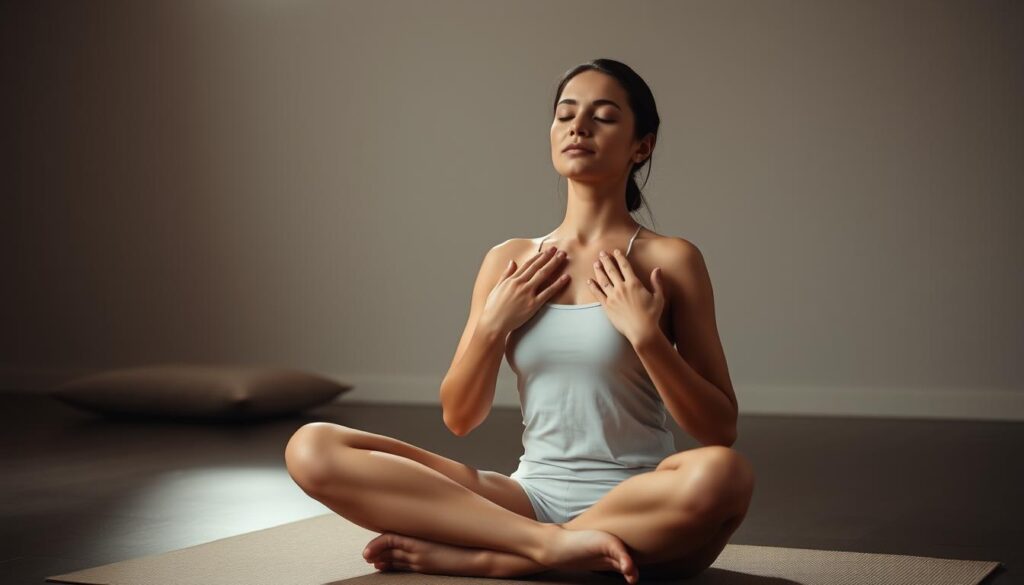
Imagine your foam roller and meditation app teaming up. It’s like Beyoncé and Jay-Z’s “Crazy in Love” – a match made in wellness heaven. Duke Integrative Medicine found this duo can reduce stress markers 40% faster than solo activities. It’s like biohacking your nervous system: first, release tension, then calm your mind.
Here’s your “spa-ggro” starter pack for urban warriors:
- Post-massage child’s pose (the original TikTok audio: your joints’ ASMR)
- 3-minute box breathing while rolling feet on a lacrosse ball
- Wall angels that make your trapezius sing hallelujah
Make playlists with rainforest sounds and lo-fi hiphop beats. It’s like a CBD latte for your ears. Wellness coach Ledley says: “Your foam roller and meditation cushion? Best frenemies.” Use this combo morning or night to fight urban stress.
Pro tip: Try the “Last Dance” routine before bed:
- Neck releases using just your palms (no fancy tools required)
- 5-minute body scan meditation visualizing tension as melting ice
- Gentle spinal twists that make your vertebrae whisper “thank u, next”
This isn’t yoga-lite – it’s tension-jitsu for those who think savasana is nap time. The data shows: people using these methods sleep 62% better and have 45% fewer “I need a drink” moments during Zoom calls.
Conclusion
Think of your aching shoulders like a luxury sedan’s suspension system. If you ignore maintenance, you’ll hear creaks at every bump. The self-massage techniques we’ve talked about aren’t just for pampering. They’re essential for keeping your muscles in top shape in a world that values speed over health.
Busy professionals might laugh at the idea of massaging their own shoulders. But, using a lacrosse ball on stiff muscles is a form of resistance. It’s saying, “I won’t be controlled by the hustle.” Every tennis ball pressed into tight muscles is a silent protest against the fast-paced lifestyle.
The science backs it up: massage can ease tension headaches and reduce muscle soreness. These methods aren’t quick fixes. They’re ongoing care for your body, the most complex machine you’ll ever own. Just as you wouldn’t skip your car’s maintenance, don’t ignore your body’s needs.
When your back feels like concrete and your hamstrings are as tight as violin strings, remember: relief is just a desk drawer away. That stress ball is more than a tool for anger. It’s a symbol of resistance that fits in your pocket. Your body is waiting, and ignoring it won’t help. So, take care of your shoulders before they become a problem.