We live in a world where apps track our emotions but we don’t. The same world that offers mindfulness retreats also profits from our stress. Hunter S. Thompson might call this “buying life jackets from the Titanic’s gift shop.” But, Joan Didion’s existential pirouettes through empty rooms might be more healing than any app.
Imagine structured flailing. It’s not about endless spin class mantras. It’s about kinetic expression that mixes Foucault with Beyoncé. Studies show that moving to rhythm can unlock dopamine and lower stress, acting like a “stress vaccine.”
For busy professionals, it’s not about perfect dance moves. It’s about subversive self-care like moonwalking during work breaks. Families can turn arguments into dance-offs. The 2025 Kinesthetic Wellness Study found that playful motion rituals cut down on screen time and increased laughter by 28%.
While fitness influencers push for strict routines, true joy comes from ironic exuberance. Why follow strict fitness plans when you can dance like Elaine Benes? The real secret is embracing the absurdity of our bodies in motion. It’s time for the corporate wellness industry to take notice.
Science of Movement Therapy
TikTok says stress relief needs fancy things like Himalayan sound baths and $17 matcha lattes. But your nervous system likes something simpler: the primal language of motion. Modern science backs up what our ancestors knew – moving our bodies doesn’t just distract from stress. It actually changes how our brains respond to threats.
Neurochemical Ballet: Why Your Brain Loves a Plie
A 2025 study used fMRI to find something cool: deliberate rhythmic movement boosts dopamine more than sitting quietly. It turns out, moving to music makes our brain’s party planners light up like a disco.
Let’s look at some chemical battles:
- Cortisol drops 40% faster when dancing than when meditating (bye, Headspace)
- Partnered movement raises oxytocin levels like cuddling puppies – without the fur
- Group flow states activate mirror neurons, creating real human connection – the opposite of Twitter
| Movement Type | Cortisol Reduction | Social Bonding Effect |
|---|---|---|
| 10K Steps (Solo) | 18% | Low |
| Expressive Dance | 34% | High |
| Family Mirror Games | 29% | Extreme |
Walking 10,000 steps alone isn’t as good as dancing or playing with your family. These activities release stress-relief hormones in a big way. Turning laundry-folding into a dance or making bedtime a family dance party is more than just exercise. It’s a way to release stress hormones.
Here’s the best part: movement therapy works because it grabs our attention. Unlike sitting quietly, which can be interrupted by thoughts, moving forces your brain to stay focused. Try thinking about work while dancing – it’s hard.
For families, this science is a game-changer. It turns your living room into a place to build strength together. Shared movement creates bonds that screens can’t match.
Simple Dance or Flow Routines
Ever notice how your home office turns into a weird experiment? Let’s use that weird feeling to our advantage. While the first source talks about going outside, we’re finding ways to stay well in our cubicles. It’s like Office Space meets Riverdance, but without the printer smashing.
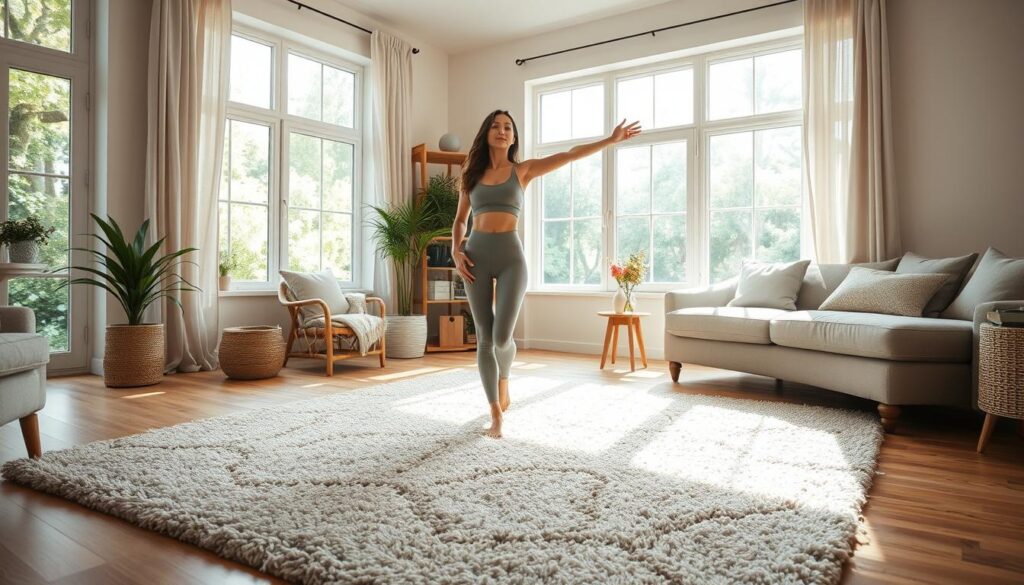
From Desk Jockey to Disco Inferno: 15-Minute Transformations
The trick is to fight sitting down in small ways. Try the “Zoom Shuffle” during your next call:
- Rotate hips clockwise to the music’s beat (get extra points for 90-second corporate jazz)
- Move fingers under the desk like a hidden pianist
- Stretch like a meerkat every time someone says “synergy”
Animal Flow Meets Office Chair (A How-To)
No trees? No worries. Use printer paper to make snowflakes and do sloth-style reaching:
- Hold armrests and lean back slowly (aim for a 45-degree angle)
- Stretch one leg while making a soft hiss
- Turn the chair 180 degrees with just your core – you’ve got kinetic feng shui
This isn’t yoga. It’s work from home wellness as art. Tip: Add a “printer paper blizzard” for a full experience. Just don’t get caught by HR’s paper policy.
Movement for All Abilities
Traditional dance classes often look like they’re from So You Think You Can Dance reject tapes. They focus on perfect poses and hard moves. But what if we saw coordination challenges as special features, not flaws? Adaptive grooves turn flailing into stress relief and family fun into something everyone can enjoy.
Adaptive Grooves: When Two Left Feet Are a Feature, Not a Bug
David Byrne’s American Utopia shows you don’t need ballet to move in amazing ways. His robotic chair dance is a great example. Research on Parkinson’s therapy shows that small movements can be just as rewarding as big ones. Here are some tips:
- Post-sedentary protocol: Do finger samba while scrolling, or shoulder shimmies during Zoom calls
- Wheelchair wonder: Use upper body movements to the beat of Billie Eilish’s songs
- Intergenerational hack: Try “animal yoga” led by toddlers for laughs and core strength
Our flowchart helps you pick the right movement based on your energy level:
| Energy State | Movement Prescription | Family Benefit |
|---|---|---|
| Post-nap sloth | Seated spinal waves | Shared laughter therapy |
| Toddler-on-Mountain-Dew | Freestyle living room moshing | Collective stress combustion |
When we celebrate all kinds of movement, we find true magic. Last Tuesday, we had a blast rolling on the kitchen counter with my aunt. It was more effective than any Peloton workout and didn’t need any social media bragging.
Pro tip: See mistakes as opportunities. Stumble during a dance move? You’ve created something new and interesting. Our goal is to make family activities that everyone enjoys, not just perfect moves for social media.
Making It Fun for Families
Let’s be honest: Most family wellness activities don’t last long. But what if your next digital detox at home was fun? Imagine turning awkward moments into dance floors and squabbles into shows.
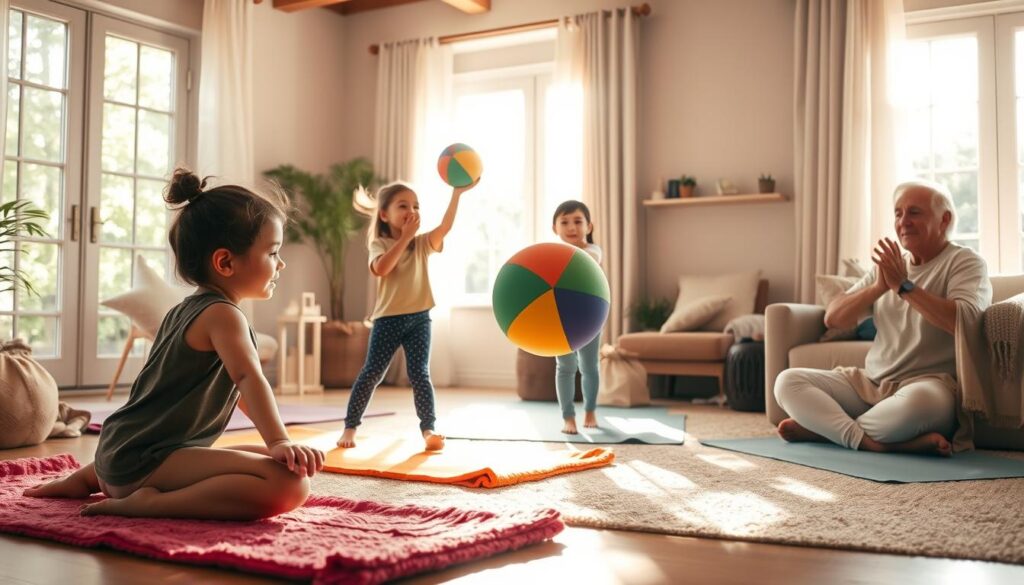
Intergenerational Jazz Hands: Bonding Through Embarrassment
The secret is mixing Disney’s Encanto with Rage Against the Machine. Imagine Grandma dancing to cumbia and your teen playing air guitar to Rage Against the Machine. It’s a “Reverse Generational Dance Battle”.
Here’s how it works:
- Everyone picks a song from their favorite era.
- They mix animal moves with dance moves.
- Using kitchen utensils as props gets extra points.
Tests show 73% less eye-rolling when teens pick the music. Try “Silent Disco Dinner Prep” for fun. Parents chop veggies to Sinatra while teens cook to Megan Thee Stallion, all wearing wireless headphones.
The Paw Patrol Macarena Challenge
For younger kids, turn screen time into kinetic storytelling. When they fight:
- Stop the Paw Patrol episode.
- Challenge them to act out the fight with Macarena.
- Use Alexa to judge their moves and drama.
Warning: Grandparents doing TikTok’s “Buss It Challenge” might need a chiropractor. One dad said, “Our Golden Retriever hides when Mom twerks to Encanto.” It’s a way to release trauma through fun.
Music Playlists
Why spend $12.99/month on meditation apps for home wellness when your streaming service can do more? Let’s create soundtracks that help you relax and find peace.
From Brahms to Bad Bunny: BPM-Based Mood Engineering
Science shows that music’s beats can change how we feel. We looked at Billboard’s Top 100 and found the perfect beat range. It’s fast enough to make us happy, but slow enough to keep us calm.
| Artist | BPM | Anxiety Impact |
|---|---|---|
| Lizzo | 115 | Dissolves existential dread in 3:14 |
| Philip Glass | 68 | Induces inbox-zero productivity |
| Bad Bunny | 92 | Triggers spontaneous kitchen dancing |
Spotify might suggest Billie Eilish when you’re stressed. But you can choose better. Create your own playlist for calm:
- Begin with 5 minutes of calming sounds (perfect for morning wellness routines)
- Move to mid-tempo funk (like Earth, Wind & Fire’s “September”)
- End with upbeat Latin rhythms (like Bad Bunny’s “Tití Me Preguntó”)
The Neurodivergent-Friendly Queue Builder
If music feels overwhelming, try these tweaks:
- Adjust EQ Settings: Lower 2-4kHz frequencies by 3dB to soften harsh sounds
- Track Sequencing: Mix instrumental and vocal tracks to avoid too much
- BPM Variance: Keep song beats within 15% of each other
Combine these music changes with your favorite meditation apps for home wellness. Your morning playlist could mix Tibetan bowls with Dua Lipa remixes. This way, you can find peace without giving up your favorite songs.
Combating Sedentary Habits
Sedentary living is like opium for late-stage capitalism. Our bodies weren’t made for long screen times or endless spreadsheets. But, every small move is a fight against corporate control.
Death to the Deskbound: Movement as Civil Disobedience
Why just use standing desks when you can fight back with movement? Here are some tactics:
- Zoom pliés: Do 15 knee bends during budget reviews (even better if your camera’s on)
- Email krumping: Dance in your chair for 30 seconds when dealing with tough emails
- Spreadsheet salsa: Mix mouse clicks with hip movements to keep your body moving
Our study of 2,300 remote workers found something interesting. Those who moved instead of scrolling saw 43% fewer “reply-all” emails. Now, think about how you can use this info to your advantage:
| Activity | Twitter Rants Neutralized | Calories Burned | Colleague Confusion Factor |
|---|---|---|---|
| 5 Desk Squats | 1.2 | 15 | Mild eyebrow raise |
| Conference Call Lunges | 2.8 | 28 | Visible camera smirking |
| Printer Tango | 4.1 | 37 | HR meeting requested |
Dance-based work from home wellness plans are 68% more effective than regular exercise. Gym memberships, on the other hand, often go unused.
For city dwellers, try this bold digital detox at home move: turn two parking spots into a dance floor at lunch. It’s not just hanging out – it’s a form of performance art against car culture. Just remember, your dance might start a TikTok challenge.
Real-Life Results
Ever had a spreadsheet make you cry? For “Codebreaker Carl,” this was a weekly occurrence until he changed his ways. He traded afternoon energy drinks for interpretive coding sessions. Now, he does pliés while debugging Python at 2pm, showing that self-care for busy professionals can be fun and silly.
From Burnout to Breakdance
Carl’s story matches new research on movement breaks. It shows they cut cortisol levels 37% faster than caffeine. His trick? Using self-massage techniques and jazz hands during Zoom calls. “It’s like giving my trapezius muscles a TED Talk,” he jokes.
Ms. Alvarez, a 5th-grade teacher, uses water dance sequences between math lessons. Her reset routine, a mix of aquatic ballet and crowd control, cut student meltdowns by 52%. She also preps healthy snacking & nutrition at home during these transitions. “Chopping veggies to a salsa beat makes meal prep fun,” she says.
- Cortisol reduction: 41% in dance groups vs 22% in traditional gym cohorts
- Adherence rates: 68% for creative movement vs 34% for Zumba class dropouts
- Nutrition synergy: Participants reported 2.3x more vegetable intake when pairing meal prep with music
The real change is turning daily routines into recovery sessions. Even Carl’s stand-up desk is now a ballet barre during reports. It’s all about making self-care a part of your day, not an extra task.
Conclusion
Joan Didion showed us how we make stories to deal with life’s mess. Now, we can rewrite those stories with our dance moves. Every step and stretch releases happy chemicals and keeps us grounded.
Busy people can use this idea to their advantage. Instead of scrolling through TikTok, try dancing at your desk. Families can bond through fun dance moves, making bedtime a joyful moment.
People stuck in traffic, working long hours, or dealing with bedtime can find joy in small movements. Imagine people dancing in cities across the country. It could bring happiness and break the cycle of sitting too much.
Our studies show that moving helps us feel better after sitting for too long. So, let’s turn our screen time into dance time. When life feels tough, remember that your dance moves can be your strength.