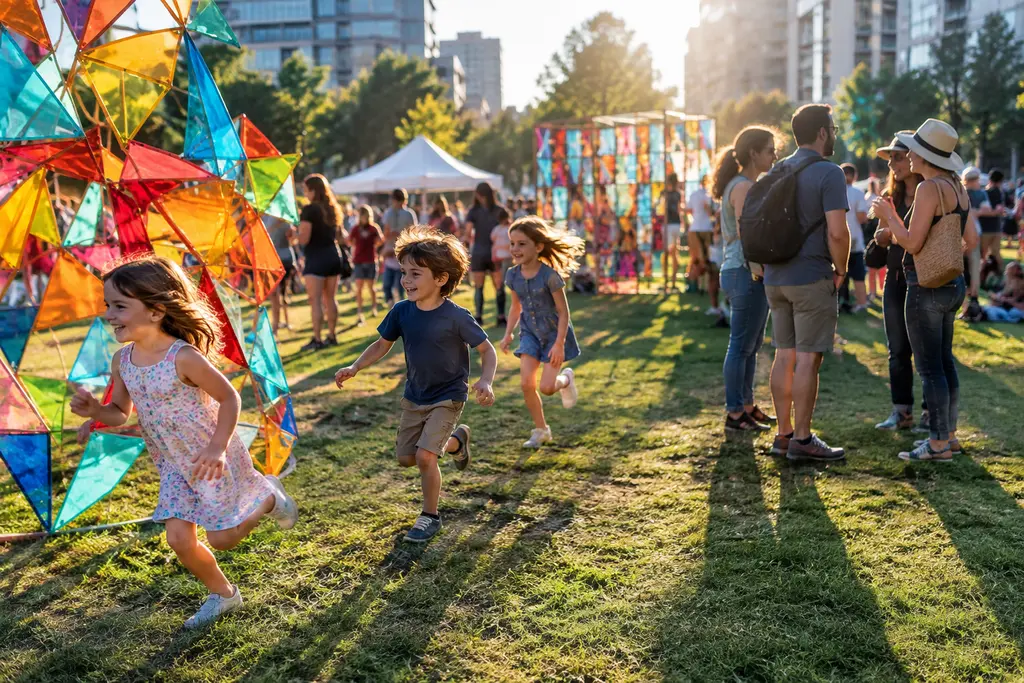
The La Jolla festival, held on October 10–11, 2026, offered a useful case study in how local art, family activity, and public trust can meet in a street-based cultural event. The 18th La Jolla Art & Wine Festival ran from 10 a.m. to 6 p.m. on both days, with free admission to the main art displays and community programming in La Jolla Village, according to the festival’s published event details.
Because the event has already passed, the most responsible way to read it is not as a promotion but as a recap. The available reporting points to a festival that combined juried art, school fundraising, family programming, and weather-related stress. For families interested in light movement, craft learning, and community connection, the event also showed why cultural gatherings need planning, transparency, and respect for the artists whose booths carry much of the public experience.
What The La Jolla Festival Revealed About Access
The event drew more than 45,000 visitors over two days, based on the festival information. That figure matters because scale can change the character of a local art event. A street lined with art booths may feel open and inviting, but a large audience also increases pressure on artists, volunteers, families with children, and older visitors. Access is not only about whether a person can enter without paying. It also includes whether families can move at a calm pace, pause near booths without crowding artists, and take part in activities without treating handmade work as background decoration.
La Jolla Festival Access And Family Movement
The La Jolla festival made its main admission free, while the Wine & Beer Garden was the ticketed 21+ portion. That structure likely helped separate the family-oriented public street experience from adult tasting activity. From a family fitness perspective, the free street format supported gentle walking, stopping, looking, and returning to activity zones. These are modest forms of movement, not a substitute for formal exercise, but they can help families make art viewing a shared physical routine.
For caregivers, a festival walk works best when it respects both bodies and artworks. Children can be invited to notice color, texture, material, and scale while walking between booths. Parents can set simple boundaries: hands behind backs near fragile work, voices lowered at crowded booths, and breaks before fatigue becomes frustration. Shimply has covered similar practical issues in craft festival fitness gear, where planning for walking, heat, and comfort helps visitors respect artisan spaces.
Free Entry Did Not Mean Low Responsibility
Free admission can widen participation, but it should not be confused with a low-effort event. Large, open-street art festivals depend on labor from artists, organizers, volunteers, local businesses, and families who adapt to shared public space. The research notes state that about 450 volunteers supported vendor operations, family and pet activations, logistics, and local merchant needs during the two-day event. That volunteer structure is part of the public value of the festival, but it also shows how much work sits behind an event that may appear casual to visitors.
Artist Booths, Handmade Value, And Trust
Reporting after the event said more than 170 juried artists from the United States and Mexico exhibited work including painting, sculpture, jewelry, photography, ceramics, woodwork, fine glass, and mixed media along Girard Avenue and nearby streets. The same report noted that the weekend brought the festival’s first rain in its history, including tropical rain on Saturday, overnight tent damage, and a 20% vendor non-return rate on Sunday, according to local coverage.
Those two facts belong together. Juried art festivals ask artists to present work in a public selling environment that is both cultural and commercial. When weather damages tents or reduces Sunday participation, the burden falls unevenly on makers who may have paid for travel, booth preparation, materials, and time away from studio work. A respectful recap should avoid treating rain as a charming side note. It affected participation and, for some vendors, likely affected sales opportunities, though the research does not provide artist-by-artist financial outcomes.
Weather Tested The Artisan Market
The rain episode gives the La Jolla festival a clearer trust lesson. Visitors often see the finished object: a ceramic vessel, a photograph, a glass piece, a carved wood object, or a piece of jewelry. They may not see the risk behind bringing handmade work into an outdoor setting. Weather, crowd flow, booth placement, and setup conditions all shape whether an artist can present work safely and explain it properly.
For artisan markets, trust is built through visible care. Organizers need systems for vendor communication, weather response, and visitor safety. Artists need time and space to protect their work. Visitors need to understand that a booth is not a generic retail stall. It is often the public face of a studio practice. A cautious buyer should ask about materials, process, care, and use without demanding private trade details or treating cultural references as decoration.
Family Art Programming And Community Connection
The Geppetto’s Toys Family Art Center at Wall Street and Girard Avenue served as the family programming hub, according to the research notes. Activities included crafts, prize drawings, ballet dance, robotics, visual arts, face painting, sensory activities, library reading, and performance arts. That mix matters because it did not treat children only as passive companions to adult art buyers. It gave families reasons to stop, make, move, listen, and observe.
The La Jolla festival also linked family activity with school support. Proceeds benefit underfunded programs at five La Jolla public schools: La Jolla High, Muirlands Middle, La Jolla Elementary, Torrey Pines Elementary, and Bird Rock Elementary. Supported areas include art, music, science, physical education, technology, and on-site medical care. Since its founding in 2008, the festival has donated more than $1.7 million to those schools and benefits more than 4,000 students annually, based on the research notes.
Why Family Fitness Needs Cultural Care
Family fitness in an art setting should be framed carefully. A festival is not a gym, and a child’s movement should not come at the cost of an artist’s work or another visitor’s access. The strongest family movement at this kind of event is slow and observant: walking a block, pausing at a booth, sketching a shape from memory, stretching during a break, or dancing only in appropriate activity areas.
That kind of movement supports attention rather than distraction. It lets children experience art as something made by real people, not as content passing by. It also teaches practical ethics: ask before touching, step aside when someone is speaking with an artist, and recognize that handmade objects carry skill, cost, and cultural context.
For readers who follow craft commerce across sites, related cultural coverage at Kay Granger’s site offers another reminder that public trust depends on clear context, not only visibility. The same principle applies here. A public art festival earns confidence when visitors understand who is showing work, where proceeds go, and how the event treats both families and makers.
How Families Could Read The Festival After The Rain
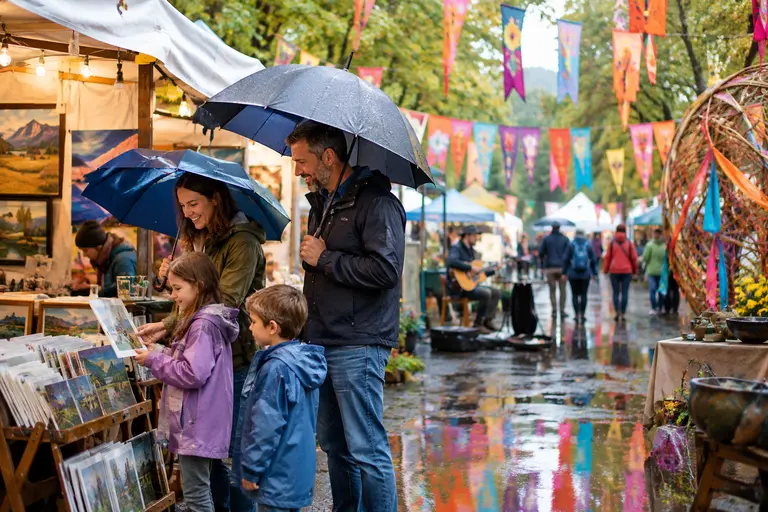
The rain on October 10–11, 2026, changed the story of the event. It is easy to focus on attendance and programming, but the weather revealed the strain that outdoor cultural events can carry. If 20% of vendors did not return on Sunday, then the second day was not the same event for those artists or for visitors who came expecting the full booth count. That does not erase the festival’s school fundraising purpose or community value. It does mean any serious assessment should hold both ideas at once.
Families can learn from this without turning an art outing into a lesson plan. A caregiver might ask a child why an artist uses a tent, why rain could damage certain materials, or why some booths might close for safety. These questions build empathy for the labor behind objects. They also connect movement, weather, and public space in a concrete way.
- Use art walks as slow movement, not rushing from booth to booth.
- Keep hands clear of fragile work unless an artist invites touch.
- Take breaks before children become tired or overstimulated.
- Ask artists respectful questions about materials, care, and process.
- Notice how weather, volunteers, and public space affect handmade commerce.
La Jolla Festival Community Connection
The La Jolla festival showed that local art events can support more than sales. They can bring families into contact with handmade work, help children connect movement with attention, and channel proceeds toward public school programs. Yet the October 2026 weekend also showed why trust should be measured through practical conditions: how artists are supported, how weather disruption is handled, how families move through shared space, and how clearly the event communicates its public purpose.
For families, the most useful takeaway is modest but meaningful. Art festivals can become healthy community routines when visitors slow down, respect makers, and treat cultural work as more than scenery. For artists and organizers, the lesson is just as direct: community connection grows when access, transparency, and care are visible in the event itself.