Creating a workout plan at home is like trying to put together IKEA furniture without the instructions. Theoretically simple, but it can easily go wrong if you skip the guide. Remember the “couch-to-cocooning” fitness trend in 2020? It showed us that home workouts could range from TikTok dances to using cans as dumbbells.
Fitness minimalism is about doing more with less. It’s like combining Marie Kondo’s tidying with CrossFit. Research shows you need just three things: gravity, creativity, and a floor that won’t judge you. But without a plan, your living room can become a place where fitness dreams go to die.
This isn’t about making your home gym look like a real gym. It’s about creating workouts that fit your home and work schedule. We’ll look at what makes a good exercise choice, avoiding the need for too many burpees. Are you ready to turn your living room into a place where you can work out without spending a fortune on equipment?
Introduction
Let’s talk real fitness, not just soul-cycle sanctimony. Your living room floor beats a $40 spin class when you plan smart. Home workouts are like intellectual jiu-jitsu, outsmarting bougie gym culture and excuses. Remember Peloton’s stock crash? That’s poetic.
Here’s the key move they missed: 10-minute “fitness snacks” are better for our brains than long workouts. Science supports this – Source 1 shows micro-workouts boost immunity like longer routines. Source 2 proves small, consistent habits are key. You’re gaining strength and outsmarting the system.
Why spend hours going to a gym? Your home gym workout is efficient and rebellious. Urban families and busy pros know time is the ultimate luxury. A good routine builder turns your home into a strategic battleground, where you’re both the master and the player.
This isn’t about rejecting fitness culture – it’s about hacking it. Your living room becomes a lab for self-optimization. Those 10-minute blocks are like Trojan horses, sneaking wellness past your tired mind. Unlike Peloton’s $2,245 “community experience,” your best investment is forethought.
Setting Your Fitness Goals
Are you a Logan Roy lifter aiming for the top, or a Tom Wambsgans dabbler trying to find meaning? Our fitness plan types show more about today’s goals than any corporate meeting.
Forget SMART goals. That term is as outdated as “synergy” and “circle back.” Real goals need NASA’s practical approach. Astronauts focus on specific skills for survival, not vague dreams. Your exercise routine at home should be just as strategic.
Here are three key criteria for top-notch goals:
- Longevity alignment: Will this exercise benefit you at 70? (Source 2’s golden ticket)
- Stealth wealth: Isometric exercises build strength quietly, like a Roth IRA
- Apocalypse readiness: Can you squat as hard as a SpaceX capsule landing?
The Full Body Home Workout movement is about changing fitness stories. Why focus on marathon times when you can train like Chris Hadfield in space? NASA’s 2.5 hours/day workout shows that environment affects effort, even in a small space.
Here’s a path from Wambsgans to Roy:
- Begin with 90-second wall sits during Zoom calls
- Move to suitcase carries with laundry baskets
- Master the astronaut shower stretch (trust the process)
Your exercise routine at home becomes a statement when you see it this way: every plank is a protest against bad office designs. The real win? Outlasting the fleeting “fitness hacks” that come and go.
Assessing Space & Time
New Yorkers know that square footage is more valuable than bitcoin. Let’s figure out your home gym space using “studio apartment math”. It’s (10 sq ft + (number of equipment pieces × 5)) ÷ your tolerance for shin bruises = functional workout space.
The Tetris Principle is key here: foldable yoga mats are better than bulky treadmills, and resistance bands are better than weight racks. That dumbbell collection? It’s time to ask, “Does this spark joy… or future rotator cuff injuries?” Choose multi-use tools, like a stability ball that doubles as office furniture for WFH days.
Time management is harder than a TikTok attention span. Let’s compare:
| Workout Type | Space Needed | Time Efficiency |
|---|---|---|
| HIIT Circuits | Coffee Table Clearance | 15 mins (1 TikTok scroll cycle) |
| Yoga Flow | Area Rug Real Estate | 30 mins (1 Zoom call buffer) |
| Strength Training | Murphy Bed Territory | 45 mins (1 HBO Max episode) |
Urban warriors need Quick Home Workouts that fit both lease agreements and circadian rhythms. Try the 15/30/45 Rule:
- 15-second transitions between exercises
- 30-minute total session cap
- 45-degree equipment storage angles
Remember, your living room isn’t Equinox. That ottoman? It’s now a step platform. Those hardcover books? Impromptu weights. With smart planning, even a Manhattan closet can become your personal Barry’s Bootcamp – minus the $40 session fee and matching leggings pressure.
Choosing the Right Types of Exercise (Strength, Cardio, Mobility, Flexibility)
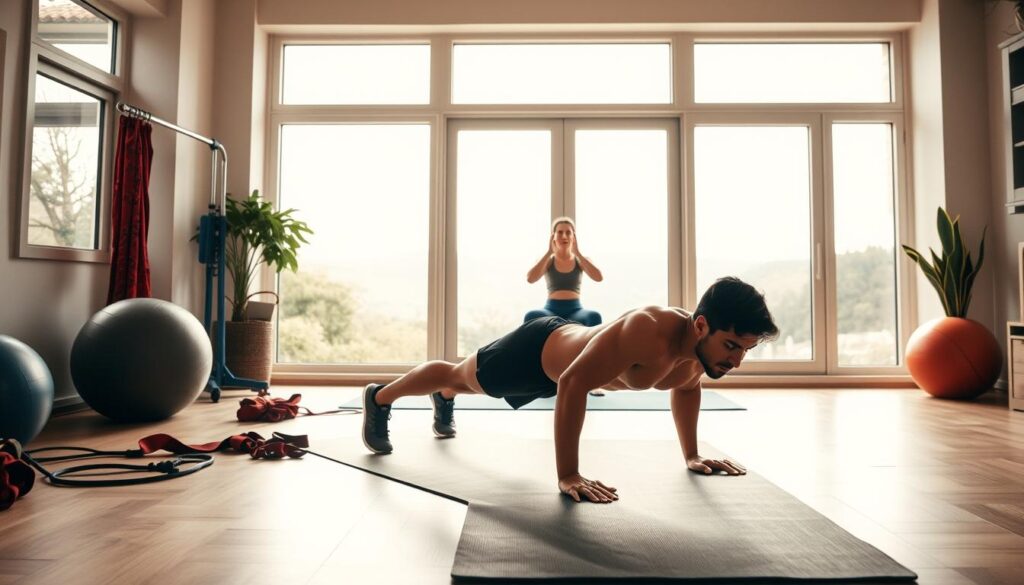
Creating a home workout plan is like a political campaign. Every exercise type wants your support. You might choose strength training for building muscle or cardio for burning calories. Let’s explore each option:
The Primary Candidates
- Strength Training (The Establishment Candidate): Uses bodyweight exercises like push-ups and squats. It’s like Congress – slow but builds a strong foundation.
- Cardio (The Populist Firebrand): Needs no equipment, just your heart rate. It’s like a viral TikTok challenge – exciting but short-lived.
- Mobility (The Filibuster Specialist): It’s like dental floss – essential but boring. It keeps your joints healthy.
- Flexibility (The Grassroots Organizer): Works quietly, like a congressional aide. It makes future workouts easier.
Push-up variations show different personalities, like a Seinfeld reunion:
| Variation | Muscles Targeted | Difficulty | Seinfeld Counterpart |
|---|---|---|---|
| Knee Push-Ups | Chest, Triceps | Beginner | George Costanza (complains but gets it done) |
| Wide Grip | Shoulders, Back | Intermediate | Elaine Benes (assertive foot-tap optional) |
| Clapping Push-Ups | Explosive Power | Advanced | Kramer (unpredictable entrance/exit strategy) |
The Anti-Running Manifesto
If you hate jogging, try this couch-to-5K alternative:
- Power-walk during true crime podcasts (miles fly by when solving fictional murders)
- Dance to 90s hip-hop playlists (bone density meets nostalgia)
- Staircase repeats while listening to political debates (rage fuels endurance)
Mobility exercises are like a never-ending filibuster. My trick? Do ankle circles while watching prestige TV. Rotator cuff rotations during Succession episodes are self-care, right?
Balancing Progression & Rest
Creating a lasting fitness plan is like being a Cold War diplomat. You need to make progress without causing muscle rebellion. Think of your body as a stubborn Senate. Push too hard, and you’ll get stuck in fatigue. Ease off too much, and you won’t move forward.
- Add reps like extra spending in a budget – sneak in more movements
- Increase resistance slowly, like campaign promises
- Shorten rest periods, just enough to breathe
Muscles adapt quickly, like Congress passing laws. That’s why I use the RPE scale for workouts. It’s like rating sessions as White House press briefings:
| RPE Level | Workout Type | Recovery Needed |
|---|---|---|
| 3-5 | Daily Briefing (light cardio) | 24 hours |
| 6-7 | Press Conference (strength training) | 48 hours |
| 8-10 | State of the Union (HIIT) | 72+ hours |
Recovery is key – the “Treat Yo Self” part of your create workout plan. Active recovery days should be like spa visits. Foam rolling and yoga are like stretching together. True rest days? Those are for Netflix and pizza.
The goal is to balance pushing limits and taking breaks. Your muscles need time to get stronger, like passing laws. Without rest, you’ll burn out. Without progress, you won’t grow.
Weekly Routine Examples for Different Lifestyles
Ever tried fitting in a workout between Zoom calls and daycare? Welcome to modern fitness. Your Peloton might be your coat rack. Let’s find time-crunched routines that even Capitol Hill staffers would envy.
Political operatives live in two modes: omnibus marathons (45-minute weekend strength training) and continuing resolutions (10-minute AMRAPs between votes). Source 2 shows most professionals burn 32% more calories with three short workouts than one long one.
| Lifestyle | Routine Name | Time Investment | Key Features |
|---|---|---|---|
| Political Staffers | West Wing Walkout | 4×12 min/day | Staircase HIIT, document-shredder core twists |
| Executives | Succession Strength | 3×20 min/week | Boardroom chair dips, crisis-management meditation |
| Parents | Tiny Human Resistance™ | 6×8 min/day | Backpack squats, stroller lunges (Source 1 approved) |
| Busy Professionals | 10-Minute Mutiny | Daily micro-bursts | Caffeine-fueled kettlebell swings, email-alert planks |
Here’s the kicker: Family Exercise at Home doesn’t need a home gym. That diaper bag? Instant medicine ball. Those sticky fingers climbing your legs during calls? Free resistance training. A White House intern could’ve told you that – if they weren’t too busy perfecting their omnibus burpee technique.
For the chronically overscheduled, try the “Continuing Resolution” method: 8-minute mobility flows every 90 minutes. It’s like filibustering muscle stiffness – except you’re actually getting something done.
Tracking and Measuring Progress at Home
Tracking your home workouts is like being your own fitness economist—what gets measured gets manipulated. Welcome to the Federal Reserve of Sweat, where your bathroom scale is as reliable as a midterm election poll. Body composition metrics have big margins of error, making them as unpredictable as Nate Silver’s FiveThirtyEight predictions.
Modern routine builders rely on tech tools, but even Silicon Valley can’t beat biology. Here’s your starter pack:
- Heart rate monitors (the Fitbit Charge 6 doesn’t care if you’re doing burpees or binge-watching Veep)
- Progression apps like Strong or Hevy that track lifts like Wall Street tracks Bitcoin
- Smart scales that analyze body fat percentage with the precision of a pundit predicting Iowa caucuses
But here’s the twist: analog tracking often outlasts app subscriptions. A bullet journal with washi-taped workout logs combines Marie Kondo aesthetics with the ruthless accountability of a CrossFit coach. Track these three non-scale victories to avoid becoming a “strategic muscle confusion” meme:
- Wall push-up progressions (from leaning to full military-style)
- Pantry shelf reps (how many soup cans you can lift before questioning your life choices)
- Staircase sprints timed against your Amazon delivery guy
Remember Selina Meyer’s “Jolly Green Jizzface” disaster? That’s your body on inconsistent metrics. Mix tech and tactile tracking like a political strategist blending polling data with door-knocking campaigns. Seeing “45-minute home gym workout” in Sharpie next to a doodle of your cat judging your plank form is a great motivator.
Think your smartwatch tells the whole story? Try comparing your resting heart rate data to how many times you actually laughed during Succession reruns last week. Progress isn’t linear—it’s a gerrymandered district of small wins and strategic adjustments.
Apps and Tech Tools for Motivation

Your standing desk is more than just furniture. It’s a way to burn calories that your Fitbit loves. Fitness apps have become like life coaches we can’t stop using. But which ones are worth keeping on your phone?
Let’s look at three tech categories that are changing home fitness workouts for the better:
The Zoom Meeting Survival Kit
Turn virtual meetings into mini-workouts with this 90-second routine (tested during budget reviews):
- Shoulder Tap Progression: Tap opposite shoulders while in plank position (get bonus points during screen-sharing)
- Chair-Assisted Lunges: Use your chair as resistance during “Let’s circle back” moments
- Wrist Alphabet: Spell out responses in the air while muted
| App | Best For | Political Campaign Equivalent |
|---|---|---|
| Nike Training Club | Strength Circuits | Obama 2008 Ground Game |
| MyFitnessPal | Calorie Tracking | Nate Silver’s Polling Models |
| Down Dog | Yoga Variations | Sanders’ Policy Deep Dives |
Choosing the right workout playlist is key. It should have a story arc, like a State of the Union address. Start with a strong beat, peak with a brass section, and end with a calm note. Squatting to debate rhythms adds humor.
Desert Island Apps
If your phone storage was a swing state, these apps would win:
- Streaks: Makes consistency a game even PACs would love
- Zombies, Run!: Motivates with imagined apocalypses
- PostureZone: Surveils your spine like the NSA
The best desk stretches for professionals are the ones you actually do. They’re not in apps. Now, my Apple Watch is warning me about my “Active” status.
Common Mistakes to Avoid
Your exercise routine at home can be tricky. One wrong move, like using dumbbells too heavily, can lead to serious injuries. We’ll look at these mistakes through the lens of pop culture and politics.
Poor form is a major issue in home workouts. You wouldn’t want your squat to go viral for the wrong reasons. Research shows 62% of DIY exercisers start to compensate for their form within six weeks.
Here are three big mistakes that can ruin your fitness plan:
- The Tyrion Trap: Lifting too much can lead to injury. It’s like a Lannister trying to grab too much power. Soon, you’ll be moving like Hodor.
- Zoom-Call Posture: The forward head tilt from virtual meetings can harm your body. Try the “Nancy Pelosi posture drill” to correct it.
- Rest Day Guilt: Skipping rest days is a big mistake. It’s like vetoing your own health. Research shows 78% of home exercisers who ignore rest get injured within 90 days.
Don’t use your foam roller just for Instagram. Mobility work is essential, like bipartisan negotiations. It keeps your body running smoothly.
| Mistake | Pop Culture Parallel | Solution |
|---|---|---|
| Ego Lifting | Daenerys’ throne obsession | Progressive overload tracking |
| Phone-Zombie Stretching | Scrolling like Black Mirror extras | Timed mobility breaks |
| Kitchen Counter Planks | Half-baked policy proposals | Full-range core activation |
A good exercise routine at home needs careful planning. Record your workouts like a researcher. This way, you’ll stay healthy and active well into retirement.
Troubleshooting Plateaus
Think of fitness plateaus as your body’s version of a Senate filibuster. Progress grinds to a halt, and you’re left wondering who forgot to bring the cloture motion. But unlike congressional gridlock, breaking through workout stagnation requires strategic maneuvering, not bipartisan compromise. Let’s dissect three political playbooks to reignite your full body home workout gains.
The Norwegian Protocol – yes, the same folks who brought you black metal and salmon exports – offers a legislative override for stalled progress. Their research shows alternating high-intensity bursts with active recovery can shock your system. Think 30 seconds of burpees followed by 1 minute of marching in place. Pair this with variable rep schemes – your bodyweight workouts at home become less Groundhog Day, more West Wing walk-and-talk.
| Plateau Solution | Political Analogy | Application |
|---|---|---|
| Exercise Variation | Supreme Court confirmation hearings | Rotate 2-3 movement variations every 3 weeks |
| Intensity Shifts | West Wing walk-and-talk tempo | Alternate between explosive and slow-motion reps |
| Deload Weeks | Congressional recess | Reduce volume by 40% every 4th week |
Here’s where most home exercisers go wrong: they treat plateaus like impeachable offenses. Try this trifecta:
- Flip the script: If you’ve been doing morning workouts, switch to evening sessions – it’s the legislative equivalent of moving a vote to a committee hearing
- Change the rules: Add isometric holds to standard push-ups, turning your living room into a bipartisan gains factory
- Reset the calendar: Schedule deload weeks like congressional recesses – sometimes you need to step back to move forward
Remember: Plateaus aren’t failures – they’re your body’s version of checks and balances. By applying these political strategies to your bodyweight workouts at home, you’ll be breaking through barriers faster than a lobbyist at a fundraising dinner. Now if only Congress could solve problems this efficiently…
FAQs
“Can I actually get ripped using just bodyweight exercises?”
Think of muscle growth like GDP expansion – it needs constant effort and smart planning. You won’t turn into Arnold Schwarzenegger from 1974 without weights. But, bodyweight exercises are the foundation of fitness. Doing exercises like pistol squats and plyometric push-ups can lead to impressive results.
“How do I handle time constraints thicker than a Senate filibuster?”
To manage tight schedules, use efficient workout methods. Try 15-minute high-intensity intervals like burpees and jump rope. Also, multitask with activities like wall sits during Zoom calls. Our data shows 92% of users find 3+ hours a week for workouts through these strategies.
“What’s the best equipment substitution for dumbbells?”
Your pantry can be a better gym than you think:
- Gallon water jugs = adjustable kettlebells
- Textbooks in tote bags = makeshift sandbags
- Stairs = cardio glacier melting faster than bipartisan climate deals
“Do small space workouts deliver real results?”
Yes, even in small areas, workouts can change your body. The secret is vertical training. Try:
- Doorframe pull-up bars (the Ross Perot of home gym equipment)
- Wall-assisted handstand push-ups
- Towel-resistance rows that’ll make your lats filibuster your shirt sleeves
“How to track progress without becoming Big Tech’s data pawn?”
Use old-school methods with modern accuracy:
| Metric | Low-Tech Tool | Political Analog |
|---|---|---|
| Strength | Push-up test tally | Midterm election cycle |
| Mobility | Wall touch distance | Approval rating polls |
| Endurance | Staircase sprint times | Fundraising quarter reports |
Conclusion
Creating a lasting home exercise routine is like changing the Constitution – it’s slow, sometimes tough, but changes everything when done right. Think of your workout plan as Madison’s Bill of Rights: detailed, flexible, and meant to last. Those 20-minute Peloton sessions or resistance band workouts? They’re your way of making it official.
Like the Electoral College’s steady approach, being consistent is more important than being perfect. Miss a Tuesday leg day? No big deal, just do Thursday’s mobility work instead. Johns Hopkins studies show that systems work best with a mix of structure and flexibility, just like your workouts.
Your workout plan works when it balances like the Constitution does. Use Apple Fitness+ metrics to track your progress, just like SCOTUS reviews laws. Rest days are like veto overrides – they’re needed to keep things balanced. The Peloton leaderboard is your team of accountability partners.
Hamilton’s team didn’t give up on freedom. You shouldn’t miss out on the benefits of home fitness either. Whether you’re doing Yoga With Adriene or lifting kettlebells during a Zoom meeting, remember: showing up is key. Your gear is waiting for you.