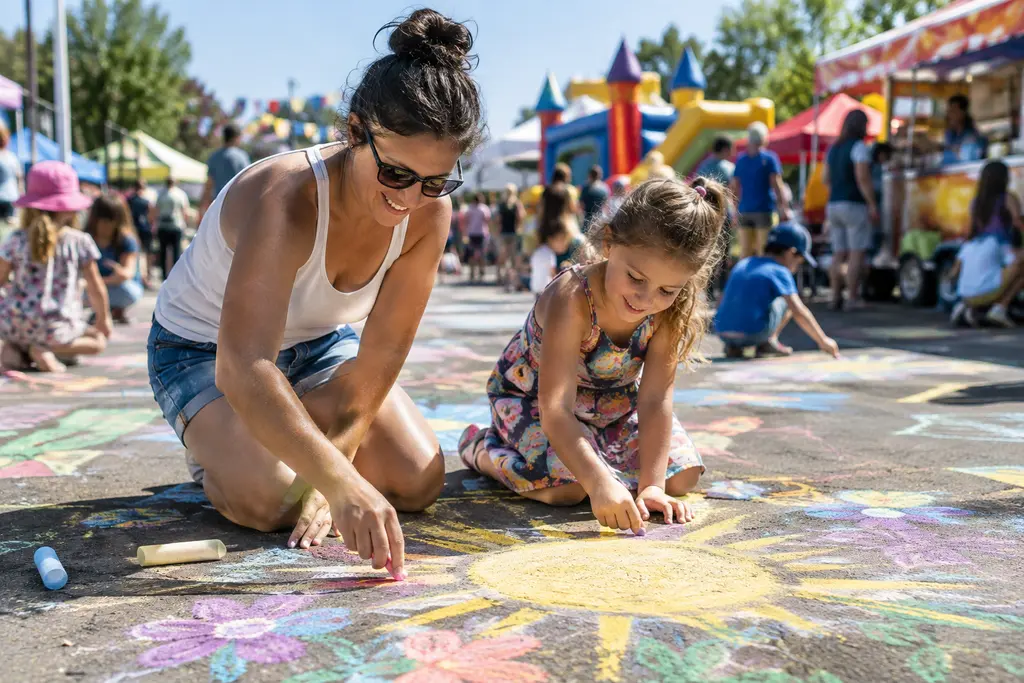
The Charlotte Chalk Art Festival 2026 has already taken place, so the most useful way to read its family chalk art program is as a community fitness and craft case study. Held on October 17–18, 2026, from 12:00 pm to 5:00 pm each day at NoDa Brewing Company, the free outdoor event was described by the festival as family-friendly, accessible for strollers, walkers, and wheelchairs, and open to dogs and service animals, with free parking listed by the organizer on the festival’s official page. Those details matter because family wellness at public arts events is often shaped less by formal exercise and more by access, pacing, shared attention, and whether children, caregivers, and older relatives can participate without pressure.
What Happened At Charlotte Chalk Art Festival 2026
Dates, Place, And Access
The 2026 festival ran across two afternoons at 150 W 32nd St in Charlotte. The event centered on sidewalk chalk art, public participation, and live programming rather than a structured fitness class. That distinction is worth keeping clear. Based on the available event information, there is no support for describing the festival as a formal health intervention or exercise program. A cautious reading is stronger: the setting created opportunities for light movement through walking, standing, bending, kneeling, carrying small supplies, and moving between activity areas.
For families, that kind of movement can be meaningful because it is embedded in play and observation. Children may spend time drawing, pause to look at another artist’s work, return to their own chalk space, and then move toward a stage or workshop area. Caregivers may alternate between helping, supervising, resting, and walking. This pattern is not athletic training, but it can support a less sedentary family outing when matched with hydration, shade awareness, seating, and realistic expectations.
Art Schedule And Public Participation
The festival included Community Chalking Zones on both days, with scheduled art activations: Ruchi Rao on Saturday, October 17, from 1:00 pm to 4:00 pm, and Love in Action on Sunday, October 18, from 1:00 pm to 4:00 pm. Charlotte On The Cheap also listed a Saturday Paint & Sip session from 1:00 pm to 3:00 pm by Pop Up & Paint Charlotte, all-ages open mic programming hosted by Shannon Lee from 3:30 pm to 5:00 pm on Saturday, and a Sunday performance by It’s Snakes from 3:30 pm to 5:00 pm in its event listing. These details show how the festival placed hands-on making beside performance, competition, and casual gathering.
Why Family Chalk Art Fit The Festival
Family Chalk Art As Light Movement
Family chalk art fits community wellness because it asks participants to use the body gently while also making choices together. A child might squat to fill a shape, stretch an arm to widen a line, or stand back to inspect color placement. A parent may model careful movement, help divide a drawing area, or encourage a break when knees, backs, or hands tire. None of this should be overstated as a guaranteed fitness benefit, but it is a practical way to reduce passive screen time during a shared outing.
The collaborative craft format also has a social benefit. Families can negotiate who draws which part, how much space to use, and when to stop. Those small decisions build patience and communication. In community nutrition and family wellness work, these non-competitive routines matter because they make healthy habits feel ordinary rather than punitive. A child who associates movement with creativity may be more open to future walks, park visits, and low-pressure community events.
Why Accessibility Mattered
Accessibility is central to whether an art-centered outing can support family wellness. The festival’s stated accommodation of strollers, walkers, and wheelchairs widened who could participate. That does not mean every part of an outdoor event is equally easy for every person; surfaces, weather, crowding, sound, and fatigue can still affect comfort. Yet the public commitment to accessibility gave families a starting point for planning. Bringing a blanket or lawn chair, as event information encouraged, likely helped some families balance activity with rest.
Collaborative Crafts And Community Trust
Youth Teams And Shared Making
The chalk art competition structure also supported shared making. Youth registration was open to ages 12–17, including youth teams of up to three, while adult competition was listed for individuals age 18 and older. The registration deadline was October 2, 2026, and cash prizes were planned in each category. The research available here does not provide final winners, attendance totals, or participation numbers, so those outcomes should not be invented after the fact.
The youth-team format is worth noting because it treats young people as participants in a public art setting, not only as spectators. Working in a team can require planning a design, sharing materials, dividing labor, and adapting when chalk behaves differently on pavement than it does on paper. For families watching or joining the public chalk zones, that can make the artistic process more visible. It also helps children see craft as labor, practice, and collaboration rather than instant decoration.
Craft Culture Without Overclaiming
The festival states that its roots date back to 2018 and that it draws inspiration from the Renaissance madonnari tradition of sidewalk chalk art. That reference should be handled with respect. The Charlotte event did not need to reproduce a historic European practice exactly to acknowledge an artistic lineage. A more careful framing is that the event used sidewalk chalk art as a contemporary public format while pointing to a longer tradition of temporary pavement art.
For families interested in handmade presentation, costume culture, and visual storytelling beyond chalk, fairytale fashion provides a similar artistic perspective in the same network. The connection is not that chalk art and fashion are the same practice; rather, both ask families and makers to think about color, surface, public display, and the ethics of respecting original creative work.
Practical Family Fitness Takeaways From The Event
Pacing, Seating, And Recovery
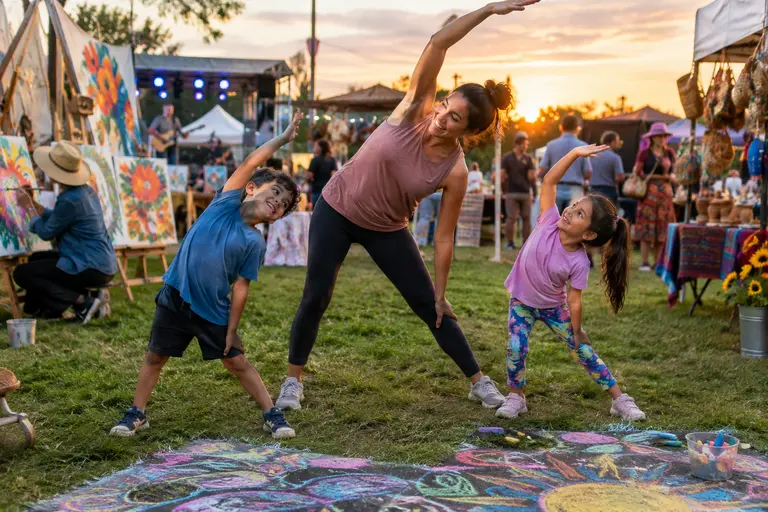
One lesson from the 2026 festival is that family fitness can be built through pacing rather than intensity. A two-hour window of strolling, drawing, listening, and resting may be more sustainable for many households than a high-effort activity that excludes younger children, older adults, or relatives with mobility limitations. The event’s noon-to-5:00 pm schedule gave families room to choose a shorter visit, and the presence of art zones and performances created natural pauses.
Families can apply the same principle to other local craft events: arrive with a time limit, identify rest points, rotate between active and seated activities, and treat comfort as part of participation. Shimply has discussed similar ideas in family art fitness at local craft events, where movement is strongest when it respects children’s attention spans, caregiver capacity, and the space artists need around their work.
Respectful Participation
Public art spaces depend on trust. Families can support that trust by keeping children within marked chalk areas, avoiding interference with competition pieces, asking before photographing people closely, and following material rules set by organizers. This is not only etiquette; it protects the artistic integrity of the event. Chalk art is temporary, but the work can still represent planning, physical effort, and personal style.
For family chalk art to remain welcoming, adults need to model care. That includes helping children understand boundaries, cleaning hands before touching shared supplies if requested, and stepping aside so others can see finished pieces. Community craft succeeds when participation does not erase the artist’s work or the organizer’s safety plan.
Family Chalk Art In Charlotte
What Families Can Carry Forward
The Charlotte Chalk Art Festival 2026 showed a modest but useful model for family wellness: free access, outdoor movement, shared making, youth participation, and public performance in one setting. It was not a gym session and should not be described as one. Its value was quieter. Families could walk, observe, draw, rest, listen, and take part at different levels of ability and interest.
That is the stronger lesson for family chalk art after the October 17–18 event. Collaborative crafts can support light movement and social connection when they are accessible, time-bounded, and respectful of artists. For caregivers seeking low-pressure ways to keep children active, the festival offered evidence of a simple idea: art-making in public space can help families move together without turning wellness into a contest.