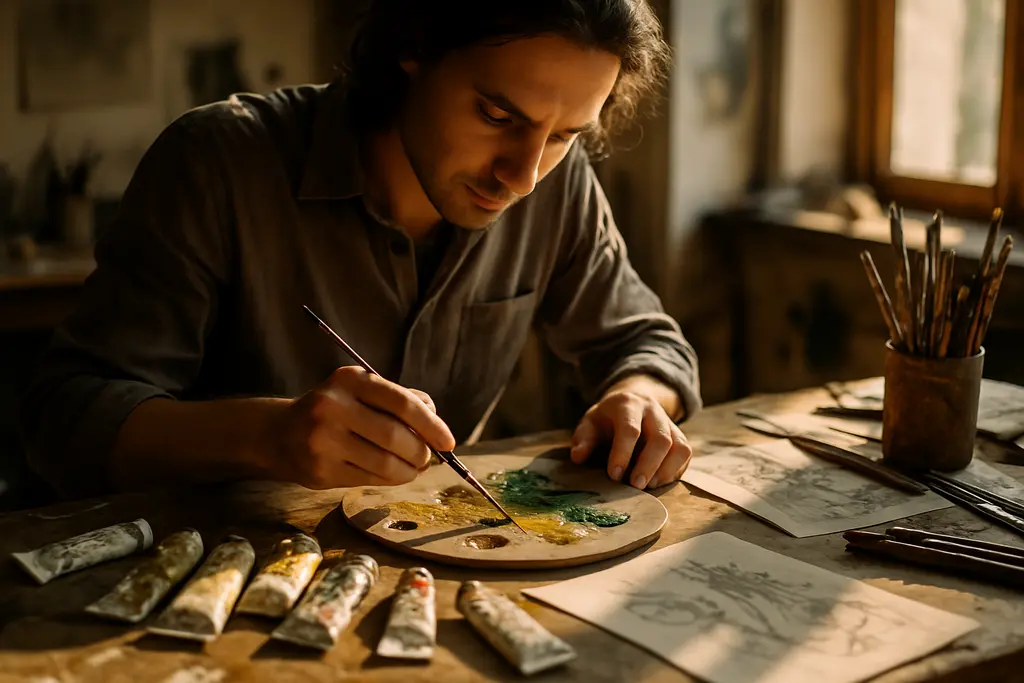
Creator Productivity is often discussed as a matter of speed, output, or personal discipline. The Studio Museum in Harlem’s Fall 2026 season suggests a different lesson: sustained creative work depends on time, space, feedback, institutional context, and room for revision. Since its founding in 1969, the Museum’s Artist-in-Residence program has supported nearly 150 artists of African and Afro-Latinx descent, a scale documented in the Museum’s AIR publication. For independent artists, handmade sellers, and culture-based creators, the useful point is not to copy a museum residency. It is to study what the structure protects.
As of October 15, 2026, the 2026–2027 Artist-in-Residence cohort had been announced but had not yet begun its residency period. Derriann Pharr, Simonette Quamina, and Taylor Simmons were scheduled for an 11-month residency from November 2, 2026, through October 3, 2027, with professional development guidance, research support, studio space, and a stipend, according to the Museum’s residency page. That combination matters because artistic productivity rarely comes from pressure alone. It often grows from protected attention and a clear frame for risk.
Why Creator Productivity Needs Time And Structure
Creator Productivity As A Residency Frame
Creator Productivity, in this context, is not a demand to produce more objects in less time. The Studio Museum model points to a slower, more accountable rhythm: a defined period, a studio base, research access, professional support, and a public endpoint. For a visual artist, those elements can create a container for experimentation. For a craft seller, they offer a useful analogy for planning product development, documentation, and release schedules without treating handmade work as factory output.
The 11-month span is especially instructive. A period that long can hold early research, failed attempts, material testing, peer exchange, and refinement. Short deadlines may be useful for shipping orders or preparing a market table, but they often leave little room for unresolved work. A longer cycle lets a creator separate exploration from presentation. That distinction protects artistic integrity because not every sketch, sample, glaze test, costume mockup, or textile study needs to become a product immediately.
Deadlines Without Constant Acceleration
The Fall 2026 season also had public exhibition markers. The annual Artist-in-Residence exhibition, A sustained becoming: Studio Museum Artists in Residence 2026, opened on October 1, 2026, and was scheduled to remain on view through January 3, 2027. Research notes state that this marked the culminating AIR exhibition’s return to the Museum’s main building for the first time in eight years. The timing is useful for creators because it separates a deadline from panic. A public presentation date can focus decisions, but the value comes from the preparation that precedes it.
Handmade creators can translate this into a practical calendar. A seller preparing a small collection might set separate dates for research, sourcing, prototype review, photography, product writing, care-card drafting, and launch. That structure does not make the work less artistic. It gives the maker more chances to notice weak claims, unfinished edges, unclear sizing, or missing cultural context before buyers encounter the work.
Process Resets From The 2026 Artists
Stopping Can Protect The Work
The Museum’s 2026 artist Q&A described several working methods that resist the myth of nonstop production. Simonette Quamina was described as handling creative block by cleaning the studio, leaving, and returning later with fresh eyes. Taylor Simmons used a printed grounding reminder to reset focus when creativity began to spiral. Derriann Pharr’s process was described as iterative: beginning with large circular marks, adding and retracting, experimenting with materials, and allowing figures to emerge over time.
Those examples are modest, but they are useful because they place attention before output. Cleaning a studio is not merely avoidance if it helps the artist see the work again. A grounding object is not a gimmick if it interrupts unhelpful pressure. Iteration is not inefficiency if the work requires discovery. For creators selling handmade goods, similar resets can prevent rushed listings, weak photographs, vague origin claims, and overextended production runs.
Revision As A Trust Practice
Creator Productivity can also be understood as revision that protects trust. A maker who pauses before publishing a product page may notice that the material description is incomplete. A costume designer may realize that a process photo needs more context and less spectacle. A ceramicist may decide that a glaze note should be clearer about variation. A jeweler may need to explain scale, finish, and care with more precision. These are not delays without value; they are safeguards for buyers and for the work itself.
Shimply has covered a related idea in its discussion of art productivity lessons from Christopher Payne, where sequence, craft, and trust are treated as practical parts of creative work. The Studio Museum example adds another layer: productivity is strongest when the maker has both freedom and a frame.
What Handmade Sellers Can Learn

Context Is Part Of The Product
The Fall 2026 season included multiple exhibitions with overlapping dates, including Dreams of This Future: The Collection of Peggy Cooper Cafritz, which opened on August 19, 2026, and was scheduled through February 28, 2027; Geometries, which opened on September 10, 2026, and was scheduled through January 31, 2027; and the AIR exhibition that opened on October 1, 2026. Research notes also state that the Museum’s permanent collection represents more than 800 artists and that nearly 500 works from the collection were expected to have been displayed by the end of 2026.
For an artist in residence, that surrounding context can place new work beside multigenerational references. For handmade sellers, the lesson is to avoid presenting objects as isolated commodities. A woven accessory, hand-built vessel, beadwork piece, illustrated print, or costume element gains clarity when buyers understand material, process, maker intent, and appropriate use. Context does not require exaggeration. It requires careful description.
This is especially relevant for creators whose work touches dress, fantasy fashion, performance, or costume culture. A related resource such as Fairytale Fashion can accompany craft commerce as a reminder that visual identity, making skill, and cultural reference often intersect in wearable work. Sellers should still be cautious: inspiration should be described honestly, living artists should be respected, and buyers should not be given unsupported claims about origin, rights, or tradition.
A Practical Productivity Checklist
Independent creators can adapt the residency logic without pretending they have museum-level resources. The point is to build repeatable support around the work. A small studio, spare-room desk, shared workshop, or weekend market practice can still benefit from defined cycles.
- Set a project period with a start date, review date, and public release date.
- Separate research, making, documentation, pricing, and buyer education into distinct tasks.
- Create a reset habit for creative block, such as cleaning the work area or stepping away before review.
- Write material, care, and process notes before the product listing is published.
- Use peer feedback carefully, especially from people who understand the medium or community context.
This checklist is not a formula for guaranteed sales. It is a way to reduce confusion and protect the quality of decision-making. Creator Productivity improves when the maker can see the work, the buyer, and the cultural context with less noise.
Studio Museum Lessons For Creator Productivity
The Studio Museum’s Artist-in-Residence program is an institutional model with resources most creators do not have. That difference should be acknowledged. A stipend, studio access, research support, and professional guidance cannot be reduced to a simple productivity tip. Yet the structure offers a clear principle: serious creative work needs conditions that support attention, not only ambition.
For independent makers, the lesson is to build a smaller version of those conditions. Protect time for experimentation. Give projects enough duration to change. Set deadlines that clarify decisions rather than forcing premature release. Treat cleaning, stepping back, grounding, and revision as part of the work. Place finished objects inside honest context so buyers understand what they are seeing and what they are supporting.
That is the most useful reading of Creator Productivity from the Studio Museum’s Fall 2026 season. Productivity is not only the number of works completed. It is the quality of the structure that helps a creator keep faith with the material, the community, and the audience.