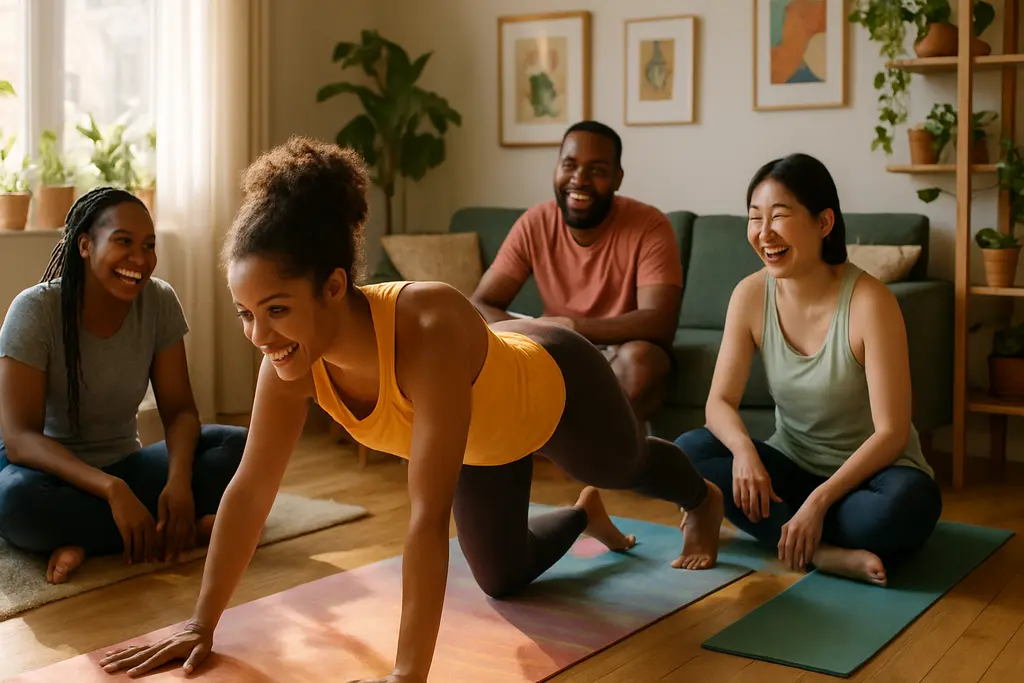
Home workout aesthetics can learn from art without reducing an artist’s work to a decorative prompt. Terence Hammonds’ exhibition, “Soul is a Ham Hock in Your Cornflakes,” is scheduled at the Cincinnati Art Museum from November 20, 2026 through March 28, 2027. Based on the museum’s description, the exhibition brings together historical household objects, printed ceramics, textiles, and wallpapers to reconsider domestic design and Black middle-class visual culture. That context matters. A home routine inspired by the show should not copy Hammonds’ imagery or treat cultural reference as a fitness theme. A more respectful approach is to think about how patterned interiors, household objects, and visual memory shape the room where movement happens.
For handmade-art readers and home exercisers, the useful lesson is not that an exhibition can be converted into a workout. It is that domestic space carries meaning. A living room, spare bedroom, or hallway workout corner may feel more usable when it has light, room to move, and objects that feel personally grounded rather than generic. That fits the larger question of how design, craft, and trust affect the ways people return to a practice over time.
Home Workout Aesthetics And Cultural Care
Home Workout Aesthetics Without Imitation
The first rule is restraint. Hammonds’ exhibition, as described in the research, works with domestic design, printed ceramics, textiles, wallpaper, and historical household references. Those are not neutral surfaces. They sit within a cultural and social frame, especially because the show is described as reimagining Black middle-class visual culture. A workout room inspired by that premise should therefore avoid replicas, costume-like staging, or commercialized “in the style of” claims.
A better method is to work from general principles: pattern can change the feel of a room; household objects can hold memory; handmade surfaces can bring care into everyday practice; and domestic interiors can be read as cultural spaces rather than empty backdrops. This is where home workout aesthetics become more than color matching. They become a way to ask whether the space feels honest, usable, and respectful.
For a small workout area, that might mean placing a handwoven mat nearby, using a ceramic vessel for resistance bands, or choosing a textile backdrop made by a known maker rather than an anonymous print. The point is not to make the room look like the exhibition. The point is to acknowledge that craft, pattern, and use can belong together.
Why Domestic Design Matters For Movement
Research on exercise settings gives limited but useful support for this design-first thinking. A study of fitness center users found that attractive interior design was valued alongside sufficient space, well-maintained equipment, and heating or ventilation; the combination of these attributes had the highest reported preference and market share in the study’s modeled options, at 38.5% fitness servicescape study. The setting was a fitness center, not a private home, so the finding should not be overstated. Still, it suggests that people do notice the physical character of exercise spaces.
In a home, the same idea becomes practical. A room that is dim, crowded, or visually chaotic can make a routine feel harder to begin. A room with adequate space, reliable airflow, and objects placed with intention may reduce friction. This is not a promise that decor changes fitness outcomes. It is a cautious design principle: the room should help the body start moving, not compete for attention.
Designing A Respectful Art-Inspired Workout Space
Use Pattern As A Cue, Not A Costume
Pattern can support rhythm. A repeated motif on a rug, curtain, or wall hanging can create a visual beat for warmups, breath work, or low-impact intervals. But pattern should be chosen with origin in mind. If a textile comes from a particular craft community, the seller should name the material, maker, region, or technique when that information is available. That kind of transparency supports the maker and helps the buyer avoid treating cultural craft as anonymous decor.
Shimply has discussed related choices in home workout decor with local art, where art-aware setup is treated as a practical part of returning to exercise. The same caution applies here: buy from artists and artisans when possible, credit the work in your own notes or posts, and do not imply that a personal room arrangement is an extension of Hammonds’ exhibition.
Build The Room Around Space, Light, And Objects
A modest setup can be effective if it is clear. Keep enough floor area for lunges, squats, mobility work, or mat exercises. Place breakable ceramics outside the movement zone. Use textiles as atmosphere rather than hazards. If a chair or side table holds equipment, make sure it is stable and not treated as exercise equipment unless it is safe for that use.
The most useful home workout aesthetics are often modest: a clear wall, warm light, one meaningful textile, a basket for small tools, and a plant or natural material where it does not interfere with movement. That balance respects domestic design while keeping safety central. For broader culture and design reading across the same network, related insights are available at NextClues, helping readers compare how visual environments shape everyday habits.
A Hammonds-Aware Routine For Small Spaces
A 25-Minute Room-Based Session
The following routine is not presented as museum interpretation. It is a home movement structure shaped by ideas of rhythm, repetition, and domestic attention. Adjust pace and range of motion to your body, and stop if pain appears.
- Five-minute warmup: march in place, shoulder rolls, gentle hip circles, and slow squats. Use the room’s pattern or a repeated object as a visual pacing cue.
- Eight-minute strength block: two rounds of bodyweight squats, wall pushups, glute bridges, and standing rows with a resistance band if available.
- Six-minute rhythm block: step-touches, low side lunges, arm reaches, and controlled torso rotations. Keep the movement grounded rather than performative.
- Four-minute hold block: wall sit, plank from knees or hands on a table, and calf raises. Use steady breathing and avoid forcing duration.
- Two-minute reset: slow walking, shoulder release, and seated breathing while observing the room without judgment.
This routine treats the domestic setting as a partner in attention. A patterned textile may support tempo. A handmade bowl holding a resistance band may remind the user that the room is cared for. A clear path across the floor may make the workout less stressful. These are small signals, not cures or guarantees.
Where Nature Videos May Fit
The research notes include several findings about nature exposure and virtual environments, but only one source from the approved evidence set can be cited here. In green-exercise testing with wall-squat isometric sessions, participants who watched forest walking footage reported lower perceived exertion, lower heart rate, and better affect than those looking at a blank screen; recovery heart-rate variability also improved green exercise trial. The study sample was small and specific, so it should not be treated as universal proof.
Still, for indoor workouts, a nature video or view of plants may be a low-risk environmental cue for some people. It can sit beside, not replace, art-aware domestic design. If the room is already full of pattern, a quieter nature video may help balance attention. If the room is plain, greenery or natural materials may soften the space without turning it into a theme set.
Trust Signals For Handmade Workout Decor
What Buyers Should Ask Before Styling A Space
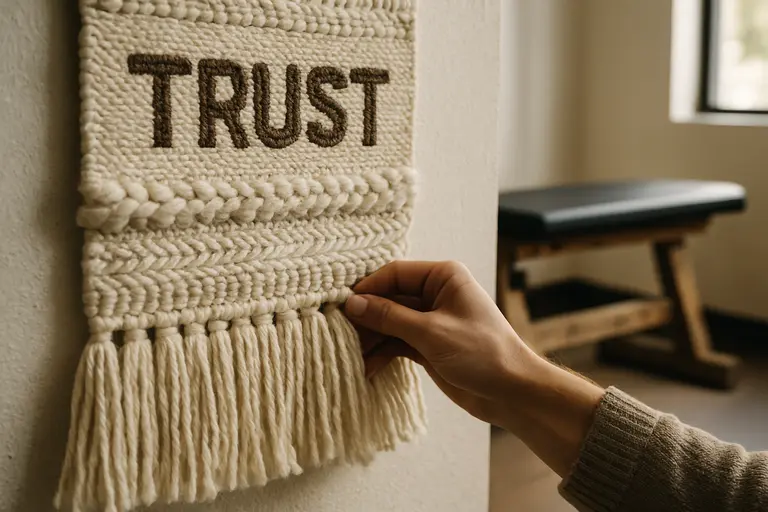
Art-inspired exercise spaces often lead people toward handmade mats, baskets, ceramics, textiles, and wall pieces. That is an opportunity to support craft, but it also requires buyer care. A seller’s listing should be clear about material, dimensions, maker background where appropriate, care instructions, and whether the item is decorative or suitable for regular handling. A ceramic bowl may be beautiful for storing bands, but that does not make it impact-safe. A textile may be meaningful as a backdrop, but it should not be placed where it can slip underfoot.
Authenticity depends on more than style. If a seller uses cultural language, the listing should explain the source of that claim. If the work is handmade, the process should be described without romanticizing labor. If the object is made by a specific artisan or community, that connection should be stated with respect and without turning makers into marketing ornaments.
How Sellers Can Avoid Overclaiming
Sellers should be cautious about claiming that a decor object will improve performance, reduce stress, or make a routine easier to sustain unless they have sound evidence. It is safer and more honest to say that a basket organizes equipment, a textile adds visual warmth, or a ceramic vessel keeps small tools visible. Clear claims build trust. Broad wellness promises can weaken it.
This is especially relevant to home workout aesthetics informed by museum culture. The artwork should not be used as a shortcut to authority. A product page can say that a piece suits a movement corner, supports storage, or adds handmade character. It should not imply endorsement by an artist, museum, or exhibition unless that relationship is real and documented.
Terence Hammonds-Inspired Home Workout Aesthetics
A thoughtful response to Hammonds’ Cincinnati Art Museum exhibition starts with respect for context. The exhibition is scheduled to open after October 14, 2026, so any home practice built now is necessarily anticipatory, based only on the published description in the research. That description points toward domestic design, printed surfaces, historical household objects, and Black middle-class visual culture. Those are serious cues, not a palette to copy.
For readers building a home routine, the strongest approach is practical and culturally careful: clear space, safe movement, honest handmade objects, good light, and design choices that support attention. Home workout aesthetics work best when they help the room feel cared for without turning art into a prop. That balance honors both the body in motion and the cultural work that art objects can carry inside domestic life.