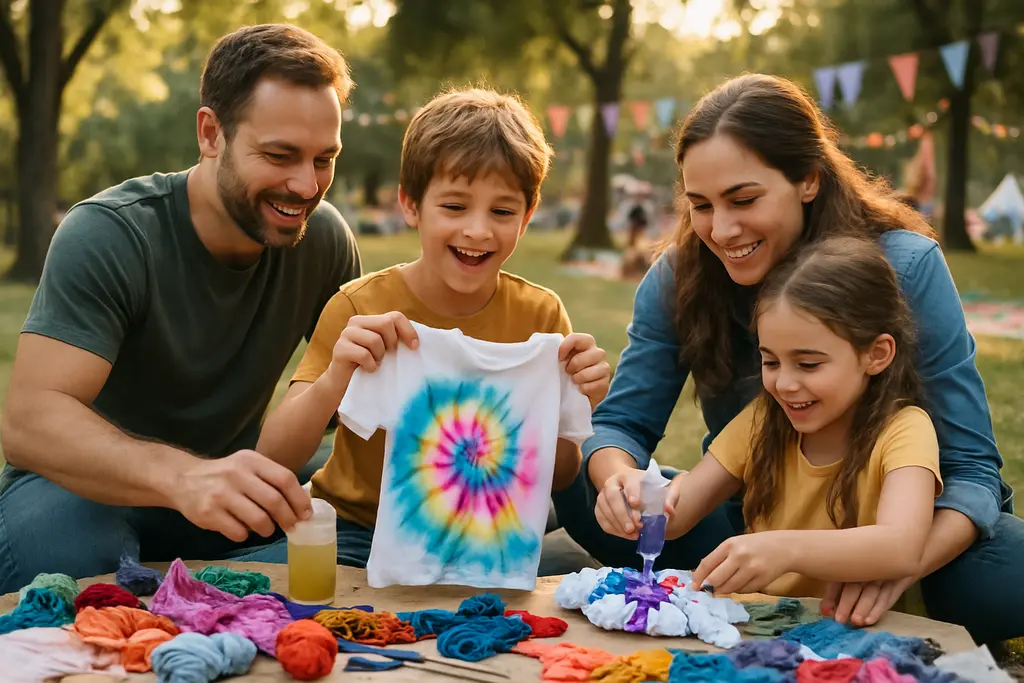
Family Craft Fashion can turn festival preparation into a shared activity that combines creativity, light movement, reuse, and family conversation. The idea is not to push children into adult trend cycles. It is to use recent festival-fashion behavior as a prompt for age-aware making: decorating a hat, stitching a patch, threading a bracelet, painting a tote, or adapting an older garment so it feels useful again. For families, the strongest value may be the process rather than the outfit.
Why Family Craft Fashion Fits Festival Prep
Recent festival-fashion data shows that outfit planning has become a significant part of event culture for many adults. In March 2026, SHEIN reported a survey of 18,603 U.S. festival-goers aged 18 and older; 58% said they prepared two or more outfits per day, while 69% began planning looks at least one month in advance, according to the festival trend report. That survey did not measure children’s participation, so any family reading must be cautious. Still, it suggests a practical opening: if adults are already planning, sorting, packing, and styling early, families can shift some of that effort toward slower, shared making.
Craft participation also appears broad in the United States. Mintel’s 2026 U.S. arts and crafts consumer report states that 73% of U.S. adults participated in a crafting project in the past year, with younger generations more engaged, as described in the arts and crafts report. This does not prove that every household wants to sew or upcycle festival clothing. It does show that craft is not a niche family language; many adults already have some familiarity with making, decorating, repairing, or personalizing objects.
Family Craft Fashion Starts With Budget Reality
The same SHEIN survey found that price, comfort, and wearability were key stated priorities, with 62% naming price among their top three factors, followed by comfort at 49% and wearability at 39%. For families, that mix matters. The practical value of Family Craft Fashion is strongest when it does not require buying a full set of new items. A child can help choose buttons from a sewing tin, add ribbon to a sun hat, stamp a cotton bandana, or turn fabric scraps into wrist ties. These projects are modest, but they meet the main test of family wellness: they are affordable enough to repeat, simple enough to finish, and flexible enough for different ages.
Festival Planning As A Household Routine
A festival outfit plan can become a household routine rather than a last-minute rush. One short session can be for sorting garments by comfort and weather. Another can be for repairs, such as reinforcing a strap or replacing a missing button. A third can be for decoration. Children see that style is not only buying; it can include care, reuse, and decision-making. That lesson is especially useful in family fitness settings because clothing that pinches, overheats, or restricts walking can make a long art fair or music event harder for children and caregivers.
What Kids Can Make Without Treating Culture As Costume
Festival fashion often borrows from craft traditions, performance dress, fantasy aesthetics, and local art practices. Families should handle that space with care. A handmade look can be playful without turning sacred, ceremonial, or culturally specific garments into props. Parents can guide children toward materials, colors, textures, and personal symbols instead of copying regalia, religious dress, or living community identifiers without context.
This is also where handmade fashion becomes a chance to talk about authorship. Children can learn that artists, designers, and makers deserve credit. A family can admire embroidery, crochet, beadwork, quilting, or natural dyeing while also asking where those practices come from and whether a design has meaning beyond decoration. For commercial sellers, the caution is stronger: avoid implying cultural authority, rights clearance, or permission unless it is real and documented. This is not legal advice; it is a trust principle for families and creators.
- Use familiar base items, such as a plain tote, jacket, hat, scarf, or bandana.
- Choose decorations children can place safely, such as fabric patches, yarn tassels, large beads, or washable textile paint.
- Keep closures simple so children can dress, walk, rest, and use bathrooms without stress.
- Skip sharp trims, heavy chains, loose cords, and small parts for younger children.
- Discuss cultural references before using them, especially if the design comes from a community the family does not belong to.
Turning Craft Sessions Into Gentle Family Fitness
Crafting is often seated, but festival preparation can include gentle movement if the session is planned with children’s bodies in mind. Sorting fabric on the floor, measuring ribbon, testing how a bag sits on the shoulder, walking across the room in decorated shoes, or practicing how to carry water and snacks all create small movement breaks. These are not substitutes for active play. They are practical ways to connect making with comfort, endurance, and body awareness.
For a festival day, the most wellness-minded outfit is not always the most decorative one. It is the one a child can move in safely. Wide, relaxed shapes can be easier to personalize because they offer room for patches and appliqué without needing tight fitting skills. A loose overshirt, roomy pants, or a simple skirt can become a child’s canvas while still allowing walking, sitting, and stretching. Families interested in event-day comfort can pair craft planning with practical gear thinking, such as the walking and heat-management ideas in Shimply’s craft festival fitness gear article.
Movement Checks Before Decoration
Before adding decoration, ask the child to try the base item while moving. Can they raise their arms? Can they sit cross-legged? Can they walk without tripping? Can they carry a small bag without shoulder strain? These checks protect the craft from becoming a burden. They also teach children that design has function. A beautiful cape that catches on chairs or a heavy beaded bag that hurts after ten minutes may not serve the day well.
Shared Making Without Over-Scheduling
Family craft sessions work better when they are short. A 20- to 30-minute project may be enough for younger children, especially if it includes setup and cleanup. Older children may enjoy longer work, but parents should avoid turning festival preparation into performance pressure. The healthiest rhythm is often simple: choose one item, make one change, test comfort, and stop while the child still feels proud.
Buyer Trust, Creator Commerce, And Reuse
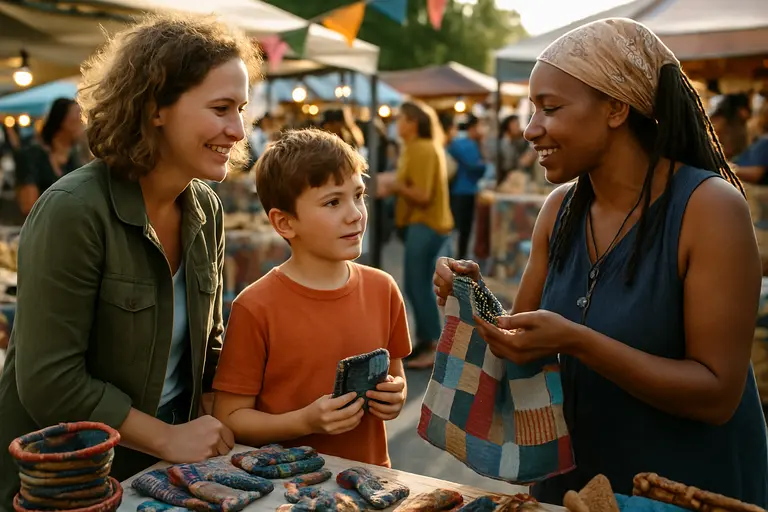
The craft-commerce lesson is similar to the family lesson: trust grows when the maker is honest about materials, effort, limits, and care. A parent selling handmade festival accessories should explain whether an item is decorative or functional, whether it is washable, what age range it suits, and which parts could detach. If upcycled materials are used, clear descriptions matter. Reuse is valuable, but it should not hide wear, fragility, or cleaning needs.
Festival-fashion budgets also make reuse worth considering. If many shoppers are weighing price alongside comfort, a handmade or upcycled accessory may be appealing because it lets a family refresh an outfit without replacing it. Still, sellers should avoid broad claims such as “eco-friendly” or “zero waste” unless they can explain exactly what they mean. More precise wording is stronger: made from leftover cotton fabric, repaired from a previous garment, or decorated with secondhand buttons.
For readers comparing culture, wellness, and community activity across related sites, the related site in our network coverage can offer another reference point within the same network. The useful standard is consistent across family crafting and creator commerce: name the material, respect the source, and do not overstate the benefit.
| Family Goal | Craft Choice | Wellness Check |
|---|---|---|
| Lower cost | Patch an older jacket or tote | Confirm the item is still comfortable and clean |
| Child participation | Thread large beads or tie fabric tassels | Match tools and parts to age and supervision |
| Festival comfort | Decorate a hat, scarf, or light overshirt | Test heat, weight, and range of motion |
| Reuse | Turn scraps into wrist ties or bag charms | Check for loose cords or choking risks |
| Cultural respect | Use personal symbols and original drawings | Avoid sacred or community-specific motifs without context |
Family Craft Fashion And Festival Wellbeing
The strongest family projects do not need to imitate runway looks or social-media styling. They can start with a child’s drawing, a repaired pocket, a favorite color, or a shared memory from a past local event. Done carefully, Family Craft Fashion supports more than appearance. It gives children a way to practice planning, patience, reuse, and comfort testing while giving caregivers a calmer structure for festival preparation.
The evidence should be read with restraint. Adult festival survey data does not prove that children want multiple outfits, and broad craft participation data does not prove that every family has time, tools, or interest. But together, these signals support a practical idea: many households already understand both festival styling and craft. The family wellness opportunity is to slow the process down, make it safer, and keep the child’s comfort at the center.
For handmade sellers, educators, and parents, the best approach is not more consumption. It is clearer making: use what is available, explain materials honestly, respect cultural context, test movement, and let children help in ways that match their age. A festival outfit can then become less of a purchase and more of a family-made object with use, story, and care built in.