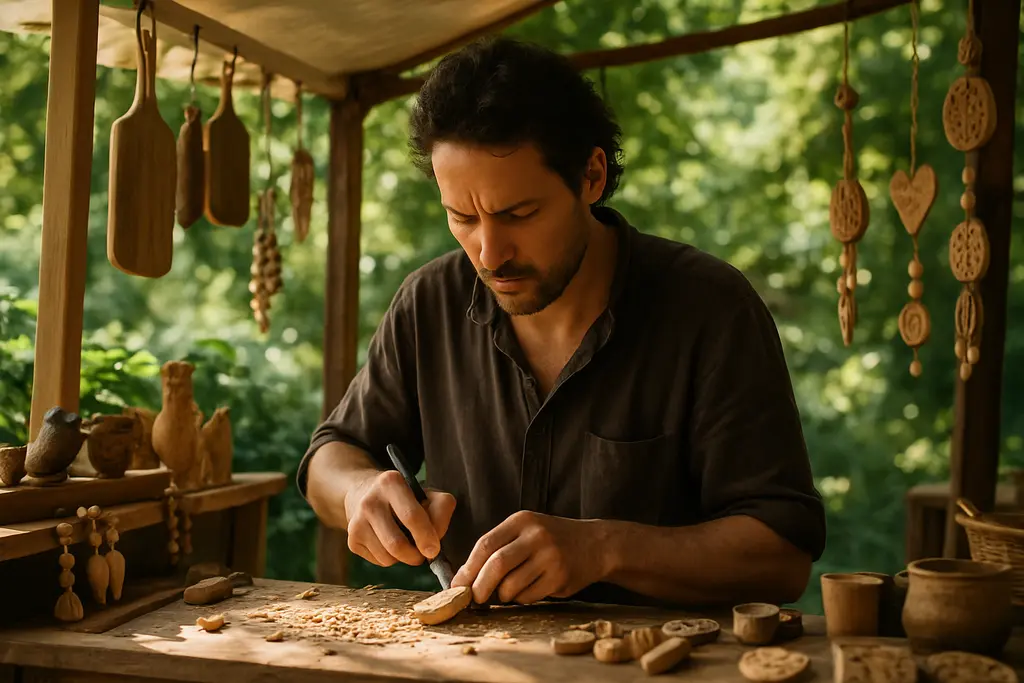
Regional Craft at the Midsummer Mercantile Market is best understood through evidence about local creators, regional identity, and buyer trust rather than through broad claims about a named event. The research supplied does not provide verified vendor counts, sales figures, venue details, or dates for a specific Midsummer Mercantile Market. That means any analysis should treat the market as a region-based craft model, not as a documented event with confirmed operating data.
That caution matters. Artisan markets are often judged by atmosphere, but their lasting value depends on whether makers, buyers, and organizers can show credible links between place, material knowledge, cultural context, and fair presentation. For Shop by Region coverage, the central question is not only what is sold. It is how local knowledge becomes visible without turning makers into decorative marketing.
Why Regional Craft Depends On Local Creators
Recent creator data gives a useful frame for region-based mercantile markets. In India, 66% of creators came from non-metro cities in 2025, up from 44% in 2020, and non-metro creators increased 6.4-fold from 2020 to 2025 compared with 2.6-fold growth in metros, according to Moneycontrol reporting. The same reporting said more than 80% of non-metro creators were nano or micro creators, while only about 2.1% completed five or more brand campaigns in a year and 85% completed none.
Those figures do not describe the Midsummer Mercantile Market directly. They do, however, show why small regional creators should not be dismissed because they lack large campaign histories. In a craft market, a maker with modest online reach may still hold strong local knowledge: a dye practice learned through family work, a basket form tied to local plants, a festival object shaped by seasonal use, or a food craft linked to regional households. The value is not only follower count. It is the credibility of place-based practice.
How Regional Craft Builds Trust
For Regional Craft sellers, trust grows when buyers can connect an object to a maker’s process without being asked to accept vague claims. A product label that says “handmade locally” is weaker than one that names the material, explains the method, identifies the region in careful terms, and tells buyers how to use or care for the item. This is especially important where cultural forms have ceremonial, community, or seasonal meaning. Respectful explanation can help buyers appreciate the work without flattening the culture behind it.
What Regional Creator Data Can And Cannot Tell Us
Creator-economy statistics are useful, but they have limits for artisan markets. The Moneycontrol figures concern creators, not necessarily craft vendors. A creator may be a video maker, educator, performer, stylist, food chronicler, or maker-seller. A mercantile market may include artisans who do not post often, elders who sell through family members, or workshop-based producers who rely on local reputation more than social platforms. Treating all of them as influencers would be inaccurate and unfair.
Still, the data supports one careful conclusion: cultural and commercial attention is not confined to major metropolitan centers. If non-metro creators are increasing faster than metro creators in the cited data, organizers of region-based markets should take local maker networks seriously. That does not mean every stall needs a social-media plan. It means regional markets should create room for makers whose authority comes from practice, community recognition, and material skill.
Reading Local Creator Signals
In 2026, Impact reported that regional creators in Maharashtra, Tamil Nadu, and Gujarat delivered engagement rates 30–35% higher than broader influencer campaigns, based on brand data cited in its regional creator analysis. This evidence should be read with care: engagement rates from branded campaigns do not automatically prove sales success at a craft fair. Yet they do suggest that language, proximity, and regional identity can make communication more relevant when the audience recognizes the context.
| Market Signal | What It Can Support | What It Should Not Claim |
|---|---|---|
| Named local maker | Clearer origin and accountability | Guaranteed authenticity without further detail |
| Material and care notes | Better buyer understanding after purchase | Medical, spiritual, or sustainability claims without evidence |
| Regional language or story | Stronger context for local buyers | Permission to generalize an entire culture |
| Small creator following | Possible community relevance | Automatic commercial success |
Buyer Trust Starts Before The Stall
A well-run regional market should build trust before a buyer reaches the table. Stall cards, vendor pages, maps, and product notes can show who made the object, where the material came from, and what the buyer should understand before purchase. This does not require long essays on every tag. It requires clear signals: maker name or collective name where appropriate, region, material, function, care, and any use limits.
For a meaningful comparison of regional market insights, online readers can visit Kay Granger, a related site within the same network. The shared lesson is that place-based coverage benefits from restraint and specificity. In craft commerce, that means avoiding generic heritage language unless the seller can explain the practice in a grounded way. Shimply has also examined similar trust questions through handmade trust, where community support signals help buyers judge whether a craft claim is meaningful.
Practical Trust Signals For Region-Based Markets
The strongest market pages often act like public records for buyers. They do not need private supplier details, but they should make the relationship between seller and maker legible. Is the vendor the maker, a family member, a cooperative, a curator, or a retailer? Does the object come from a single artisan, a workshop, or a group? Is the work made in small batches, made to order, or stocked from previous production? Each answer changes how buyers understand price, availability, and cultural context.
Local Identity Without Overstatement
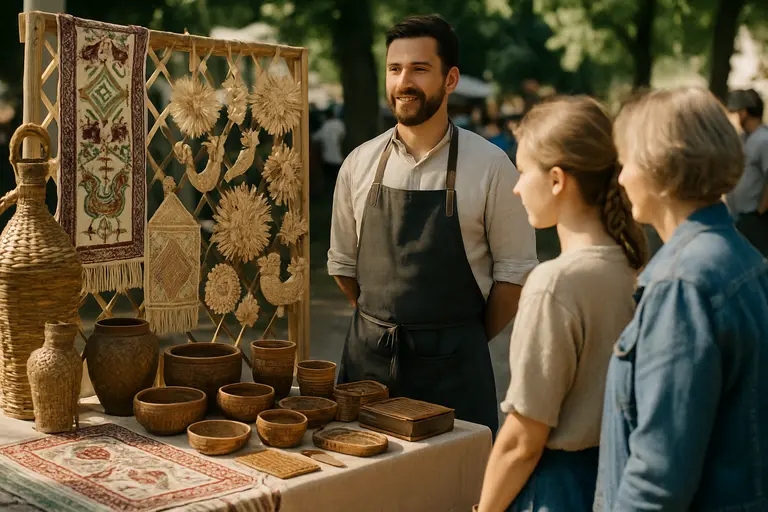
Local identity can be a selling strength, but it should not become a shortcut. A region-based market should avoid implying that one maker represents an entire city, state, caste group, language community, or tradition. It is safer and more respectful to describe the specific relationship: “made by a textile worker based in this district,” “inspired by a seasonal food practice,” or “produced by a family workshop using a known local material.” Specificity protects both the artist and the buyer.
This is also where organizers can support fairness. If a few creators attract most attention, smaller stalls may need better signage, shared storytelling spaces, or market maps that do not bury less visible makers. The research shows that many non-metro creators have limited brand campaign experience. A craft market can respond by lowering the burden of self-promotion and giving makers structured ways to present process, care, and cultural context.
Midsummer Mercantile Market And Regional Craft
The Midsummer Mercantile Market, treated as a Shop by Region model, works best when it centers proof over mood. Regional Craft should be presented through maker identity, material literacy, and buyer education, not through broad seasonal language alone. Local creators may bring strong knowledge to such a market, but that value becomes visible only when the market helps buyers read origin, process, and use with care.
The evidence supports a cautious position: regional creators can carry meaningful attention and trust, especially where language and place matter. For artisan markets, the ethical task is to turn that attention into respectful context, fair visibility, and clearer buying decisions.