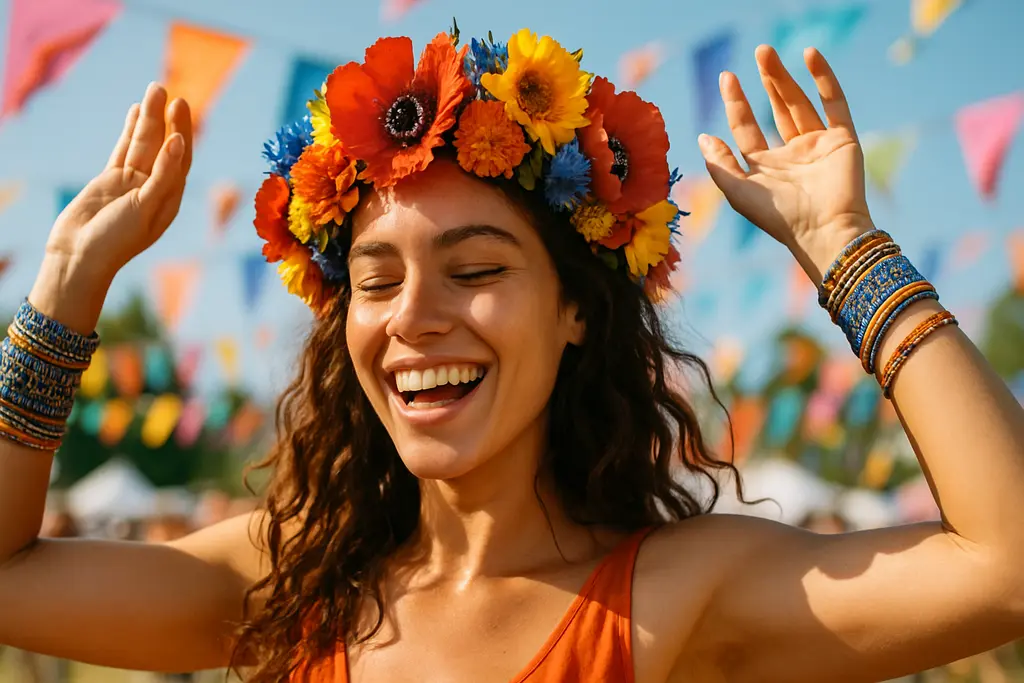
Handmade festival fashion at Outside Lands is best understood as a visible form of self-presentation, not only as clothing for a music weekend. Looking back at the festival held on August 8-10, 2025, the strongest evidence comes from two places: attendee style documented by arts media and the event’s own community-impact reporting. Together, they show how personal making, local participation, and careful buying can shape festival culture without reducing it to a single trend.
Handmade Festival Fashion And Outside Lands
Handmade Festival Fashion As Self-Presentation
At a festival, clothing works differently than it does in ordinary streetwear. It has to move through crowds, tolerate weather changes, survive long walking days, and still communicate something personal. That is why handmade festival fashion often carries more meaning than a quick costume purchase. A hand-knit hat, altered jacket, crocheted layer, or customized accessory may show care, time, and a maker’s point of view.
KQED’s photo coverage of Outside Lands 2025 documented fans using fashion as expressive identity, including one attendee described as an “electric fairy,” age 40, who wore gloves, a cardigan, and a hat she made herself KQED photo essay. That single example should not be stretched into a claim about every attendee. Still, it is useful evidence that self-made clothing was visible within the festival’s style culture.
What The 2025 Photos Can And Cannot Prove
Photo essays are not surveys. They do not measure how many people wore handmade pieces, how much they spent, or whether items were bought from independent makers. They do, though, preserve evidence of how people presented themselves in public space. For a buying guide, that distinction matters. Handmade festival fashion should not be treated as a guaranteed marker of ethics or authenticity. A buyer still needs to ask who made the item, what materials were used, and whether the seller is being clear about origin.
From a mindful wellness perspective, the most useful question is not “Does this look festival-ready?” It is “Can I wear this for several hours while staying comfortable, respectful, and true to myself?” That question brings body comfort, cultural context, and consumption habits into the same frame.
Authenticity Signals Buyers Can Read
Maker Evidence Without Overclaiming
Authenticity is not created by using words such as “artisan” or “handmade” on a tag. It comes from verifiable details. A thoughtful seller can explain whether a piece was hand-knit, sewn from repurposed fabric, beaded in small batches, dyed by hand, or assembled from sourced components. Those statements are stronger when paired with process photos, care instructions, maker notes, or a clear explanation of variation between pieces.
Buyers should be cautious with vague claims. “Handmade-inspired” is not the same as handmade. “Festival aesthetic” says little about labor or origin. “One of a kind” should mean that the buyer will not receive a mass-produced duplicate. None of these points require suspicion toward sellers; they simply help buyers reward clarity.
Comfort, Weather, And Wearability
Festival clothing also has a physical job. Outside Lands takes place in Golden Gate Park, where attendees may spend long hours standing, walking, sitting on grass, and shifting between sun, wind, and cooler air. The research provided here does not include weather measurements for the 2025 dates, so it would be wrong to make a specific weather claim. What can be said safely is that layered handmade pieces, such as cardigans, hats, gloves, and accessories, may support adaptable dressing when conditions change.
- Check seams, closures, and stretch before buying or wearing a piece for a full festival day.
- Ask how to wash or spot-clean handmade knits, crochet, dyed fabrics, or embellished garments.
- Choose footwear and bags for walking comfort, not only visual impact.
- Respect cultural references by avoiding sacred, ceremonial, or community-specific items used as casual costume.
This is where mindful buying becomes practical. A piece that supports movement, warmth, and personal meaning will usually serve the wearer better than an outfit chosen only for photographs.
Community Economics Around Festival Style
Local Participation As A Trust Context
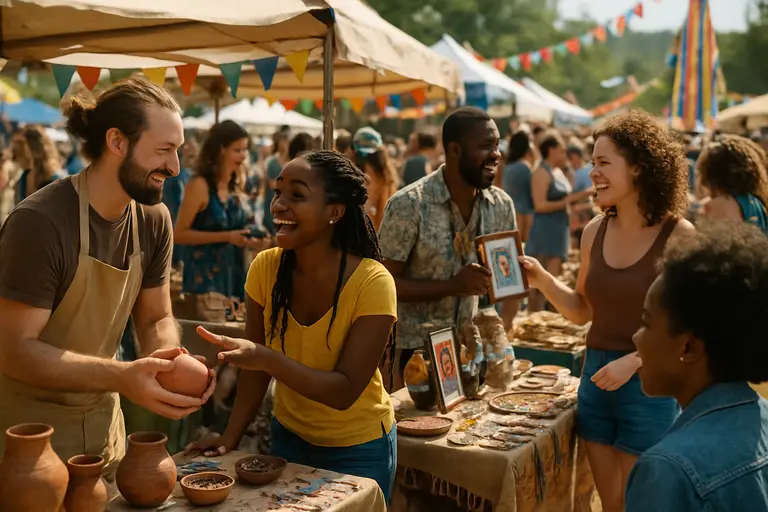
Outside Lands’ official community-impact page reported that, in 2025, the festival included more than 150 local restaurants, wineries, breweries, and artists among its vendors and participants. The same page reported $97.5 million in Bay Area economic benefit, more than $43.1 million in wages and income, and 485 full-time equivalent jobs supported by the festival Outside Lands community impact. These figures do not isolate handmade clothing sales, so they should not be used as proof of a specific fashion economy. They do show that the event placed local participation near the center of its public identity.
For handmade sellers, that context matters. Festivals with strong local vendor cultures can help visitors become more open to objects with maker stories, regional identity, and limited production. Food, visual art, and fashion are different categories, but they often share the same buyer behavior: people look for something that feels connected to place rather than detached from it.
What Sellers Should Avoid Saying
Sellers benefit from being specific rather than grand. A booth sign or product page can say, “hand-crocheted in small batches,” “made from reclaimed denim,” or “assembled by the designer in San Francisco” if those claims are accurate. It should not imply community benefit, sustainability, or cultural authenticity without proof. Handmade festival fashion gains trust when sellers explain limits as well as strengths: delicate beads may need care, natural fibers may stretch, and small-batch dye lots may vary.
Readers comparing festival-style coverage across this network may also find Robsonic helpful, as the article available on Robsonic offers additional music-culture context. At the same time, Shimply’s related analysis of festival fashion expression shows how comfort, heat, culture, and creator commerce can shape regional event style. The shared lesson is restraint: do not turn every expressive outfit into a market trend without evidence.
Buying Handmade Fashion At Outside Lands
A Mindful Handmade Festival Fashion Check
Buying handmade fashion at Outside Lands, or after seeing styles from the festival, works best when the buyer slows down. Ask whether the garment or accessory has a maker name, a material description, a care path, and a clear return or repair policy. If a piece references a specific culture, artist, or community practice, pause before purchasing. Respect means asking whether the item is being presented with context rather than used as surface decoration.
There is also a wellness angle that is easy to miss. Festivals can push people toward urgency: buy fast, dress loudly, keep up with the crowd. A steadier approach protects both the buyer and the maker. Choose fewer pieces with better information. Try to understand the labor behind them. Wear them in ways that let your body feel at ease. If the item is handmade, treat care as part of ownership, not as an afterthought.
Handmade festival fashion does not automatically make festival culture more authentic. It can, however, support authenticity when the making is visible, the seller is honest, and the buyer values comfort, context, and provenance. The Outside Lands evidence from 2025 supports a cautious reading: self-made style was present, local participation was publicly emphasized, and festival fashion offered a space where individual expression and community commerce could meet. That is enough to take the subject seriously without overstating it.